
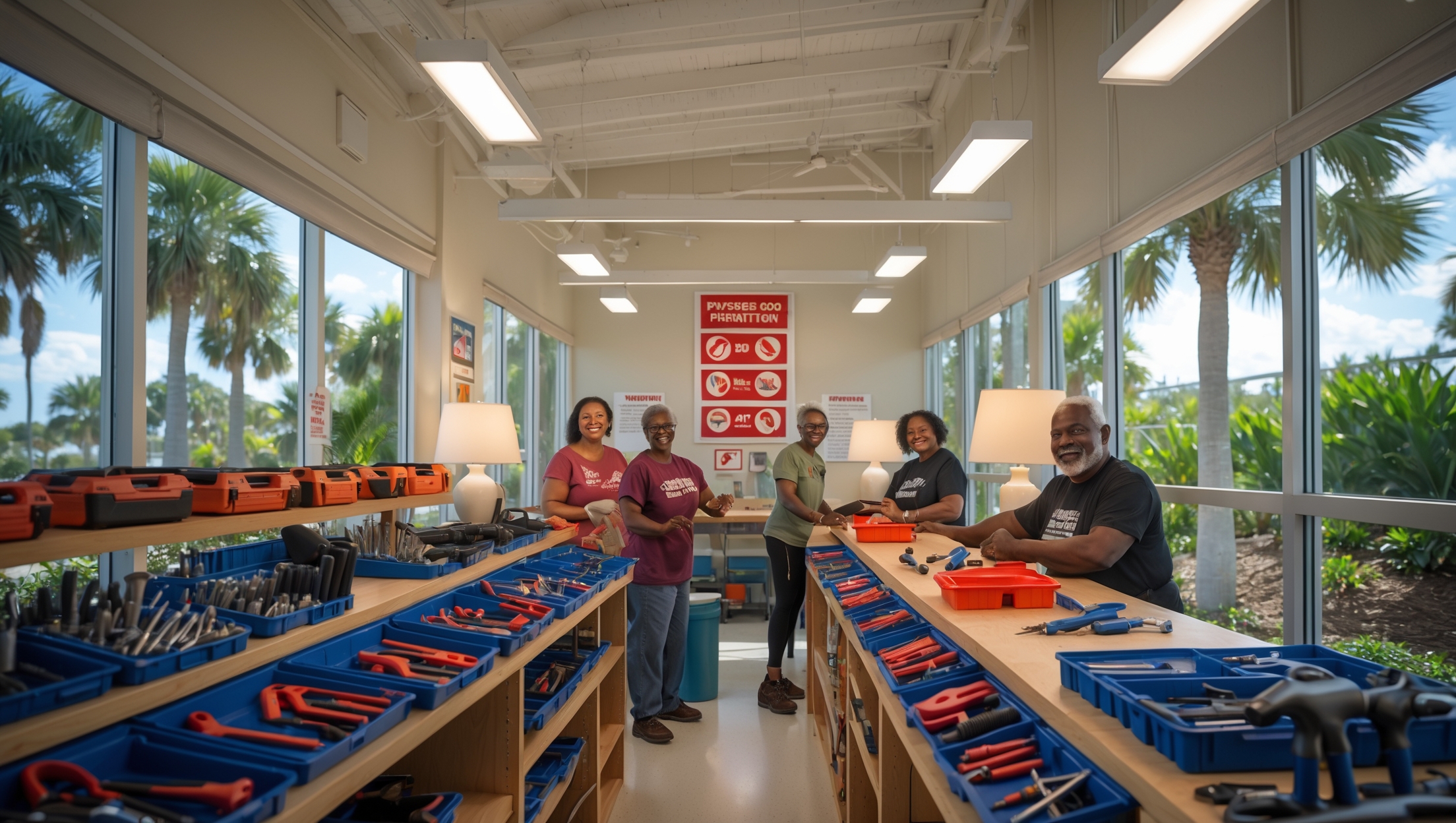
Safety Essentials for St. Petersburg’s Community Tool Libraries: Checklists, Protocols & Local Resources

Introduction: Why Safety Matters in Community Tool Libraries
Community tool libraries are transforming neighborhoods across St. Petersburg, FL, offering residents affordable access to a vast array of tools for projects both big and small. These volunteer-driven spaces empower people to fix, build, and create—fostering a true sense of community. However, with shared equipment and diverse users, safety must remain a top priority. Without clear safety protocols, checklists, and maintenance routines, even the most well-intentioned tool library risks accidents, liability, and diminished trust.
Whether you’re launching a new tool library or seeking to improve an established one, this comprehensive guide delivers St. Pete-specific insights, actionable checklists, and local resources to help you build a robust culture of safety. From electrical safety and tool maintenance to emergency protocols and insurance considerations, you’ll find everything you need to protect your members, volunteers, and community assets.
Understanding Community Tool Library Safety Risks
Common Hazards in Shared Tool Environments
- Improper Tool Use: New users may be unfamiliar with safety instructions or specific tool functions.
- Faulty or Poorly Maintained Equipment: Tools with worn parts, frayed cords, or missing guards can cause injuries.
- Physical Hazards: Cluttered aisles, unsecured shelving, and poor lighting increase trip and fall risks.
- Chemical & Fire Hazards: Flammable items (e.g., paint thinners, oils) and improper storage can lead to fire or exposure risks.
- Inadequate Emergency Response: Lack of first aid supplies or unclear response plans can worsen outcomes during accidents.
Legal & Liability Considerations
Florida law expects community organizations to take reasonable steps to ensure safety. Inadequate safety protocols can expose volunteers and organizers to legal liability. Proper documentation, waivers, and insurance are essential.
Establishing a Safety-First Culture
Drafting a Clear Safety Policy
Set the tone with a written policy that covers:
- Adherence to tool safety manuals and posted instructions
- Required safety gear (PPE) for certain tools
- Reporting and documenting hazards or injuries
- Regular safety briefings for new members and volunteers
- Consequences for unsafe behavior (warnings, suspensions)
Training Members and Volunteers
- Host monthly safety orientations—invite local experts or tradespeople from St. Pete.
- Offer tool-specific demonstrations (e.g., safe circular saw use).
- Provide written and visual guides in English and Spanish.
- Train volunteers in basic first aid and fire extinguisher use.
Essential Safety Checklists for Daily Operations
Daily Opening Checklist
- Inspect floors and aisles for obstructions and spills.
- Check lighting and emergency exits are functional and accessible.
- Verify first aid kit is stocked and visible.
- Confirm fire extinguishers are present, charged, and unblocked.
- Test security cameras and alarm systems.
Tool Inspection & Maintenance Checklist
- Examine tool cords, switches, and moving parts for wear or damage.
- Ensure required guards, shields, and safety features are intact.
- Clean tools after each return—remove dust, debris, and moisture.
- Log maintenance and repairs in a visible maintenance binder or digital system.
- Tag and quarantine unsafe or broken tools until repaired or replaced.
Member Checkout & Return Protocol
- Verify the member’s account and signed waiver are current.
- Provide a quick safety refresher for unfamiliar or high-risk tools.
- Record the tool’s condition at checkout and return.
- Encourage members to report any tool issues immediately.
Personal Protective Equipment (PPE): What to Provide & Require
Core PPE for Common Tools
- Safety glasses/goggles for cutting, sanding, or grinding tools
- Ear protection for loud power tools
- Work gloves for hand tools, yard equipment, and handling rough materials
- Dust masks or respirators for sanding, painting, or chemical use
- Non-slip floor mats and appropriate footwear policies
Consider offering a PPE lending program or discounted PPE purchases for members. Source supplies from local St. Petersburg hardware stores or safety suppliers.
Emergency Preparedness: Protocols and Supplies
First Aid Readiness
- Stock a comprehensive first aid kit: bandages, antiseptics, burn gel, eye wash, gloves, and cold packs.
- Post emergency contact numbers and directions for 911, St. Pete Fire Rescue, and nearby urgent cares.
- Train at least two volunteers in basic first aid and CPR—Red Cross St. Pete offers regular classes.
Fire Safety
- Keep fire extinguishers near exits and in tool-use zones (ABC type recommended).
- Install smoke detectors and test monthly.
- Store flammable liquids in a ventilated, clearly labeled cabinet away from ignition sources.
- Plan and practice evacuation routes—post maps by entrances.
Incident Response
- Document all accidents or near-misses in an incident log.
- Review incidents during monthly safety meetings to adjust protocols.
- Communicate transparently with members about incidents and preventive actions.
Proper Tool Storage and Facility Layout
Optimal Storage Systems
- Use sturdy, anchored shelving for heavy tools.
- Label shelves and bins for easy tool location and return.
- Hang frequently used hand tools on pegboards at eye level.
- Secure sharp tools (e.g., saws, chisels) in lockable cabinets.
- Designate a separate, ventilated area for chemicals and batteries.
Safe Facility Design
- Maintain wide, well-lit aisles for easy movement and wheelchair access.
- Install anti-slip flooring or mats in wet or high-traffic zones.
- Post clear signage for exits, first aid, and tool return areas.
- Implement a maximum occupancy policy if space is limited.
Local St. Petersburg Safety Resources and Partnerships
Where to Learn and Get Support
- Pinellas County Extension: Offers workshops on tool safety, home repair, and safe gardening.
- St. Pete Fire Rescue: Provides free fire safety checks and community risk reduction advice.
- Sunshine Safety Council: Delivers OSHA-based safety training—discounted rates for nonprofits.
- Local hardware stores: Many offer group discounts on PPE and tools for community projects.
- St. Petersburg College Workforce Institute: Hosts hands-on tool use and safety classes open to the public.
Building a Network of Safety Champions
- Invite local tradespeople as volunteer safety advisors.
- Partner with other St. Pete community projects to share best practices and resources.
- Engage your membership in annual safety “audit days” for continuous improvement.
Documentation and Insurance: Reducing Liability Risks
Member Waivers and Agreements
Require all members to sign a liability waiver outlining:
- Assumption of risk when using shared tools
- Agreement to follow all posted safety policies
- Procedures for reporting hazards or incidents
Review waivers annually with a local attorney familiar with Florida nonprofit law.
Insurance Considerations
- General liability insurance to cover injuries or property damage
- Property insurance for tools and equipment
- Volunteer accident insurance for regular helpers
Contact St. Pete-based insurance agents who understand community projects—many offer nonprofit discounts and tailored coverage.
Continuous Improvement: Gathering Feedback and Adapting
Surveying Members and Volunteers
- Conduct quarterly anonymous safety surveys—ask about near-misses, comfort using tools, and suggestions for improvement.
- Hold open forums or suggestion box days to foster open dialogue.
Evaluating and Updating Safety Protocols
- Review checklists and policies every six months.
- Update protocols after any incident or major change in operations.
- Share new procedures widely—via email, posters, and at member meetings.
Conclusion: A Safer, Stronger St. Petersburg Through Community Tool Libraries
St. Petersburg’s community tool libraries are more than just shared garages—they’re engines of neighborhood resilience, skill-building, and social connection. By making safety your anchor, you ensure these vital resources remain accessible and inviting for everyone. Comprehensive checklists, clear protocols, and ongoing training empower both seasoned tinkerers and first-time DIYers to use tools confidently and responsibly.
From daily inspections and PPE lending programs to robust partnerships with local experts and organizations, each step you take toward safety multiplies your impact. Not only do you reduce the risk of accidents and liability, but you also foster a culture of care that keeps members returning, volunteering, and spreading the word. Remember: safety is not a one-time project, but a living process of listening, learning, and adapting together.
Tap into the wealth of resources in St. Pete—leverage local expertise, engage your community, and prioritize open communication. The result? A safer, stronger, and more vibrant community tool library that continues to build St. Petersburg’s future, one project at a time.
I noticed you mentioned the importance of proper documentation and waivers to help manage legal liability for tool libraries in Florida. Are there any sample waiver templates or recommended sources specific to St. Petersburg that new tool libraries can use to get started?
There aren’t any official St. Petersburg-specific waiver templates for tool libraries, but many Florida tool libraries adapt general liability waivers to cover equipment use and member responsibilities. A good starting point is to look at waivers used by established Florida tool libraries, tailoring them to your needs. It’s also a good idea to consult a local attorney familiar with nonprofit and liability law in Florida to ensure your documents meet legal requirements.
The article mentions waivers and insurance as legal precautions. Is there a recommended insurance provider in the St. Petersburg area that specializes in community tool libraries, or do most libraries just use general liability coverage?
Most community tool libraries opt for general liability insurance, as there aren’t many providers who specialize specifically in tool libraries in the St. Petersburg area. It’s common practice to work with local insurance agents familiar with nonprofits or community organizations to tailor a policy to your needs. You might also want to contact other local tool libraries for recommendations based on their experience.
I’m curious about the maintenance routines mentioned—how often should tools be inspected for safety, and is there a sample checklist available for volunteers to follow? Consistency seems important to avoid accidents with shared equipment.
Tools in community libraries should typically be inspected for safety each time they are returned and before being loaned out again. A routine monthly inspection is also a good idea for items that are used less frequently. The article mentions using a checklist—this often covers checking for damage, proper labeling, cleanliness, and working safety features. Volunteers can follow a sample checklist that includes these points to help maintain consistency and reduce the risk of accidents.
When it comes to creating emergency response plans for tool libraries, what are some best practices for involving community members and volunteers in drills or training sessions, especially to ensure clear communication during an actual incident?
Involving community members and volunteers in emergency response plans works best with regular, hands-on drills and clear role assignments. Start by hosting short, accessible training sessions followed by realistic practice drills. Use simple communication tools—like walkie-talkies, text groups, or clear signage—so everyone understands alert signals and their responsibilities. Encourage feedback after each exercise and update protocols based on suggestions to build confidence and make sure everyone feels prepared.
Do you have any examples of what a solid equipment check-in and check-out checklist specifically looks like for a community tool library in St. Pete? I’m especially interested in how detailed organizations get with tool condition tracking before and after each use.
A detailed check-in and check-out checklist for a St. Pete community tool library typically includes the tool’s name, serial or ID number, current condition (noting any wear, damage, or missing parts), and the borrower’s information. Staff or volunteers often inspect tools for cleanliness, functionality, and safety features before and after every loan, documenting specifics like sharpness of blades or battery charge. Photos are sometimes taken for reference. This level of detail helps quickly spot changes in tool condition and ensures accountability.
Can you clarify whether tool libraries in St. Petersburg are expected to follow different insurance or liability rules than other community organizations in Florida? I want to make sure our neighborhood group is covered if we open a small lending library.
Tool libraries in St. Petersburg generally need to meet the same basic liability and insurance requirements as other community organizations in Florida, but there can be extra considerations due to the risks of lending tools. You should check with a local insurance agent about coverage for tool lending and consider having borrowers sign waivers. It’s best to consult a legal advisor to ensure your group meets all local and state requirements.
I noticed you mentioned insurance considerations for tool libraries in Florida. Do you have any recommendations on affordable insurance options or specific providers who understand the unique risks of community tool lending?
For community tool libraries in Florida, it’s a good idea to look for insurers who specialize in nonprofit or community organization coverage. Providers like Nonprofits Insurance Alliance and Philadelphia Insurance Companies are known to work with similar groups and often understand the unique risks involved. It’s also worth reaching out to local insurance brokers familiar with community initiatives in Florida, as they can tailor policies and sometimes offer more affordable group rates.
Could you share more about what kind of insurance coverage is typically required or recommended for community tool libraries in Florida? I’m trying to understand the liability side before getting involved as a volunteer organizer.
Community tool libraries in Florida generally carry general liability insurance to cover injuries or property damage that might occur when people borrow or use tools. Some also have property insurance to protect their tool inventory. It’s common to require waivers from borrowers as an added precaution. Before volunteering, ask the library about their current coverage and whether they include volunteer protection under their policy.
I noticed the emphasis on tool maintenance routines and checklists—do you have recommendations for affordable ways to track tool condition, like digital platforms or simple paper systems? We have a limited budget and want something easy for volunteers to manage.
For a limited budget and ease of use, starting with a simple paper logbook or printed checklists can be very effective—volunteers just note tool condition as items are checked in or out. If you’d like a digital option, free tools like Google Sheets or Airtable work well; volunteers can update tool status from any device. Both approaches keep things straightforward and affordable.
How do St. Petersburg tool libraries typically handle initial training for new members, especially considering the diverse experience levels and the specific risks of poorly maintained equipment or improper tool use? Are there any recommended resources or local organizations that assist with safety training?
St. Petersburg tool libraries generally start new members with a brief orientation covering safe tool use, maintenance checks, and proper handling practices. They may provide printed guides or short demonstrations, ensuring everyone understands the basics regardless of experience level. Some libraries collaborate with local organizations like community centers or vocational schools to offer workshops or safety classes, which members are encouraged to attend for more in-depth training.
For a tool library just getting started, which safety protocols should be prioritized first—maintenance routines, emergency plans, or user training? I’m concerned about limited volunteer capacity and want to focus on the most critical areas initially.
In the early stages, prioritize user training and clear safety instructions above all else. Making sure borrowers know how to use tools correctly helps prevent most accidents. As your team grows, add basic emergency plans and simple maintenance routines. Start with quick safety briefings for new users and clear instruction sheets for the most commonly borrowed tools.
The article mentions insurance and waivers for liability, but I’m still unsure about what kind of documentation or steps I’ll need to complete as a new member. Are there any upfront costs or specific forms I should be prepared for when joining a St. Petersburg tool library?
When joining a St. Petersburg tool library, you’ll typically be asked to fill out a membership application and sign a liability waiver acknowledging safe tool use. Some libraries may also require proof of local residency. Upfront costs vary, but you may need to pay a small annual or one-time membership fee. It’s a good idea to bring identification and be prepared to review the safety policies during orientation.
I noticed you mention the importance of insurance and proper waivers for legal protection in Florida. Can you share more details about affordable insurance options that have worked well for smaller tool libraries in the area?
Many smaller tool libraries in Florida have found success with general liability insurance policies from local brokers who understand nonprofit and community group needs. Providers like Nonprofits Insurance Alliance and local agents specializing in community organizations can often tailor coverage at reasonable rates. It’s also useful to explore umbrella policies if your library operates under a larger nonprofit. Comparing quotes and asking for discounts for volunteer-led groups can help keep costs down.
I noticed you mentioned the importance of clear emergency protocols. What are some practical steps for training new volunteers on those procedures, especially if we have a high turnover? Do you recommend written manuals, hands-on drills, or something else?
To train new volunteers effectively, a combination of written manuals and hands-on drills works best. Start with a brief, easy-to-read manual outlining emergency steps and contact information. Follow this with in-person walkthroughs or role-play scenarios, so volunteers practice responding to emergencies. Regular refresher sessions can help reinforce these protocols, especially with high turnover.
I noticed you mentioned checklists and maintenance routines for safety. Do you have sample checklists that libraries can adopt, or tips on how often tools should be inspected to stay compliant with Florida regulations?
We recommend that tool libraries use a simple checklist covering things like checking for damage, cleaning tools after use, and confirming they’re stored properly. Inspections should be done at least monthly, but high-use tools may require weekly checks. In Florida, it’s important to document inspections and maintenance for liability, so keeping a log helps. If you’d like, I can share a sample checklist template to get you started.
The article mentions legal and liability considerations in Florida and the importance of waivers and insurance. Could you clarify what type of insurance is typically required for a tool library in St. Pete, and how expensive is it for a community organization to maintain that coverage?
For a tool library in St. Petersburg, general liability insurance is typically required to protect against injuries or property damage during tool lending and events. Some organizations also choose property insurance for their tools. Costs vary based on coverage and size, but many small community tool libraries pay anywhere from $500 to $2,000 annually. It’s best to get quotes from insurers familiar with nonprofits and tool lending to find the best fit.
Can you elaborate on what types of insurance coverage are most commonly recommended for community tool libraries in Florida to address liability concerns, and are there any local providers in St. Pete that specialize in this kind of coverage for nonprofit organizations?
Community tool libraries in Florida generally look for general liability insurance to cover accidents or injuries, as well as property insurance to protect their equipment. Some also consider volunteer accident and directors & officers (D&O) insurance for broader protection. In St. Petersburg, insurance agents like Bouchard Insurance or Wallace Welch & Willingham are experienced with nonprofit clients and can help tailor coverage to a tool library’s needs.
If a tool is returned with possible damage or wear, who checks it over before it goes back on the shelf? I’m curious how the maintenance routines work, especially since faulty equipment seems to be a top safety risk.
When a tool is returned, staff or trained volunteers are responsible for inspecting it before it’s made available again. They look for signs of damage, wear, or missing parts using a checklist. If anything is questionable, the tool is set aside for repairs or further assessment instead of being placed back on the shelf. Regular maintenance routines are vital for minimizing safety risks in the tool library.
The article mentions legal liability and the need for insurance. What type of insurance is typically required for a community tool library in Florida, and are there any local providers in St. Pete that specialize in coverage for nonprofits or similar organizations?
For a community tool library in Florida, general liability insurance is typically required to protect against injuries or property damage. Some libraries also carry property insurance for tools and equipment. In St. Pete, local agencies like Bouchard Insurance and Wallace Welch & Willingham are known to work with nonprofits and can tailor coverage to your organization’s needs. It’s a good idea to discuss your specific activities and risks with the provider to ensure comprehensive coverage.
If I want to help my local tool library get better at emergency response, what are some practical first steps we can take to improve our first aid supplies and make sure volunteers know what to do if someone gets hurt?
To strengthen your tool library’s emergency response, start by reviewing and updating your first aid kit, ensuring it includes items like bandages, antiseptics, gloves, and a first aid manual. Regularly check that supplies haven’t expired. Next, organize a basic first aid training session for volunteers so everyone knows how to respond to common injuries. Additionally, post clear emergency procedures and contact numbers in visible areas to guide volunteers in case of an accident.
For established tool libraries looking to upgrade their emergency response plans, what are some effective ways to ensure first aid supplies remain stocked and that response procedures are clearly communicated to all volunteers and users?
To keep first aid supplies stocked, assign a dedicated volunteer to check inventory regularly using a checklist, and set calendar reminders for restocking. For clear communication of emergency procedures, post visible signs at key areas, include protocol overviews during volunteer orientations, and periodically review procedures with both staff and users through brief training sessions or handouts.
You talked about insurance and legal liability for community tool libraries under Florida law. Are there any local St. Pete organizations or consultants that can help new tool libraries navigate the insurance process affordably?
Yes, in St. Petersburg, you might reach out to the Nonprofit Leadership Center of Tampa Bay, which has connections to insurance experts serving local nonprofits. The St. Pete Greenhouse also offers consultations for new organizations, including advice on insurance options. Additionally, some local State Farm and Allstate agents are familiar with nonprofit tool-sharing models and can provide quotes tailored for community tool libraries.
Could you provide more details on what kind of insurance is typically recommended for a tool library in Florida? I’m particularly interested in knowing whether general liability policies are enough, or if there are specialized policies for volunteer-driven organizations like these.
For a tool library in Florida, general liability insurance is essential as it covers injuries or property damage involving members, volunteers, or visitors. However, because tool libraries often rely on volunteers and lend potentially hazardous equipment, it’s wise to consider specialized policies. Look into volunteer accident insurance and property coverage for your tools. Some insurers also offer tailored packages for nonprofits, which can include both liability and volunteer-specific protections. Consulting an agent experienced with community organizations will help you find the best fit.
When storing paint thinners or other flammable supplies, what are the safer storage options on a small budget? Are there local resources or programs in St. Petersburg that help tool libraries get compliant storage cabinets?
For flammable supplies like paint thinners, it’s safest to use metal flammable storage cabinets, which are designed to contain fires and prevent vapor buildup. On a tight budget, you might look for used cabinets from local businesses or online marketplaces. In St. Petersburg, organizations like the local fire department or hazardous waste facilities sometimes offer guidance or surplus safety equipment. Additionally, you could reach out to local nonprofits or community grant programs for potential funding or donations to help your tool library stay compliant.
If a tool I borrow ends up having a frayed cord or missing part, should I report it to the library on the spot, and are there clear protocols for how quickly damaged tools get taken out of circulation? I’m a bit worried about using something that might not be safe.
You should definitely report any frayed cords or missing parts to the tool library staff as soon as you notice them. Most libraries have protocols in place to immediately tag and remove damaged tools from circulation for safety reasons. Staff will usually inspect and repair or retire the tool before it’s lent out again, so your prompt report helps keep everyone safe.
I’m interested in the insurance aspect mentioned for tool libraries in Florida. What types of insurance policies are most commonly required or recommended for these organizations, and are there any local providers in St. Pete that specialize in this kind of coverage?
Tool libraries in Florida typically carry general liability insurance to protect against injuries or property damage, as well as property insurance for their inventory. Some also consider volunteer accident and directors and officers (D&O) insurance. In St. Petersburg, several independent insurance agencies can help nonprofit organizations find the right coverage—look for agencies experienced with nonprofit or community organization policies, as they often understand the unique needs of tool libraries.
For tool libraries just getting started in St. Pete, what would you recommend as the most critical first steps for establishing safety protocols, especially considering Florida’s liability laws? I’m curious which checklists or documentation you found most effective.
For new tool libraries in St. Pete, I suggest starting with a clear tool lending agreement that outlines safe use, borrower responsibilities, and waivers addressing liability under Florida law. Establish an initial safety checklist for each tool (covering inspection, maintenance, and safe operation). Document staff and volunteer training in tool handling and emergency protocols. Keeping consistent incident and maintenance logs has also proven very effective for both safety and liability protection.
If a volunteer notices a tool with a frayed cord or missing safety guard, what is the established protocol for removing it from circulation? Is there a standard reporting or tagging system that St. Pete libraries use to track maintenance issues?
When a volunteer spots a damaged tool, such as one with a frayed cord or missing safety guard, the usual protocol is to immediately remove the tool from circulation to prevent use. Most St. Petersburg tool libraries use a tagging system—often a colored tag or label—to mark tools needing repair. Volunteers are also asked to log the issue in a maintenance record or alert a staff member so repairs or disposal can be tracked and addressed properly.
As a parent with kids who love to help out, I’m wondering what specific safety measures are in place for families using the tool library? Are there any recommended guidelines or age restrictions for children wanting to participate in projects, especially with larger equipment?
Families are welcome at the tool library, but for safety reasons, we recommend that children under 14 use only hand tools and always under direct adult supervision. Power tools and larger equipment are generally restricted to adults or teens aged 16+ with a parent present. We also encourage families to review our safety checklists together before starting any project and to attend periodic safety workshops designed for all ages.
I’m interested in volunteering with my teen at our local community tool library, but I’m concerned about proper supervision and safety training for younger helpers. Does the article discuss any specific guidelines or age restrictions for youth volunteers handling tools, especially given the risks with electrical equipment and chemicals?
The article highlights the importance of safety protocols and supervision for all volunteers, including teens, but it doesn’t specify exact age restrictions or guidelines for youth handling tools. It recommends that tool libraries implement checklists and training sessions, especially when working with electrical equipment or chemicals. For the most accurate information, please check directly with your local tool library—they often have their own age policies and supervision requirements in place.
I see you mention both waivers and insurance as key components for managing legal liability. Could you elaborate on any specific types of insurance policies that are especially relevant or recommended for tool libraries in Florida, and whether local providers in St. Pete offer tailored options?
For tool libraries in Florida, general liability insurance is crucial to cover injuries or property damage. Some libraries may also consider property insurance for their inventory and umbrella policies for added protection. In St. Petersburg, several local brokers and agencies are familiar with nonprofit needs and can help tailor policies specifically for tool lending operations. It’s best to consult with providers experienced in nonprofit and lending risks to ensure the coverage fits your library’s activities.
I’m curious about the insurance side you mentioned. For a new community tool library in Florida, what kind of insurance coverage is typically needed to cover accidents or damage, and is it expensive for small volunteer groups?
For a new community tool library in Florida, general liability insurance is the most important coverage to protect against accidents or injuries. You might also consider property insurance for your tools and equipment. Costs can vary, but for small, volunteer-run groups, basic general liability policies often start at a few hundred dollars per year. Local agents or nonprofit insurers can help you find affordable options tailored for volunteer organizations.
If a volunteer or member gets injured despite following your recommended safety protocols, what are the next steps the tool library should take both for immediate care and for documenting the incident to protect everyone involved?
If someone is injured, first provide immediate first aid and seek medical attention if needed. Make sure to keep the area safe and calm. Quickly document the incident with details such as what happened, when, where, and who was involved. Collect witness statements if possible. Inform your supervisors and follow your reporting procedures. Keep records of the incident for review and update your protocols if necessary to help prevent future injuries.
I’m curious if you have suggestions for hands-on training or orientation programs that help new members learn proper tool use, especially given the risks cited around improper usage.
For new members, consider organizing regular hands-on training sessions that cover basic tool safety and operation, led by experienced volunteers or local tradespeople. Orientation workshops at sign-up can walk members through safe usage, cleaning, and return procedures for popular tools. You might also create simple demonstration videos or offer supervised practice times to help members get comfortable before borrowing tools on their own.
When it comes to handling chemical hazards like paint thinners or oils, do you have suggestions for affordable, St. Pete-based resources or training programs that can help libraries set up safe storage and emergency response protocols?
For affordable, local support in St. Pete, the Pinellas County Solid Waste Department often provides guidance on safe chemical storage and disposal. You might also contact the St. Petersburg Fire Rescue for advice or training on emergency response protocols. Some community colleges and local OSHA outreach programs offer workshops or resources tailored to nonprofits, which can be a cost-effective way to train staff and volunteers.
For tool libraries with limited budgets, what are some realistic strategies to prioritize safety improvements without overwhelming volunteers or resources, especially when dealing with older or donated equipment that might need repairs?
Focus on the most commonly used tools first and set up a simple safety inspection checklist that volunteers can follow. Tag or separate any equipment that seems unsafe or in need of repair, and prioritize repairs for high-demand items. Consider brief, regular training sessions for volunteers to spot hazards quickly. Keeping safety protocols simple and consistent will help avoid overwhelming your team while still making meaningful improvements.
How often should tools be inspected for maintenance issues like frayed cords or missing guards, and who in the library is typically responsible for making sure these safety checks actually happen?
Tools should be inspected for maintenance issues such as frayed cords or missing guards every time they are returned to the library, and ideally before each loan as well. Regular monthly inspections are also recommended for a thorough check. Typically, these safety checks are the responsibility of designated staff members or trained volunteers assigned to oversee tool maintenance and safety protocols.
You mention checklists for safety and maintenance routines—do you have examples of what a comprehensive checklist might look like for power tools versus hand tools? I am trying to create detailed procedures for our tool library and would appreciate some specifics.
For power tools, a comprehensive checklist should include steps like inspecting cords for fraying, checking safety guards, testing switches, and cleaning after use. For hand tools, focus on examining handles for splinters, ensuring blades are sharp and rust-free, and confirming that moving parts function smoothly. Both lists should include returning tools to proper storage and reporting any damage. These details help standardize routines and ensure safety in your tool library.
I noticed you touched on emergency protocols; do you have recommendations for how often a tool library should run safety drills or review emergency response plans with volunteers? Also, what are some effective ways to keep new members in the loop about these protocols?
A good practice is to run safety drills and review emergency response plans with volunteers at least twice a year. For high-traffic tool libraries or those with frequent volunteer turnover, quarterly reviews work well. To keep new members informed, include a brief emergency protocol overview during orientation, provide printed guides at check-in, and regularly share updates in newsletters or group meetings. This helps ensure everyone stays prepared and aware.
When it comes to insurance and liability, what should smaller tool libraries in St. Pete budget for annually? Are there local organizations or resources that help libraries access affordable coverage or legal guidance?
Smaller tool libraries in St. Petersburg typically budget $500 to $2,000 per year for general liability insurance, though costs can vary based on inventory and membership size. Local nonprofits such as the Foundation for a Healthy St. Petersburg and the Nonprofit Leadership Center sometimes offer guidance or connect libraries with affordable insurance and legal support. It’s also worth checking with the Florida Association of Nonprofits for resources tailored to community organizations.
I’m curious about your checklist for handling hazardous chemicals or flammable materials in a shared tool space. Are there specific protocols you suggest for labeling, storage, or staff training to prevent fire and exposure risks, especially in older buildings common in St. Pete?
For hazardous chemicals and flammable materials, we recommend using clear, standardized labels on all containers and keeping an up-to-date inventory list. Store these materials in designated, ventilated cabinets away from ignition sources, and ensure secondary containment is provided for spills. Staff and volunteers should receive annual training on safe handling, emergency procedures, and the use of personal protective equipment, with extra emphasis on the older infrastructure typical in St. Petersburg. Regular safety audits help address building-specific risks.
I’m curious about handling hazardous materials like paint thinners and oils. Are there local St. Pete resources or waste facilities you recommend for safe storage and disposal, especially for smaller tool libraries with limited space?
For smaller tool libraries in St. Pete, the Pinellas County Household Electronics & Chemical Collection Center (HEC3) is a reliable option for disposing of paint thinners, oils, and other hazardous materials safely. For storage, use clearly labeled, sealed containers in a ventilated area, away from any heat sources. HEC3 accepts small quantities from community organizations, so scheduling regular drop-offs can help manage limited storage space.
What resources or local organizations in St. Petersburg would you recommend for a new tool library looking to train volunteers on emergency response and proper tool usage? Are there affordable options for small, volunteer-run groups?
For training on emergency response, consider reaching out to St. Petersburg Fire Rescue or the local Red Cross chapter—they sometimes offer workshops or guidance for community groups. For tool usage training, Pinellas Technical College and local hardware stores may provide free or low-cost safety demos. Also, Community Emergency Response Team (CERT) programs often welcome collaborations with volunteer groups. Many of these organizations are open to working with small, volunteer-run initiatives and can help keep training affordable.
I noticed you mentioned liability concerns under Florida law. Do you have suggestions for affordable insurance providers or waivers that other St. Pete tool libraries have used successfully to protect their volunteers and organizers?
Many St. Petersburg tool libraries use general liability policies from local agents like Florida Farm Bureau or regional providers such as Hiscox and Next Insurance, which often have affordable premiums for nonprofits. For waivers, most libraries adapt templates from organizations like the St. Pete Makers or the Greenhouse, focusing on clear language that covers equipment use and volunteer activities. It’s a good idea to consult a local attorney to tailor both insurance and waiver forms to your group’s specific needs.
The article mentions waivers and insurance as part of Florida’s legal expectations. Can you elaborate on what kind of insurance policies are most suitable for small, volunteer-run tool libraries? Any local providers you’d recommend?
For small, volunteer-run tool libraries, general liability insurance is essential. It covers injuries or property damage that might occur during tool lending or in the facility. Additionally, consider property insurance for the tools themselves and, if you have staff, volunteer accident insurance. In St. Petersburg, local agents familiar with nonprofits, like those working with Florida Farm Bureau or Bouchard Insurance, can help tailor coverage to your needs.
I’m just starting to use some shared power tools at my local tool library in St. Pete, and I’m worried about using equipment that might have worn parts or missing guards. Does the guide include a checklist for users to inspect tools before borrowing, or is that just handled by staff?
The guide includes a user-friendly checklist specifically for borrowers, so you can inspect tools yourself before taking them home. While staff do an initial check when tools are returned, it’s always recommended that users double-check for any worn parts, missing guards, or other safety concerns. This way, you can feel confident about the equipment you use.
Could you elaborate on the types of liability insurance that St. Petersburg tool libraries typically carry, and whether there are any local providers or policies you would recommend specifically for volunteer-driven organizations?
St. Petersburg tool libraries usually carry general liability insurance to cover injuries or property damage, and sometimes add volunteer accident coverage. These policies help protect both the library and its volunteers. Local agents familiar with nonprofits, like those specializing in community organizations, can tailor policies for volunteer-driven groups. It’s wise to compare options, focusing on providers who understand the unique needs of tool lending libraries in the area.
I’m curious about how St. Pete’s tool libraries typically train new users who might not be familiar with proper tool use—do you recommend formal orientations or just written instructions, and are there any local resources for hands-on workshops?
St. Petersburg’s tool libraries usually recommend a mix of approaches for training new users. Formal orientations are often provided, especially for those unfamiliar with certain tools, to go over safe handling and library protocols. Written instructions and safety checklists are also available for quick reference. For hands-on experience, local organizations like the St. Pete Makerspace and community centers occasionally host workshops that teach tool use and safety in a practical setting.
Could you share more about what kind of insurance coverage is typically needed for a community tool library in St. Petersburg, and how much it might cost for a small, volunteer-run operation?
For a community tool library in St. Petersburg, the most common insurance types are general liability (to cover injuries and property damage) and property insurance (to protect the tools themselves). Some libraries also add volunteer accident coverage. Costs vary, but a small, volunteer-run operation might expect to pay $500–$1,500 per year depending on coverage limits, tool value, and member usage. Talking to a local insurance agent who understands nonprofits can help tailor coverage to your needs.
With the emphasis on proper storage of flammable items and emergency preparedness, what would you recommend as the best way for a smaller tool library to affordably stock first aid supplies and fire safety equipment without going over budget?
For a smaller tool library, consider buying first aid kits and fire extinguishers in bulk from warehouse stores or local suppliers, as they often offer discounts. You can also reach out to local fire departments or health organizations, which sometimes provide free or discounted safety supplies to community groups. Don’t hesitate to ask members to donate unused supplies or contribute toward purchases—community support can make a big difference in keeping costs down.
I see you brought up insurance as a liability consideration for tool libraries. Could you explain what types of insurance are most commonly used by community organizations in Florida and if there are any local providers you recommend?
Community tool libraries in Florida typically use general liability insurance to cover accidents or injuries related to tool use. Other common options include property insurance for the tools themselves and volunteer accident insurance. For local providers, many organizations work with insurance brokers experienced with nonprofits in the Tampa Bay area. It’s a good idea to consult a local agent who understands community organizations’ needs and Florida’s legal requirements.
For existing tool libraries trying to improve safety protocols, what are some realistic first steps to get all our volunteers trained on emergency response and basic tool safety? Is there a local organization in St. Pete that provides this kind of training or resources?
To get all your volunteers trained, start by organizing a dedicated safety training session that covers both emergency response and basic tool safety. You can create a checklist from the article’s recommendations as a foundation. In St. Petersburg, the local chapter of the American Red Cross often offers emergency response training, while organizations like Pinellas County Extension or local hardware stores may provide tool safety workshops. Reaching out to these groups can help you set up tailored sessions for your team.
Could you clarify how liability waivers are typically handled in St. Pete’s community tool libraries? Do organizers require waivers for every visit, or is it more of a one-time process? Wondering what’s considered best practice locally to keep everyone covered legally.
In St. Petersburg, most community tool libraries require members to sign a liability waiver during their initial registration. This is generally a one-time process, not something repeated with each visit. Best practice locally is to keep signed waivers on file for all active members, ensuring everyone is covered legally while minimizing paperwork for frequent users.
When it comes to maintaining and inspecting tools, how often should a volunteer-driven library be checking for issues like frayed cords or missing guards? Is there a standard checklist you recommend, or should each library develop something custom?
For volunteer-driven tool libraries, it’s a good idea to inspect tools for issues like frayed cords or missing guards before every check-out and return. Regular monthly deep inspections also help catch problems early. While there are standard safety checklists available from organizations like OSHA, customizing one to fit your specific collection and local needs is best. Combining a general checklist with notes on your unique tools ensures thorough safety practices.
Do you have any tips for how St. Petersburg tool libraries can balance affordability for users while still making sure all the safety equipment, like PPE and first-aid kits, are properly stocked and maintained?
One effective approach is to partner with local businesses or health organizations to sponsor or donate safety equipment. Tool libraries can also set up a small fund from membership fees or tool rental donations specifically for maintaining PPE and first-aid supplies. Regular inventory checks help avoid overstocking, and bulk purchasing often reduces costs. Inviting volunteers to help with maintenance can further stretch the budget while ensuring safety standards are met.
If someone is interested in starting a neighborhood tool library, what would be the first steps for developing emergency protocols and checklists? Should organizers partner with local agencies for training, or are there ready-made resources available to adapt for St. Petersburg?
To start, review existing safety checklists and emergency protocol templates from established tool libraries or national organizations—these can be tailored to fit St. Petersburg’s needs. Partnering with local agencies like fire departments or emergency management will help ensure protocols meet local standards, and they may offer valuable training or resources. Combining ready-made guides with local expertise is usually the most effective approach.
If our tool library is just starting out with a small budget, what would you prioritize investing in first for safety—upgrading storage, buying first aid kits, or securing legal waivers and insurance?
With a limited budget, I would prioritize securing legal waivers and basic insurance first. This helps protect your organization and volunteers from liability right from the start. After that, invest in basic first aid kits to ensure immediate safety needs are covered. Upgrading storage can come next as your collection and resources grow.
I noticed you mentioned the importance of waivers and insurance for legal protection. Are there any specific types of insurance or waiver templates that tool libraries in Florida typically use, or local resources in St. Pete that help with this process?
Tool libraries in Florida often look into general liability insurance to cover accidents or property damage, and sometimes volunteer accident insurance. For waivers, many adapt standard liability waiver templates, making sure they address tool usage specifically. In St. Petersburg, organizations like the Foundation for a Healthy St. Petersburg or local legal aid groups may offer advice. Consulting with a local insurance agent experienced with nonprofits and checking with other area tool libraries can be helpful for tailored guidance.
The article talks about emergency response plans and first aid supplies. Are there any local resources or organizations in St. Petersburg that provide free or low-cost first aid training for volunteers at tool libraries?
Yes, in St. Petersburg, a few local organizations offer free or low-cost first aid training. The American Red Cross Tampa Bay Chapter often holds courses and sometimes partners with community groups. St. Petersburg Fire Rescue also provides occasional community training sessions. Additionally, local hospitals and health departments sometimes host first aid workshops. Contacting these organizations directly or checking their event calendars can help you find training for your tool library volunteers.
When establishing emergency protocols at a tool library, are there recommended local resources in St. Pete for obtaining or maintaining first aid supplies, and how often should those supplies be checked or replenished?
For first aid supplies in St. Petersburg, you can contact local providers like Tampa Bay First Aid, St. Pete Fire Rescue, or general suppliers such as local pharmacies and medical supply stores. It’s recommended to check and inventory your first aid kit at least once a month, replenishing used or expired items promptly to ensure everything is up to date and ready for emergencies.
I noticed you mention checklists and protocols for tool maintenance. Are there sample checklists or templates tailored for volunteers with different experience levels, or do most places just use a universal list?
Many community tool libraries start with a universal maintenance checklist, but some adapt their protocols for volunteers with varying experience. For example, simple checklists may be used for newer volunteers, covering basics like cleaning and visual inspection, while more detailed versions guide experienced volunteers through deeper checks or minor repairs. If you’re setting up your own, consider making a basic template and expanding it for advanced users.
For a new tool library just getting started, what are some realistic budget estimates or key expenses when implementing the safety equipment and emergency protocols discussed here, especially considering the need for Florida-specific documentation and waivers?
When launching a tool library in St. Petersburg, expect to budget around $500–$1,500 for basic safety equipment—this covers items like PPE (gloves, goggles, ear protection), first aid kits, fire extinguishers, and clear signage. For Florida-specific safety documentation and waivers, factor in $200–$500 for legal review or template customization. Don’t forget training materials and ongoing restocking, which can add about $100–$300 annually.
Do you have recommendations for affordable insurance providers in St. Petersburg that work with community tool libraries? Our group is just starting out and I want to make sure we’re properly covered without overspending.
For affordable insurance in St. Petersburg, many community tool libraries partner with local agents experienced in non-profit coverage. You could reach out to providers like Florida Nonprofits Insurance or consult independent brokers familiar with group liability and property coverage. It’s also helpful to contact other community organizations in the area for referrals based on their experience. Be sure to ask specifically about general liability and coverage for volunteers to ensure comprehensive protection.
The article mentions emergency protocols and maintaining first aid supplies. What specific first aid items should a St. Pete tool library prioritize stocking, and are there local organizations that offer free or low-cost first aid training for community groups?
A St. Pete tool library should prioritize stocking adhesive bandages, sterile gauze pads, antiseptic wipes, medical gloves, adhesive tape, tweezers, scissors, a cold pack, and a CPR face shield in its first aid kit. For local training, the American Red Cross and Sunstar Paramedics often offer free or affordable first aid and CPR classes for community groups in St. Petersburg. Reaching out to local fire departments or health departments can also connect you with training options.
The article mentions the importance of checklists and maintenance routines. Are there any sample checklists or templates you would suggest for managing tool inspections and user safety orientations, particularly geared toward first-time borrowers?
For first-time borrowers, a useful tool inspection checklist might include steps like checking for visible damage, testing moving parts, confirming electrical cords are intact, and ensuring safety guards are in place. For user safety orientations, a template could cover basic tool handling, proper use of personal protective equipment, emergency contact info, and a sign-off section confirming the user understands key safety guidelines. These checklists can be adapted based on the types of tools your library lends.
The article mentioned Florida law expects reasonable safety measures and proper documentation. Could you share examples of waivers or insurance types other St. Pete tool libraries have found effective for covering both volunteers and borrowers?
Many St. Pete tool libraries use liability waivers that require both borrowers and volunteers to acknowledge risks and agree to safe use policies before participating. Some also carry general liability insurance and volunteer accident coverage to help protect against injuries or property damage. These approaches help ensure both legal compliance and peace of mind for everyone involved.
I saw that you mentioned chemical and fire hazards like paint thinners and oils. Do you have recommendations on specific local vendors or city programs in St. Petersburg for safe disposal of hazardous materials used in tool libraries?
For safe disposal of hazardous materials like paint thinners and oils in St. Petersburg, the city’s Sanitation Department operates a Household Electronics & Chemical Collection Center where you can drop off these items safely. Additionally, the Pinellas County Solid Waste facility accepts many types of hazardous waste from residents. It’s best to call ahead to confirm accepted materials and hours. Most local hardware stores do not offer disposal, so using these city-run programs is your safest option.
I’m really interested in borrowing some paint supplies, but I’m worried about flammable materials and storage. Are there recommendations for handling and storing chemicals safely at home, or just within the tool library itself?
Your concern is valid—paint supplies often include flammable or hazardous materials. The article’s safety guidelines mainly apply to both the tool library and home use. At home, always store chemicals in their original containers, keep them away from heat sources, and ensure they’re out of reach of children and pets. Ventilated, cool, and dry spaces are ideal. Never mix chemicals, and follow all label instructions for safe handling, use, and disposal.
If someone accidentally uses a tool incorrectly and gets hurt, what steps should volunteers follow in terms of first aid and documentation? Is there a checklist or standard emergency protocol the library recommends everyone be trained on?
If someone is hurt using a tool, volunteers should follow the library’s emergency protocol: first, provide appropriate first aid or call emergency services if needed. Then, document the incident in the library’s accident log, noting details of the injury and how it happened. The article recommends that all volunteers be trained on these protocols, and it includes a checklist covering first aid procedures, emergency contacts, and proper documentation steps.
How do St. Pete’s community tool libraries typically keep track of maintenance routines and ensure tools with issues, like frayed cords or missing guards, get pulled from circulation quickly?
St. Petersburg’s community tool libraries usually use detailed checklists and maintenance logs for each tool. When tools are returned, staff or volunteers inspect them for issues like frayed cords or missing guards. If a problem is found, the tool is tagged and set aside for repair or disposal, ensuring it doesn’t return to circulation until it’s safe. Some libraries also use software systems to track maintenance schedules and flagged issues.
I noticed you mention the importance of waivers and insurance for protecting volunteers and organizers. Do you have recommendations for specific types of insurance policies community tool libraries in St. Petersburg should look into, and are there local providers you’d suggest starting with?
Community tool libraries often benefit from general liability insurance and volunteer accident insurance to cover injuries or property damage. It’s also wise to look into property insurance for your equipment. In St. Petersburg, contacting local agencies familiar with nonprofits, like Florida Insurance Trust or local branches of national providers, can be a good starting point for tailored coverage.
Can you share more about what kind of insurance coverage is typically recommended for a St. Petersburg community tool library, and whether local providers offer tailored policies for organizations like this?
For a community tool library in St. Petersburg, it’s wise to have general liability insurance to cover accidents or injuries, plus property insurance for damage or theft of tools. Some organizations also consider volunteer accident coverage. Local providers often offer tailored policies for nonprofits and tool libraries, so it’s a good idea to consult with an insurance agent experienced in community organizations to find the best fit.
Do you have any recommendations for conducting safety orientations or training sessions for new tool library members in St. Pete, especially for people who might not have much prior experience with power tools?
Absolutely. For new members, especially beginners, start with a hands-on demo covering the basics of each tool and essential safety gear. Use simple checklists to guide them through safe handling, proper usage, and what to do in emergencies. Short group sessions work well, but one-on-one introductions are helpful for those with no experience. Always encourage questions, and consider offering printed safety guides for reference.
Could you elaborate on what kind of insurance coverage is most commonly used by tool libraries in St. Pete, and whether there are any local providers that specifically work with these kinds of community organizations?
Tool libraries in St. Petersburg commonly opt for general liability insurance, which helps protect against injuries or property damage resulting from tool use. Some also consider property insurance for their inventory. While no local insurance provider specializes exclusively in tool libraries, many local brokers are familiar with coverage for nonprofits and community organizations. It’s a good idea to discuss your specific needs with an agent who has experience working with small nonprofits or lending libraries.
If our neighborhood is interested in starting a tool library, how much does implementing the recommended safety protocols and maintenance routines typically cost up front? Are there affordable options for small groups just getting started?
The initial cost for safety protocols and maintenance routines can vary, but small tool libraries often start with basic supplies like PPE, signage, cleaning products, and a simple check-in system, which might total around $100–$300. Many groups secure donated safety gear or gently used items to help lower expenses. Partnering with local businesses or community centers can also provide access to shared resources, making it more affordable for small groups just starting out.
We have a small tool library and are wondering how other St. Pete organizations document safety training and waivers for users. Are there local resources or templates you recommend to help streamline those legal requirements and stay compliant with Florida law?
Many St. Pete organizations use simple sign-in sheets or digital forms to track safety training and signed waivers. You might contact the St. Petersburg Greenhouse or local makerspaces, as they often share templates and best practices. The article mentions reaching out to the Pinellas County Extension Office for guidance. They can provide resources on legal compliance specific to Florida tool lending programs and may have sample documents you can adapt.
You brought up the risk of chemical and fire hazards from things like paint thinners in shared spaces. What are some specific storage solutions or protocols that St. Pete tool libraries are already using to safely manage and store hazardous materials?
St. Pete tool libraries often use locked, well-ventilated cabinets or dedicated storage rooms for hazardous materials like paint thinners. These areas are clearly labeled, and only authorized staff have access. Materials are kept in original containers with proper labeling, and fire extinguishers plus spill kits are located nearby. Regular safety checks and staff training are also part of their protocol to ensure ongoing safety.
I noticed you mentioned that proper waivers and insurance are essential under Florida law for community tool libraries. Do you have recommendations for affordable insurance providers or types of coverage that specifically suit smaller, volunteer-run organizations in St. Petersburg?
For smaller, volunteer-run tool libraries in St. Petersburg, looking into general liability insurance is a good start, as it typically covers property damage and bodily injury. Some national providers like Nonprofits Insurance Alliance and local agents familiar with nonprofits can offer tailored plans. It’s also worth contacting local insurance brokers who work with St. Petersburg charities, as they often bundle volunteer accident and property coverage affordably. Consulting with a nonprofit attorney can help ensure the coverage aligns with Florida’s legal requirements.
The article covers a lot about tool maintenance and emergency procedures, but I’m wondering what steps tool libraries can take to help new users—especially teens or beginners—learn the safe and correct way to use trickier equipment before checking it out.
Tool libraries can support new users by offering hands-on orientation sessions, especially for tricky equipment. Short safety demonstrations, user manuals, and visual guides at checkout are also helpful. For teens or beginners, supervised practice sessions or pairing with experienced volunteers can build confidence and ensure safe use before taking tools home.
Do you have any suggestions for affordable ways to organize aisles and improve lighting in a small tool library space, to help reduce trip and fall hazards without a big renovation budget?
To organize aisles affordably, consider using labeled plastic bins and stackable shelving to keep tools off the floor and grouped by type. Arrange shelves to leave clear, wide walkways. For better lighting, use LED utility lights or plug-in work lights, which are energy-efficient and inexpensive. Mount them strategically to brighten dark corners and aisles. Non-slip mats or floor tape can also highlight safe walking paths without significant cost.
Does your checklist cover how often tools should be professionally inspected or serviced? I’m curious if you recommend a specific maintenance schedule to prevent issues with faulty or worn-out equipment in community tool libraries.
The checklist in the article encourages regular inspection and servicing of tools, but it doesn’t specify exact time intervals, since needs can vary by tool type and frequency of use. For community tool libraries, a good starting point is to have tools professionally inspected at least once a year, with monthly in-house checks for wear and damage. High-use or safety-critical tools might need more frequent attention.
If the tool library is mostly run by volunteers with varying experience, what are the minimum safety trainings or checklists you’d recommend to prevent issues with improper tool use, especially for people who might be borrowing equipment for the first time?
To keep everyone safe, I recommend a brief but thorough safety orientation for all volunteers and first-time borrowers. This should cover tool-specific checklists, basic PPE requirements, demonstrations of proper use, and a rundown of what to do in case of an emergency. Posting clear step-by-step instructions and reminder signs near tool storage areas also helps reinforce safe practices.
Could you elaborate on what kinds of insurance policies are most commonly used by St. Petersburg community tool libraries, and whether there are local providers you would recommend? I am particularly interested in understanding what liability coverage should look like for a new, all-volunteer tool library.
Community tool libraries in St. Petersburg typically use general liability insurance to cover injuries or property damage related to tool use, as well as property insurance for the tools themselves. For all-volunteer organizations, volunteer accident insurance is also worth considering. Local agencies like Bouchard Insurance and Alltrust Insurance are familiar with nonprofit needs and may offer tailored coverage. When shopping for liability policies, ensure they specifically cover tool lending, public events, and volunteer activities to address your library’s risks.
Could you share any examples of how St. Pete’s tool libraries handle maintenance checks for electrical tools, especially regarding frayed cords or missing guards? I’m curious about how frequently these inspections are scheduled and who is responsible for carrying them out.
St. Pete’s tool libraries usually schedule maintenance checks on electrical tools every time they are returned and before they’re loaned out again. Volunteers or designated staff members are responsible for inspecting items, specifically looking for issues like frayed cords, missing guards, or other safety hazards. Any tool with a problem is tagged and set aside for repair before it can be borrowed again. This process helps ensure all tools remain safe for community use.
Does your guide include any recommendations or templates for incident documentation and waivers that would meet Florida’s legal requirements for volunteer-run tool libraries? I’m especially interested in how these documents should be tailored to address potential liability when lending higher-risk tools.
Yes, the guide offers sample templates for incident documentation and volunteer waivers, specifically considering Florida’s legal context. It highlights the importance of including clear language about inherent risks and proper tool use, especially for higher-risk equipment. The guide also suggests customizing waivers to require acknowledgment of safety procedures and recommends consulting a local attorney to ensure full compliance with state liability laws.
I noticed you mentioned the importance of proper documentation and waivers for legal protection in Florida. Could you share any sample waiver language or specific insurance providers that local tool libraries in St. Pete have found effective or affordable?
While I can’t provide official legal language, a typical waiver should clearly state that borrowers accept responsibility for any injuries or damages resulting from tool use, and acknowledge that they’re borrowing equipment at their own risk. For insurance, many community tool libraries in Florida have had success with providers specializing in nonprofit or liability coverage, such as The Hartford or Philadelphia Insurance Companies. It’s always wise to consult a local attorney to ensure waivers and insurance policies meet your library’s specific needs.
What are some affordable options for tool libraries just starting out to secure insurance and basic safety equipment, given that budgets can be really limited at the beginning?
For new tool libraries with tight budgets, consider working with local insurance brokers to find affordable general liability policies tailored for nonprofits. Some community foundations or local business groups may also offer grants or discounted coverage. For safety equipment, check with hardware stores for donations or discounts, and explore partnerships with local organizations or city programs that might provide used gear or starter kits. Remember to prioritize essentials like gloves, goggles, and first aid supplies to keep costs manageable.
You mentioned insurance and waivers as important for legal protection in Florida. Are there any local St. Pete resources or sample documents you recommend for organizing these, especially for smaller, all-volunteer tool libraries?
For smaller, volunteer-run tool libraries in St. Pete, you might connect with the Foundation for a Healthy St. Petersburg or the St. Petersburg Bar Association, as they sometimes assist nonprofits with sample waivers and insurance guidance. Tampa Bay Nonprofit Leadership Center can also be a good resource. For tailored documents, consider reaching out to local attorneys familiar with Florida liability law, as they’ll know the specifics that protect volunteers and users in your area.
The article mentions Florida’s legal requirements and the importance of waivers and insurance. For a small tool library just getting started in St. Pete, what are the most essential legal steps to take to stay compliant without going over budget?
For a small tool library in St. Pete, start by registering your organization as a nonprofit or LLC, which gives you liability protection. Draft a basic waiver form for all tool borrowers to sign, outlining risks and responsibilities. Look into affordable general liability insurance—some insurers offer special rates for nonprofits. Also, make sure your waivers and check-out procedures comply with Florida’s legal standards. Consulting a local attorney for an initial review can help you cover key bases without overspending.
If a tool library is just getting started and relies heavily on volunteers, what are some practical steps for establishing clear safety checklists and maintenance routines without a large budget or paid staff?
Start by involving your volunteers in creating simple, easy-to-follow checklists for each tool category—think of basic steps like inspecting for damage before and after use, cleaning tools, and safe storage. Assign regular check-in times or rotate responsibilities so no single person is overloaded. Use free templates online for both safety and maintenance logs, and hold brief training sessions to review these together. Clear communication and teamwork make routines manageable, even with a small group and budget.
You mention the importance of regular tool maintenance and inspections for safety—do you have specific checklists or recommended schedules tailored to higher-use tools versus those checked out less often? I’m wondering how to balance thoroughness with the realities of a volunteer-run operation.
Higher-use tools like drills and saws should be inspected and cleaned after every return, with a thorough maintenance check once a month. Less frequently borrowed items can be checked every three months. A simple checklist can include checking for damage, ensuring safety guards are intact, cleaning, and verifying electrical cords. Rotating these tasks among volunteers and keeping a log can help balance thoroughness and available help.
You brought up the issue of improper chemical storage as a safety risk. Are there any particular storage solutions or local St. Petersburg guidelines you’d suggest for handling flammable materials like paint thinners in community tool libraries?
For flammable materials like paint thinners, it’s best to use clearly labeled, ventilated flammable storage cabinets made of metal. St. Petersburg follows Florida Fire Prevention Code, which requires these materials to be kept away from heat sources and in limited quantities. Always store chemicals in their original containers, and post clear signage about fire safety. You can also check with the local St. Petersburg Fire Rescue for specific storage recommendations.
Could you elaborate on best practices for safely storing chemicals and flammable items, given the fire hazard risks? Are there any local St. Petersburg resources or agencies that provide guidance or materials for setting up proper storage solutions?
For safe storage of chemicals and flammable items, always use clearly labeled, sealed containers and store them in well-ventilated areas away from heat sources or direct sunlight. Keep a dedicated storage cabinet for flammables, ideally one that is fire-resistant. In St. Petersburg, you can contact the St. Petersburg Fire Rescue Department for guidance and inspections. The local Department of Environmental Protection can also provide materials and advice tailored to your needs.
For tool libraries just getting started, what are some effective ways to train new members on proper tool use, especially when they may have little experience? Are there specific checklists or training resources you recommend that are tailored for beginners?
For new tool library members, hands-on workshops and demonstration sessions work really well, especially for those without much experience. Consider offering short orientation sessions when members sign up, where you walk through basic safety and tool handling. You can create simple checklists covering inspection, safe use, and clean-up for each tool type. The article mentions local organizations in St. Petersburg that may offer beginner-friendly training materials or even guest instructors. Printable guides and posted reminders in the library are also helpful for reinforcing safe practices.
What do you recommend as the most effective way to keep emergency protocols clear and accessible for both volunteers and members? Do you suggest printed guides posted in the library, digital resources, or a mix of both for St. Petersburg’s tool libraries?
Using both printed and digital resources is the most effective way to keep emergency protocols clear and accessible. Printed guides should be posted in key areas of the tool library for quick reference during an emergency. At the same time, digital versions can be shared with volunteers and members via email or the library’s website, so everyone has easy access before visiting.
You mentioned emergency protocols and local resources. For a new tool library starting out, what are the most essential first aid supplies and emergency response steps recommended for small spaces with limited budgets?
For a small tool library, prioritize a basic first aid kit with adhesive bandages, antiseptic wipes, gauze pads, tape, scissors, disposable gloves, and a cold pack. Post emergency contact numbers clearly, and make sure volunteers know your location’s address for 911 calls. Have a simple incident log and designate someone to check supplies regularly. A wall poster with basic first aid steps can help in emergencies.
I’m interested in starting a tool library in my neighborhood but am concerned about properly training new users and volunteers. Does your guide include sample safety checklists or training materials that could be adapted for first-time users?
Yes, the guide includes sample safety checklists and outlines training protocols that can be adapted for new users and volunteers. You’ll find practical templates and suggestions for hands-on orientation sessions, covering essential safety practices for different tools. These resources are designed to help you create your own training materials and ensure everyone feels confident and informed when using the tool library.
Our tool library is volunteer-run, and we’re worried about tools being returned in poor condition. What systems have you found effective for routine tool maintenance and ensuring users follow safety checklists before checking items back in?
To help maintain your tools and ensure safety, consider implementing a check-in/out form that includes a condition checklist for each tool. Volunteers can verify the tool’s condition and confirm the safety checklist is followed upon return. Assigning maintenance days and having a sign-off process for both users and volunteers also encourages accountability. Routine inspections and clear guidelines posted in your library can make a big difference.
I’m interested in how you handle tool maintenance for equipment with electrical parts. Are there specific checklists or routines you recommend for checking things like frayed cords or worn parts, especially given the climate challenges in Florida?
For tools with electrical parts, we recommend a routine inspection checklist that includes checking cords for fraying or cracks, ensuring plugs are intact, and looking for signs of rust or corrosion due to Florida’s humidity. It’s important to clean and dry tools after use, store them in a dry area, and test them regularly for proper function. Any damaged parts should be repaired or replaced immediately to maintain safety.
As a parent, I’m wondering how tool libraries in St. Pete handle safety training for kids or teens who want to participate. Does the guide suggest any age-specific protocols or supervision requirements when minors are involved?
The article highlights that tool libraries in St. Petersburg typically require direct adult supervision for minors and recommend age-appropriate instruction for any youth participants. It suggests that parents or guardians should be present when kids or teens use tools, and some libraries may offer specific safety workshops tailored to younger users. Always check with your local branch for their detailed policies, as requirements can vary.
For tool maintenance routines, how often do you suggest doing inspections on electrical tools, and are there local resources or professionals in St. Pete who can help libraries with regular safety checks?
For electrical tools in a community tool library, it’s recommended to inspect them before each use and do a more thorough safety check monthly. In St. Pete, you might reach out to local hardware stores or vocational schools, as they sometimes offer maintenance workshops or may know qualified electricians who can assist with routine inspections.
For an established tool library looking to improve safety, what are some actionable steps for training volunteers on proper tool inspection and maintenance routines? Does the guide suggest any local organizations in St. Petersburg that can assist with this kind of training?
To boost safety, you can set up regular training sessions where volunteers learn to inspect tools for damage, check moving parts, and follow cleaning routines. The article suggests using written checklists and hands-on demonstrations. It also mentions local resources like the St. Petersburg Makerspace and Pinellas Technical College, which may offer workshops or support for tool safety and maintenance training.
I’m interested in how existing St. Petersburg tool libraries handle tool maintenance routines, especially for older or heavily used equipment. Do you suggest a particular checklist or schedule to reduce the risk of faulty tools, or is it more of a case-by-case approach?
Most St. Petersburg tool libraries use a mix of scheduled maintenance and case-by-case checks, especially for older or popular tools. They often rely on a standardized checklist covering cleaning, inspection for damage, lubrication, and testing before each loan and during regular monthly reviews. For heavily used equipment, weekly or even post-use inspections are common. This routine helps catch issues early and ensures all tools remain safe and functional for members.
As someone just getting started with DIY projects in St. Pete, I’m curious about what kind of waivers or paperwork members are typically required to sign before borrowing tools. Are there sample forms or templates available that community tool libraries here use to cover legal liability?
Most community tool libraries in St. Petersburg ask members to sign a liability waiver before borrowing tools. This form usually covers safety guidelines, proper tool use, and a release of liability for the library. Many libraries also require a membership agreement outlining borrowing policies. While templates can vary, staff at local libraries are often willing to share sample forms if you ask. It’s a good idea to review these documents carefully so you know your responsibilities.
I noticed you mentioned legal liability under Florida law. Can you elaborate on what kind of waivers or documentation are generally effective for protecting both organizers and volunteers in these community tool libraries?
In Florida, community tool libraries typically use liability waivers that participants sign before borrowing tools or volunteering. These waivers should clearly state the risks involved and that users accept responsibility for their own safety. For added protection, organizers may require a hold harmless agreement and document orientation or training participation. Keeping thorough records of signed waivers and training attendance is important in case any issues arise later.
Could you share more about how St. Petersburg tool libraries typically handle training for new users who might not be familiar with certain equipment? Are there standard safety orientations, or does it vary between libraries?
St. Petersburg tool libraries usually provide some form of safety orientation for new users, especially if they’re borrowing equipment that requires specific knowledge. While the exact process can vary by location, most libraries offer basic training sessions, written guidelines, or one-on-one demonstrations to ensure users know how to operate the tools safely. It’s a good idea to check with your local branch about their specific requirements and available training resources.
I noticed you talk about legal liability and waivers under Florida law. Are there any templates or guidelines available locally for creating waiver forms that would be legally valid and effective for tool library members and volunteers?
For tool libraries in St. Petersburg, local resources like the Florida Bar and some neighborhood associations may offer general templates or guidance for liability waivers. It’s a good idea to consult with a local attorney familiar with nonprofit and volunteer law to ensure your waiver meets Florida’s specific requirements and covers both members and volunteers effectively. Many community organizations also share sample forms that can be adapted to your needs.
For small tool libraries run entirely by volunteers, what are the most budget-friendly options for getting insurance coverage that still meet Florida’s legal requirements? Any local providers you suggest reaching out to?
For small, volunteer-run tool libraries in Florida, look into general liability insurance tailored for nonprofits or community organizations. Some local agents in St. Petersburg may offer discounted group rates or special packages for nonprofits. Try reaching out to the Florida Association of Nonprofits for recommendations, and consider contacting independent insurance brokers who can compare multiple options for you. Always confirm the policy meets the state’s liability requirements.
Do you have examples of maintenance checklists for power tools versus hand tools? I’m wondering if the requirements differ much based on tool type or if there’s a standard approach you recommend.
Maintenance checklists do differ for power tools and hand tools. For power tools, the checklist often includes inspecting cords and plugs, testing safety switches, checking for overheating, and ensuring guards are in place. For hand tools, focus on sharpness, checking for cracks or rust, and making sure handles are secure. Both types require cleaning and safe storage, but electrical and moving parts make power tool checklists a bit more detailed.
As a parent, I’m curious how the tool library handles kids who might wander in while I’m borrowing tools. Are there specific safety measures in place to keep children away from dangerous equipment, or recommendations for families who visit together?
Children’s safety is a top priority at the tool library. Dangerous equipment is kept in secured areas out of children’s reach, and staff closely supervise the space. We recommend that parents keep children with them at all times, and some locations may have designated waiting areas or child-friendly zones. If you have specific concerns, feel free to ask staff when you arrive—they’re always happy to help families feel comfortable and safe.
I’m setting up a tool library in St. Pete and want to be sure I cover legal stuff the right way. How do most organizations here handle liability waivers, and are there any sample forms or best practices you recommend for new groups?
Most tool libraries in St. Petersburg ask members to sign a liability waiver before borrowing tools. This helps protect the organization from accidental damage or injury claims. Many groups use straightforward forms that clearly state users accept responsibility for safe tool use. It’s a good idea to consult a local attorney or look at waivers from established Florida tool libraries to adapt their wording. Always keep signed copies on file and review your waiver regularly to make sure it meets current legal standards.
I’m curious how St. Pete’s tool libraries handle maintenance routines for electrical tools in particular. Are there any local resources or recommended vendors for regular inspections, or is it mostly done in-house by volunteers?
St. Pete’s tool libraries typically rely on a mix of in-house volunteer maintenance and periodic professional inspections for electrical tools. Volunteers handle routine cleaning and basic checks, while certified electricians or local vendors are called in for more thorough inspections or repairs when needed. Some libraries have partnerships with local hardware stores or electricians who offer discounted services to support safe tool operations.
Could you provide examples of what tool safety checklists might look like for new users, especially for common items like power drills or saws? I am interested in how detailed these checklists should be to truly minimize risk in a community setting.
For common tools like power drills or saws, safety checklists should be clear and detailed. For example, a checklist for power drills may include inspecting the cord, checking for loose parts, confirming the drill bit is secure, wearing safety glasses, and making sure hands are dry. Saw checklists might add steps like testing blade guards, confirming the blade is sharp and tight, clearing the workspace, and always unplugging before blade changes. These checklists help new users develop safe habits and reduce risk in a shared environment.
The article mentions handling flammable items like paint thinners. What are some budget-friendly storage solutions or protocols you recommend for keeping these chemicals safe and compliant with local fire codes in St. Petersburg?
For budget-friendly storage of flammable chemicals like paint thinners, use approved metal safety cabinets, which can sometimes be found secondhand through local classifieds or surplus sales. Always keep containers tightly sealed, properly labeled, and stored away from heat sources. Make sure to ventilate the storage area and post clear signage. Check St. Petersburg fire codes for the maximum allowed quantities and required distances from exits. Regularly train volunteers on handling spills and emergency procedures to ensure ongoing compliance and safety.
You talk about the risks with chemical and fire hazards, especially with things like paint thinners. Are there local regulations in St. Petersburg about how these should be stored or labeled within a tool library, and what resources can help new libraries stay compliant?
Yes, St. Petersburg follows Florida fire and safety codes, which require flammable chemicals like paint thinners to be stored in clearly labeled, approved safety containers and kept in well-ventilated areas away from ignition sources. The St. Petersburg Fire Rescue Department and the Florida Department of Environmental Protection are good resources for guidance and compliance checklists. New tool libraries can contact these agencies for specific storage and labeling requirements.
Could you elaborate on what types of insurance are most commonly used by St. Petersburg community tool libraries to protect against liability? I am curious whether general liability coverage is sufficient, or if there are St. Pete-specific requirements organizers should be aware of.
Most St. Petersburg community tool libraries typically carry general liability insurance to cover injuries or damages that might happen during tool use or while patrons are on library property. Some also opt for property insurance for their inventory. While general liability is usually sufficient for basic protection, it’s wise to check with local officials, as some St. Pete neighborhoods, city programs, or grant requirements may have additional or specific insurance needs for nonprofits or lending operations.
You mention waivers and insurance for legal protection—could you provide more details on what type of insurance a tool library typically needs in Florida, and how much that might cost for a small community group?
A tool library in Florida should consider general liability insurance, which covers property damage or injuries caused by borrowed tools. Some groups also get property insurance for the tools themselves. Costs can vary, but small community tool libraries often pay between $500 and $1,500 per year, depending on size, location, and inventory. It’s a good idea to work with an insurance broker familiar with nonprofits to get the best fit.
If a tool library is just getting started and has a really limited budget, which safety essentials from your checklist should be prioritized right away before opening to the public?
For a new tool library with a tight budget, the top priorities should be basic personal protective equipment like safety glasses and gloves, a first aid kit, clear safety signage, and thorough check-in/check-out procedures for tools. Training volunteers on safe tool use and inspection is also essential. These steps address the most immediate safety risks and help set a strong foundation until you can add more resources.
I’m curious about how often tools are checked for maintenance and safety issues at St. Pete’s tool libraries. Is there a standard inspection schedule, and who’s responsible for making sure tools remain safe and in good working condition?
At St. Pete’s tool libraries, tools are typically inspected each time they’re returned by borrowers, which helps catch any issues right away. Additionally, there’s usually a more thorough monthly inspection conducted by trained staff or designated volunteers. The responsibility for ensuring tool safety mainly falls to the library’s staff and volunteer coordinators, who follow established checklists and maintenance protocols outlined in the article.
I’m interested in how local tool libraries in St. Pete handle the maintenance of electrical tools, especially older equipment. Are there recommended local services or workshops that help with regular safety inspections, or is this typically managed in-house by volunteers?
Most St. Petersburg community tool libraries rely on trained volunteers to carry out regular safety inspections and basic maintenance for their electrical tools, including older equipment. For more specialized repairs or safety checks, some libraries partner with local repair shops or host periodic workshops led by professional electricians. If you’re looking for specific service recommendations or want to volunteer for maintenance, it’s best to contact your neighborhood tool library directly as practices can vary.
The article mentions that Florida law requires community tool libraries to take reasonable safety steps. Can you share examples of what kind of documentation or waivers have worked well for other libraries in St. Pete to stay compliant and reduce liability risks?
Other tool libraries in St. Petersburg often use a release-of-liability waiver that members must sign before borrowing tools. This waiver typically outlines safe usage guidelines and confirms that the borrower understands the risks. Many libraries keep digital or paper records of these signed waivers. They also maintain incident logs and require users to sign check-in/check-out sheets for each tool, helping document responsible handling and compliance with safety protocols.
Regarding electrical safety and tool maintenance protocols, do you suggest having a certified electrician or professional regularly inspect power tools, or can trained volunteers handle most preventive maintenance tasks? What does Florida law require in these scenarios for community organizations?
Trained volunteers can typically handle routine preventive maintenance on power tools, such as cleaning, checking for visible damage, and replacing worn parts. However, for electrical inspections, Florida law does not explicitly require a certified electrician for nonprofit tool libraries, but it is strongly recommended to have a professional periodically inspect tools for safety, especially if repairs involve wiring or internal components. This helps ensure compliance with general safety standards and reduces liability for your organization.
We’re struggling a bit with organizing our space—do you have any specific recommendations or checklist items regarding clutter and shelving to minimize trip hazards, especially in a high-traffic environment with lots of borrowed tools?
To reduce clutter and trip hazards, prioritize sturdy, clearly labeled shelving for all tools, keeping heavier items on lower shelves. Create dedicated zones for tool returns and repairs, and mark walkways with tape to keep them clear. Regularly schedule tidy-up checks where volunteers return misplaced items to shelves. Also, provide accessible storage bins for smaller tools and cords. Consistent organization makes the environment safer for everyone.
If someone new wants to borrow power tools but has never used them before, does the article suggest any specific safety training or orientation process? I’m trying to plan out what kind of support we’d need for first-time users at our library.
The article does recommend having a safety orientation for first-time users, especially those new to power tools. It suggests a checklist-based walkthrough, brief hands-on demonstrations, and requiring users to review tool manuals or quick guides. Setting up short, in-person sessions or video tutorials could make sure users feel confident and safe before borrowing any equipment.
Could you share more about how the local tool libraries in St. Petersburg handle waivers and insurance? I’m helping set up a lending library and am not sure what kind of legal paperwork is typical or required in Florida.
Most tool libraries in St. Petersburg require borrowers to sign waivers that release the library from liability for injuries or damages resulting from tool use. These waivers typically include clear language about safety and personal responsibility. Insurance is also common; many libraries carry general liability insurance to cover accidents on-site. It’s wise to consult a local attorney to ensure your waiver complies with Florida law and addresses your library’s specific needs.
I’m wondering about the best way to train new volunteers who might not be familiar with all the different tools or the safety procedures you mentioned. Do you have recommendations for onboarding or orientation practices that have worked well in St. Pete’s tool libraries?
One effective approach St. Pete’s tool libraries use is pairing new volunteers with experienced members for hands-on shadowing during their first few shifts. They also provide a simple checklist covering tool basics, safety protocols, and emergency procedures, followed by a short quiz. Regular refresher sessions and encouraging volunteers to ask questions help reinforce key points and build confidence. This combination of mentorship and clear materials has worked really well.
I noticed the article mentions both electrical safety and chemical hazards in tool libraries. Are there particular protocols or training resources you suggest for volunteers to ensure they’re confident handling these specific risks?
For electrical safety, we recommend offering basic training on inspecting cords, proper usage of extension leads, and safe tool operation. For chemical hazards, volunteers should be trained on safe storage, correct labeling, and how to read Safety Data Sheets. Local fire departments sometimes provide workshops, or you can use online resources from OSHA for both topics. Printed checklists and a brief orientation session for new volunteers are very effective ways to build confidence and awareness.
If a community tool library doesn’t have a big budget, what are your top recommendations for prioritizing which safety protocols or equipment to invest in first so everyone still stays protected?
Focus first on basic personal protective equipment like gloves, safety glasses, and ear protection, as these cover most common tool risks and are generally affordable. Next, set up a clear check-in/check-out system to track tool condition and usage. Simple, regular safety training or printed guidelines can reinforce safe practices without much cost. Prioritize protocols and gear that address the highest-risk tools you lend most often.
For St. Petersburg tool libraries that are volunteer-driven, do you recommend any specific type of insurance policy to best address liability concerns mentioned in the article? I’m curious about what kinds of coverage are most practical for smaller organizations versus larger, more established operations.
For volunteer-driven tool libraries, general liability insurance is essential to cover injuries or property damage during tool use. Smaller organizations often start with this basic coverage, while larger or more established libraries might add umbrella policies, volunteer accident coverage, or property insurance. It’s wise for any size organization to consult a local insurance agent familiar with nonprofits to tailor coverage to their specific risks and needs.
I’m new to using a tool library and a little worried about accidentally using something the wrong way. Do your checklists include simple guides or visual instructions for people who might not be familiar with specific tools? What do you suggest for beginners to avoid mistakes?
Our checklists are designed with beginners in mind and usually include clear, step-by-step instructions for each tool, sometimes with diagrams or photos for extra clarity. For anyone new, we suggest reviewing these guides before use, asking staff for a quick demo, and starting with simpler tools before moving on to more advanced equipment. Never hesitate to ask questions—our team is here to help you feel confident and safe.
You mention the importance of emergency protocols and first aid supplies. For a new tool library getting started on a tight budget, what are the most essential first aid items to have on hand, and are there any local resources or organizations that help supply these materials in St. Pete?
For a new tool library, focus on basics like adhesive bandages, gauze pads, medical tape, antiseptic wipes, disposable gloves, and a pair of scissors. If possible, include a cold pack and a CPR face shield. In St. Pete, check with local organizations such as the American Red Cross or neighborhood health clinics—they sometimes offer discounted or donated first aid kits to community groups. Local fire departments may also provide advice or support for safety planning.
I noticed the article talks about having emergency protocols in place for accidents at the tool library. Could you give examples of what a clear emergency response plan might look like for a smaller library just starting out in St. Pete?
A clear emergency response plan for a small tool library could include steps like posting emergency contact numbers near work areas, training volunteers on basic first aid, designating someone to call 911 if needed, keeping a stocked first aid kit accessible, and documenting incidents in a simple log. Clear evacuation routes and regular safety drills also help everyone know what to do if an accident occurs.
You mentioned that Florida law requires community organizations to take reasonable steps for safety in tool libraries. Could you clarify what specific legal requirements or standards we should be aware of when running one in St. Petersburg?
Florida law doesn’t outline detailed requirements specifically for tool libraries, but general liability principles apply. You should maintain safe premises, provide clear safety guidelines, inspect and maintain tools, and keep accurate records of tool loans and incidents. It’s important to post safety protocols and provide safety training or resources. Consulting with a local attorney or insurance provider is recommended to ensure your procedures meet local standards and minimize liability risks.
If someone does get injured while borrowing or using a tool, what steps should the staff or volunteers take right away? Is there a specific emergency protocol you recommend for smaller community-run tool libraries?
If someone is injured, staff or volunteers should first assess the situation and ensure everyone’s safety. Provide first aid if you are trained, and call emergency services immediately if the injury is serious. Document the incident with details about what happened and notify the tool library’s leadership. Smaller community tool libraries should have a simple emergency protocol posted, including emergency contact numbers, first aid kit locations, and a step-by-step response plan.
For volunteers who are new to tool safety and emergency response, does the article suggest any local organizations or resources that offer training or certification? I’d like to know what my options are for getting everyone up to speed.
The article does mention local resources, specifically highlighting partnerships with organizations such as the St. Petersburg Fire Rescue and the Pinellas Technical College. These groups offer tool safety workshops and basic emergency response training. It suggests reaching out to them for up-to-date schedules and certification options, which can help ensure all volunteers are well-prepared.
The article mentions checklists for tool maintenance and safety protocols. What are some examples of items you’d include on a daily or weekly checklist for volunteers in a community tool library setting?
A daily checklist could include inspecting tools for visible damage, wiping down handles, confirming all safety guards are intact, and making sure tools are returned to their proper places. Weekly tasks might involve testing power tools for proper operation, checking for frayed cords, sharpening blades, and reviewing the inventory for missing or broken items. Regular documentation of any issues found is also important for ongoing safety.
Could you clarify what types of insurance are recommended or required for a community tool library operating in Florida? I want to make sure we’re not missing any liability coverage, especially with so many volunteers involved.
For a community tool library in Florida, general liability insurance is highly recommended to cover accidents or injuries involving tools or equipment. You should also consider volunteer accident insurance, which specifically protects volunteers if they get injured while helping out. Property insurance can cover the tools themselves against theft or damage. Some cities may require proof of insurance to operate, so it’s wise to consult with a local insurance agent familiar with nonprofits to ensure you meet both legal requirements and best practices.
You mention checklists and emergency protocols for safety. Does the article include specific templates or examples, or is there a place in St. Pete where beginners like me can get those resources to use for our own community tool library?
The article discusses the importance of safety checklists and emergency protocols but does not provide downloadable templates or specific examples. For hands-on resources in St. Petersburg, you can reach out to local organizations like community centers or established tool libraries, as they often share templates and offer guidance for beginners looking to set up their own safety systems.
When setting up a new tool library in St. Pete, how detailed do our safety protocols need to be to meet Florida legal requirements? Are there sample templates or checklist formats that would satisfy insurance providers and protect our volunteers?
Your safety protocols should be thorough enough to address proper tool use, maintenance, storage, and emergency procedures, as Florida law expects reasonable precautions to protect users and volunteers. Insurance providers often require clear documentation of safety rules and training. Sample templates and checklists are available from national tool library organizations and some local insurers; adapting these to cover liability waivers, accident reporting, and regular inspections will help meet both legal and insurance requirements.
You mention legal and liability issues, including waivers and insurance. As a parent who might volunteer at our local tool library, how complicated is the process for signing these documents, and what kind of insurance coverage is usually recommended for families who participate?
Signing waivers at community tool libraries is usually straightforward—most have a simple form that you sign when joining or volunteering. It explains the risks and your responsibilities. For insurance, the library itself should carry general liability insurance to cover accidents. Families don’t usually need separate coverage for participation, but you might want to check your homeowner’s or renter’s policy to see if it covers liability at off-site volunteer events.
You mentioned that improper tool use is a big risk, especially for new members. Do you have suggestions on how to train or onboard first-time users efficiently, without overwhelming our limited staff or volunteers?
One effective approach is to create short, easy-to-follow video tutorials or printed guides covering the basics of tool use and safety. You can also implement a peer buddy system, where experienced members help newcomers during their first few visits. This spreads the workload and fosters a supportive community, making onboarding smoother without stretching your staff too thin.
I’m curious about maintenance routines for shared tools—does the guide recommend a set schedule for checking equipment, or does it depend on the tool type and usage? How do smaller libraries with fewer volunteers usually manage this?
The guide recommends adapting maintenance routines based on both the type of tool and how often it’s used. Heavily used or riskier equipment should be checked more frequently, while less-used tools can be inspected on a regular but less frequent schedule. Smaller libraries with fewer volunteers typically use rotating checklists and encourage users to report issues as soon as they’re noticed, which helps spread out the workload and keep tools in good condition.
For tool maintenance, does the article suggest a particular checklist or schedule that works best for volunteer-run libraries? I’d like to know if there are sample logs or protocols tailored for environments where volunteers, not professionals, handle upkeep and inspections.
The article recommends using simple, easy-to-follow checklists tailored for volunteer teams. It outlines sample maintenance logs that focus on basic inspection steps, like checking for wear, cleaning after use, and promptly tagging damaged tools. It also suggests scheduling monthly group checks to make upkeep manageable for volunteers and stresses keeping protocols clear and accessible in the tool library space.
The article mentions the importance of proper documentation, waivers, and insurance for minimizing legal liability in Florida. Do you have recommendations for affordable insurance providers in the St. Pete area that specifically cover volunteer-driven organizations like tool libraries?
For volunteer-driven organizations like tool libraries in St. Petersburg, consider reaching out to local insurance brokers who specialize in nonprofit coverage. Providers such as Nonprofits Insurance Alliance and local branches of companies like State Farm or Allstate may offer tailored policies. It’s wise to request quotes specifically mentioning volunteer activities and shared equipment. Also, some Florida-based nonprofit resource centers can recommend insurers familiar with community projects.
How often should shared tools be checked for issues like frayed cords or worn parts? Is there an industry standard maintenance schedule for community tool libraries, or does it depend on how frequently each tool gets borrowed?
Shared tools should be inspected for issues like frayed cords or worn parts before each loan and upon return. While there isn’t a strict industry-wide schedule, many community tool libraries follow a monthly or quarterly deep inspection routine. Ultimately, more frequently used tools may need extra checks. Adapting the maintenance schedule based on usage and tool type helps keep everything safe and reliable.
I’m interested in the emergency response suggestions mentioned—do you have recommendations for local vendors or organizations in St. Pete that can provide first aid supplies and safety training specific to tool libraries?
For first aid supplies in St. Pete, local vendors like Safety Harbor Fire & Safety and St. Petersburg Safety Supply are good options—they understand community needs and offer tailored kits. For safety training, organizations such as the American Red Cross of Greater Tampa Bay and the Suncoast Safety Council provide courses in first aid and emergency response. Both can adapt their programs for tool library staff and volunteers.
I noticed the article mentions liability waivers and insurance as important legal considerations. Can you share more specific guidance or examples on what kind of insurance policies are most appropriate for a tool library in Florida and how much organizations should budget for this?
For tool libraries in Florida, general liability insurance is typically essential to cover injuries or property damage related to tool lending. Some organizations also consider property insurance for their inventory. Costs can vary, but many small tool libraries budget between $500 and $2,000 annually, depending on location, inventory value, and coverage limits. It’s best to consult a local insurance agent familiar with nonprofit or community organizations for tailored advice.
I noticed you mentioned legal liability and the need for proper waivers and insurance. For a new tool library in Florida, are there sample waiver templates or local legal resources you recommend using to help us get started?
For a new tool library in Florida, it’s a good idea to start with waiver templates designed for lending libraries or makerspaces. The national organization, the Tool Library Network, often provides sample waivers that you can adapt. For local legal resources, you might consider reaching out to the Florida Bar’s lawyer referral service or your local legal aid office for help reviewing documents to ensure they fit Florida law.
I’m curious how often you recommend performing safety inspections and maintenance checks on tools, especially given the diverse range of users and equipment mentioned in the article. Is there a standard schedule that works well for most libraries?
For most community tool libraries, a monthly safety inspection and maintenance check works well as a baseline. However, frequently used or high-risk tools may need more frequent checks, such as every two weeks. Always perform a quick inspection when tools are returned. Adjust the schedule based on usage patterns and feedback from users to ensure safety and reliability.
If an accident were to happen while borrowing a tool and I had signed a waiver, does the tool library insurance still cover medical costs, or would that fall on my personal health insurance? I’m just trying to understand the liability side before getting involved.
If you’ve signed a waiver, it generally limits the tool library’s liability for accidents. Most tool libraries’ insurance covers damage to their property, not medical costs for users. In the event of an accident, your personal health insurance would likely be responsible for covering your medical expenses. It’s always good to check directly with the tool library for their specific policies, as coverage can vary.
With the risks you listed around improper tool use and maintenance, do you have a sample checklist tailored for power tools versus hand tools? I’m wondering if the protocols should differ significantly between these categories.
Yes, protocols should differ between power tools and hand tools, since power tools often pose greater risks due to electricity and moving parts. A sample checklist for power tools should include checking for damaged cords, ensuring safety guards are in place, testing switches, and wearing appropriate PPE. For hand tools, make sure they’re clean, sharp, free from cracks, and stored properly. Each category should have its own set of checks reflecting the specific hazards involved.
I noticed the article mentions local resources for building a safety culture. Are there specific organizations or workshops in St. Petersburg that offer hands-on safety training for tool library members, or advice on setting up emergency response protocols?
Yes, St. Petersburg has several organizations that support hands-on safety training and emergency response planning. The article refers to groups like the St. Petersburg Fire Rescue, which often hosts community safety workshops, and the local chapter of the American Red Cross, which offers first aid and emergency preparedness courses. Connecting with these organizations is a great way for tool library members to get practical training and advice on setting up protocols.
The article mentions emergency protocols and first aid supplies. What are some practical steps for making sure volunteers are actually prepared to use them in a real situation? Do tool libraries in St. Pete offer regular safety or first aid training?
To ensure volunteers are prepared, it’s helpful to hold regular safety briefings, run hands-on first aid drills, and post clear emergency procedures near work areas. In St. Pete, some tool libraries do organize safety or first aid workshops, often in partnership with local organizations. It’s a good idea to check with your specific library about upcoming training sessions or to suggest one if it’s not yet available.
Could you share more about what types of insurance coverage are typically recommended for community tool libraries in St. Petersburg, and whether there are particular local providers that work with these organizations?
Community tool libraries in St. Petersburg often carry general liability insurance to protect against accidents or injuries, property insurance for tools and equipment, and sometimes volunteer accident coverage. Some also consider directors and officers (D&O) insurance for board members. While national insurers can provide these policies, local agencies like Bouchard Insurance and Wallace Welch & Willingham have experience working with nonprofits and community groups in the area. It’s a good idea to consult with these providers to find a policy that fits your library’s needs.
As a parent who might bring my kids along when borrowing tools, I’m curious about what specific safety protocols are in place to protect younger visitors, especially around hazardous materials or heavy equipment. Are there any special rules for families using the tool library?
Families are welcome at our tool library, but for safety, children must be supervised by an adult at all times. Access to hazardous materials and heavy equipment is restricted to adults only, and these items are stored securely out of children’s reach. We also have clear signage and designated areas to keep young visitors safe. If you need guidance or have concerns while visiting, our staff are always available to help.
For borrowed tools that require special training to operate safely, do you have any tips or requirements for verifying users’ experience or providing on-the-spot instruction? I’m wondering how deeply established libraries go into user education before lending out riskier equipment.
Established tool libraries usually have protocols for lending high-risk equipment. Some require users to show proof of prior training or certification, while others offer brief on-the-spot orientations or safety demos before checkout. It’s common to have users sign a waiver confirming they understand safe operation. These measures help ensure borrowers know how to use the tools safely and responsibly.
When it comes to emergency preparedness, do most St. Pete tool libraries have first aid supplies on hand and a clear response plan? How often do these emergency protocols get reviewed or updated, and who is responsible for that process?
Most tool libraries in St. Petersburg do keep basic first aid supplies available and have an emergency response plan in place. These protocols are typically reviewed and updated at least once a year, often during annual staff or volunteer training. The library’s manager or a designated safety coordinator is usually responsible for maintaining supplies and ensuring everyone is familiar with the latest procedures.
When it comes to electrical safety and tool maintenance, does the article suggest any particular local training courses or certifications for volunteers in St. Petersburg? I’m curious if there are any affordable, community-focused options that tool libraries commonly use.
The article mentions the importance of electrical safety and regular tool maintenance but doesn’t list specific local training courses or certifications for volunteers in St. Petersburg. However, it suggests reaching out to local community colleges and trade schools, as they often offer affordable classes and workshops. Partnering with neighborhood centers or city programs is also a common approach for tool libraries to arrange community-focused safety training.
I’m thinking about joining my local tool library in St. Pete, but I’m not really experienced with power tools yet. Do tool libraries here usually offer hands-on safety demonstrations or trainings for new users, or is it more of a self-taught, read-the-manual kind of approach?
Most tool libraries in St. Petersburg encourage safe tool use and many do offer hands-on safety demonstrations or basic trainings, especially for new users. However, the level of instruction can vary between locations. Some may provide scheduled classes or one-on-one guidance, while others rely more on manuals and printed safety checklists. It’s a good idea to contact your local tool library directly to ask about their specific offerings for beginners.
I noticed you mention tool maintenance and regular checklists—how often should the tools be inspected or serviced to keep everything safe, especially if there are a lot of people borrowing them each week?
For busy community tool libraries where tools are borrowed frequently, a weekly inspection is a good standard. This helps catch any damage or wear quickly. Basic checks like cleaning, looking for missing or broken parts, and testing for safe operation can be done after each return. More thorough servicing, such as sharpening or tightening hardware, should be scheduled monthly or as soon as issues are found during inspections.
Regarding the legal and liability considerations you mentioned, are there any specific types of insurance policies that St. Petersburg’s community tool libraries are required to have, or do you have recommendations on what coverage is most effective for these organizations in Florida?
In Florida, community tool libraries are often encouraged—but not always legally required—to carry general liability insurance. This type of policy covers injuries and property damage that may occur during tool use. Some locations may also benefit from property insurance for equipment loss or damage, and directors and officers (D&O) insurance to protect board members. It’s wise to consult with a local insurance agent familiar with nonprofit organizations to tailor coverage to your specific needs.
I noticed you mentioned waivers and insurance as part of managing legal liability. For a small community tool library just starting out in St. Pete, what type of insurance is typically required, and are there any affordable options or local providers you recommend?
For a new community tool library in St. Pete, general liability insurance is typically recommended to protect against accidents or injuries involving borrowed tools. You might also consider property insurance for your inventory. Some small organizations look at policies offered by groups like the Nonprofits Insurance Alliance or check with local independent insurance agents who understand nonprofit needs. Comparing a few quotes can help you find affordable coverage tailored to your size and activities.
You mentioned the need for clear emergency response plans and adequate first aid supplies. What are some practical steps that a small community tool library in St. Pete can take to train volunteers on emergency protocols without a big budget?
For a small community tool library, start by creating simple written emergency procedures and reviewing them with all volunteers during orientation. Conduct short, regular safety briefings or role-play scenarios so everyone knows what to do. You can also reach out to local fire departments or the Red Cross for free or low-cost first aid training sessions. Posting emergency contact numbers and clear instructions in visible areas is another effective, low-cost step.
Is there a recommended checklist you’d suggest for someone who’s just borrowing tools for the first time? I’m a little worried about using items I’m not familiar with, especially electrical tools, and want to make sure I’m covering all the safety bases before starting a project.
Absolutely, it’s smart to be cautious when borrowing tools, especially if you’re new to them. Start by checking the tool for damage, reading the user manual or safety instructions, and making sure you have the right protective gear like gloves or safety glasses. Test the tool in a safe area before full use, and never use electrical tools near water. If you’re unsure about anything, your tool library staff can usually give you a quick demo or some helpful tips.
The section about chemical and fire hazards caught my attention, especially regarding paint thinners and oils. Are there any affordable storage solutions or local St. Petersburg resources you recommend to safely store these materials without breaking the bank?
For safe and budget-friendly storage of paint thinners and oils, look for metal safety cabinets, which can often be found secondhand from local businesses or online marketplaces. In St. Petersburg, check with local hardware stores for gently used storage options or inquire at Suncoast Safety Council, which sometimes has leads on affordable safety supplies. Also, consider using sturdy, clearly labeled containers placed in a well-ventilated area away from heat sources.
I noticed you mentioned liability and the importance of insurance for tool libraries in St. Pete. Do you have any suggestions for affordable insurance providers that work specifically with volunteer-driven organizations like ours?
For volunteer-driven organizations in St. Petersburg, it’s worth reaching out to providers that specialize in nonprofit or community group insurance. Companies like Nonprofits Insurance Alliance, The Hartford, and Philadelphia Insurance Companies are known to offer tailored liability policies for organizations like tool libraries. It can also help to check with local insurance brokers experienced in nonprofit coverage, as they might secure group rates or recommend regional carriers familiar with St. Pete’s needs.
If the tool library is on a tight budget, what are the most essential safety upgrades we should prioritize first? For example, is investing in better lighting more critical than improving storage or buying new first aid kits? Any advice on balancing cost and safety would help.
If your tool library is on a tight budget, focus first on upgrades that directly prevent accidents. Good lighting is very important for both indoor and outdoor areas, as it helps users see hazards. Next, make sure storage keeps tools secure and off the floor to avoid tripping. A basic, updated first aid kit is also essential, but start with one and expand as funds allow. Improving lighting and safe storage usually offer the biggest safety benefits for the cost.
The article talks about emergency response plans and having first aid supplies. Can you recommend any local organizations in St. Pete that offer first aid training or can help a new tool library set up proper emergency protocols?
For first aid training in St. Petersburg, you can reach out to the local American Red Cross chapter—they offer a range of classes for groups and individuals. Sunstar Paramedics and the St. Petersburg Fire Rescue Department are also good resources for emergency preparedness advice and may offer community training or guidance. These organizations can help your tool library set up effective emergency protocols and ensure your team is prepared.
For someone completely new to using borrowed tools, could you give an example of what a typical safety checklist looks like before I start on a project? I’m especially nervous about missing something basic, like checking cords or tool guards.
Absolutely, starting with a safety checklist is a smart move. Before using any borrowed tool, make sure to: inspect the tool for damage (look for cracks, rust, or loose parts), check that cords and plugs are intact with no fraying, confirm all guards and safety features are securely attached, read the instruction manual if available, wear suitable protective gear, and clear your workspace of hazards. Taking a few minutes for these checks goes a long way in keeping you safe.
If a tool library is just getting started on a tight budget, which safety measures should be prioritized first according to your checklist? Is it more important to invest in tool maintenance or emergency supplies up front?
For a new tool library on a limited budget, it’s best to prioritize basic safety measures that protect both users and equipment. According to the checklist, start with clear signage, essential personal protective equipment (like gloves and goggles), and basic training on tool use. Investing in tool maintenance is slightly more important than emergency supplies early on, as well-maintained tools are less likely to cause accidents. However, ensure you still have minimal emergency supplies like a first aid kit available from the start.
As a parent, I’m interested in letting my teenager borrow tools for school projects. Does the article suggest any specific safety checklists or training requirements for younger users in community tool libraries?
The article highlights the importance of safety for all users, especially younger ones, at community tool libraries. It mentions that many libraries have age-appropriate safety checklists and may require teens to attend basic safety training or orientation sessions before borrowing tools. Checking with your local library about their specific requirements for minors is recommended to ensure your teenager is well-prepared and safe.
The article mentions that Florida law requires proper documentation and waivers for liability. Do you know if there are local St. Pete organizations or professionals who can help set up these legal documents correctly for a new tool library?
Yes, in St. Petersburg there are local organizations and professionals who can assist with setting up the necessary legal documents and waivers for a tool library. Consider reaching out to the Community Law Program in St. Pete, as they often help nonprofits with legal requirements. You might also contact local attorneys who specialize in nonprofit or liability law for tailored advice and document preparation.
You mention risks related to poorly maintained equipment and the need for regular maintenance routines. For a volunteer-driven tool library just getting started in St. Pete, what would be a reasonable maintenance checklist and how often should each type of tool be inspected?
For a volunteer-run tool library, a basic checklist should include cleaning tools after each use, checking for visible damage or wear, confirming blades and electrical cords are intact, and ensuring all safety features work. Hand tools can be inspected monthly, while power tools should be checked before each loan and given a thorough monthly inspection. Keep a log for each tool to track maintenance and repairs. Adjust frequency as the library grows and usage increases.
If a volunteer or member gets injured while using a tool, what are the first steps the tool library should take according to your emergency protocols? I want to make sure our team understands exactly how to respond and document these incidents properly.
If someone is injured, the first step is to provide immediate first aid and call emergency services if needed. Once they’re safe, document the incident with details about what happened, who was involved, and any witnesses. Complete an incident report form as soon as possible. Notify the tool library coordinator, and review the situation to prevent future incidents. Make sure to store all documentation securely.
I noticed the article brings up chemical and fire hazards related to flammable items like paint thinners. What are some effective, budget-friendly storage solutions for safely handling these materials in a small community tool library?
For small tool libraries, metal safety cabinets designed for flammable liquids are ideal, but if that’s out of budget, you can use a sturdy metal locker with clear labeling and ventilation, placed away from direct sunlight or heat sources. Always keep flammable materials in their original containers, store them on lower shelves, and use spill trays to contain leaks. Make sure a fire extinguisher rated for chemical fires is nearby and visible.
As a parent, I worry about older kids or teens wanting to check out power tools—does the article mention any age restrictions or supervision requirements for youth using the St. Petersburg tool libraries?
The article does address safety protocols for youth using the tool libraries. It mentions that most St. Petersburg community tool libraries require anyone under 18 to have adult supervision when borrowing or using power tools. Some locations may also have minimum age restrictions for certain equipment. It’s a good idea to check with your local branch for their specific policies.
I’m planning to borrow some power tools soon, and I’m a bit nervous about using ones that might have frayed cords or missing safety guards. Does the article include a sample checklist or advice on how I should inspect tools myself before using them, or is that mainly handled by the staff at the library?
The article does outline basic inspection tips you can use yourself before borrowing tools, including checking for frayed cords, missing guards, and other obvious damage. It encourages borrowers to do a quick safety check and not just rely on the library staff, though staff members typically inspect and maintain the tools as well. You’ll find a sample checklist in the article to guide your own inspection.
You mentioned liability and insurance for tool libraries in Florida—what kinds of insurance policies are most common or effective for these organizations, and are there any local providers you’d recommend that really understand the unique risks involved?
For tool libraries in Florida, the most common insurance policies are general liability insurance, property insurance for the tools themselves, and sometimes volunteer accident coverage. Some organizations also look into directors and officers (D&O) liability if they have a board. Local providers like Bouchard Insurance or Brown & Brown have experience with nonprofits and community organizations in the St. Petersburg area, so they are familiar with the unique risks tool libraries face. It’s a good idea to work with an agent who understands lending operations and can tailor coverage to your needs.
As a parent with two kids who might come with me to the community tool library, are there specific protocols or areas you recommend for families to minimize risks, especially regarding cluttered aisles or hazardous materials like paint thinners?
When visiting the tool library with children, it’s best to keep them close to you and avoid areas marked for hazardous materials or ongoing tool checkouts, as these spots may have clutter or chemicals like paint thinners. Look for family-friendly zones or waiting areas, and be sure everyone wears closed-toe shoes. If you’re unsure about safe spaces, ask staff for a quick orientation—they’re happy to point out any potential hazards and help you navigate safely.
How often should the tools in a community tool library be inspected for wear and tear or safety risks, and who is typically responsible for this maintenance in a volunteer-run setting like the ones in St. Petersburg?
In volunteer-run community tool libraries like those in St. Petersburg, tools should ideally be inspected for wear and safety risks each time they are returned and before being lent out again. Monthly or quarterly deep inspections are also recommended for all tools. Typically, volunteers or designated tool stewards handle these checks, often following a checklist to ensure consistency and thoroughness.
You mentioned that poor maintenance can become a hazard. How often do these tool libraries usually inspect and service their tools, and is there a recommended checklist or schedule you suggest following for the most common tools?
Tool libraries typically inspect and service their most-used tools every few weeks, while less frequently borrowed items might be checked monthly. A basic checklist should include inspecting for rust, checking electrical cords for wear, confirming blades and bits are sharp, and making sure safety features work properly. Scheduling regular maintenance—like monthly cleanings and quarterly deep inspections—helps keep everything safe and in good working order.
I noticed the article mentions insurance considerations for tool libraries in Florida. Are there any local insurance providers or specific policies that tend to work well for these kinds of community lending spaces?
For community tool libraries in Florida, many groups find success with local insurance brokers who have experience serving nonprofits or community organizations. Policies like general liability and property insurance are common choices. Some libraries in St. Petersburg have worked with regional agents familiar with nontraditional lending spaces. It’s a good idea to contact a few local brokers to discuss your specific needs and see which providers can tailor coverage for your library’s activities.
If a tool library operates mostly on volunteer hours and limited funds, what are the absolute must-have safety protocols or supplies to prioritize first? I’m worried about balancing a tight budget with keeping everyone safe.
When working with limited resources, start by prioritizing basic safety measures. Focus on clear safety checklists for tool use, proper orientation for both volunteers and borrowers, and visible, simple signage about safe handling. Essential supplies should include a stocked first aid kit, PPE like gloves and safety glasses, and regular inspection of tools for damage. These steps help prevent accidents and can often be implemented without significant expense.
Could you elaborate on what types of waivers or documentation are typically recommended for community tool libraries in Florida to help manage legal liability? I’m especially interested in what has worked well for established libraries in the St. Petersburg area.
For community tool libraries in Florida, including St. Petersburg, it’s common to use liability waivers that participants sign before borrowing tools. These usually state that borrowers accept responsibility for safe tool use and waive claims against the library for injuries or damages. Many established libraries also require proof of residency and provide an orientation to reinforce safety expectations. Keeping clear records of signed waivers and regularly updating them is a best practice to help manage liability.
I noticed the article mentions the importance of proper documentation and waivers in meeting Florida legal requirements. Do you have recommendations on what specific forms or templates St. Petersburg tool libraries should use to ensure they’re adequately protected from liability?
For St. Petersburg tool libraries, it’s wise to use a comprehensive tool loan agreement that outlines borrower responsibilities, a waiver of liability form that clearly states users accept risks, and a user orientation checklist. These forms should include participant signatures, clear terms, and emergency contact information. Consulting with a local attorney can help tailor these documents to meet Florida’s specific legal standards and ensure full compliance.
Can you provide examples of the types of insurance coverage that are most relevant for community tool libraries in St. Petersburg? I am particularly interested in understanding whether general liability is enough or if other specific policies are recommended for volunteers and equipment.
General liability insurance is definitely important for community tool libraries, as it covers injuries and property damage involving visitors or members. However, it’s also wise to look into volunteer accident insurance, which helps protect your volunteers if they’re injured while helping out. Additionally, property or equipment insurance can cover damage or loss of your tools. Some libraries also consider professional liability or directors and officers insurance for board and staff protection.
If a tool is accidentally returned with a worn part or minor damage, what is the recommended process for reporting it, and are repairs generally handled in-house or by partnering with local professionals in St. Petersburg?
If you notice a tool has a worn part or minor damage when returning it, please inform the staff or volunteer at the time of drop-off. They will log the issue and assess the tool. Most minor repairs are managed in-house by experienced volunteers, but for more complex repairs, the tool library may partner with local professionals in St. Petersburg to ensure everything stays safe and functional.
We are starting a tool library in our neighborhood and are concerned about liability. Could you share more detail about what types of insurance local St. Pete tool libraries typically carry and whether there are affordable options for small organizations?
Local St. Petersburg tool libraries usually carry general liability insurance to protect against accidents or injuries involving borrowed tools. Some also opt for property insurance in case tools are lost or damaged. For small organizations, insurance co-ops or group policies through local nonprofits can provide more affordable rates. It’s a good idea to consult with an insurance broker familiar with community organizations to tailor coverage to your needs and budget.
How often should maintenance checks be performed on shared power tools to minimize the risk of accidents, especially with high-use items like saws and drills in a busy community tool library?
For high-use power tools such as saws and drills, it’s best to perform maintenance checks at least once a week. In very busy tool libraries, even more frequent checks—after every heavy-use session or at the end of each day—can further reduce accident risks. Always inspect for visible damage, test safety features, and clean tools after each use to ensure they remain safe and reliable for everyone.
You mentioned emergency protocols and first aid supplies—do you have a checklist or suggested sources for stocking an appropriate first aid kit that fits the kinds of injuries most common in tool libraries?
Absolutely, keeping a well-stocked first aid kit is essential for any tool library. Your kit should include bandages of various sizes, gauze pads, adhesive tape, antiseptic wipes, antibiotic ointment, tweezers, scissors, instant cold packs, latex or nitrile gloves, a CPR face shield, and a first aid manual. Since scrapes, minor cuts, splinters, and eye irritation are most common, eye wash and burn cream are useful additions. For sourcing, local pharmacies and reputable online medical suppliers usually offer complete workplace first aid kits that meet OSHA recommendations, which are a good fit for community tool spaces.
The article touched on chemical and fire hazards due to improper storage. Could you share practical examples of storage solutions or protocols that have worked well for other community tool libraries in the area?
Absolutely, many local tool libraries use metal cabinets with clear labeling for storing flammable materials, and always keep them away from heat sources and exits. They also implement a check-in/check-out log for chemicals to track usage, and provide regular training on safe storage practices. Fire extinguishers and spill kits are kept nearby, and shelves are organized so that incompatible chemicals aren’t stored together.
If a member accidentally damages a tool or there’s a small injury, what’s the usual protocol for documenting these incidents and communicating with the affected person? Do most tool libraries have first aid training for volunteers?
If a tool is damaged or someone has a minor injury, most tool libraries have an incident report form to document what happened. Staff or volunteers typically gather details from those involved, record the incident, and follow up as needed. It’s common for libraries to contact the affected member to check in and clarify next steps. Many tool libraries also provide basic first aid training for their volunteers so they can respond properly to minor injuries.
Could you share more about what emergency protocols St. Petersburg tool libraries should have in place? For example, are there local resources for first aid training or partnerships with fire departments that have worked well in practice?
St. Petersburg tool libraries should have clear emergency protocols, including posted evacuation routes, accessible first aid kits, and a list of emergency contacts. Regular safety drills are useful. Many libraries partner with local fire departments for fire safety training and inspections. For first aid training, organizations like the American Red Cross and local hospitals often offer community courses. Building relationships with these groups ensures staff and volunteers stay prepared for emergencies.
For a student on a tight budget wanting to help out at a local tool library, are there affordable ways for volunteers to get certified in basic first aid or tool maintenance in St. Pete, and are those certifications usually required before helping out?
Volunteers at most St. Pete tool libraries aren’t usually required to have certifications before helping out, but having basic first aid or tool maintenance training is always valued. Many local organizations, like the American Red Cross or community centers, occasionally offer discounted or sliding-scale first aid classes for students. Some libraries might even host their own free training sessions, so it’s a good idea to ask the library staff about upcoming opportunities or partnerships with local safety organizations.
Are there any local organizations or city departments in St. Pete that you recommend partnering with for regular tool inspections or safety training for volunteers, especially when it comes to electrical equipment or hazardous materials?
You might consider connecting with the City of St. Petersburg’s Codes Compliance Assistance Department or the local Fire Rescue Department for guidance on regular tool inspections and safety training. Additionally, organizations like Pinellas County Extension and the St. Pete Makerspace often offer workshops or resources related to safe equipment use, including electrical tools and handling hazardous materials. These groups can help ensure your volunteers receive up-to-date safety information.
Could you expand a bit on what types of insurance are typically recommended for a community tool library in St. Petersburg? I’m wondering if general liability is enough, or if there are more specialized policies we should consider given the risks you mentioned.
General liability insurance is essential as it covers injuries or property damage caused by tool borrowing. However, many tool libraries also carry property insurance to protect their own inventory and equipment. Some organizations opt for volunteer accident insurance if they have unpaid staff, and product liability insurance can be useful since defects in tools can lead to claims. It’s a good idea to consult with a local insurance agent familiar with non-profits to ensure you have the right coverage for your library’s specific risks.
What sort of insurance policies are usually recommended for a neighborhood tool library in St. Pete? I’m trying to figure out how much coverage we’d actually need to protect volunteers and users, especially if someone gets injured.
For a neighborhood tool library in St. Pete, it’s wise to consider general liability insurance to cover injuries to users or visitors, as well as property damage. Many tool libraries also add volunteer accident coverage to protect volunteers in case of accidents, and sometimes equipment insurance for the tools themselves. The amount of coverage depends on your membership size, activities, and the value of your inventory. Consulting with a local insurance agent familiar with nonprofits can help tailor the right coverage for your needs.
The maintenance and inspection of tools seems crucial for safety and liability. Could you share what kind of budget a St. Pete tool library should anticipate for ongoing tool repairs, replacements, and necessary safety equipment?
Budgeting for tool maintenance and safety in a St. Pete tool library typically ranges from $2,000 to $5,000 annually, depending on the size of your inventory and usage rates. This should cover basic repairs, regular inspections, replacements for worn-out tools, and essential safety gear like gloves, goggles, and ear protection. It’s wise to set aside contingency funds for unexpected repairs or upgrades, and periodically review expenses to adjust as your collection or membership grows.
When it comes to emergency protocols, especially responding to incidents involving chemicals or fire, are there local St. Pete resources or organizations that can help train volunteers or provide guidance on best practices?
Absolutely, St. Petersburg has several local resources that can help. The St. Petersburg Fire Rescue department often offers safety training and guidance on fire emergencies, and the Pinellas County Emergency Management office can provide advice on chemical safety and emergency protocols. You might also reach out to local Red Cross chapters, as they occasionally offer specialized training sessions for volunteers working with hazardous materials.
I’m just getting started with DIY projects, and I’m curious about what kind of training or orientation tool libraries in St. Pete typically provide for first-time users to prevent improper tool use. Are there basic classes, or is it more of a quick safety rundown when you borrow something?
Most tool libraries in St. Petersburg offer a brief safety orientation when you borrow tools for the first time. This usually covers how to handle and return tools safely. Some locations also hold basic classes or workshops on using specific tools, especially for beginners. It’s a good idea to ask staff about upcoming classes or demonstrations, as these can be very helpful if you’re new to DIY projects.
For smaller tool libraries just starting out with limited budgets, which safety upgrades or protocols would you prioritize first to minimize risk without overwhelming volunteers?
For new, small tool libraries, start by creating clear safety checklists for tool usage and returns, and make sure all tools are inspected before lending. Offer a simple orientation or brief written guidelines for borrowers and volunteers, focusing on basic protective gear and proper tool handling. Prioritize obvious hazards like damaged cords or missing guards. These steps are cost-effective and lay a strong foundation for safety without overwhelming your team.
I’m just getting into DIY projects and thinking of borrowing some power tools for the first time. The article mentions maintaining tools with worn parts or frayed cords, but what should I look for as a beginner before using a tool to make sure it’s safe?
Before using any borrowed power tool, check that the cord is intact without cuts or fraying, and that plugs aren’t loose or damaged. Inspect the tool’s body for cracks or missing parts, and make sure all switches and safety features work smoothly. If you notice any odd smells, sparks, or strange noises during use, stop immediately and inform the library staff. Don’t hesitate to ask for a quick demonstration if you’re unsure how to use something safely.
I’m new to using power tools and worried about faulty equipment. Does your checklist include specific steps for members to report tools with issues like frayed cords or missing guards, or is that only handled by volunteers?
Our checklist includes clear steps for all members to report any tools with issues, such as frayed cords or missing guards. We encourage you to let staff or volunteers know right away if you spot anything unsafe. There’s usually a designated area or form for reporting concerns, so you don’t have to wait for a volunteer to notice a problem. This helps us keep everyone safe and equipment in good working order.
We’re in the early stages of setting up a tool library in St. Pete, and the section about legal liability caught my eye. Could you clarify what types of insurance are most critical for small, volunteer-based tool libraries, and what local options exist for affordable coverage?
For small, volunteer-driven tool libraries, general liability insurance is essential to cover accidents or injuries that might happen on-site or with borrowed tools. You might also consider property insurance to protect your equipment from damage or theft. In St. Pete, many small nonprofits work with local agents familiar with community organizations, and some have found affordable plans through Florida Nonprofit Alliance or local credit unions offering nonprofit resources. Comparing several providers can help you find the best fit for your budget and needs.
For tool libraries in St. Pete, does your safety protocol recommend any specific brands or types of PPE for volunteers and borrowers, especially when dealing with electrical tools? It would be great to know what’s considered reliable and affordable locally.
Our safety protocol suggests using PPE that meets ANSI or OSHA standards, but we don’t endorse specific brands. For electrical tool use, insulated gloves, safety goggles, and non-slip footwear are essential. Locally, stores like Harbor Freight and Home Depot carry reliable, affordable options such as G&F Products gloves and 3M or Dewalt safety goggles. Always check certification labels to ensure proper protection.
I’m really interested in the checklists mentioned here, especially for tool maintenance and emergency protocols. Are there any examples of these checklists available, or recommendations on how detailed they need to be for volunteers who may not have much experience with tools?
We’re glad you found the checklists helpful! While the article highlights their importance, it doesn’t provide direct examples. For tool maintenance, a simple checklist might include visual inspection, cleaning, checking for damages, and confirming tools are returned complete. Emergency protocols should outline steps for common incidents (like injuries or power outages) and include key contact numbers. For volunteers with less experience, keep instructions clear and concise, using step-by-step points and basic terminology.
With all the concerns about legal liability in Florida, do you recommend that new tool libraries get a specific kind of insurance policy? If so, what coverage should we be looking for to protect both volunteers and members?
Yes, new tool libraries in Florida should definitely consider insurance to help manage liability concerns. Look for a general liability policy that covers bodily injury and property damage, as well as participant accident insurance to protect members and volunteers. Adding coverage for theft or damage to the tools themselves is also wise. Consulting with an insurance agent who understands nonprofit and community organizations can help tailor the policy to your needs.
Could you share more details about what makes a good maintenance routine for tools in this kind of shared setup? For example, how often do you suggest inspecting equipment, and are there any local resources in St. Pete that help with maintenance training for volunteers?
A good maintenance routine for shared tool libraries includes inspecting all tools before and after each loan, with a more thorough check every month. Cleaning, lubricating moving parts, and checking for wear are key steps. In St. Petersburg, the local Pinellas Technical College sometimes offers workshops on basic tool maintenance, and the St. Pete Maker Space is another resource where volunteers can learn hands-on upkeep skills.
I’m curious what kind of training new volunteers typically get on using certain tools safely, especially if they don’t have much experience. Does the guide include any sample checklists or protocols that can be shared with first-time users?
New volunteers are usually given hands-on instruction for the most commonly borrowed tools, focusing on safe handling, proper usage, and necessary protective gear. The guide does include sample safety checklists and protocols, which can be printed or shared with first-time users. These resources help ensure everyone understands the basics before borrowing or using any equipment.
Your checklist mentions the importance of emergency protocols, but I’m wondering what the recommended steps are for training new volunteers on those procedures, especially since our members have widely varying experience levels. Are there resources or training sessions available locally?
To train new volunteers on emergency protocols, it’s best to start with clear written guidelines and a walkthrough of your specific procedures, like fire evacuation routes and first aid kit locations. Pairing new volunteers with experienced members for their first few shifts can help. In St. Petersburg, local organizations like the fire department or Red Cross often offer free or low-cost safety workshops. You might also request a guest speaker or set up group training sessions tailored to your library’s needs.
I’m interested in starting a small tool library with neighbors, but I’m worried about liability. Can you explain what kind of waivers or insurance policies are most common or required in Florida to protect organizers and volunteers?
In Florida, most tool libraries use liability waivers that borrowers must sign to acknowledge risks and release organizers from responsibility for injuries or damages. Additionally, many groups purchase general liability insurance, which can cover accidents, property damage, or injuries that might occur. Volunteer accident insurance is also worth considering. It’s a good idea to consult a local attorney or insurance agent to ensure your waivers and policies meet Florida’s specific requirements.
If our small tool library relies mostly on volunteers with limited experience, what would you suggest as the most beginner-friendly way to train them on safety protocols and emergency response without overwhelming them or going over budget?
Consider starting with short, interactive training sessions focused on your most commonly used tools and basic safety practices. Use simple checklists and role-play common scenarios, like what to do if someone is injured. Visual aids, like posters or laminated guides near the tool checkout area, can reinforce key points. Regular, brief refreshers can help volunteers build confidence without feeling overwhelmed.
You mention the importance of emergency protocols and keeping first aid supplies stocked. How often do you suggest reviewing or updating emergency plans, and are there any local St. Petersburg resources or agencies that can help guide this process?
Emergency plans should be reviewed and updated at least once a year, or whenever there are significant changes in staff, facility layout, or local regulations. In St. Petersburg, the local fire department, Pinellas County Emergency Management, and the American Red Cross are valuable resources. They can provide guidance, training, and up-to-date information to help you keep your protocols current and effective.
For existing tool libraries looking to upgrade their safety protocols, what are some effective ways to train new volunteers on emergency response and tool use without overwhelming them, especially if the group relies mostly on part-time help?
To make training easier for part-time volunteers, break it into short, focused sessions instead of covering everything at once. Use hands-on demonstrations and simple checklists for both emergency response and tool use. Pair new volunteers with experienced members for mentoring, and provide easy-to-read reference materials they can review as needed. Regular safety refreshers and brief drills can help reinforce key points without being overwhelming.
For emergencies, is there a recommended checklist or resource in St. Pete for organizing first aid supplies and clear response plans? I’m curious if local libraries partner with nearby clinics or emergency services for training or support.
St. Petersburg’s community tool libraries typically use a first aid supply checklist that includes items like bandages, antiseptics, gloves, and emergency contact cards. For response plans, they suggest posting clear procedures near main work areas. Some tool libraries work with local clinics or the fire department for first aid training sessions and might receive advice on emergency response. It’s a good idea to check with your local branch about specific partnerships or scheduled trainings.
The article mentions the risks of faulty equipment and the importance of maintenance routines. How often should tools be inspected for safety, and who is usually responsible for these checks in a volunteer-run setting?
In a volunteer-run tool library, tools are generally inspected for safety every time they are returned, and a more thorough inspection is recommended monthly. Responsibility for these checks typically falls to trained volunteer coordinators or designated safety officers in the organization. Creating a simple inspection checklist can help ensure consistency, even when different volunteers are involved.
I noticed the article mentions the importance of keeping proper documentation and waivers for liability reasons in Florida. As a parent, how do I know what types of waivers or paperwork are required before my teenager can check out and use tools at our local library?
Each community tool library may have slightly different requirements, but generally, a liability waiver signed by a parent or legal guardian is necessary for minors in Florida. Some libraries may also require proof of age or a brief orientation session for teenagers. I recommend contacting your local tool library directly to ask about their specific forms and policies to ensure your teenager is prepared.
Could you elaborate on best practices for storing flammable items like paint thinners or oils in a shared tool space to reduce fire risks? Are there St. Pete-specific storage regulations or local resources to help with compliance?
For flammable items like paint thinners and oils, use approved flammable storage cabinets, clearly labeled and kept away from heat sources. Only store small, necessary quantities and keep containers tightly sealed. In St. Petersburg, city code often references national fire standards, so check with the St. Pete Fire Rescue Department for current local requirements or inspections. They can also guide you to training or resources to help keep your tool library compliant and safe.
With kids sometimes around when parents are picking up or returning tools, what protocols are suggested for keeping young children safe from hazards like chemicals and sharp tools while at the library?
To help keep children safe at the tool library, we recommend designating a supervised waiting area away from tool storage and checkout zones. All sharp tools and chemicals should be stored securely, out of children’s reach, and only handled by adults. Clear signage can remind parents to keep children close and supervised at all times. Staff should be trained to spot potential hazards and guide families accordingly during visits.
I saw that the article mentioned checklists for tool maintenance and safety protocols. Are there any sample checklists available specific to electrical tools or hazardous materials that you could recommend for someone setting up a new library?
Yes, there are sample checklists you can use when setting up a tool library, especially for electrical tools and hazardous materials. For electrical tools, your checklist should include checking cords and plugs for damage, ensuring all safety guards are in place, and confirming proper labeling and storage. For hazardous materials, include verifying proper labeling, safe storage away from heat sources, current safety data sheets, and accessible spill kits. Many local safety agencies or hardware retailers also provide downloadable templates that can be customized for your needs.
As a parent, I wonder how St. Pete’s tool libraries handle supervision if kids or teens are present while adults are borrowing tools. Are there any specific rules or protocols to prevent younger visitors from accidentally accessing dangerous equipment?
St. Pete’s tool libraries generally require that minors be accompanied by a responsible adult at all times. Staff members ensure that children and teens do not handle or borrow tools themselves, especially anything potentially hazardous. There are also clear safety zones and signage in place to keep younger visitors away from restricted equipment. If you’re planning a visit with your child, tool library staff will guide you on their specific supervision policies.
For a new tool library just starting out in St. Petersburg, what are the most critical safety protocols to prioritize in the first few months before the library has time or budget to implement every checklist and resource mentioned?
When launching a new tool library, prioritize protocols that have the biggest impact on immediate safety. Start by thoroughly inspecting all incoming tools and removing any that are damaged. Require users to sign a basic safety waiver and provide simple, clear instructions with every tool checkout. Also, establish a check-in/check-out log to track tool condition and usage. Providing basic PPE, like gloves and safety glasses, even in limited quantities, is also very helpful at the beginning.
You mentioned both emergency protocols and the importance of first aid supplies. As someone who’s new to this, what are the most essential items I should look for in a basic first aid kit at a tool library, and do most places in St. Pete have a standard emergency response plan?
For a basic first aid kit at a tool library, look for items like bandages, gauze pads, adhesive tape, antiseptic wipes, gloves, tweezers, scissors, and a cold pack. These essentials help handle minor injuries. Most tool libraries in St. Pete do follow a standard emergency response plan, which usually includes contact info for local emergency services and clear evacuation procedures. If you’re unsure, just ask a staff member—they’re happy to help you get familiar with the setup.
If a tool library is starting from scratch in St. Pete, what are the most cost-effective first steps to establish both physical safety (like storage and lighting) and emergency protocols without a big budget?
For a new tool library on a limited budget, start by securing sturdy, second-hand shelving and lockable cabinets for tool storage. Use affordable LED shop lights to brighten work areas. Basic safety protocols can be outlined with clear signage and simple checklists. Partner with local fire departments for free emergency training and request donated first aid kits. Posting emergency contact information and practicing regular safety walkthroughs can also boost safety without high costs.
I’m curious if there are any local St. Petersburg resources or city departments that offer support or grants for purchasing safety equipment, like first aid kits or fire extinguishers, for tool libraries on a tight budget?
Yes, in St. Petersburg, you can reach out to the city’s Neighborhood Affairs Department, which sometimes offers mini-grants and support for community projects like tool libraries. It’s also worth contacting local fire departments or the St. Petersburg Fire Rescue, as they occasionally provide fire safety resources or can direct you to relevant safety programs. Don’t forget to check with local nonprofits and community foundations, which may have grant opportunities for safety equipment as well.
The article talks about the risks of chemical and fire hazards in shared tool spaces. Are there any local organizations or fire departments in St. Petersburg that offer free safety inspections or training for these kinds of community projects?
Yes, in St. Petersburg, the local fire department often provides free safety inspections and advice for community projects like tool libraries. You can contact St. Petersburg Fire Rescue to request an inspection or ask about fire safety training sessions. Additionally, the Pinellas County Emergency Management office sometimes offers workshops or resources tailored to community organizations interested in improving safety.
I noticed the article mentions Florida law and liability concerns. Can you share more about what type of documentation or waivers are typically used by St. Pete tool libraries to protect both the organization and the borrowers? Are there free templates or local legal resources available?
St. Pete tool libraries often require borrowers to sign liability waivers acknowledging the risks of tool use and agreeing to return items in good condition. These waivers typically include clear language about personal responsibility and limitations of the library’s liability. Many libraries use templates available from national tool library associations or adapt free release forms found online. For local legal resources, organizations sometimes reach out to the Florida Bar’s legal aid services or local law clinics for guidance and template review.
The section about emergency response caught my eye. Do you have any recommendations for local St. Pete resources or organizations that can help train volunteers in first aid or develop emergency response plans tailored for tool libraries?
For St. Petersburg, you might consider reaching out to the St. Petersburg Fire Rescue or the local chapter of the American Red Cross for first aid training and emergency preparedness workshops. Pinellas County Emergency Management is another resource that can help you develop customized emergency response plans. These organizations have experience working with community groups and can offer practical guidance tailored to tool libraries.
For a new tool library, what would you recommend as the most important checklist items to cover before opening to the public, especially in terms of tool maintenance and emergency response planning?
Before opening your tool library, make sure your checklist includes thorough inspection and documentation of all tools for safety, clear maintenance schedules, and labeling of any damaged items. For emergency response, outline procedures for injuries, post emergency contact info, ensure first aid kits are stocked and accessible, and train staff on basic first aid. Regularly review both maintenance and emergency protocols so everyone stays prepared.
I’m planning on borrowing some power tools from my local tool library in St. Pete for the first time. How does the library make sure tools like saws and drills are properly maintained and checked for safety before they’re loaned out? Is there a maintenance checklist volunteers follow?
The tool library uses a detailed maintenance checklist to keep all power tools, including saws and drills, safe for borrowers. Volunteers inspect each tool before and after lending, checking for issues like frayed cords, dull blades, or loose parts. Tools are cleaned, tested for proper operation, and any needed repairs are logged and addressed before they’re put back on the shelf.
Could you explain a bit more about how St. Petersburg’s community tool libraries usually handle emergency protocols? I’m curious if local organizations collaborate with nearby medical providers or fire departments for training or quick response, especially given the chemical and fire hazards mentioned.
St. Petersburg’s community tool libraries typically have clear emergency protocols that staff and volunteers follow, including posted evacuation routes and first aid kits on site. Many libraries coordinate with local fire departments for annual safety training, and some invite medical professionals to lead first aid workshops. They also maintain up-to-date emergency contacts and sometimes conduct joint drills with nearby emergency services to ensure quick response in case of chemical spills or fires.
Does your guide recommend any specific insurance providers or policy types that are especially suited for community tool libraries in Florida? I’m interested in understanding what coverage is most important given the risks you mention, like liability for volunteers and potential tool misuse.
The guide doesn’t recommend specific insurance providers by name, but it does suggest that community tool libraries in Florida should prioritize general liability insurance and volunteer accident coverage. These policy types help protect against claims related to tool misuse, injuries, and property damage. It also advises consulting with an insurance agent familiar with nonprofit organizations to tailor coverage to your library’s unique needs.
The article mentions chemical and fire hazards, especially with things like paint thinners. Are there specific local resources or recommended storage solutions in St. Pete for handling hazardous materials safely in a community tool library setting?
In St. Pete, the Solid Waste Department offers guidance on hazardous material storage and disposal, which can be helpful for tool libraries. For safe storage, use approved metal safety cabinets for flammables like paint thinners, keep materials in original containers with labels, and ensure good ventilation. The local fire department can also provide advice on compliance and emergency protocols. It’s best to regularly review and follow city and county regulations for community-based organizations.
Can you explain how tool maintenance routines are usually managed in community tool libraries? I’m curious if there are recommended checklists or schedules to make sure tools stay safe between uses, especially those with electrical components.
Community tool libraries typically have maintenance routines that include regular inspections, cleaning, and functionality checks after each use. For tools with electrical components, these routines often involve checking cords for damage, testing safety switches, and ensuring all moving parts are lubricated and secure. Many libraries use checklists that cover visual inspection, cleaning, function testing, and a record of repairs or issues noted. Schedules can range from after every use for higher-risk tools to monthly or quarterly for items used less frequently.
I noticed the article discussed the importance of insurance and legal waivers for tool library organizers. Are there any St. Petersburg-specific insurance providers or models that have worked particularly well for local community tool libraries?
While the article highlights the importance of insurance and waivers, it doesn’t mention specific St. Petersburg providers by name. However, many local tool libraries have found success working with insurance agents familiar with nonprofit or community group needs. Reaching out to regional brokers who handle general liability and property coverage for nonprofits is a good starting point, as they can tailor policies to suit tool lending operations in St. Petersburg.
Could you share some examples of how other tool libraries in St. Pete handle situations where a user is unfamiliar with a tool’s safety instructions? Do you offer on-site demonstrations or require users to complete a safety checklist before checking out certain equipment?
Many tool libraries in St. Pete provide safety instructions in multiple formats—printed guides, signage, and digital resources. For more complex or potentially hazardous tools, staff or volunteers are often available to give a quick on-site demonstration. Some libraries do require users to review and sign a safety checklist before borrowing specific equipment, especially power tools. This helps ensure everyone understands safe operation before taking the tool home.
You mention that insurance is important for tool libraries, but are there local resources or partnerships in St. Pete that help with affordable insurance options, especially for smaller or newly established community groups?
In St. Petersburg, some community tool libraries have worked with local nonprofits and neighborhood associations to access group insurance rates or shared liability coverage. It may also help to reach out to the St. Pete Greenhouse or local credit unions, which sometimes support small organizations with connections to affordable insurance providers. Networking with other community groups in the area can uncover additional partnership opportunities or cost-sharing arrangements.
For new tool library volunteers, what initial safety training protocols do you suggest putting in place to address improper tool use and emergency response? Are there local organizations or resources in St. Pete that provide this type of training support?
For new volunteers, it’s important to start with hands-on orientation covering proper tool handling, PPE requirements, and real-life scenarios on what to do if a tool is misused. Clear step-by-step emergency procedures, including incident reporting and first aid basics, should be included. In St. Pete, reach out to local organizations like Pinellas County Extension and St. Petersburg Fire Rescue, as they often offer community safety workshops and can help tailor training for your group.
I noticed the article mentions insurance and waivers as essential for tool libraries. For someone looking to start a small library on a budget, what kind of insurance policies are typically required in Florida and are there affordable options for new organizations?
For a small tool library in Florida, general liability insurance is usually recommended to cover accidents or injuries related to borrowed tools. You might also consider property insurance for your inventory. Affordable options exist—some insurers offer nonprofit or community group packages, and you can often tailor coverage to your budget. It’s a good idea to contact local insurance agents for quotes and explore joining an existing nonprofit network for group rates.
The article mentions the importance of having emergency response plans and proper insurance, but what are some affordable insurance options specifically for smaller neighborhood tool libraries? Are there local resources that help with this in St. Pete?
For smaller neighborhood tool libraries in St. Pete, options like general liability insurance from local independent agents or nonprofits such as the Nonprofits Insurance Alliance can be quite affordable. The St. Petersburg Foundation and the Foundation for a Healthy St. Petersburg sometimes offer support or advice for neighborhood groups. Also, reaching out to the Florida Association of Nonprofits can connect you with resources tailored to community-driven initiatives.
For communities just starting out, what kind of insurance policies are typically both affordable and sufficient for covering liability in a St. Petersburg tool library? Are there local providers or nonprofit options that cater specifically to these kinds of organizations?
For new tool libraries in St. Petersburg, general liability insurance is usually the most essential and affordable option to cover injuries or damages related to tool use. Some libraries also consider property insurance for their tool inventory. Look into local insurance brokers familiar with nonprofits, and check with organizations like the Nonprofits Insurance Alliance, which sometimes covers tool libraries. It’s also worth reaching out to local community foundations or Tampa Bay-area nonprofit networks for provider recommendations.
You highlighted tool maintenance and safety checklists as key strategies to prevent accidents. Are there any specific examples or templates of these checklists tailored to the kinds of tools most commonly shared in St. Pete’s community libraries?
Yes, our article suggests creating tailored checklists for popular tools like power drills, ladders, and gardening equipment, which are commonly shared in St. Pete’s tool libraries. For example, a drill checklist might include checking the cord for frays, verifying bit tightness, and testing the trigger. Ladder checklists could cover inspecting rungs and ensuring stability. While we didn’t publish full templates, these steps can guide you in building practical, tool-specific checklists for your library.
You mentioned emergency protocols and first aid supplies—does the article outline what a basic emergency plan should look like for tool libraries, and how often should these plans be reviewed or practiced with volunteers?
The article highlights the importance of having emergency protocols and first aid supplies but stops short of detailing a specific emergency plan template. It recommends that tool libraries create clear plans covering contacts, evacuation routes, and incident response, and suggests that these should be reviewed with volunteers at least annually or whenever procedures or staff change. Regular drills or brief walkthroughs are also encouraged to keep everyone prepared.
For someone starting out, what are the most essential emergency supplies and first aid items you’d recommend having on hand in a new tool library, and are there any St. Pete organizations that help with donations or discounted supplies?
For a new tool library, it’s smart to have a fully stocked first aid kit with bandages, gauze, antiseptic wipes, burn cream, gloves, tweezers, and a CPR mask. Emergency supplies like a fire extinguisher, eye wash station, and emergency blankets are also important. In St. Pete, organizations like the St. Petersburg Fire Department and local hardware stores sometimes assist with donations or discounts, so it’s worth reaching out to them for support.
For a new tool library just getting started, what would you suggest as the very first safety checklist items to prioritize? I am especially concerned about tools with electrical components and keeping aisles clear, but I have a limited budget for upgrades right now.
Since you’re just starting out, focus on a few key basics: check that all electrical tools have intact cords, proper plugs, and clear usage instructions. Make sure power outlets are safely accessible and not overloaded. For aisles, set up clear pathways free of clutter, and use simple signage or floor tape to mark these areas. Even with a limited budget, regular visual inspections and clear labeling can go a long way for safety.
You talked about keeping tools well-maintained, but what kind of regular inspection schedule works best for community libraries with mostly part-time volunteers? How do you track maintenance to make sure nothing slips through the cracks?
For libraries staffed by part-time volunteers, a simple monthly inspection schedule often works best. Assign volunteers to check tools during regular shifts and use a shared checklist or spreadsheet to note issues and maintenance dates. You can also label tools with inspection due dates. This way, everyone can see what needs attention, and it’s easy to track what’s been done and what’s coming up.
Could you provide more details on the type of insurance coverage most tool libraries in St. Pete typically carry to protect both the organization and its volunteers? I’m curious how much coverage is considered adequate given the risks you mentioned.
Most tool libraries in St. Petersburg carry general liability insurance to cover accidents or property damage involving borrowed tools. They also often have volunteer accident and injury policies. Coverage limits usually range from $1 million to $2 million, which is considered adequate since it addresses common risks like tool misuse and volunteer injuries. Some organizations also add property insurance for their inventory. It’s important to review these policies annually to ensure they match your library’s size and risk level.
The article talks about keeping first aid supplies and having emergency protocols, but what are some practical steps for making sure everyone knows what to do if an accident happens? Are there resources for local first aid training or drills for volunteers?
To ensure everyone knows what to do during an accident, regular safety briefings and walkthroughs during volunteer orientation are effective. Posting clear emergency procedures in visible areas helps too. You can organize mock drills to practice responses. For local first aid training, many community centers and the St. Petersburg chapter of the American Red Cross offer workshops that volunteers can attend to build their skills.
I noticed you mentioned Florida law requires proper documentation, waivers, and insurance for tool libraries. Could you clarify if there are any specific insurance providers or types of coverage that local groups in St. Pete typically use to stay compliant and protect volunteers?
Local tool libraries in St. Petersburg often seek general liability insurance, which covers injuries or property damage. Some also choose volunteer accident coverage for extra protection. While there’s no single required provider, organizations commonly look at insurers familiar with nonprofits, like Nonprofits Insurance Alliance or local independent agents who understand Florida’s laws. It’s important to check that the policy specifically includes tool lending and volunteer activities to meet legal requirements.
Do you have any recommendations for affordable insurance providers in St. Petersburg that specifically work with community tool libraries? We want to make sure we’re fully covered without overspending, but most business policies seem expensive or not quite the right fit.
Finding affordable insurance tailored to community tool libraries can be challenging. In St. Petersburg, consider reaching out to local independent insurance agents who have experience with nonprofits or community organizations. They can help you compare quotes from providers like Nonprofits Insurance Alliance or Philadelphia Insurance Companies, both of which offer specialized coverage. Also, check if the Florida Association of Nonprofits has group insurance options or recommendations.
Can you share more specific examples of how St. Petersburg tool libraries handle the storage and labeling of flammable materials like paint thinners and oils? I am interested in any local regulations or best practices that go beyond general guidelines.
St. Petersburg tool libraries typically store flammable materials like paint thinners and oils in dedicated, ventilated metal cabinets that are clearly marked with both hazard symbols and detailed labels identifying their contents. They follow local fire codes, which require materials to be kept away from ignition sources and limit total quantities in public spaces. Staff receive training on these protocols, and regular inspections are conducted to ensure compliance with both city and state fire safety regulations, which may be stricter than general guidelines.
This is my first time borrowing tools from a community tool library, and I’m concerned about using equipment that might have hidden issues like frayed cords or missing guards. How often are tools typically inspected for safety, and is there a checklist or tag system that users can look for before checking something out?
Most community tool libraries inspect their tools regularly—usually after every return and before lending them out again. They often use safety checklists and may attach color-coded tags or inspection logs to each tool, showing its last check date and any known issues. If you’re ever unsure, ask a staff member to review the tool with you before borrowing it.
For newer tool libraries just getting started, what’s a realistic budget range to cover basic safety essentials like first aid kits, signage, and insurance in St. Pete? Are there any local grants or partnerships that help offset these initial costs?
For a new tool library in St. Pete, budgeting around $500–$1,500 should cover basic safety supplies like first aid kits, clear safety signage, and some introductory insurance. The exact amount depends on your space size and coverage needs. Consider reaching out to local organizations such as the Foundation for a Healthy St. Petersburg or the St. Petersburg Foundation—both occasionally offer community project grants or partnerships that could help offset startup costs.
Can you share some best practices for keeping power tools and other equipment well-maintained in a community tool library setting? I’m curious about how volunteers manage maintenance schedules, and whether there are affordable local services that assist with repairs.
To keep power tools well-maintained, volunteers usually set up a maintenance log to track each item’s check-out, inspection, and service dates. Routine cleaning after returns, regular safety checks, and prompt removal of damaged tools help a lot. Assigning maintenance tasks on a rotating basis ensures no tool is overlooked. For repairs, many community tool libraries partner with local repair shops or vocational schools, which often offer affordable or even free services to support community initiatives.
I’m curious how local tool libraries keep up with regular equipment inspections and maintenance. Do most rely on volunteers for this, or do they partner with professionals in St. Pete? Any tips for staying on top of this without a big budget?
Most local tool libraries in St. Petersburg depend on dedicated volunteers to handle regular equipment inspections and maintenance. Some larger libraries may occasionally partner with local professionals, but that’s less common due to budget constraints. To stay organized, many libraries use simple checklists, maintenance logs, and set up regular inspection days. Rotating volunteer teams and providing basic training can help keep things on track without requiring a big budget.
Could you provide more details on what types of insurance are typically needed for a community tool library in Florida? I want to make sure we’re protected from liability since the article mentioned legal considerations.
For a community tool library in Florida, you’ll want general liability insurance to cover injury or property damage claims. Consider property insurance for your tools and equipment, and look into volunteer accident insurance if you have people helping out. Some libraries also get directors and officers (D&O) insurance to protect board members from legal claims. It’s a good idea to consult with a local agent who understands nonprofit risks.
For tool libraries that are just getting started, do you have any sample checklists or documentation templates you recommend for tracking equipment maintenance and user waivers? I’m hoping to streamline the process and would love any St. Pete-specific resources.
For new tool libraries in St. Pete, start with a basic equipment maintenance checklist that includes columns for tool name, serial number, last inspected date, condition, and next scheduled maintenance. For user waivers, a simple template asking for name, contact details, acknowledgment of safety guidelines, and signature works well. Local organizations like the St. Petersburg Tool Library may have example forms, and the city’s neighborhood associations sometimes share resources tailored to our area. These can help you customize documents that meet St. Pete’s community standards.
For new members who might not have experience with power tools, what kind of orientation process do you recommend? Does your checklist suggest hands-on safety training every time, or are printed materials and waivers generally considered enough?
For new members without power tool experience, we highly recommend a brief orientation that includes hands-on safety training for the specific tools they’ll be using. Our checklist suggests going beyond just printed materials and waivers, as practical demonstrations help ensure everyone understands how to operate the tools safely. Printed guides and waivers are important for reference and liability, but hands-on instruction is key for building confidence and reducing accidents.