
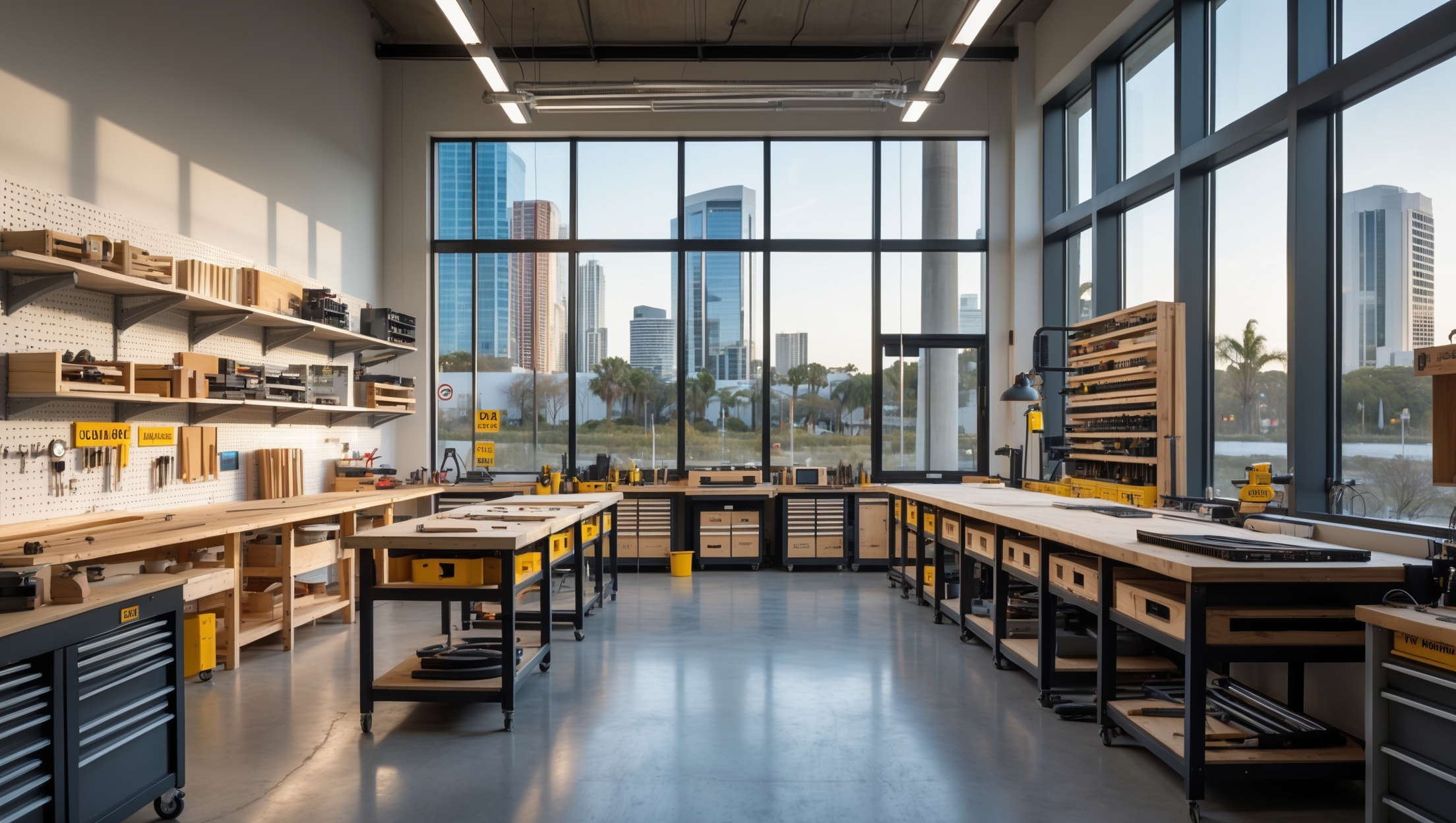
Essential Safety Checklist for Launching a Community Makerspace in St. Petersburg, FL

Introduction
St. Petersburg, FL has rapidly become a hub for creative collaboration, thanks in large part to the city’s thriving community makerspaces. These shared workshops—equipped with tools for woodworking, metalworking, 3D printing, electronics, and more—are where local innovators, artists, and entrepreneurs come together to turn ideas into reality. But as exciting as launching a community makerspace can be, it’s critical to remember that safety isn’t just a regulatory box to check: it’s the foundation of your project’s long-term success. A single overlooked hazard, missing protocol, or compliance slip-up can spell disaster—for your members, your funding, and your reputation. That’s why a comprehensive, locally attuned safety checklist is non-negotiable. In this guide, we’ll walk you through everything you need to consider before opening your doors, with a focus on St. Pete’s unique regulations, weather challenges, and vibrant maker community. Whether you’re transforming a vacant storefront in Grand Central or building from scratch near the Warehouse Arts District, this expert checklist will help you protect your people, your equipment, and your mission from day one.
Why Safety Matters for Community Makerspaces
Makerspaces are inherently hands-on and collaborative. This energy fuels creativity, but it also introduces a spectrum of risks—from flying debris and chemical exposure to electrical hazards and tool misuse. Unlike private workshops, community makerspaces welcome users of all backgrounds and skill levels. That means your space must be accessible, clearly organized, and rigorously managed. A robust safety culture not only prevents injuries; it builds trust, attracts members, and can even lower your insurance premiums. In St. Petersburg, where extreme weather and local codes add unique considerations, a detailed safety plan is essential for compliance and peace of mind.
Section 1: Pre-Launch Safety Planning
1.1 Conduct a Thorough Risk Assessment
- Inventory All Activities: List every tool, material, and process your space will support (e.g., woodworking, soldering, chemical use).
- Identify Hazards: For each activity, note potential risks: sharp blades, fire hazards, toxic fumes, electrical shock, etc.
- Assign Risk Levels: Use a simple matrix (low/medium/high) to prioritize which hazards need the most attention.
1.2 Understand Local Codes and Permits
- City of St. Petersburg Permitting: Makerspaces often fall under light industrial or commercial zoning. Check with the City’s zoning office for occupancy classifications.
- Fire Inspections: St. Pete Fire Rescue requires pre-opening inspection for spaces using flammable materials or high-power tools.
- ADA Compliance: Ensure your layout, doors, and restrooms are accessible. The city provides ADA guidelines.
1.3 Develop a Safety Policy Manual
- Membership Agreements: Require all users to sign a code of conduct with safety responsibilities and reporting procedures.
- Orientation Requirements: Mandate safety training before members use specific equipment.
- Incident Reporting: Set up simple, accessible ways to report near-misses, injuries, or hazards (e.g., digital forms or a dedicated email).
Section 2: Facility Safety Essentials
2.1 Layout and Organization
- Clear Pathways: Mark walkways with tape or paint; keep them free of clutter and cords.
- Dedicated Zones: Separate high-risk areas (e.g., welding, saws) from quiet workspaces and electronics benches.
- Tool Storage: Use labeled shadow boards or pegboards. Return tools after use to prevent tripping hazards and loss.
2.2 Electrical and Fire Safety
- Electrical Inspection: Hire a licensed local electrician to review circuits, outlets, and load limits.
- GFCI Outlets: Install Ground Fault Circuit Interrupter outlets in wet or high-risk areas.
- Fire Extinguishers: Place ABC-rated extinguishers near exits and hazardous work zones. Mount signage for quick access.
- Smoke/CO Detectors: Install and test regularly; connect to a monitored alarm if possible.
- Emergency Exits: Mark all exits with illuminated signage. Keep exit routes unobstructed at all times.
2.3 Ventilation and Air Quality
- Dust Collection: Use HEPA-filter systems for woodworking and sanding. Empty units regularly to prevent fire risk.
- Fume Extraction: Install local exhaust (fume hoods) for soldering, laser cutting, or chemical work.
- HVAC Maintenance: Schedule quarterly checks—especially before St. Pete’s humid summer season—to prevent mold and ensure airflow.
2.4 Chemical and Material Storage
- Separate Flammables: Store paints, solvents, and aerosols in UL-listed metal cabinets.
- Label Everything: Use clear, weatherproof labels in accordance with OSHA’s Globally Harmonized System (GHS).
- SDS Binders: Keep a visible binder with Safety Data Sheets (SDS) for all chemicals—required for compliance and emergencies.
Section 3: Equipment and Tool Safety
3.1 Selection and Inspection
- Buy Commercial-Grade Tools: Avoid consumer-grade equipment for shared use; it’s less durable and often lacks advanced safety features.
- Safety Features: Choose tools with blade guards, emergency shutoffs, and dust collection ports.
- Regular Inspections: Create checklists for daily, weekly, and monthly tool inspections. Log maintenance and repairs.
3.2 Personal Protective Equipment (PPE)
- PPE Station: Set up a clearly marked area with safety glasses, ear protection, gloves, and dust masks. Include instructions for selection and fit.
- Specialty PPE: Provide welding helmets, aprons, or respirators as needed. Store separately and inspect after each use.
- Mandatory Use: Enforce PPE requirements in high-risk zones. Use signage and peer reminders.
3.3 Tool-Specific Safety Protocols
- Standard Operating Procedures (SOPs): Post laminated instructions at each station. Include startup, shutdown, and emergency steps.
- Training Badges: Issue tool-specific badges or digital credentials to members who complete hands-on training.
- Lockout/Tagout: Implement a lockout system for tools under repair or those awaiting inspection.
Section 4: Emergency Preparedness
4.1 First Aid Readiness
- First Aid Kits: Place wall-mounted kits in visible, accessible locations. Restock monthly.
- Eye Wash Stations: Install plumbed or portable units near chemical workstations.
- Defibrillator (AED): Consider adding an AED with clear signage, especially if your member base includes older adults.
4.2 Emergency Plans and Drills
- Evacuation Maps: Post floor plans at entry points and throughout the facility. Clearly indicate fire exits and assembly points.
- Severe Weather Protocols: In St. Pete, hurricanes and flooding are real threats. Identify shelter-in-place locations and communicate plans during storm season.
- Incident Response: Train staff and core volunteers on how to handle injuries, fires, and chemical spills. Assign roles (e.g., first responder, 911 caller, crowd manager).
- Drills: Schedule semi-annual drills for fire and severe weather scenarios. Log participation and make improvements based on feedback.
4.3 Emergency Contacts and Communication
- Contact List: Post emergency numbers for St. Petersburg Fire Rescue, Police, and Poison Control by every phone and workstation.
- Notification System: Use group texts, email lists, or an app like Slack to alert members quickly in an emergency.
Section 5: Member Training and Safety Culture
5.1 Onboarding and Ongoing Education
- Orientation Sessions: Hold regular in-person tours covering facility layout, emergency exits, and basic safety rules.
- Tool Certifications: Require hands-on demonstration of safe tool use before members receive access.
- Refresher Courses: Offer quarterly updates on new equipment, safety policies, and lessons learned from incidents.
5.2 Signage and Visual Reminders
- Custom Signage: Use color-coded signs for risk zones, PPE requirements, and emergency exits.
- Instructional Posters: Include step-by-step diagrams for complex tools or hazardous processes.
- Real-Time Displays: If budget allows, install digital screens with rotating safety tips and weather alerts.
5.3 Fostering a Safety-First Mindset
- Peer Accountability: Encourage members to remind each other about PPE and protocols without fear of reprisal.
- Suggestion Box: Provide an anonymous method for members to suggest safety improvements or report concerns.
- Recognition: Highlight safety role models in your newsletter or at meetings to reinforce positive habits.
Section 6: St. Petersburg-Specific Safety Considerations
6.1 Weather and Environmental Risks
- Flood Readiness: If your space is in a flood-prone zone, elevate electrical equipment and store chemicals off the ground. Review the city’s flood maps and mitigation tips.
- Hurricane Preparedness: Develop a checklist for securing tools, covering windows, and communicating closures. Share the plan before hurricane season (June–November).
- Heat and Humidity: Monitor indoor temperatures, especially if members are working for long periods. Provide water stations and encourage regular breaks.
6.2 Local Partnerships and Resources
- Fire Department Consultations: Invite a St. Pete Fire Rescue officer to review your layout and make recommendations before launch.
- Nearby Medical Facilities: Map out the closest urgent care and hospital. Share directions with your staff and members.
- Local Makerspace Network: Connect with other area spaces (e.g., St. Pete Makers) to share best practices and lessons learned.
Section 7: Ongoing Safety Maintenance and Improvement
7.1 Regular Safety Audits
- Monthly Walkthroughs: Assign rotating teams to inspect for hazards, blocked exits, expired PPE, and tool condition.
- Annual Professional Review: Hire a local safety consultant or OSHA-trained inspector for a yearly audit.
7.2 Incident Tracking and Response
- Incident Log: Maintain a secure, confidential log of all injuries, near-misses, and property damage.
- Root Cause Analysis: After any significant incident, assemble a team to review what happened, why, and how to prevent recurrence.
7.3 Member Feedback and Continuous Improvement
- Feedback Loops: Regularly survey members about their safety concerns and suggestions.
- Policy Updates: Update your safety manual at least annually—or whenever new equipment or processes are introduced.
Conclusion
Launching a community makerspace in St. Petersburg is an ambitious, rewarding endeavor—one that can transform neighborhoods, spark innovation, and build lifelong connections. But none of those benefits are possible without a rock-solid commitment to safety. By following this comprehensive checklist, you’re not just complying with local codes or avoiding accidents; you’re setting the tone for a culture where every member, from first-time DIYers to seasoned fabricators, feels empowered and protected. Remember, safety isn’t a one-time box to tick—it’s an ongoing conversation and a shared responsibility. Invest in regular training, listen to your community’s feedback, and stay proactive about new risks as your makerspace grows. Most importantly, partner with local experts—from the St. Pete Fire Department to fellow makerspace leaders—to keep your knowledge and protocols up to date. With careful planning, clear communication, and an open-door approach to improvement, your makerspace can become a beacon for safe, creative collaboration in the heart of St. Petersburg. Here’s to building, making, and innovating—safely and together.
For community makerspaces that plan to offer both wood and metalworking, are there particular St. Pete regulations or insurance requirements that should be emphasized during the risk assessment phase?
For makerspaces in St. Pete that include wood and metalworking, focus on city fire code compliance, proper ventilation, and hazardous material storage. The city may require specific permits depending on your machinery and processes. Insurance providers often ask for clear safety policies, equipment training documentation, and records of regular inspections. It’s smart to consult with local fire officials and an insurance broker experienced with makerspaces to ensure full compliance and adequate coverage.
You mention that compliance with local codes is crucial for makerspaces in St. Petersburg. Are there any specific city regulations or inspection requirements that first-time owners might not expect, especially when renovating an older building for a makerspace?
Yes, St. Petersburg has some unique requirements that can catch first-time makerspace owners by surprise, especially in older buildings. Beyond standard fire and building codes, be prepared for accessibility upgrades under ADA guidelines, updated electrical standards for workshop equipment, and possible historical preservation reviews if the building is designated historic. Also, the city may require a change-of-use permit if the building’s prior purpose was different. It’s a good idea to schedule a pre-renovation inspection with city officials to uncover any hidden compliance issues early on.
You mention that makerspaces in St. Pete need to consider unique weather challenges. Could you give examples of specific weather-related safety protocols that should be included in the checklist, especially in a city prone to hurricanes and flooding?
Absolutely, weather-related safety is crucial in St. Pete. Your checklist should include securing all outdoor equipment before storms, having a clear evacuation plan, waterproofing electrical systems, and maintaining a list of emergency contacts. It’s also wise to store important materials and electronics above flood-prone areas and ensure you have adequate storm shutters or window protection for hurricanes.
You talked about creating a robust safety culture for all skill levels. What are some effective ways to train first-time users on tool safety without overwhelming them, especially in a busy community setting?
Introducing first-time users to tool safety works best with short, hands-on demonstrations focused on one tool at a time. Offer quick orientation sessions or small-group workshops, and provide simple, easy-to-read safety guides near each tool. Pairing beginners with experienced mentors for their first few uses can also build confidence and reinforce safe habits without making the process feel overwhelming.
As a parent, I’m especially concerned about kids using tools in these shared makerspaces. Does the checklist suggest any age-specific safety protocols or supervision requirements, especially for equipment like 3D printers or woodworking tools in St. Pete?
The checklist does address age-specific safety measures. It recommends that children under a certain age should only use equipment like 3D printers or woodworking tools with direct adult supervision. For some tools, it suggests setting minimum age limits and requiring safety training or orientation before use. The checklist also encourages clear signage and ongoing supervision to help keep young makers safe.
The article mentions that a single overlooked hazard can impact funding and reputation. Could you share examples of common safety slip-ups other St. Petersburg makerspaces have faced, and how they addressed them?
Absolutely. Some St. Petersburg makerspaces have encountered issues like improper storage of flammable materials, which led to fire code violations, or blocked emergency exits during events. To address these, spaces implemented regular safety inspections, set up clear labeling, and conducted staff training sessions. Another common slip-up was insufficient personal protective equipment (PPE) signage. Solutions included posting reminders and providing visible, accessible PPE stations.
When it comes to fostering a robust safety culture among makerspace members with varying skill levels, what strategies or orientation approaches have you seen work best in St. Petersburg’s community workshops?
In St. Petersburg community workshops, a hands-on orientation session is very effective—new members are paired with experienced mentors for their first projects. Regular safety briefings, clear visual signage, and mandatory tool-specific training also help. Open Q&A sessions encourage everyone to speak up about safety concerns, regardless of skill level, which builds a supportive culture.
I’m getting ready to set up a makerspace in St. Pete and I’m especially concerned about meeting local codes and weather-related risks like hurricanes. Are there specific resources or city offices you recommend contacting to make sure our safety checklist covers everything unique to the area?
For local codes in St. Petersburg, it’s best to contact the City of St. Petersburg Building Department, as they can guide you on permits, occupancy, and safety requirements. For weather-related risks, especially hurricanes, the Pinellas County Emergency Management office offers valuable resources and planning guides. Also, consider reaching out to the local fire marshal for advice on fire and emergency protocols specific to makerspaces.
When it comes to building trust and lowering insurance premiums as you mentioned, are there local St. Petersburg insurers or programs that specifically recognize makerspaces with detailed safety plans? How do you document compliance to meet their requirements?
Some local St. Petersburg insurers do take into account strong safety plans when quoting premiums for makerspaces. While there aren’t programs exclusive to makerspaces, insurers like Brown & Brown or Bouchard Insurance have experience with community spaces and may recognize your efforts. To document compliance, keep thorough records of your safety trainings, inspection checklists, and incident reports. Sharing your written safety plan and evidence of regular safety audits can help demonstrate your commitment and often leads to better rates.
What kind of risk assessment process would you recommend for someone who’s never run a makerspace before? Are there any beginner-friendly templates or local St. Pete resources you suggest starting with, especially to cover things like weather challenges?
For a first-time makerspace operator, start with a basic risk assessment template that lists potential hazards (like equipment use, electrical safety, and severe weather events), their likelihood, and ways to reduce them. The City of St. Petersburg’s emergency management office can provide guidelines on local weather risks, and organizations like the Tampa Bay Innovation Center sometimes share beginner-friendly checklists. Consider reaching out to local fire or building inspectors for insights specific to St. Pete’s regulations and climate challenges.
In terms of onboarding members with different skill levels, what are some effective strategies for ensuring everyone understands and follows safety protocols, especially in a diverse and collaborative environment like the ones described in the article?
To ensure all members understand and follow safety protocols, it’s helpful to offer tiered safety orientations tailored to various skill levels. Pairing new or less experienced members with mentors can provide hands-on guidance. Using clear signage, visual aids, and regular refresher workshops also reinforces key rules. Encouraging open communication and feedback helps address gaps and keeps safety top-of-mind for everyone in the makerspace.
For a makerspace trying to balance rigorous safety measures with a limited startup budget, which items on your checklist would you recommend prioritizing first before opening in a neighborhood like the Warehouse Arts District?
Start by prioritizing fire extinguishers, clear emergency exit signage, and first aid kits, as these are crucial for immediate safety and are relatively low cost. Ensure basic electrical safety by checking outlets and cords. Provide essential personal protective equipment like goggles and gloves. Training on safe tool use and establishing clear safety rules are also key and can often be managed with minimal expense.
I’m curious about insurance—have you found that demonstrating a detailed safety plan actually leads to noticeably better insurance rates for a community makerspace in St. Petersburg? If so, what elements of the safety plan do insurers seem to care about most?
Yes, having a thorough safety plan can positively influence insurance rates for a makerspace in St. Petersburg. Insurers usually pay close attention to elements like documented equipment safety protocols, clear emergency procedures, staff and member training records, regular maintenance schedules, and incident reporting systems. Demonstrating that these measures are actively enforced often reassures insurers and can help you secure better coverage terms or premiums.
You mention that a strong safety culture can impact insurance premiums. Do you have any tips on what specific safety protocols or documentation local insurers in St. Petersburg look for when evaluating a new makerspace?
Local insurers in St. Petersburg typically look for documented safety protocols such as regular equipment maintenance logs, clear emergency procedures, staff and member safety training records, and incident reporting forms. They also appreciate visible signage for hazards and the use of personal protective equipment. Keeping these records organized and easily accessible can make a positive impression during insurance evaluations.
How do makerspaces in St. Pete balance the need for comprehensive safety protocols with the goal of being accessible and welcoming to all skill levels? Are there any strategies to avoid overwhelming new members with too many rules right away?
Makerspaces in St. Pete often introduce safety protocols gradually, starting with clear signage and brief orientations tailored to beginners. They typically offer hands-on demonstrations and mentorship, allowing new members to learn essential safety practices at a comfortable pace. To avoid overwhelming newcomers, many spaces prioritize the most critical rules first and provide ongoing support, so members gain confidence without feeling burdened by information overload.
You mention the importance of local regulations and weather challenges in St. Pete. Could you give some examples of specific city codes or weather-related risks that should be prioritized on a pre-launch safety checklist for a makerspace here?
Absolutely. For St. Petersburg, make sure your checklist includes compliance with city fire codes (like proper extinguisher types and exit signage), ADA accessibility standards, and zoning rules for commercial spaces. Weather-wise, plan for hurricane preparedness—this means anchoring outdoor equipment, securing windows, and having a storm action plan. Flooding is also a risk, so check your location’s flood zone and have water management strategies in place.
When doing the initial risk assessment, how detailed does it need to be for insurance purposes and city compliance? I’d love to know if there’s an average timeline or budget that new makerspaces in St. Pete should expect when developing a comprehensive safety plan.
Your initial risk assessment should be as thorough as possible for both insurance and city compliance. This means documenting all equipment, hazards, emergency procedures, and occupancy limits. Insurers and local officials typically expect clear, written protocols and site-specific details. In St. Petersburg, developing a comprehensive safety plan can take anywhere from 2 to 6 months, with budgets ranging from $2,000 to $10,000, depending on facility size and scope. Consulting with local officials early can help streamline the process.
The article mentions that makerspaces welcome people of all experience levels. How do you suggest organizing tool safety training for beginners versus more experienced makers to make sure everyone’s on the same page?
A good approach is to offer tiered training sessions. Start with an introductory safety course that everyone must complete, covering basic rules and emergency procedures. Then, provide specialized, hands-on training for each tool, tailored to different skill levels. Beginners can join group workshops, while experienced makers might take short refresher sessions or demonstrate proficiency before using advanced equipment. This way, everyone meets the same safety standards but at a pace suited to their experience.
I’m a parent interested in enrolling my teen in a St. Pete makerspace, but I’m worried about safety since there are so many different tools and skill levels involved. Can you explain what kind of supervision or mandatory safety training is typically required before kids and teens can use equipment?
Most St. Pete makerspaces require all youth to complete a mandatory safety orientation before using any tools or equipment. Trained staff or instructors usually supervise teens, especially when they’re using advanced or potentially hazardous equipment. Some spaces have age restrictions for certain tools and require parental consent. You can also expect ongoing supervision during open hours and clear rules posted throughout the facility to ensure everyone’s safety.
As someone in the process of setting up a community makerspace in St. Pete, I’m wondering if there are specific local weather-related safety protocols we should prepare for, like hurricane readiness or flood management. Does your checklist address that in detail?
Our checklist does include general emergency preparedness, but St. Petersburg’s specific weather risks, like hurricanes and flooding, deserve extra focus. You should plan for stormproofing windows, securing equipment, setting up a clear evacuation route, and developing a communication plan for closures. It’s also a good idea to consult local emergency management resources to tailor your protocols for the area.
Do you have any advice for making the safety checklist accessible to makerspace members with very different experience levels? I’m curious how detailed signage and training should be when you might have total beginners and seasoned pros using the same space.
To accommodate all experience levels, keep your signage clear, concise, and focused on key actions and hazards—use simple language and visuals where possible. For training, offer both a basic safety orientation for newcomers and optional in-depth sessions or refreshers for more advanced users. Encourage an open culture where anyone can ask questions, and consider periodic group reviews to reinforce shared standards.
How do you balance ensuring strict compliance with St. Pete’s local regulations while still keeping the makerspace atmosphere inviting and accessible for all skill levels? Any tips for integrating safety culture without discouraging first-time makers?
You can maintain strict compliance by building safety protocols into your makerspace’s culture in a positive way. Offer clear, friendly orientation sessions for new members that blend hands-on demonstrations with explanations of local rules. Use approachable signage and encourage peer support, so more experienced makers help newcomers. Emphasize that safety is about empowerment rather than restriction, helping everyone feel confident and welcomed.
Regarding weather-related safety in St. Pete, how did you address hurricane preparedness for your makerspace—did you need to invest in special infrastructure, or are there city guidelines that specifically affect tool storage and member safety plans during storms?
For hurricane preparedness, we followed St. Petersburg’s city guidelines, which include securing all equipment, moving sensitive tools to higher shelves, and posting clear emergency procedures for members. We did invest in storm shutters and reinforced storage for valuable tools. The city also recommends keeping an updated contact list and having a plan for safely shutting down operations before a storm arrives.
Our group is setting up a makerspace in the Warehouse Arts District and we’re wondering, are there city-specific safety codes or permits we should be aware of before purchasing equipment like laser cutters or welding gear?
Yes, St. Petersburg has specific safety codes and permitting requirements for makerspaces, especially when handling equipment like laser cutters and welding tools. You’ll need to check with the city’s Building and Fire Departments for regulations on ventilation, fire suppression, and electrical safety. Permits may be required for both the equipment and any facility modifications. It’s a good idea to schedule a meeting with city code enforcement early in your planning process to ensure compliance and avoid delays.
As a parent in St. Petersburg, I’m curious how the safety checklist addresses supervision for young teens or preteens using things like 3D printers and woodworking tools. Are there typically age minimums or extra protocols for families who want to participate together?
The safety checklist recommends close adult supervision for young teens and preteens, especially when using equipment like 3D printers or woodworking tools. Most makerspaces set age minimums—often 12 or 13—for independent tool use, and require adults to accompany younger children. Extra protocols may include mandatory safety orientations, signed waivers, and family training sessions to ensure everyone understands safe practices before participating together.
I’m in the early stages of setting up a makerspace near the Warehouse Arts District, and I’m curious about budget planning. Is investing heavily in advanced safety equipment up front usually required for compliance in St. Petersburg, or can we start basic and upgrade as we grow?
In St. Petersburg, basic compliance often starts with meeting essential fire, electrical, and building safety codes, which can usually be addressed with standard safety equipment. You don’t need to invest heavily in advanced gear at first, but make sure you have core items like fire extinguishers, first aid kits, clear signage, and proper ventilation. As your makerspace grows or adds specialized equipment, you can upgrade your safety measures to match new requirements or membership needs.
When creating safety plans for a makerspace that welcomes members with varying skill levels, what are some effective strategies for ensuring that newcomers understand proper tool use and safety expectations, especially in a busy environment like a community makerspace in St. Petersburg?
To make sure newcomers understand tool use and safety in a busy community makerspace, offer mandatory orientation sessions that cover basic safety protocols and hands-on tool demonstrations. Use clear signage and posted guidelines at each workstation. Assign trained mentors or staff to supervise and assist new members. You can also develop quick-reference guides or videos for common equipment, and encourage a culture where questions and double-checking procedures are always welcome.
For a new makerspace in St. Pete, what are the key local codes or weather-related safety requirements that might catch a first-time operator off guard compared to setting up in another city?
St. Petersburg has unique safety considerations due to Florida’s hurricane risk. You’ll need to ensure your makerspace meets strict wind load requirements for buildings and has an emergency hurricane plan. Local codes also require robust flood mitigation and clear evacuation routes. Fire safety standards are strict for spaces with tools and flammable materials, and regular inspections are enforced. Don’t forget to register with local emergency management to stay updated on alerts.
I’m especially concerned about extreme weather in St. Pete. Does your safety checklist cover procedures for hurricanes or flooding, and are there any specific local regulations around weather-related emergency preparedness for makerspaces?
Yes, the safety checklist includes steps for preparing and responding to hurricanes and flooding, which are common concerns in St. Petersburg. It highlights the importance of having an emergency communication plan, securing equipment, and establishing evacuation routes. Local regulations require compliance with city emergency management guidelines, so it’s important to coordinate with St. Pete officials and review their specific requirements for community spaces like makerspaces.
I’m wondering about compliance with St. Pete’s local codes when it comes to hazardous materials in a makerspace. Are there common pitfalls that new makerspace founders should watch out for so they don’t miss important requirements?
One common pitfall is underestimating the complexity of hazardous materials storage and disposal under St. Pete’s fire and zoning codes. Many new makerspaces overlook the need for detailed inventories, proper labeling, and clear signage. It’s also crucial to check ventilation requirements and secure all permits before using flammable or toxic substances. Consulting with local fire inspectors early and maintaining thorough records can help avoid costly violations.
When you talk about conducting a thorough risk assessment before launch, can you share examples of common hazards that are sometimes overlooked in new makerspaces, particularly those set up in converted storefronts?
Absolutely. In converted storefront spaces, some commonly overlooked hazards include poor ventilation for activities like soldering or painting, inadequate electrical capacity for heavy equipment, and trip hazards from extension cords or uneven flooring. Fire safety can also be a concern if exits are blocked or there aren’t enough fire extinguishers. It’s also easy to miss checking for hidden mold or asbestos in older buildings.
Could you clarify how the safety protocols you recommend for extreme weather in St. Petersburg differ from what might be suggested for makerspaces in less hurricane-prone areas? Are there specific local requirements around storm preparedness that we should budget for upfront?
In St. Petersburg, extreme weather protocols for makerspaces go beyond standard safety measures due to the hurricane risk. You’ll need a robust storm preparedness plan, including securing equipment, reinforced windows, emergency supplies, and clear evacuation procedures. Local codes may also mandate storm shutters or flood mitigation for commercial spaces. Budgeting for these features upfront is wise, as they’re often more stringent than what non-hurricane areas require.
When it comes to local regulations in St. Petersburg, are there any city-specific compliance steps that often catch new makerspace founders off guard during pre-launch safety checks?
One common surprise for makerspace founders in St. Petersburg is the requirement for a detailed fire safety and evacuation plan, which must be approved by the local fire marshal before opening. Additionally, the city can be strict about proper electrical permitting, ventilation for workshops, and ADA accessibility. Double-checking these during pre-launch safety checks can help avoid delays.
When considering accessibility and safety for members with various skill levels, do you have recommendations for onboarding or training programs before people can use tools like woodworking or metalworking equipment?
Absolutely, onboarding is key for safety in a makerspace. It’s best to require all new members to complete a hands-on orientation and tool-specific training before they use woodworking or metalworking equipment. You might consider offering tiered classes—basic safety for beginners and advanced workshops for experienced users. Ongoing refresher sessions and clear posted guidelines can also help ensure everyone stays safe, regardless of their skill level.
As a parent, I’m wondering how you make sure the makerspace is accessible and safe for young teens, especially given the mixture of skill levels mentioned. Are there any recommendations for minimum ages, supervision, or specific zones for younger makers?
We recommend setting a minimum age of 12 for independent participation, though younger children can join if accompanied by a parent or guardian. The makerspace can be divided into zones, with certain areas (like those with power tools) restricted to older teens or those who have completed safety training. Supervision by staff or trained volunteers is strongly advised, especially when young teens are present. Clear guidelines and skill-level badges can help ensure everyone stays safe.
The article talks about compliance with local codes in St. Petersburg. Are there any city-specific safety regulations or inspections that first-time makerspace founders should watch out for when setting up in a repurposed storefront versus a new build?
Yes, in St. Petersburg, repurposing an existing storefront often requires you to get a change-of-use permit, and the fire marshal will likely inspect for proper exits, alarms, and occupancy limits. You’ll also need to meet zoning rules and ADA accessibility standards. For new builds, expect more thorough inspections during construction for electrical, plumbing, fire suppression, and structural codes. Always check with the city’s Building and Permitting Services early to avoid surprises.
When budgeting for safety equipment and compliance in a new makerspace, is there a ballpark figure or percentage of the total startup costs that should be reserved, particularly considering local St. Pete regulations and potential insurance savings?
For a new makerspace in St. Petersburg, it’s wise to allocate about 10–20% of your total startup budget for safety equipment, compliance measures, and related expenses. This covers essentials like fire suppression, ventilation, signage, and first aid supplies, and also helps with meeting local regulations. Investing up front can often reduce your insurance premiums, so it may save money later as well. Always review St. Pete’s latest codes and consult with your insurer for the most accurate estimates.
I’m in the process of converting an old storefront in downtown St. Pete into a makerspace and had a question about weather challenges you mentioned. What specific steps should I include in my safety checklist to address risks from hurricanes or flooding unique to our area?
For hurricane and flooding risks in St. Pete, add these steps to your checklist: elevate critical equipment and power sources above potential flood levels, install surge protectors, keep sandbags and plastic sheeting on hand, create a storm closure and reopening protocol, back up important digital records offsite, and clearly post evacuation routes. Review your insurance coverage for storm damage and train volunteers on emergency procedures before hurricane season.
When you mention making the makerspace accessible and clearly organized for users with different skill levels, do you have suggestions for specific signages or layout changes that have worked well for similar spaces in St. Petersburg?
For makerspaces in St. Petersburg, clear color-coded signs for zones (like Beginner, Intermediate, Advanced) have worked well, along with visual guides for tool use and safety reminders at each station. Using floor markings to define work areas and traffic flow helps, too. Modular furniture and flexible layouts also make it easier for users of all skill levels to find what they need and feel comfortable navigating the space.
How early in the makerspace development process should I consult with insurance providers regarding safety compliance, and are there particular liability issues in St. Petersburg that tend to surprise new owners?
You should reach out to insurance providers as soon as you start planning your makerspace, ideally before signing a lease or purchasing equipment. Early consultation helps you identify coverage needs and compliance steps specific to your space and activities. In St. Petersburg, some new owners are surprised by requirements for coverage related to youth programs, tool training, and product liability for member-made items, so be sure to ask about those.
I’m in the early stages of planning a makerspace in St. Pete’s Warehouse Arts District and am curious—how do the local weather challenges, like hurricanes and humidity, specifically impact the safety protocols or insurance requirements for new makerspaces here?
In St. Pete’s Warehouse Arts District, hurricanes and high humidity require extra safety measures for makerspaces. Building codes often call for reinforced structures and stormproofing. Insurance providers may also require flood insurance and policies that cover storm damage. Humidity control is crucial to prevent equipment rust and electrical issues, so dehumidifiers and regular maintenance are recommended. These local weather factors should be addressed in your facility’s emergency plans and insurance discussions.
You mentioned that a thorough risk assessment is the first step before launching a makerspace. Are there any local agencies or experts in St. Pete you’d recommend consulting to make sure nothing gets missed, especially regarding compliance?
For St. Petersburg, it’s a good idea to connect with the City of St. Pete’s Building and Permitting Department for code compliance. Pinellas County’s Fire Marshal can help address fire safety requirements. You might also consider reaching out to local consultants experienced in makerspace safety or even the Tampa Bay Area Makers Network, as they often have insights on local regulations and compliance best practices.
Could you clarify how detailed the risk assessment should be before launching? For a small team with limited experience, are there local organizations or city departments in St. Petersburg that can help guide the process?
Your risk assessment should cover all major hazards—like tool safety, fire risks, and emergency procedures—but it doesn’t need to be overly technical, especially for a small team. In St. Petersburg, you can reach out to the city’s Fire Department for fire safety reviews and the Building Department for facility inspections. Local small business support groups or the Chamber of Commerce may also offer guidance or workshops on risk management for new community spaces.
Your point about how safety protocols can affect insurance premiums caught my attention. Are there particular safety measures or documentation that insurers in the St. Petersburg area typically look for when assessing makerspaces?
Insurers in St. Petersburg usually want to see clear safety protocols like emergency evacuation plans, regular equipment maintenance logs, and up-to-date first aid kits. They may also ask for staff and member safety training records, incident reporting procedures, and posted safety signage. Documenting these measures and keeping records organized can help demonstrate your commitment to safety, which can positively affect your insurance premiums.
You mentioned St. Pete’s unique weather challenges in the checklist—what specific steps should we take to prepare a makerspace for hurricanes or flooding beyond basic emergency exits and fire safety?
For hurricanes or flooding in St. Petersburg, consider elevating electrical outlets and critical equipment above potential flood levels. Use water-resistant materials where possible, and store important documents in waterproof containers. Install hurricane shutters or impact-resistant windows. Keep sandbags on hand for doorways and low areas, and develop a communication plan for all members. Finally, review your insurance coverage to ensure it includes flood and hurricane protection.
The article highlights that makerspaces attract members with varying backgrounds and skill levels. Do you have suggestions for onboarding procedures or training modules that help ensure all users, regardless of experience, are up to speed with safety protocols before using high-risk equipment?
Absolutely—an effective onboarding process can include a mandatory safety orientation session for all new members, regardless of their experience. You might also implement equipment-specific training modules, where users must demonstrate proficiency before using high-risk tools. Providing clear, accessible safety manuals and having periodic refresher courses helps reinforce best practices and ensures everyone stays up to date on protocols.
For someone new to launching a makerspace, how in-depth does a risk assessment need to be before opening in the Grand Central area? Are there local agencies or experts you recommend consulting with to make sure nothing gets overlooked?
A thorough risk assessment is important before opening, especially in a busy area like Grand Central. You’ll want to identify potential hazards for tools, materials, and building access. Consult with the City of St. Petersburg’s Building Department and Fire Marshal for safety codes and inspections. It’s also helpful to reach out to local makerspace groups or safety consultants who specialize in shared creative spaces to ensure you address all critical points.
When it comes to making the space accessible and clearly organized for members of all skill levels, what kind of signage or training do you recommend at launch, especially for high-risk tools like woodworking and metalworking equipment?
For high-risk tools like woodworking and metalworking equipment, clear, durable signage is crucial. Label each machine with step-by-step safety instructions and highlight required protective gear. Color-coded warning signs can help identify high-risk zones. At launch, host mandatory orientation sessions for all members, including hands-on demonstrations and quizzes to confirm understanding. Also, provide printed and digital manuals accessible onsite, and consider refresher workshops to keep safety practices top of mind.
Could you give some examples of how to clearly organize tools and equipment in a community makerspace, especially when you have people with really different experience levels using the space?
To keep tools organized for all experience levels, use clearly labeled shelves, pegboards, and color-coded bins. Post simple diagrams or photos showing where each tool belongs. Consider having a check-in/check-out system for high-value equipment. Group tools by project type—like woodworking, electronics, or crafts—so users can easily find what they need. Make sure safety instructions are posted nearby for each tool.
With insurance premiums potentially being affected by your safety culture, do you have any estimates or examples of how a well-developed safety plan could impact insurance costs for a new makerspace in St. Petersburg?
A well-developed safety plan can make a noticeable difference in insurance premiums for a new makerspace. While exact numbers vary, insurance providers often offer lower rates—sometimes 10 to 20 percent less—for organizations that demonstrate thorough safety protocols, training, and regular inspections. Being proactive about safety not only protects your members but also signals to insurers that your risk is lower, which can result in more competitive premiums.
For someone transforming a vacant storefront into a makerspace in the Grand Central area, what are the key local regulations or codes I should be especially aware of before starting renovations? It seems overwhelming with all the compliance steps.
When converting a vacant storefront into a makerspace in Grand Central, pay special attention to St. Petersburg’s zoning codes to confirm your intended use is permitted. Check building codes for occupancy, accessibility (ADA), and fire safety. You’ll need permits for any structural, electrical, or plumbing changes. It’s helpful to contact the city’s Building Department early—they can clarify steps and prevent costly missteps. Local business licensing and safety inspections are also required before opening.
When transforming an older building in areas like Grand Central, are there any frequent compliance issues or overlooked hazards that new makerspaces should pay particular attention to during their initial safety assessment?
When converting older buildings in areas like Grand Central, common compliance issues include outdated electrical systems, inadequate fire suppression, and insufficient emergency exits. Hazards that are often overlooked are asbestos, lead paint, and poor ventilation. During your initial safety assessment, be sure to check for these, and also verify that accessibility standards are met for all users.
When setting up a makerspace in a location like the Warehouse Arts District, what are some local code requirements or regulations that could easily be overlooked during the pre-launch safety planning phase?
When launching a makerspace in the Warehouse Arts District, it’s easy to overlook specific requirements like fire code compliance for storage of flammable materials, accessibility codes for restrooms and entrances, and proper ventilation for workshops using chemicals or dust-producing tools. Also, check for necessary city permits for public assembly and confirm electrical systems meet local capacity and safety standards.
As a parent with teens interested in joining a makerspace, I’m wondering what kind of safety training or supervision is usually required for younger or less experienced members in St. Pete, especially with all the heavy equipment mentioned?
For teens and less experienced members, most St. Petersburg makerspaces require an initial safety orientation and specific equipment training before allowing independent use of heavy tools. Staff or trained volunteers often supervise minors, and some spaces have age restrictions for certain machines. Parents may need to sign waivers, and there are usually clear guidelines to ensure everyone’s safety while working with advanced equipment.
I’m interested in starting a makerspace in a converted storefront like you described. Are there any special considerations or common issues with adapting existing buildings in St. Pete for makerspace safety requirements compared to building new?
Adapting an existing storefront in St. Pete for a makerspace does have some unique challenges compared to new construction. Older buildings may need upgrades to electrical systems for heavy equipment, improved ventilation, and enhanced fire safety features. You’ll also want to check that exits and accessibility meet current codes. It’s wise to have a local fire marshal and building inspector review your plans early so you can anticipate and address any compliance gaps.
In the article, you mention St. Pete’s unique weather challenges as a safety consideration for makerspaces. Could you share some specific protocols or equipment upgrades that are recommended to protect both people and tools during hurricanes or sudden storms common in the area?
Absolutely, for St. Pete’s hurricane and storm risks, we recommend installing surge protectors and waterproof storage for sensitive tools, as well as anchoring large equipment securely. Have a clear evacuation plan and a weather alert system in place. Storm shutters or reinforced windows can protect against flying debris, and elevated shelving can help keep equipment safe from flooding.
I see insurance premiums might be affected by how robust our safety culture is. Do you have any recommendations for cost-effective ways to demonstrate compliance and earn discounts, especially for a new space in the Warehouse Arts District with a tight budget?
Absolutely, insurers look favorably on proactive safety measures, especially for new makerspaces. Start by establishing clear safety policies and regular training sessions, and keep signed attendance records. Maintain up-to-date documentation on equipment maintenance and incident reports. Display visible safety signage and conduct periodic safety audits. Many insurers offer discounts if you can show this paper trail, even as a new space, so be diligent with your records. Some local organizations may also subsidize first aid or fire safety training, so it’s worth asking around the Warehouse Arts District.
When it comes to insurance, does building a strong safety culture actually make a difference in premium costs for a makerspace, or is that more of a long-term benefit? Any tips for proving safety compliance to insurers?
Building a strong safety culture can absolutely impact insurance premiums, especially over time. Initially, your premium might not drop immediately, but demonstrating ongoing safety training, incident records, and robust policies can help negotiate better rates with insurers at renewal. To prove compliance, document all safety procedures, keep training logs, conduct regular safety audits, and display certifications or inspection reports when discussing terms with your provider.
The article talks about conducting a thorough risk assessment before opening. Is there a recommended checklist or resource you’d suggest for identifying hazards unique to makerspaces, especially with things like 3D printers and electronics?
For makerspaces, it’s important to assess hazards related to tools like 3D printers, soldering stations, and other electronics. A good approach is to create a checklist that covers proper ventilation, fire safety, electrical safety, and training procedures. The article suggests adapting templates from organizations like the Fab Foundation, which offers safety guidelines tailored to makerspaces. Also, consider reaching out to local fire and building inspectors who may recommend specific precautions based on your equipment and layout.
Do you have advice on how to adapt a general makerspace safety checklist for St. Pete’s specific weather risks, like hurricanes or flooding? Are there extra precautions you’d recommend for equipment storage or evacuation planning, especially considering Florida’s storm season?
Absolutely, adapting your safety checklist for St. Pete means planning for hurricanes and flooding. Store valuable equipment above ground level or on wheeled racks for quick relocation. Make sure all power tools can be easily unplugged and moved. Create a clear evacuation protocol and keep an updated contact list for all members. Regularly review your storm preparedness plan, and consider backup power solutions to protect sensitive electronics from outages or surges.
The article talks about compliance slip-ups impacting funding and insurance. Are there particular local codes or regulations in St. Petersburg that makerspace founders often overlook when planning their safety checklist?
In St. Petersburg, makerspace founders sometimes miss specific fire code requirements, such as proper storage and labeling of hazardous materials, adequate ventilation for certain tools, and occupancy load limits. Another key area is ensuring ADA accessibility, which is essential for both compliance and insurance. Checking with the local building department for zoning and permitting requirements early on can help avoid costly surprises.
I’m interested in how you handle extreme weather risks in St. Pete, especially with equipment like 3D printers or electronics that may be sensitive to humidity or power outages. Are there specific backup plans or insurance requirements you recommend for makerspaces in this area?
In St. Pete, extreme weather is a real concern, especially during hurricane season. For sensitive equipment like 3D printers, we recommend climate-controlled storage and surge protectors or uninterruptible power supplies to guard against outages. It’s also smart to keep critical equipment elevated to avoid water damage. As for insurance, a comprehensive property policy that covers storm and flood damage is essential, and business interruption coverage can help recover from downtime. Having a clear emergency shutdown and evacuation plan is also important for all members.
If we’re planning to open a makerspace in the Warehouse Arts District using a previously vacant storefront, what are some common overlooked risks during the initial risk assessment specific to older buildings in this area?
When using older storefronts in the Warehouse Arts District, common overlooked risks include outdated electrical wiring, hidden water damage or mold, and non-compliance with ADA accessibility standards. Asbestos and lead paint can also be present in older buildings. It’s important to check for structural weaknesses in roofs or floors and verify that fire exits and alarms are up to current codes. Inspecting these areas early will help prevent surprises during renovations and ensure a safer environment for your makerspace.
For organizations converting older buildings, like those in the Grand Central or Warehouse Arts District, are there particular safety code updates or inspections they should prioritize before opening as a community makerspace?
For older buildings in areas like the Grand Central or Warehouse Arts District, it’s especially important to prioritize fire safety system upgrades, electrical inspections, and ADA accessibility compliance. You should also have structural assessments done to ensure the building can support makerspace equipment and activities. Local fire and building code inspections are key steps before opening, as they can identify issues unique to older structures.
When budgeting for safety equipment and protocols before launch, what are some hidden costs that pop up in St. Pete due to local regulations or insurance expectations? I’m trying to get a realistic sense of what to set aside.
In St. Pete, hidden costs often include meeting specific fire code upgrades, such as installing extra extinguishers or alarm systems, and ensuring ventilation for workshops. Insurance may require you to document safety training or purchase higher liability coverage, which adds to costs. Inspections and permitting fees can also be unexpectedly high, so it’s wise to budget for these in addition to visible equipment and protocol expenses.
When building out a safety plan for a new space, what are some common compliance issues or overlooked protocols you’ve seen trip up other makerspaces in Florida? Any local fire or building code quirks to watch for early in the process?
A common issue is failing to account for occupancy limits and clear emergency exits, which are rigorously enforced in Florida. Many makerspaces overlook proper storage of flammable materials and don’t install enough fire extinguishers or proper ventilation for activities like welding. In St. Petersburg, pay close attention to local ordinances on electrical installations and signage for hazardous areas. It’s wise to involve the fire marshal early to catch any code-specific quirks before finalizing your layout.
I noticed you said a single missed protocol could affect funding. Could you elaborate on what kinds of safety documentation or procedures local insurers or grant organizations typically want to see in St. Petersburg for makerspaces?
Local insurers and grant organizations in St. Petersburg usually expect thorough safety protocols, including documented emergency procedures, regular equipment maintenance logs, clear incident reporting systems, and up-to-date training records for staff and members. They may also request risk assessments for hazardous tools and proper signage throughout the space. Having these documents prepared and regularly updated can help secure both insurance coverage and funding.
The article talks about building a robust safety culture to help lower insurance premiums. Do you have any examples of insurance requirements or typical safety investments that have made a noticeable difference for makerspaces in the St. Pete area?
Makerspaces in St. Petersburg often see insurance benefits from requiring formal safety training for all members, maintaining detailed incident logs, and regularly updating equipment inspections. Investments like installing proper ventilation for woodworking or laser cutting and using lockout/tagout systems for machinery have also helped lower premiums. Many insurers look for written safety policies and visible emergency procedures as part of their requirements.
As a parent, I’m curious about how makerspaces in St. Pete handle safety protocols for younger teens or kids who might be interested in joining. Are there specific guidelines or supervision requirements given the variety of hazardous equipment mentioned?
Makerspaces in St. Pete typically have clear safety protocols for younger teens and children. Most require minors to be accompanied by a parent or guardian or to have adult supervision, especially when using hazardous equipment like power tools or soldering stations. There may be age-based restrictions on certain machines, required safety training sessions, and mandatory use of safety gear. Be sure to check with the specific makerspace for their detailed guidelines and supervision policies.
The article mentions compliance with local codes in St. Pete. Are there any particular city ordinances or permitting steps that makerspace founders frequently overlook during the initial risk assessment phase?
One common area that founders sometimes miss is obtaining the proper occupancy and fire safety permits, especially if the makerspace will have workshops or store flammable materials. City zoning regulations regarding allowed activities in commercial spaces are also easy to overlook. It’s also important not to forget ADA accessibility requirements and health department reviews if you’re offering food or beverage services. Early consultation with local city planners can help you catch these details.
I’m in the early stages of planning a makerspace in St. Pete and wondering what specific local regulations or weather-related risks I should be extra careful about beyond the general safety checklist. Are there resources you recommend for staying updated on St. Pete’s requirements?
In St. Petersburg, be sure to review local fire codes, building occupancy limits, and zoning regulations specific to makerspaces or workshops. Due to hurricane season, consider reinforced windows, emergency storm plans, and securing outdoor equipment. Regularly check the City of St. Petersburg’s official website and Pinellas County Emergency Management for updates. It’s also wise to connect with local business associations or the fire marshal for ongoing guidance.
You mentioned insurance premiums could be lower with a strong safety culture. Do you have any recommendations for affordable insurance providers in St. Pete that understand the makerspace environment?
Several local insurance agents in St. Petersburg are familiar with covering makerspaces, including Brown & Brown Insurance and McGriff Insurance Services. It’s helpful to look for agents who specialize in community nonprofits or creative workspaces, as they’ll better understand your needs. Be sure to share your safety protocols and training programs—this can help you secure more competitive premiums. It’s also a good idea to compare quotes from a few providers to find the best fit for your makerspace.
As a parent, I’m particularly concerned about chemical exposure in a makerspace environment, especially since kids and teens of different ages might be using the same tools. Are there any local regulations in St. Petersburg specifically around chemical storage or training for younger members?
In St. Petersburg, makerspaces must follow state and local fire codes, which include rules on chemical storage—like using proper labeling, locked cabinets, and ventilation. For minors, there aren’t specific city regulations, but best practice is to provide age-appropriate safety training and restrict access to hazardous chemicals. Many spaces also require parental consent and supervision for kids and teens working with any potentially dangerous materials.
What kind of insurance savings have you seen from having a robust safety checklist in place, and are there particular protocols that St. Petersburg insurers look for when underwriting makerspaces?
A comprehensive safety checklist can often lead to lower insurance premiums, as it demonstrates your commitment to minimizing risk. In St. Petersburg, insurers typically look for detailed protocols such as regular equipment inspections, documented member training, clear emergency procedures, and proper tool storage. Having these measures in place can make your makerspace more favorable to underwriters and may qualify you for discounts or better terms.
Could you give some specific examples of how St. Pete’s extreme weather might impact safety protocols for a makerspace? For instance, are there particular materials or equipment storage concerns during hurricane season that need to be addressed in the safety checklist?
St. Pete’s hurricane season brings high winds and flooding risks, so your safety checklist should include securing outdoor equipment, storing hazardous materials above flood level, and using waterproof storage containers for tools and electronics. It’s also important to clearly label emergency exits, have backup power supplies, and establish a plan for safely shutting down and evacuating the makerspace if a storm is approaching.
As a parent, I’m especially interested in how access to makerspaces is managed for younger participants. Does your safety checklist address age restrictions or specific supervision requirements for kids and teens using woodworking and electronics equipment?
Yes, the safety checklist covers age-appropriate access and supervision requirements. Younger participants must have adult supervision, especially when using woodworking and electronics equipment. Certain tools and areas are off-limits to children under a specific age, and teens often need parental consent to use more advanced equipment. The checklist also recommends clear signage and staff monitoring to ensure these rules are consistently followed.
I’m curious about the best way to balance accessibility for all skill levels with managing tool safety protocols. Are there particular training methods or supervision strategies that have worked well for diverse makerspace communities in St. Petersburg?
One effective approach is to offer tiered tool training sessions—introductory workshops for beginners and advanced classes for experienced users. Pairing new members with mentors or designated safety monitors during their first few visits also helps. Some St. Petersburg makerspaces use badge systems to identify which tools a member is certified to use, ensuring everyone has proper training and supervision for each piece of equipment.
I’m curious about how you balance accessibility for beginners with rigorous safety management in a community makerspace. Are there specific orientation or training programs you recommend to make sure new members understand all the safety procedures?
Balancing accessibility and safety is key in a makerspace. We recommend structured orientation sessions for all new members, which include hands-on demonstrations of equipment and clear safety instructions. Offering tiered training—for example, basic safety for all, and advanced sessions for specific tools—helps ensure everyone feels confident and informed before using the space independently.
For makerspaces in St. Pete, how do you recommend balancing open access with the need for rigorous tool safety training? I’m curious if you require orientation sessions for every member or if you handle this by restricting access to certain equipment.
Balancing open access with safety is crucial. A common approach is to require all new members to attend a general orientation covering makerspace rules and basic safety. For more advanced or potentially hazardous equipment, we recommend restricting access until members complete specialized training or certification sessions. This way, everyone feels welcome while still ensuring that only trained individuals use higher-risk tools.
Could you elaborate more on how St. Pete’s unique weather challenges, like hurricane season, should factor into the safety checklist for a new makerspace? Are there local building codes that specifically address storm preparedness for these kinds of spaces?
St. Pete’s frequent storms and hurricane season mean your safety checklist should include securing loose outdoor equipment, ensuring emergency power supplies, and having an evacuation plan. Local building codes, like those in Pinellas County, require makerspaces to meet wind resistance standards for roofs, windows, and doors. It’s important to consult the city’s latest codes for commercial spaces to stay compliant and protect your community.
I’m trying to figure out how to make sure our makerspace meets St. Petersburg’s unique safety regulations, especially since we’re considering setting up in a hurricane-prone area. Are there specific local requirements or weather-related protocols we should prioritize on our safety checklist before opening?
Absolutely, in St. Petersburg, it’s crucial to account for hurricane preparedness in your makerspace safety checklist. This includes securing windows with impact-resistant materials, ensuring your emergency supplies (like water, lighting, and first aid) are accessible, and having a clear evacuation plan. Also, check with the city’s building and fire departments for local codes related to storm-resistant structural requirements and emergency power solutions. Prioritize regular weather drills and communication plans for severe weather events before opening.
For new makerspaces setting up in areas like Grand Central or the Warehouse Arts District, how did you approach compliance with local codes—especially for ventilation and electrical safety, given the variety of tools and equipment involved? Any tips for balancing flexibility in workspace design with city regulations?
When setting up in neighborhoods like Grand Central or the Warehouse Arts District, we started by consulting with local building inspectors and fire marshals early in the planning phase. For ventilation, we invested in modular exhaust systems that could be expanded later, ensuring compliance with air quality standards for different equipment. For electrical safety, we worked with licensed electricians to install circuits with enough capacity and flexibility for various tools. Keeping spaces adaptable while meeting code meant using movable partitions and planning for future upgrades, always double-checking plans with city officials before making changes.
I’m wondering about the insurance side—does establishing a strong safety culture actually make a noticeable difference in premiums for community makerspaces, or are costs still pretty high because of the range of tools and members?
Building a strong safety culture can have a positive impact on insurance premiums for community makerspaces. Insurers often look favorably on proactive safety measures, detailed safety protocols, staff training, and incident records, which can sometimes lead to discounts or lower rates. However, because makerspaces involve various tools and a diverse membership, premiums may still remain higher than average, but active safety management can definitely help control those costs.
For new makerspaces in neighborhoods like Grand Central versus the Warehouse Arts District, are there significant differences in risk assessment strategies due to the types of buildings or local conditions?
Yes, there can be notable differences in risk assessment strategies depending on the neighborhood and building type. Older industrial spaces in the Warehouse Arts District may require extra checks for structural integrity, electrical systems, and possible contaminants. In Grand Central, which may have newer or mixed-use buildings, the focus could shift to fire egress, accessibility, and adapting shared spaces. Always tailor your checklist to the building’s age, previous use, and local activity patterns.
I’m curious how you recommend handling safety training for members who have never used tools like 3D printers or woodworking equipment before. Do you suggest mandatory orientations for every new member, or are there alternative ways to ensure everyone is up to speed?
For members new to equipment like 3D printers or woodworking tools, I recommend mandatory orientations before they use any machines. This ensures everyone understands the safety rules and best practices. Afterward, you can provide additional resources, like written guides or supervised practice sessions, to reinforce learning. Encouraging experienced members to mentor newcomers can also help build skills and confidence over time.
When conducting the initial risk assessment mentioned here, do you recommend bringing in outside experts familiar with Florida codes, or can founders handle it themselves if they follow local guidelines closely?
For the initial risk assessment, it’s wise to involve outside experts who are familiar with Florida building and safety codes, especially since regulations can be complex and change frequently. While founders can handle some aspects by following local guidelines, expert input ensures nothing critical is overlooked and helps your makerspace meet all necessary legal and safety requirements from the start.
The article mentions that having a robust safety plan can actually help lower insurance premiums for a makerspace. How early in the process should I approach insurers about this, and are there specific safety measures they look for in St. Petersburg?
It’s wise to involve insurers as soon as you start developing your safety plan—often even before signing a lease. This lets you tailor safety measures to what underwriters value most. In St. Petersburg, insurers usually look for clear equipment usage protocols, proper ventilation, fire suppression systems, accessible emergency exits, trained staff, and thorough incident reporting procedures. Documenting these steps can really help you negotiate better premiums.
I’m in the process of setting up a makerspace in St. Pete as well, and I’m curious how you handled safety protocols for severe weather. Given the hurricane risks here, did you need to invest in any special equipment or building reinforcements that aren’t typical elsewhere?
In St. Pete, hurricane preparedness is a key part of our makerspace safety plan. We invested in reinforced windows and doors, made sure our roof was up to code, and secured heavy equipment to prevent movement during storms. We also have a clear evacuation plan and store emergency supplies on site. It’s important to review local building codes and work with professionals for any structural upgrades.
When budgeting for our makerspace, how much should we expect to set aside for safety equipment and insurance upfront? I want to make sure we meet all the guidelines you mentioned without overspending right at the beginning.
For a community makerspace in St. Petersburg, you should generally plan to allocate $2,000 to $5,000 upfront for essential safety equipment like fire extinguishers, first aid kits, eye and ear protection, signage, and emergency lighting. For insurance, expect to budget $1,500 to $4,000 for your initial annual premium, depending on your coverage needs and space size. Start with the basics and scale up as your membership grows to keep costs manageable while still meeting safety guidelines.
If I’m transforming an old storefront into a makerspace in the Grand Central neighborhood, do you have any tips on budgeting for essential safety upgrades up front? I’m worried about missing hidden costs related to compliance or insurance in the early planning stages.
When budgeting for safety upgrades, start by getting a professional safety inspection to identify compliance gaps, especially with fire codes and ADA accessibility. Don’t forget to include costs for permits, sprinkler systems, emergency exits, and signage. It’s also smart to contact local insurers early for quotes, as policy requirements can reveal additional upgrade needs. Allocating a contingency fund, around 10–15%, can help cover any surprise expenses that come up during renovation.
I’m planning to help launch a makerspace in an older building downtown, and I’m wondering how often you need to update your safety checklist to stay compliant with St. Petersburg regulations, especially with all the local code changes and weather concerns mentioned.
You should review and update your safety checklist at least once a year, but it’s best to check for updates more frequently if there are major changes in local building codes or weather-related policies. After any significant renovations, equipment updates, or incidents, revisit your checklist to ensure ongoing compliance with St. Petersburg regulations.
I noticed you highlight the importance of accommodating users with different skill levels. Do you have any suggestions on how to structure safety training or orientation sessions so that they’re effective for both beginners and experienced makers in St. Petersburg?
One effective approach is to offer tiered safety training sessions: start with a basic orientation for all new members focusing on general makerspace rules and equipment safety, then provide optional advanced sessions tailored to specific tools or projects. You might also assign experienced members as mentors to guide beginners, creating a supportive environment while ensuring everyone gets the information relevant to their skill level.
As a parent, I worry about the different experience levels in a makerspace, especially since kids and teens might not be familiar with all the tools. Does your checklist cover special safety training or supervision requirements for younger members in St. Pete makerspaces?
Yes, the checklist includes safety training and supervision guidelines specifically for younger members. It recommends age-appropriate orientations, mandatory adult supervision for kids and teens, and clear signage for tool usage. The checklist also suggests separate training sessions for young makers to ensure everyone understands safety procedures before using any equipment.
Could you elaborate on how recent weather events in St. Petersburg might influence the safety protocols or equipment choices for a new makerspace, especially when it comes to hurricane preparedness?
Recent weather events in St. Petersburg, particularly hurricanes and severe storms, should definitely be factored into your makerspace planning. This means including storm-resistant building materials, securing heavy equipment to prevent movement, having emergency kits on hand, and creating clear evacuation procedures. Backup power sources, like generators, and waterproof storage for valuable tools or electronics are also wise choices to help protect your community and assets during hurricanes.
Could you clarify how detailed the initial risk assessment should be for a new makerspace in an older building, especially given St. Pete’s mix of weather risks and historic properties? Are there any local agencies that can assist with this process?
The initial risk assessment should be thorough, especially in an older building. You’ll want to evaluate structural integrity, electrical systems, fire safety, access points, and how the building might handle storms and flooding common in St. Pete. Local agencies like the City of St. Petersburg’s Building Department and the Pinellas County Emergency Management office can offer guidance and may conduct inspections or provide resources to help assess these risks.
You mentioned St. Pete’s unique regulations and weather challenges—do these affect the types of emergency plans or equipment you need compared to makerspaces elsewhere? For example, are there extra precautions for hurricanes or flooding near the Warehouse Arts District?
Yes, St. Pete’s location and weather do influence emergency planning for makerspaces. Because hurricanes and flooding are real risks, your emergency plans should cover evacuation routes, flood-resistant storage for valuable equipment, and backup power options. It’s wise to secure tools and materials on higher shelves and to keep important documents in waterproof containers. These precautions might not be as crucial in areas without severe weather concerns.
The excerpt mentions that a detailed safety plan can help with things like insurance premiums. From your experience, how detailed does the safety checklist need to be to satisfy most insurers, or are there specific items they tend to look for in makerspaces?
Insurers usually expect a safety checklist to be fairly comprehensive. They look for clear emergency procedures, proper signage, equipment safety protocols, first aid readiness, and staff training documentation. Details about hazardous materials handling, machine maintenance logs, and incident reporting procedures are also important. The more specific and documented your plan is, the smoother the insurance approval process tends to be.
Since community makerspaces attract people with varying skill levels, do you have recommendations for effective safety training protocols or orientation processes that balance inclusivity with thorough risk management before opening in St. Petersburg?
Absolutely—balancing inclusivity with safety is key. Consider developing a multi-level orientation process: start with a general safety briefing for everyone, then offer tool-specific training sessions. Use clear signage and written guidelines throughout the space. Peer mentoring can be helpful, pairing experienced makers with newcomers. Make sure everyone signs a safety agreement and understands emergency procedures before they start using equipment.
In the article, you mention that St. Pete’s extreme weather is a factor to consider for makerspace safety. Could you elaborate on specific weather-related risks or protocols that are unique to this area and how they might impact daily operations?
St. Petersburg’s extreme weather mainly refers to hurricanes, heavy rainstorms, and high humidity. Makerspaces here need clear protocols for severe weather alerts, including evacuation plans and procedures for securing equipment against flooding or wind damage. High humidity can also affect electronics and materials, so climate control and regular maintenance are important. These protocols might mean closing early, pausing activities during storm warnings, or having backup communication plans in place.
I’m interested in launching a makerspace in the Warehouse Arts District, as mentioned in the article. Are there distinct local regulations or permitting steps I should know about for this area, especially regarding tool safety or building codes?
For the Warehouse Arts District in St. Petersburg, you’ll need to comply with local zoning regulations specific to creative or industrial spaces. The city requires permits for renovations and occupancy, and you must adhere to building codes, including fire safety and proper ventilation for tool use. It’s important to check local ordinances on noise and hazardous materials as well. Reaching out to the city’s Building Services and Fire Marshal offices can help clarify requirements tailored to makerspaces.
Could you elaborate a bit more on how to make safety protocols accessible to beginners who might be completely new to power tools or electronics? Do you recommend onboarding sessions, signage, or maybe a buddy system, especially in a diverse community setup?
Making safety protocols accessible to beginners is crucial. Onboarding sessions are highly effective—they let newcomers get hands-on guidance and ask questions in real time. Clear, simple signage near each tool or workstation helps reinforce key steps and reminders. A buddy system works well too, especially for those who may be nervous or have language barriers, pairing new users with experienced members for their first sessions.
How do you recommend addressing hurricane and flood risks specifically in the safety checklist for a makerspace in St. Petersburg? Have you seen any particular protocols or building modifications that work best for local weather challenges?
To address hurricane and flood risks in a St. Petersburg makerspace, include protocols like securing equipment, waterproof storage for valuables, and an evacuation plan. Building modifications that help are installing hurricane-rated windows and doors, elevating electrical systems, and using flood barriers or sandbags. Regularly review local emergency guidelines and train staff on storm preparedness. These steps help minimize damage and keep members safe during severe weather.
For someone planning to set up a makerspace in a converted storefront, what are the main safety upgrades or retrofits that tend to be both necessary and budget-friendly? I’m hoping to balance safety and startup costs effectively.
When converting a storefront into a makerspace, affordable safety upgrades often include installing proper fire extinguishers, clear exit signage, and smoke detectors. Consider adding basic first aid kits and securing electrical outlets and cords to prevent hazards. Good ventilation is important, especially for workshops, and you might achieve this with portable fans or openable windows. Non-slip mats and clear walkways also help keep costs low while improving safety for everyone.
As a parent thinking about letting my teenager join a makerspace in St. Pete, I’m wondering how you recommend balancing accessibility for beginners with strict safety protocols. Are there specific strategies or training sessions that have worked well for diverse groups?
Balancing accessibility and safety is key in a makerspace. Many spaces hold orientation sessions and beginner workshops where teens learn equipment basics before independent use. Some also pair new members with mentors or require safety certifications for certain tools. Structured, age-appropriate training helps ensure everyone, regardless of experience, understands safety rules while still feeling welcome and encouraged to participate.
The article mentions unique weather challenges in St. Pete. Could you share more about the specific safety steps makerspaces there should take for hurricanes or flooding? For example, do you need special storage for tools or extra insurance?
St. Petersburg’s hurricane and flood risks mean makerspaces should secure tools and equipment in elevated, water-resistant storage, ideally at least a few feet above ground level. Waterproof containers help protect sensitive electronics. It’s also wise to have a detailed evacuation and communication plan for staff and members. Many makerspaces in the area add special insurance riders to cover flood or storm damage—definitely something to discuss with your insurer.
The article mentions that St. Petersburg’s extreme weather adds unique considerations. Could you share some specific examples of weather-related safety measures you’d include in your checklist, especially for equipment storage and emergency planning?
In St. Petersburg, it’s important to prepare for hurricanes and heavy storms. For equipment storage, use waterproof containers and elevate valuable tools off the floor to prevent flood damage. Secure any outdoor equipment to avoid wind hazards. For emergency planning, make sure you have a clear evacuation procedure, keep an updated emergency contact list, and maintain backup power sources in case of outages. Regularly review weather alerts and plan drills with your team.
If our makerspace wants to build a robust safety culture to lower insurance premiums, are there particular practices or documentation that insurers in St. Pete look for, or any tips on demonstrating compliance during their evaluations?
Insurers in St. Petersburg often look for formal safety policies, regular staff and member safety training logs, clear incident reporting procedures, and up-to-date equipment maintenance records. Documenting routine safety walkthroughs and having visible safety signage also helps. During evaluations, provide organized records that show adherence to local codes and any risk assessments completed. This demonstrates your ongoing commitment to safety, which can help lower insurance premiums.
I’m curious about the insurance aspect. How much can a robust safety plan actually lower premiums for a community makerspace, and are there any specific local insurers in St. Petersburg familiar with these types of collaborative workshops?
Having a thorough safety plan can often help lower your insurance premiums by showing insurers you’re proactively managing risks—sometimes by as much as 10-20%, though exact savings vary case by case. In St. Petersburg, insurers like Bouchard Insurance and Brown & Brown have experience with makerspaces and similar collaborative environments. It’s a good idea to consult directly with local agents, as they can tailor coverage and discounts based on your safety measures.
You mention the importance of weather challenges unique to St. Pete. Could you provide more detail on what safety measures makerspaces should have in place to protect both people and expensive equipment during hurricane season?
For hurricane season in St. Pete, makerspaces should have a clear emergency action plan that includes timely communication with members. Secure all equipment and materials by storing them off the floor and away from windows. Install surge protectors or unplug electronics before storms. Check that doors and windows are reinforced, and keep sandbags handy for flood-prone areas. Designate safe shelter spaces inside the building and ensure everyone knows evacuation routes.
You mention that St. Pete’s unique regulations and weather challenges require special safety considerations for makerspaces. Could you provide more detail on what specific local codes or weather-related issues we should keep in mind during the initial risk assessment phase?
For St. Petersburg, it’s important to review the city’s fire codes, especially regarding occupancy limits and electrical system requirements. Local building codes also address hurricane-resistant construction, so securing tools and equipment against high winds and flooding is essential. Additionally, consider ventilation requirements due to Florida’s humidity and mold risks, and develop clear evacuation procedures for severe weather events. Consulting with local officials during your initial risk assessment can help ensure you meet all specific regulations.
You mention that St. Petersburg’s weather poses unique safety challenges for makerspaces. Could you elaborate on what specific weather-related risks need planning for, and how new spaces can adapt their safety checklists to address hurricanes or flooding?
St. Petersburg is prone to hurricanes, heavy rain, and flooding, which can all impact makerspaces. For hurricanes, new spaces should plan for secure storage of tools and materials, reinforce windows, and have a clear evacuation plan. Flooding risks mean storing valuable equipment above ground level and using water-resistant materials where possible. Including emergency contact info, backup power plans, and routine weather drills in your checklist will help address these challenges.
As a small business owner thinking about opening a makerspace in St. Pete, I’m particularly concerned about complying with the city’s unique regulations and weather-related challenges. Are there specific insurance requirements or local codes in St. Petersburg that I should be aware of before finalizing my safety checklist?
St. Petersburg does have some unique considerations for makerspaces. You’ll need liability insurance tailored for shared creative spaces, and you may also want to consider coverage for hurricane or flood damage due to local weather risks. Be sure to review the city’s building and fire codes, especially for ventilation, electrical systems, and occupancy limits. It’s a good idea to consult the city’s permitting office or a local insurance agent familiar with makerspaces to ensure full compliance before you open.
When setting up a makerspace in a vacant storefront versus building new, what are some unique safety challenges or code compliance issues to watch out for in St. Petersburg?
When using a vacant storefront, you might encounter older electrical systems, inadequate ventilation, or noncompliant exits that don’t meet makerspace safety needs. You’ll need to check if the building’s fire suppression, accessibility, and structural features align with current codes. In contrast, new construction lets you plan for safe layouts and proper hazardous material storage from the start, but must follow all current local ordinances and permitting requirements. Always consult with St. Petersburg’s building department early to identify site-specific issues.
The article mentions extreme weather as a unique local challenge. What kinds of weather-related safety procedures or equipment should St. Petersburg makerspaces prioritize, and how often should they revisit their emergency plans?
In St. Petersburg, makerspaces should prioritize procedures for hurricanes, flooding, and severe thunderstorms. This includes having storm shutters, waterproof storage for equipment, updated emergency contact lists, and backup power sources. Emergency plans should be reviewed at least before each hurricane season (June) and after any severe weather event. Regular drills and staff training help keep everyone prepared and safe.
Since insurance premiums can be influenced by safety measures, do you have any tips on what specific protocols or documentation insurers in Florida usually look for when evaluating a makerspace’s risk profile?
Insurers in Florida typically focus on clear safety protocols like documented equipment training, regular maintenance logs, posted emergency procedures, and up-to-date incident reports. They also appreciate proof of staff and member orientations on safety and evidence of compliance with local fire codes. Keeping organized, dated records of inspections and waivers signed by members can also help present a strong risk management profile to insurers.
You mention that local weather challenges in St. Pete should factor into the safety plan. Could you give some examples of how to prepare a makerspace for hurricane season or sudden flooding risks?
To prepare your makerspace for hurricane season and flooding in St. Pete, make sure to store equipment and important documents above ground level or in waterproof containers. Install surge protectors and ensure all electronics can be safely unplugged quickly. Create a protocol for securing windows and doors, and have an evacuation plan in place. Regularly check that your insurance covers storm and flood damage as well.
As a parent, I’m curious about how the checklist addresses the range of skill levels among members, especially teenagers who may not have much experience with tools. Does the guide suggest any specific supervision or training requirements for younger users in St. Pete’s makerspaces?
The checklist specifically recommends providing age-appropriate training and clear orientation sessions for all new members, with extra emphasis on teenagers and beginners. It advises that younger users, especially those under 18, should be supervised by trained staff or adult mentors whenever they use potentially hazardous equipment. The checklist also suggests regular safety workshops tailored to different skill levels to ensure everyone feels confident and safe.
The article mentions weather challenges unique to St. Petersburg. Could you share specific examples of how these were factored into your pre-launch safety checklist, especially for hurricane preparedness and protecting equipment?
We addressed St. Petersburg’s hurricane risks by including reinforced window covers, clear evacuation routes, and emergency supply kits on our checklist. All electrical equipment is stored at least a few feet above ground level to reduce flood damage. We also developed a protocol to move sensitive tools and materials to secure, interior storage areas when severe weather is forecasted. Regular drills ensure the team is prepared for rapid action if a hurricane approaches.
The article mentions that missing compliance can impact funding and insurance. Are there resources or agencies in St. Pete that offer guidance on meeting local makerspace safety codes, or is it better to hire a consultant for the initial risk assessment?
St. Petersburg has local resources that can help. The city’s Building and Permitting Department and the St. Pete Fire Rescue office are good starting points for guidance on safety codes specific to makerspaces. They often provide checklists and advice. However, if your project is large or complex, bringing in a safety consultant for a thorough initial risk assessment is often worthwhile to ensure nothing crucial is missed.
Could you clarify what specific local regulations in St. Pete makerspaces should pay extra attention to, especially regarding fire codes or permitting? I want to make sure my space isn’t missing any city-specific steps before opening.
In St. Petersburg, makerspaces need to follow both Florida building codes and city ordinances. Pay special attention to fire safety regulations—these include clear exit routes, proper storage of flammable materials, and installing the right fire suppression systems. You’ll also need a local business tax receipt and a Certificate of Occupancy. Be sure to check with the city’s Development Services Center to confirm if your intended activities require any additional special permits.
Could you give a few examples of specific local regulations in St. Petersburg that someone opening a makerspace might overlook during their initial risk assessment?
Some local regulations in St. Petersburg that can be easily missed include obtaining the correct zoning permits for operating a makerspace, adhering to fire department rules for safe storage of flammable materials, and complying with specific noise ordinances, especially if you run power tools outside standard business hours. It’s also important to check ventilation requirements if you plan on activities like welding or chemical use.
I’m planning my makerspace near the Warehouse Arts District and am concerned about compliance issues. How do you recommend staying on top of any changes in local building codes or safety regulations specific to this area, especially if I’m handling renovations myself?
To keep up with local building codes and safety regulations, regularly check updates from the City of St. Petersburg’s Building Department, as they post new requirements and code changes. Consider attending city workshops or meetings related to commercial renovations in the Warehouse Arts District. It’s also a good idea to establish a relationship with an inspector or code official—they can clarify any updates and help you avoid compliance issues during renovations.
You mention transforming spaces in areas like the Grand Central and Warehouse Arts Districts. Are there neighborhood-specific safety codes or zoning considerations that should be addressed before starting renovations in these parts of St. Petersburg?
Yes, both the Grand Central and Warehouse Arts Districts have specific zoning and safety codes that need to be addressed before starting renovations. You should check with the City of St. Petersburg’s zoning office to verify if your intended use is allowed and whether there are any neighborhood-specific requirements, such as fire safety standards, accessibility rules, or historic preservation guidelines. It’s also important to obtain the necessary permits for any structural changes or new installations.
I’m interested in starting a small makerspace at our local community center. Is there a ballpark estimate on the costs or time needed to set up all the proper safety measures before opening in this area?
Setting up safety measures for a small makerspace in St. Petersburg usually takes about 2 to 3 months if you’re starting from scratch. Costs can range from $2,000 to $10,000 depending on your space size and equipment. Essentials like fire extinguishers, first aid kits, signage, PPE, and basic training are the main expenses. Local codes may affect both costs and timing, so checking with city officials early is a good idea.
I have a teenager who’s interested in woodworking and 3D printing, but I’ve always worried about safety in shared spaces like these. How do makerspaces in St. Pete typically train new members on equipment use, especially younger or less experienced users?
Most makerspaces in St. Petersburg require new members, especially teens and beginners, to complete safety orientations and hands-on training sessions before using any equipment. Staff or experienced volunteers demonstrate proper use of tools like woodworking machines and 3D printers. Often, minors must be accompanied by a parent or guardian, and there may be age-specific guidelines. This approach helps ensure that everyone operates equipment safely and confidently.
The article mentions extreme weather as a unique risk in St. Pete—how do makerspaces in the area plan for storms or hurricanes, especially if power outages could affect things like 3D printers or electronics projects?
Makerspaces in St. Petersburg typically prepare for storms and hurricanes by having clear emergency shutdown procedures. This includes unplugging and safely storing sensitive equipment like 3D printers and electronics to prevent damage from power surges or flooding. Many also use surge protectors, maintain backup power options, and ensure important project files are regularly backed up offsite or on cloud storage in case of a power outage.
How do you recommend handling safety training for new members who have very little experience with tools, especially given the wide range of equipment mentioned in the article? Are there any St. Petersburg-specific resources or requirements for onboarding?
For new members with limited tool experience, a hands-on orientation covering each major equipment type is a solid approach. Pairing them with experienced mentors during their first sessions can help build confidence and safety awareness. In St. Petersburg, check local ordinances and fire codes, as some may require specific safety briefings or documentation. The article’s checklist suggests collaborating with local vocational schools or community colleges, which often offer safety training resources tailored to area regulations.
I’m just starting to plan out a makerspace and was wondering how in-depth the risk assessment should be before opening. Are there any specific hazards in St. Pete, like flood or storm-related risks, that are easy to overlook for first timers?
Your risk assessment should be thorough and tailored to your location and activities. In St. Pete, it’s important not to overlook weather-related hazards like flooding and hurricanes, since the area is prone to both. Make sure you review your building’s flood zone status, have plans for storm preparation and evacuation, and consider insurance that covers hurricane and water damage. These risks can be easy to miss if you’re focusing only on internal workshop safety.
When building out a new makerspace from scratch near somewhere like the Warehouse Arts District, how early in the process do you recommend involving insurance providers? Did you find that early collaboration helped shape your safety protocols or affect your budget planning?
Involving insurance providers early—ideally during your initial planning and layout stages—is very helpful. They can identify potential risks and requirements that might otherwise be missed, which can influence your safety protocols from the start. Early discussions also clarify coverage options and costs, which helps prevent budget surprises down the road and ensures compliance before you open your doors.
The article talks a lot about compliance with local codes. For someone new to opening a makerspace, what’s the best way to find out which St. Petersburg or Florida regulations apply, and are there common pitfalls new spaces should watch out for?
To identify the regulations for St. Petersburg and Florida, start by contacting the local building department and fire marshal—they can guide you on zoning, occupancy, and safety codes. Florida’s Department of Business and Professional Regulation is another key resource. Common pitfalls include overlooking ADA accessibility, not properly handling hazardous materials, and missing necessary permits for electrical or ventilation work. It helps to consult with an architect or contractor familiar with makerspaces to avoid surprises during inspections.
I’m wondering about insurance requirements for a makerspace that welcomes people with different experience levels. Does building a strong safety culture and clear organization actually make a difference in how much I’ll pay for insurance, or are there other big influences on cost?
Building a strong safety culture and having clear organization can positively influence your insurance costs. Insurers often look for well-documented safety protocols, staff training, and a history of incident prevention, which can reduce premiums. However, other factors like the types of equipment used, membership size, location, and past claims history also play significant roles in determining your overall insurance costs.
I’m curious how much time a thorough risk assessment usually takes before launching a makerspace, especially with all the local codes and regulations mentioned. Is there an average timeframe or checklist item that tends to slow down the process?
A thorough risk assessment for a makerspace can take anywhere from two weeks to two months, depending on the size of the space and the complexity of local codes in St. Petersburg. The most time-consuming checklist item is usually securing all required permits and getting fire and building inspections approved, as these often depend on city schedules and any needed facility upgrades.
How did you go about budgeting for safety equipment and compliance costs in your pre-launch phase? I’m trying to estimate expenses but not sure what’s typical for a space like this in St. Petersburg.
For our makerspace, we started by listing all activities and equipment, then identified required safety gear (like fire extinguishers, first aid kits, PPE) for each area. We contacted local suppliers for quotes and checked city and state regulations for inspection and permitting fees. In St. Petersburg, permit and compliance costs can vary, but we budgeted about 15-20% of our initial setup costs for safety and compliance to cover essentials and unforeseen expenses.
I saw you referenced city codes as part of the pre-launch safety planning. Do you have any tips or resources for navigating St. Petersburg’s permitting process or are there certain local requirements that are often overlooked by new makerspaces?
When setting up a makerspace in St. Petersburg, it’s important to review zoning regulations and occupancy permits early on—these are commonly overlooked. The city’s Building Services department can clarify which permits apply to your space and intended activities. Also, be sure to check for fire safety requirements and ADA accessibility. Connecting with city staff before submitting any permit applications can save time and help address any unique requirements for makerspaces.
With all the emphasis on safety planning before opening, how much should I budget for implementing the recommended protocols, and are there any resources in St. Pete that help with funding or compliance?
Budgeting for safety protocols can vary, but for a small to mid-sized makerspace, you might expect to spend anywhere from $2,000 to $10,000 on essentials like fire extinguishers, first aid, signage, PPE, and initial staff training. Local organizations like the St. Petersburg Innovation District or the Tampa Bay Makers Guild may offer grants or guidance. Also, check with city departments for possible compliance assistance programs or workshops.
The article touched on extreme weather as a unique risk in St. Pete. What kind of emergency procedures or facility upgrades would you recommend for makerspaces to handle hurricanes or flooding in this area?
For hurricanes and flooding in St. Pete, makerspaces should have a clear evacuation plan and maintain updated emergency contact lists. Facility upgrades might include installing flood barriers, elevating electrical outlets and equipment, and securing windows with storm shutters. Keep emergency kits on site, back up digital records offsite, and train staff and members on shutdown and safety protocols before storms arrive.
Given the unique weather challenges in St. Pete, what extra precautions would you recommend for makerspaces to stay compliant and safe during hurricane season, especially regarding equipment and material storage?
For hurricane season in St. Petersburg, it’s important to elevate sensitive equipment off the floor to avoid flood damage and use waterproof storage bins for valuable materials. Secure large tools and shelving to walls in case of high winds. Create a checklist to shut off and unplug electronics before storms, and ensure all hazardous substances are clearly labeled and kept in sealed, storm-resistant cabinets. Regularly review your evacuation and emergency plans with members to stay prepared.
You mentioned that St. Pete’s unique weather can impact makerspace safety planning. Could you share some examples of weather challenges you’ve seen affect local makerspaces and how they addressed them?
St. Petersburg’s frequent thunderstorms and high humidity are two weather factors that have affected local makerspaces. For example, sudden storms can cause power surges, so some spaces use surge protectors and back-up generators. High humidity can damage sensitive electronics, so climate-controlled rooms and dehumidifiers are often used. Regular roof and window checks also help prevent leaks during heavy rains.
I’m curious about how the safety plan should account for Florida’s extreme weather, like hurricanes or flooding. Are there specific protocols or equipment you recommend for protecting both people and expensive makerspace tools during major storms in St. Pete?
Your safety plan should include clear evacuation procedures and designate safe shelter areas for hurricanes. Install surge protectors and consider moving valuable tools to higher storage or offsite during major storms. Waterproof storage containers and tarps can help shield equipment from flooding. Be sure to have a communication plan for alerting members about closures or emergencies, and keep emergency kits stocked and accessible.
When planning for compliance, are there any particular city codes or local regulations in St. Pete that tend to catch new makerspace founders by surprise? It would be helpful to know what potential pitfalls to watch out for before opening.
Yes, several local regulations in St. Petersburg often catch new makerspace founders off guard. Zoning codes can restrict certain activities in specific areas, so double-check your site’s zoning. Fire safety rules require specific exits, fire extinguishers, and sometimes sprinkler systems, especially if you use woodworking or welding equipment. Also, building permits are needed for renovations or installing ventilation. Noise ordinances and waste disposal rules can impact operations, too. Consulting the city’s permitting office early can help you avoid costly delays.
Could you elaborate on how you handle safety training for new members, especially those with little or no experience using tools in community makerspaces? Do you have any recommended orientation processes that have worked well in St. Petersburg?
For new members, especially beginners, we schedule a mandatory orientation that covers our makerspace rules, emergency procedures, and basic tool safety. Each participant gets hands-on demonstrations with staff supervision, and they must pass a short safety quiz before accessing equipment. We’ve found small-group sessions work best, as they allow for questions and personalized guidance. Periodic refresher courses also help keep safety top of mind for everyone.
When conducting the initial risk assessment for a makerspace in St. Pete, do you recommend bringing in outside safety consultants who are familiar with local codes, or can organizers handle most of it in-house if they follow your checklist?
While the checklist offers a thorough starting point for your risk assessment, bringing in an outside safety consultant—especially one familiar with St. Petersburg’s local codes—can catch any gaps you might overlook and ensure compliance. If your team has strong safety and regulatory experience, you could manage much of it in-house, but a consultant’s review adds an extra layer of confidence before you open.
The guide talks about compliance with local codes in St. Petersburg. Are there certain safety requirements or inspections that are unique to this city compared to other places in Florida when opening a makerspace?
St. Petersburg follows Florida’s general building and fire safety codes, but the city may have additional requirements, such as stricter fire suppression rules, specific occupancy limits, or local permitting steps for certain types of equipment or hazardous materials. It’s important to contact the St. Petersburg Building Department and Fire Marshal early in your planning to confirm any unique inspections or standards they enforce beyond state guidelines.
The article mentions that creating a robust safety culture can lower insurance premiums. Are there examples of what local insurers in St. Pete look for in a risk assessment, or specific documentation makerspaces should prepare before opening?
Local insurers in St. Petersburg typically want to see a written safety plan, detailed records of equipment maintenance, staff and volunteer training logs, and clear emergency procedures. It’s also important to have documented incident reporting protocols and proof of compliance with local fire and building codes. Preparing these documents before opening gives insurers confidence in your risk management, which can help secure better rates.
When doing a risk assessment before launch, how detailed should the process be for a space that expects a large number of beginner makers? Are there local resources or professionals in St. Pete you’d recommend consulting to make sure nothing critical gets missed?
For a makerspace with many beginners, your risk assessment should be very detailed—covering equipment safety, emergency procedures, and supervision policies. List all tools and activities, and consider worst-case scenarios. In St. Petersburg, you might reach out to local fire inspectors, the city’s building department, or consult professionals like safety engineers or insurance assessors with experience in public workshops. These experts can help spot overlooked hazards specific to your location and audience.
How do local codes in St. Petersburg differ from state or federal safety standards when it comes to insurance and compliance for makerspaces? Are there any additional inspections or certifications required before opening?
Local codes in St. Petersburg may require additional permits, inspections, or occupancy certifications beyond what state or federal standards mandate, especially around zoning and fire safety for makerspaces. While state and federal laws set general safety and insurance requirements, the city might have unique rules about ventilation, electrical systems, and capacity. Before opening, expect a city inspection to ensure compliance with local building and fire codes, and in some cases, you may need a certificate of occupancy specific to makerspaces.
I’m interested in how the safety checklist addresses St. Pete’s extreme weather risks. Are there guidelines on what kinds of emergency supplies or protocols a makerspace should maintain for hurricanes or flooding?
The safety checklist does address St. Petersburg’s weather risks. It recommends that makerspaces keep an updated emergency kit with items like first aid supplies, flashlights, battery-powered radios, water, and non-perishable food. There are also guidelines for developing evacuation plans, securing equipment in case of hurricanes or flooding, and designating safe shelter areas. Regular drills and communication protocols are encouraged to ensure everyone is prepared.
I’m curious about the insurance aspect you brought up—are there specific safety protocols or documentation requirements that can help lower insurance premiums for a new makerspace in the Warehouse Arts District?
Insurance providers often look for strong safety protocols when deciding premiums. For a makerspace in the Warehouse Arts District, having clear safety training for all members, regular equipment maintenance logs, documented emergency procedures, and signed liability waivers can all help. Additionally, keeping incident reports and holding regular safety drills can demonstrate your proactive approach, which may help lower your premiums.
You mention that a robust safety culture can lower insurance premiums. Do you have any examples of what insurance companies in St. Petersburg typically look for in terms of safety protocols or documentation for makerspaces?
Insurance companies in St. Petersburg usually look for clear safety policies, documented training records, incident logs, and regular equipment inspections in makerspaces. They may ask for written emergency procedures, proof of member orientations, and maintenance checklists. Some also request records of safety drills or signage about proper tool use. Keeping thorough, up-to-date documentation on all these points helps show your commitment to safety, which can positively influence your premiums.
What are some of the common compliance issues with local regulations in St. Petersburg that new makerspaces should watch out for, especially during the initial risk assessment phase? Are certain types of tools or materials more strictly regulated in this city?
When starting a makerspace in St. Petersburg, pay close attention to fire safety codes, zoning restrictions, and occupancy limits—these are common compliance issues. Tools such as laser cutters, welding equipment, and 3D printers may require specific ventilation, fire suppression systems, and permits. Also, chemical storage and disposal (like for paints or resins) have local regulations. Be sure to review city-specific codes early in your planning and consult with local authorities if you’re unsure about any equipment or material.
I noticed you emphasized building a robust safety culture to help with insurance costs. From your experience, are there certain safety measures or documentation that insurers in St. Pete specifically look for when evaluating community makerspaces?
Insurers in St. Petersburg often want to see clear safety protocols, documented training programs for members, regular safety inspections, and easily accessible incident logs. They may also ask for records showing required waivers or orientation sessions for new users. These measures demonstrate proactive risk management, which can positively influence insurance rates for your makerspace.
Can you share any tips on budgeting for safety equipment and protocols when starting a makerspace from scratch in St. Petersburg? I’m wondering what costs are essential up front versus what can be added later as the community grows.
When budgeting for a new makerspace, prioritize essential safety equipment like fire extinguishers, first aid kits, safety signage, PPE (gloves, goggles, masks), and proper ventilation if using hazardous materials. These should be in place from day one. More specialized items, such as advanced air filtration or machine-specific guards, can be added later as membership and activities expand. It’s also wise to allocate some funds for safety training and regular equipment inspections early on.
The article points out that St. Pete’s unique weather is a factor in safety planning. Could you share any specific precautions or emergency protocols you suggest for hurricanes or other severe weather events that might affect a makerspace here?
St. Petersburg’s hurricane risk means your makerspace should have a well-defined storm plan. Store materials off the floor, secure loose equipment, and use waterproof storage for electronics and documents. Set up an alert system to notify members of closures or evacuations. Designate safe areas inside the building, and keep emergency kits with flashlights, first aid supplies, and water. Regularly review and practice evacuation and shelter-in-place procedures with all members.
I’m curious about the insurance side you referenced—do you have suggestions for affordable insurance options specifically for nonprofit community makerspaces, or tips on how new spaces can lower premiums while maintaining safety?
For nonprofit community makerspaces, it’s smart to compare quotes from insurers that specialize in nonprofits or community organizations. Many groups find better rates through providers like Nonprofits Insurance Alliance or by joining local nonprofit networks, which sometimes offer group plans. To keep premiums lower, document your safety policies, maintain equipment, provide safety training, and limit risky activities unless you’re covered. Insurance brokers familiar with makerspaces can also help you identify the right coverage without overspending.
How do you recommend balancing accessibility and safety when organizing the makerspace, especially since members might have very different experience levels with tools and equipment? Are there any checklists or strategies that have worked well in the St. Petersburg community?
Balancing accessibility and safety often comes down to having clear orientation sessions and tiered training for all new members, regardless of experience. In St. Petersburg, many makerspaces use color-coded badges or access levels to indicate what equipment someone is certified to use. Regular safety checklists posted near each work area, along with scheduled tool demonstrations, help reinforce safe practices while keeping the space inviting for beginners.
The article mentions insurance premiums can go down with a strong safety culture. As someone on a tight budget, do you have recommendations on affordable but effective safety equipment or protocols that would meet both St. Pete regulations and keep costs manageable for a brand-new space?
Absolutely, there are several affordable steps you can take. Start by investing in visible signage, basic PPE like safety glasses and gloves, and clearly marked emergency exits. Regular safety briefings and simple incident reporting forms also show a strong safety culture without major expense. For equipment, look for gently used fire extinguishers and first aid kits that meet local codes. These steps can satisfy St. Pete regulations and demonstrate your commitment to insurers.
You mentioned the importance of having protocols in place for things like chemical exposure and electrical hazards. Do you have recommendations for starter safety trainings or resources tailored for beginners who might not have much prior experience with these risks?
For beginners new to chemical exposure and electrical hazards, it’s a good idea to start with basic safety orientation sessions covering PPE use, labeling, and emergency procedures. Look for local OSHA introductory courses, or check with your area’s community college for hands-on safety workshops. Online resources like free OSHA e-learning modules and YouTube tutorials from reputable safety organizations can also help beginners get comfortable with the risks and best practices.
If I’m looking to convert a vacant storefront in Grand Central into a makerspace, what are some of the first safety-related expenses I should expect? I’m trying to budget for the initial setup and want to make sure I don’t overlook anything important.
Some of the first safety-related expenses to budget for include fire extinguishers, smoke and carbon monoxide detectors, emergency exit signs, proper ventilation systems, and first aid kits. You’ll also need to consider installing adequate lighting, securing electrical wiring, and possibly upgrading the building’s fire suppression systems. Don’t forget the cost of safety signage and personal protective equipment for members. A professional safety inspection before opening is also a good investment.
For makerspaces in St. Pete, you mention local regulations and unique weather challenges—are there specific city codes or hurricane-proofing steps you’d recommend prioritizing during the initial safety assessment?
For St. Pete makerspaces, it’s smart to review city codes related to occupancy limits, fire safety, and hazardous material storage. During your initial assessment, prioritize hurricane-proofing steps like reinforcing windows and doors, securing equipment, and ensuring your building meets local wind-load standards. Also, check the City of St. Petersburg’s building codes for guidance on storm preparation and emergency exits.
As someone just starting out with makerspaces, can you share more details about how to handle safety around electrical equipment for beginners? The article mentioned tool misuse, and I’m especially worried about new members who haven’t used power tools before.
For beginners using electrical equipment, start with a mandatory safety orientation that covers each tool’s specific hazards and safe operating steps. Make sure everyone always uses appropriate personal protective equipment, such as safety glasses and gloves. Post clear instructions and remind members to never use tools alone. Supervised hands-on training helps build confidence before independent use. Encourage new members to ask questions or request demonstrations whenever unsure.
Since St. Petersburg deals with hurricanes and power outages, do you have suggestions for weatherproofing both electronics areas and tool storage? Also, does insurance typically require makerspaces to have a disaster preparedness plan in place before opening?
For hurricane readiness, consider elevating electronics and tools off the floor, using waterproof storage bins, and installing surge protectors or battery backups for key equipment. Seal windows and doors to prevent water intrusion, and secure heavy items to avoid tipping. Most commercial insurance policies do look for a disaster preparedness plan, especially in hurricane-prone regions, so having one before opening can be vital for coverage and peace of mind.
When budgeting for a makerspace launch in St. Pete, how should we account for the costs associated with meeting local safety regulations and insurance requirements? It would be helpful to know which expenses tend to be most significant during pre-launch planning.
When budgeting for your makerspace launch in St. Pete, allocate funds for building code compliance, fire safety measures, permits, and inspections—these can be significant upfront costs. Also, set aside a substantial amount for general liability insurance and any required specialty coverage. Equipment safety upgrades, signage, and employee safety training are other notable expenses to factor in early. Consulting with local authorities can give you a clearer estimate for each item.
As a parent with kids who love to tinker, I’m curious how your checklist addresses the safety of younger or less experienced makers, especially when it comes to power tools and chemical use. Are there recommendations for age-based restrictions or supervision requirements in St. Petersburg makerspaces?
Our checklist emphasizes clear supervision guidelines for younger or less experienced makers, especially when using power tools or chemicals. We recommend setting age-based restrictions for certain equipment and always requiring adult supervision for minors. Most St. Petersburg makerspaces have designated staff or trained volunteers to oversee youth activities, and some offer beginner safety courses before kids can access specific areas or tools.
I noticed the article mentions that St. Petersburg’s extreme weather poses unique safety challenges for makerspaces. Could you share some specific tips or recommended protocols for preparing a space to handle hurricanes or flooding, especially when storing sensitive tools and materials?
To prepare your makerspace for hurricanes or flooding in St. Petersburg, elevate sensitive tools and materials above potential flood levels using sturdy shelving or racks. Store electrical equipment in waterproof containers when possible, and anchor heavy machinery to prevent shifting during strong winds. It’s also a good idea to have an emergency shutdown procedure for power and to keep an updated inventory of valuable items. Seal doors and windows, and consider installing sump pumps to manage water intrusion.
You mentioned that St. Pete has unique weather challenges for makerspaces. Could you elaborate on which specific weather-related hazards should be included in a safety checklist, and how other makerspaces in the area are preparing for things like hurricanes or flooding?
In St. Petersburg, makerspaces should prepare for hurricanes, tropical storms, and flash flooding. Your safety checklist should include securing equipment, having waterproof storage for valuable materials, and a plan to protect electrical systems from water damage. Many local spaces also keep sandbags on hand and have clear evacuation procedures. Regularly reviewing weather alerts and updating emergency contact lists are common practices to stay ready for severe weather.
As a parent, I’m curious how the checklist addresses safety for kids or teens who might join with less experience, especially with tools like saws or 3D printers. Are there specific protocols or required training for younger members in St. Pete makerspaces?
The checklist highlights that most St. Petersburg makerspaces require minors to have parental consent and supervision, especially when using equipment like saws or 3D printers. Many spaces offer age-appropriate safety training, and some have minimum age limits for certain tools. It’s common for young members to complete a basic skills class before using advanced equipment, ensuring everyone understands proper safety protocols.
I know the article mentions that St. Pete has unique weather challenges—do you have any tips or examples of how makerspaces there handle hurricane season, especially when it comes to protecting expensive tools and materials?
Makerspaces in St. Petersburg often prepare for hurricane season by storing valuable tools and materials off the floor, ideally on high shelves or in waterproof containers. Some install storm shutters or reinforce windows to protect against wind and debris. Many also keep an updated inventory and have a quick-access plan for covering or moving sensitive equipment if a storm is approaching. Regularly reviewing local emergency guidelines helps keep everyone safe and ready.
I’d love to know if the safety checklist covers guidance for ensuring accessibility for people with disabilities, since you said the space must be clearly organized and accessible. Are there local regulations in St. Petersburg that make this more complicated?
The safety checklist does touch on accessibility, emphasizing clear organization and unobstructed pathways for everyone, including people with disabilities. In St. Petersburg, compliance with the Americans with Disabilities Act (ADA) is required, plus local building codes may add extra details for ramps, signage, and restrooms. It’s a good idea to consult local authorities or a building inspector to ensure full accessibility and compliance.
When setting up safety protocols for woodworking and metalworking areas, how do you balance accessibility for beginners with the need for strict supervision and risk management? Any tips taken from local St. Petersburg makerspaces would be really helpful.
Balancing accessibility and safety often means providing tiered training and clear guidelines. Many St. Petersburg makerspaces require all newcomers to complete an orientation and specific safety courses before using woodworking or metalworking tools. Tool use is then supervised until members demonstrate proficiency. Some also use color-coded equipment zones and buddy systems to keep beginners supported while ensuring experienced oversight. This keeps the space inclusive but safe for everyone.
Does your safety checklist take into account any specific city codes or fire regulations unique to St. Petersburg, especially for older buildings being repurposed as makerspaces? I’m in the Warehouse Arts District and want to be sure nothing is overlooked during our buildout.
The checklist highlights general safety guidelines and best practices, but it does not address every St. Petersburg-specific city code or fire regulation, especially those that may apply to older or repurposed buildings. Since you’re in the Warehouse Arts District, I recommend contacting the city’s Building Department and the local fire marshal to get guidance tailored to your particular property. They can provide details on inspectors’ requirements for electrical systems, fire suppression, egress, and any updates for historic structures.
I read that a comprehensive safety checklist is non-negotiable, but I’m wondering roughly how much budget I should set aside just for the safety equipment and compliance part of launching in St. Petersburg?
For a community makerspace in St. Petersburg, you should plan to allocate between $5,000 and $15,000 for safety equipment and compliance costs. This covers items like fire extinguishers, first aid kits, eye wash stations, PPE, signage, and any necessary inspections or code upgrades. The actual amount depends on your space size, intended activities, and local requirements, but this range is a solid starting estimate.
When you talk about welcoming users of all skill levels, how do you handle tool training or certifications before allowing access to high-risk equipment? Is there a standard practice for tracking member competency in your space?
For high-risk equipment, we require every member to complete hands-on training and pass a skills assessment before granting access. We track certifications in a digital member database, noting which tools each person is approved to use. Members must renew their certifications periodically to ensure safety and up-to-date knowledge.
Could you elaborate on how St. Pete’s specific weather challenges, like hurricanes or frequent storms, should be factored into the initial risk assessment when launching a makerspace? Are there local resources you recommend for weather-related safety planning?
St. Pete’s weather does play a key role in your risk assessment. Make sure your makerspace location is outside flood zones and that your building can withstand high winds typical during hurricanes. Prepare a clear emergency plan for storms and power outages. For local guidance, the City of St. Petersburg’s Emergency Management Department and Pinellas County Emergency Management both offer planning resources, including checklists and storm preparation advice tailored for businesses and community spaces.
I’d like to know what kind of insurance reductions makerspaces might see from having a robust safety plan in place. Do local insurance providers in the St. Petersburg area offer specific incentives or requirements?
Insurance providers in St. Petersburg often look favorably on makerspaces with comprehensive safety plans, and this can lead to reduced premiums or deductible options. While specific incentives vary, many local insurers may require documented training programs, regular equipment maintenance, and clear emergency procedures. Some may also offer discounts for meeting or exceeding their safety requirements, so it’s worth contacting a few local agents to discuss possible benefits tailored to your makerspace’s setup.
With so many different backgrounds and skill levels using these spaces, what’s the best way to ensure everyone actually follows the safety protocols and understands the risks? Do you recommend regular workshops, signage, or something else?
Combining multiple approaches works best to ensure everyone follows safety protocols. Hold regular workshops or orientations for all new members, regardless of experience, to go over key rules and risks. Clear signage at each station is important for quick reminders. Ongoing, hands-on training sessions and periodic safety refreshers help reinforce good habits. Encouraging a culture where members look out for each other and can ask questions without hesitation also goes a long way.
When discussing compliance with local codes in St. Pete, are there any specific city ordinances or permitting processes that first-time makerspace founders should be especially aware of during their safety planning phase?
For makerspace founders in St. Pete, you’ll need to pay close attention to city zoning codes, fire safety and occupancy regulations, and the permitting process for building renovations or equipment installation. You should also be aware of requirements for accessibility under ADA and any specific rules for hazardous materials if you’ll be using them. Visiting the city’s permitting office early on can help clarify which permits and inspections are needed for your space.
You mentioned that a robust safety culture can lower insurance premiums for a makerspace. Have you seen certain safety features or protocols that local insurers in St. Pete value most when setting their rates?
Local insurers in St. Petersburg often pay close attention to whether makerspaces have clear safety training programs, enforce equipment usage guidelines, and provide thorough documentation of incident response plans. Features like well-maintained fire suppression systems, posted safety signage, and regular safety audits are also valued. Demonstrating a strong track record of incident prevention and employee/member safety education can positively influence your rates.
When you talk about building trust and lowering insurance premiums, have you found that certain types of safety training or documentation make a bigger difference for community makerspaces in Florida? Any tips on what insurers actually look for?
Insurers tend to look for evidence of regular safety training sessions, clear written protocols for equipment use, and up-to-date incident logs. In Florida, hands-on training—especially for power tools and hazardous materials—can make a big difference. Also, having documented safety policies, member waivers, and records of drills or inspections shows insurers you’re proactive, which can help lower premiums. It’s helpful to ask your insurer if they have preferred training programs or specific documentation requirements.
Is there a suggested process for training new members on tool safety, especially since skill levels vary so much in a community makerspace setting? I’d love ideas for balancing thorough instruction with keeping everything accessible and welcoming.
Absolutely, a good approach is to offer tiered tool orientation sessions. Start with a general safety briefing for all new members, followed by hands-on demonstrations for basic tools. For more advanced equipment, require skill-specific workshops or one-on-one mentoring. Encourage peer support and post clear, simple safety instructions at each station, so everyone feels comfortable asking questions and learning at their own pace.
Is there an affordable way to implement a robust safety culture, especially when working with a tight budget? I’m worried about balancing the costs of proper organization, training, and insurance early on.
Building a strong safety culture on a limited budget is possible with creative solutions. Start by recruiting experienced volunteers to help lead safety training and share best practices. Use free online resources for safety posters and instruction materials. For organization, consider using color-coded labels and clear signage, which are low-cost but effective. When it comes to insurance, shop around for quotes and explore group coverage through makerspace associations to reduce costs.
Your article highlights the importance of compliance with local codes in St. Pete. Are there any lesser-known city regulations or insurance requirements for makerspaces that new founders often overlook during the pre-launch phase?
Many new makerspace founders overlook the need for a Certificate of Occupancy, which verifies your space meets zoning and safety standards before opening. Additionally, St. Petersburg may require specialized fire suppression systems if your makerspace includes woodworking or welding. On the insurance front, product liability coverage is often missed, but it’s important if members create products on-site. Checking with a local insurance broker familiar with community spaces can help you avoid gaps in coverage.
Are there any specific insurance requirements or suggestions you’d include in the checklist for makerspaces in St. Petersburg, given the local regulations and potential hazards you mentioned?
For a makerspace in St. Petersburg, it’s important to have general liability insurance to cover accidents and injuries. You might also consider property insurance for equipment, and product liability if members sell items made onsite. Since some activities involve hazardous materials, verifying compliance with city and county regulations is wise. It’s a good idea to consult a local insurance agent familiar with makerspaces to tailor coverage to your specific risks and activities.
Since compliance with local codes seems like a big deal, what would you suggest as a first step for someone unfamiliar with St. Petersburg regulations? Are there specific city departments or resources you recommend reaching out to during the planning phase?
Contacting the City of St. Petersburg’s Building Services Division is a smart starting point, as they handle code compliance and permitting for new spaces. You might also want to speak with the Fire Prevention Division for safety requirements and the Planning & Zoning Department for location-specific rules. They can guide you on permits, inspections, and regulations specific to makerspaces.
I’m curious about how a makerspace can effectively introduce safety training to a group with very mixed experience levels. Do you suggest regular workshops or an onboarding process before members can use more advanced equipment?
Introducing a structured onboarding process is a great way to ensure everyone, regardless of experience, understands the basics before using advanced equipment. After onboarding, regular workshops can reinforce safety practices and offer hands-on refreshers. This combination helps beginners feel supported while allowing experienced makers to stay current with best practices and updates to equipment or protocols.
The article talks about both compliance and extreme weather considerations for St. Pete. Are there extra steps or equipment you’d suggest to prepare for hurricanes or power outages, especially if we’re setting up in an older building near the arts district?
Since you’re in an older building near the arts district, it’s wise to reinforce windows with storm shutters and secure any loose objects inside and outside the space. Consider investing in a backup generator to keep essential systems running during outages. Make sure all emergency exits are clearly marked and accessible, and keep an updated emergency contact list handy. Also, regularly check that your insurance covers hurricane-related damage.
For new makerspaces in St. Pete, how do you recommend balancing open access for all skill levels with the need for strict safety protocols, especially when it comes to high-risk tools like table saws or welding stations?
Balancing open access and safety can be achieved by implementing a few key practices. Require orientation sessions for everyone, regardless of experience, before allowing access to high-risk tools. Use a badge or sign-off system to track who is authorized for each tool. Supervised hours or buddy systems for dangerous equipment also help maintain safety while welcoming makers of all skill levels.
You mentioned local codes and weather challenges unique to St. Pete—can you shed more light on what specific city regulations or hurricane precautions a makerspace owner should prioritize during the initial risk assessment?
For St. Petersburg, pay close attention to building codes that address wind resistance and flood zones, since the city is hurricane-prone. Make sure your makerspace structure meets local wind load requirements and that your emergency exits and electrical systems comply with city ordinances. Also, consider hurricane shutters or impact-resistant windows, and have a clear evacuation and asset protection plan for storm season.
Does the article address any budget-friendly strategies for securing insurance or meeting local compliance without compromising on critical safety measures, particularly for new community makerspaces working with limited funding in St. Pete?
The article highlights practical safety measures and outlines required compliance steps for makerspaces in St. Petersburg, but it does not go into specific budget-friendly insurance strategies. However, it does suggest engaging with local nonprofits and community partners to share costs and resources, which can help with both compliance and insurance expenses without compromising on safety.
You mentioned that a robust safety culture can help lower insurance premiums. Are there particular safety certifications or documented protocols that insurers in the St. Pete area look for when assessing makerspace coverage?
Insurers in the St. Pete area often look for evidence of OSHA compliance, formal safety training for staff and members, and written emergency procedures. Having documented protocols like regular equipment inspections, incident logs, and accessible Material Safety Data Sheets (MSDS) can help. Some insurers may also value certifications such as First Aid/CPR or specialized training related to specific tools. Sharing these documents during the application process can make your makerspace more attractive for coverage and could positively affect your premium.
The article points out that a robust safety culture can help lower insurance premiums for makerspaces. Do you have any tips or examples from local groups on how members document or demonstrate safety compliance when working with insurance providers in St. Pete?
Local makerspaces in St. Pete often keep detailed records of safety trainings, incident reports, and regular equipment inspections to show insurance providers their commitment to safety. For example, some groups have members sign safety agreements and maintain training logs for each tool. Others conduct quarterly safety audits and keep documentation of corrections made. These records help demonstrate a proactive safety culture to insurers.
The article mentions that building a strong safety culture can help lower insurance premiums. For those of us budgeting for our first space in St. Pete, do you have tips on which safety features insurers look for most favorably, or examples of cost-effective upgrades?
Insurers often look favorably on makerspaces with clear emergency exits, visible safety signage, fire extinguishers, and first aid kits. Implementing required safety training for all members is also a big plus. Simple upgrades like installing lockout/tagout devices on machines, using non-slip mats, and keeping a well-documented incident log can help lower premiums without breaking your budget.
I’m curious about the insurance aspect you mentioned. For someone starting small in St. Pete, what types of insurance do you recommend budgeting for, and are there local providers who understand the unique challenges of makerspaces?
For a small makerspace in St. Pete, it’s wise to budget for general liability insurance, property insurance (for your equipment and space), and possibly professional liability if you offer classes. You might also consider product liability if members sell items. Local agencies like Heidt Insurance or Bouchard Insurance have experience with unique spaces and can tailor coverage. It’s helpful to explain your tools, classes, and membership model so they can suggest the best fit.
As a parent, I’m interested in enrolling my teenager in a local makerspace, but I’m concerned about how these spaces handle safety for younger or inexperienced members. Could you share more details on the specific training or supervision protocols recommended for youth in St. Pete’s makerspaces?
Makerspaces in St. Petersburg typically require youth members—especially those under 18—to complete safety training tailored to each tool or workshop area before participation. Supervision by qualified staff or volunteers is standard during youth activities, and many spaces have age-specific sessions or classes. Parents are often asked to sign consent forms, and ongoing skill assessments help ensure safe use of equipment. It’s a good idea to ask each makerspace about their specific youth protocols when enrolling your teen.
As a parent who’s thinking about letting my teenager join a local makerspace in St. Pete, how do these spaces make sure that younger or less experienced members follow the safety protocols, especially with tools like woodworking equipment or 3D printers?
Makerspaces in St. Pete typically have clear safety protocols for all members, especially teens and beginners. Before using tools like woodworking equipment or 3D printers, your teenager would likely need to complete a safety orientation or training session. Supervision is common during initial projects, and some spaces require adult oversight for younger members. Safety signage, checklists, and access controls help reinforce rules and prevent unsupervised tool use.
I’m planning to start a makerspace in downtown St. Pete, and I’m not sure how to factor in the local weather challenges you mentioned. Are there specific precautions recommended for hurricane season, especially in regard to tool storage or emergency evacuation plans?
Hurricane season in St. Pete definitely requires extra attention. For tool storage, it’s smart to use elevated shelving and secure heavy equipment to the walls to prevent water damage or tipping during storms. Keep important documents and electronic devices in waterproof containers. Your emergency evacuation plan should include a clear map with exit routes, contact info for all members, and a checklist for securing hazardous materials before leaving. It’s also wise to monitor local weather alerts and have a communication plan to keep everyone updated.
The article talks about transforming different types of spaces, like vacant storefronts versus new construction. Are there any distinct safety requirements or inspections to watch out for depending on the type of building you choose?
Yes, there are some distinct safety requirements based on the type of building. For vacant storefronts, you may need to update existing systems like electrical, fire alarms, and accessibility features to meet current codes. For new construction, you’ll have to follow all local building codes from the ground up, including permitting, fire suppression systems, and possibly more rigorous inspections. Always consult local building officials early to understand what inspections and upgrades are needed for your specific space.
Could you elaborate on how the safety checklist addresses St. Petersburg’s extreme weather risks, like hurricanes or flooding, especially with regard to tool storage and emergency evacuation plans for makerspaces?
The safety checklist includes specific measures for St. Petersburg’s weather risks. For tool storage, it recommends keeping valuable equipment off the ground, using waterproof containers, and securing items against high winds. The checklist also suggests establishing a clear emergency evacuation plan that identifies safe exit routes, emergency contacts, and designated meeting points. These steps are designed to help makerspaces protect both people and property during hurricanes or flooding.
You mentioned that makerspaces draw people of all different skill levels. How do you recommend managing training or orientation for young teens or families who might be totally new to using tools safely?
For young teens and families new to makerspaces, I suggest offering beginner-friendly orientations and hands-on safety workshops before they use any equipment. Create clear, age-appropriate safety guides, and consider supervised sessions where experienced staff or volunteers can demonstrate tool use. Group orientations for families can also build confidence and reinforce safe habits together. Regular check-ins and refresher sessions help everyone stay up to date on best practices.
Given St. Petersburg’s extreme weather, do you have recommendations for affordable ways to reinforce buildings or protect equipment from storm damage when setting up a new makerspace, particularly for groups with limited start-up budgets?
Absolutely, budget-friendly storm protection is important. Consider using heavy-duty tarps and waterproof storage bins to cover and safeguard equipment. Seal windows and doors with weatherstripping to reduce water intrusion. For buildings, reinforce entry points with plywood panels that can be installed before storms. Store valuable tools on raised shelves to prevent flood damage. Regularly check your roof for leaks and clear gutters to avoid water buildup. These steps help minimize damage without a large investment.
You mention safety protocols for new makerspaces, but I’m wondering how you recommend training members with varying experience levels on tool safety and emergency procedures before opening day. Are there local resources or templates that work well in St. Pete?
For training members with different experience levels, a mix of orientations and hands-on workshops works well. Consider mandatory safety walkthroughs with tool demonstrations before granting access. St. Pete has resources like the St. Petersburg College Workforce Institute and the Tampa Bay Inventors Council, which sometimes offer templates and training materials tailored to makerspaces. You might also connect with established local makerspaces for sample protocols or training guides they’ve used successfully.
You talked about insurance premiums possibly being lower with strong safety protocols. Are there particular checklists or safety investments you’ve seen that make the biggest impact on getting affordable insurance for a new makerspace?
Insurers usually look for thorough documentation and consistent enforcement of safety measures. The most impactful investments are clear emergency procedures, regular equipment maintenance logs, comprehensive staff and member training, and well-marked safety signage. Having a documented safety checklist, like daily walkthroughs and incident tracking, also reassures insurers. These steps help demonstrate that risks are being actively managed, which can lead to more affordable premiums.
You mention that St. Petersburg’s weather introduces unique safety challenges for makerspaces. Could you provide specific examples of what local weather-related risks should be addressed in the safety checklist, and any best practices for mitigating them?
St. Petersburg’s weather brings risks like hurricanes, heavy rain, high humidity, and lightning. For your safety checklist, address storm preparation by securing loose outdoor materials, ensuring windows and roofs are reinforced, and creating a hurricane evacuation plan. Protect electrical equipment from moisture and power surges by using surge protectors and keeping gear elevated. Also, regularly inspect for mold due to humidity, and establish protocols for safely shutting down the space during severe weather alerts.
Can you elaborate on how you balance making the space accessible to beginners while still enforcing strict safety protocols? Are there particular training sessions or supervision strategies that have worked well in your experience?
We keep the makerspace welcoming to beginners by providing clear orientation sessions that introduce both equipment basics and safety rules. Mandatory training workshops ensure everyone—regardless of experience—learns safe tool usage before independent access. We also have a mentorship system where experienced members supervise and assist newcomers, especially during busy hours. This way, we maintain a safe environment while supporting learning for all skill levels.
You mentioned that clear organization is key for safety, especially with so many skill levels using the space. Do you have recommendations on specific signage systems or workflows for tracking tool maintenance and training in a busy community makerspace?
A color-coded signage system works well—use colored tags or stickers on tools to indicate user skill levels required. For tracking, set up a digital log (like a Google Sheet or dedicated app) where members sign out tools and record issues. Create training checklists members complete before using certain equipment, and post visual instructions near each station. Regularly schedule and document tool maintenance sessions to keep everything updated.
I see you emphasized the importance of accessibility and managing diverse skill levels among members. What are some practical ways to organize tools and equipment so both beginners and experienced users can safely navigate the space, especially in a busy environment like the Warehouse Arts District?
Color-coding tools and labeling storage areas by skill level is very effective—use clear signs or tags to show which items are beginner-friendly and which require more experience. Designate specific zones for different activities or expertise levels, and post simple operating guides near complex equipment. Regular orientations and posted safety reminders help everyone stay aware, especially in a bustling makerspace.
You mention that St. Pete’s unique weather is a factor in your safety planning. Can you share examples of how you adapt your makerspace’s emergency procedures or tool storage to account for Florida’s hurricanes and humidity?
Absolutely. For hurricanes, we have detailed evacuation plans and keep emergency supplies like flashlights and first aid kits accessible. All our electrical tools and expensive equipment are stored on shelves above floor level to avoid flood damage, and we use waterproof bins for sensitive materials. To combat humidity, we run dehumidifiers in tool storage areas and regularly inspect for rust or mold. These steps help us keep both people and equipment safe year-round.
Regarding compliance with local codes in St. Pete, is there a checklist or resource you suggest for staying up to date with changing city regulations before and after opening a makerspace?
To keep up with St. Petersburg’s changing regulations, you can regularly refer to the City of St. Petersburg’s Building and Permitting Services website for updates on codes and safety requirements. Additionally, it’s helpful to maintain a checklist that includes fire safety, ADA compliance, electrical inspections, and occupancy requirements. Consulting with local code officials periodically ensures your makerspace stays compliant as rules evolve.
As a parent, I’m especially concerned about younger teens using equipment in a makerspace. Does your checklist address age restrictions or supervision requirements for certain tools, or is that something left up to each space in St. Pete?
The checklist does recommend establishing clear age restrictions and supervision policies for equipment use, especially for power tools and potentially hazardous materials. However, it also notes that specific rules—such as minimum ages or required adult supervision—are usually set by each individual makerspace based on their community and resources. We encourage parents to ask about these policies when visiting any makerspace in St. Pete.
For new makerspace organizers, what are some effective ways to educate users with little experience about equipment safety and protocols, especially given the diverse backgrounds mentioned in the article?
To help users with varied backgrounds learn equipment safety, interactive hands-on training sessions are essential. Pair new members with experienced mentors for guided practice, and use clear, simple signage near each machine. Short instructional videos and printed guides in multiple languages can also make protocols more accessible. Regular safety refreshers and open Q&A sessions encourage ongoing learning and help everyone stay informed.
If someone is transforming a vacant storefront versus building a makerspace from scratch in the Warehouse Arts District, how much would the safety preparation or checklist differ between those two approaches?
Transforming a vacant storefront means you’ll focus more on adapting existing infrastructure, like checking electrical systems, exits, and ventilation, to meet safety standards. Starting from scratch in the Warehouse Arts District lets you plan safety features from the ground up but also involves more construction-related hazards. The core checklist items stay the same, but retrofitting an old space typically adds inspection and remediation steps for things like asbestos or outdated wiring.
When developing a safety protocol for such a diverse group of users, what strategies have you seen work best to ensure both beginners and experienced members follow procedures, especially with respect to tool misuse and chemical safety?
One effective strategy is to require all members, regardless of experience, to complete standardized orientation and training sessions before using equipment or chemicals. Clearly posted signage and step-by-step guides near tools help reinforce safe practices. Pairing new users with mentors for their first projects can also reduce risks. Regular refresher workshops and a culture that encourages speaking up about safety concerns have proven successful in keeping everyone accountable.
I noticed you talked about transforming old storefronts versus building new spaces. Are there any big safety checklist differences between retrofitting an existing building and starting from scratch, especially in St. Pete’s older neighborhoods?
Yes, there are some key differences in safety checklists. Retrofitting older buildings in St. Pete often means checking for outdated wiring, asbestos, lead paint, and ensuring fire exits and sprinkler systems meet current codes. You’ll also need to review structural integrity and accessibility. New construction allows you to plan for all modern safety standards from the start, but with old storefronts, thorough inspections and possibly more upgrades will be needed to meet today’s safety requirements.
I see the checklist talks about compliance with local regulations in St. Pete. Are there particular city codes or permits that are often overlooked when setting up a new makerspace, especially around tool usage or accessibility?
When setting up a makerspace in St. Petersburg, common city codes that can be overlooked include those related to fire safety, ventilation for certain tools, and proper storage of hazardous materials. Accessibility requirements under the ADA are also sometimes missed, such as accessible pathways and restrooms. Additionally, you may need special permits for equipment like laser cutters or 3D printers. It’s a good idea to consult with the city’s building department early in the process to make sure all codes and permits are addressed.
You mention that robust safety protocols can impact insurance premiums. Do you have any insight into which specific safety measures or certifications insurance providers in St. Petersburg look for when evaluating makerspace coverage?
Insurance providers in St. Petersburg often look for written safety policies, regular staff and member safety training, documented equipment maintenance, and the presence of first aid kits and fire safety equipment. Certifications such as OSHA compliance or NFPA fire safety standards can also be viewed positively. Keeping thorough records of safety drills and incident reports helps demonstrate your commitment to safety, which can favorably impact premiums.
The article mentions the importance of accessibility and organization in community makerspaces for all skill levels. Could you elaborate on practical ways to balance safety training for complete beginners versus more experienced members when setting up safety protocols?
To balance safety training for beginners and experienced members, consider offering tiered safety sessions: a comprehensive orientation for newcomers covering basics and facility rules, and shorter refreshers or advanced workshops for returning or skilled members. Use clear signage and written guides around equipment to reinforce key points. Also, encourage a mentorship system so experienced members can help guide beginners safely, fostering both learning and a culture of safety.
You talked about lowering insurance premiums through a strong safety culture. Do you have any estimates or examples of how much insurance costs can be reduced by following these guidelines in St. Petersburg specifically?
Insurance premium reductions can vary, but in St. Petersburg, a makerspace that actively demonstrates a strong safety culture—like documented training, regular inspections, and clear safety protocols—may see premiums reduced by 10–25%. Local insurers sometimes offer additional discounts if you have few claims over time. It’s best to discuss your specific measures with insurance agents who handle makerspaces in the area, as they’ll consider your exact setup and safety practices when quoting.
The article mentions preparing for extreme weather unique to St. Pete. How do you factor hurricane preparedness into your safety checklist, and are there any particular protocols or upgrades you suggest for makerspaces near the coast?
Hurricane preparedness is a key part of the safety checklist for coastal makerspaces. It’s important to have a clear evacuation plan, regularly back up digital project files, and store important equipment above flood level. Secure all windows and doors with storm shutters or impact-resistant materials, and consider investing in portable generators for power outages. Also, assign staff roles in advance so everyone knows their responsibilities before and after a storm.
As a parent, I’m wondering if the checklist covers special safety protocols for younger teens or even kids who might visit the makerspace, since the article mentions users of all backgrounds and skill levels. Are there specific rules or supervision requirements in St. Pete’s regulations for youth participation?
The checklist highlights supervision and safety training requirements, noting that youth need adult supervision and tailored instruction when using equipment. While the article doesn’t outline every local regulation, St. Petersburg typically requires younger teens and kids to have signed guardian consent and to be directly supervised in makerspaces. It’s a good idea to check with your specific makerspace, as many set their own age minimums and supervision policies to meet both safety standards and city guidelines.
When you talk about making the space accessible and clearly organized for people with all skill levels, are there any guidelines or examples specific to community makerspaces in the St. Petersburg area I could look at? I want to make sure I’m compliant with local expectations.
For community makerspaces in St. Petersburg, it’s important to follow general ADA accessibility guidelines, but you may also want to look at what local spaces like St. Pete Makers or The St. Pete Greenhouse have implemented. They often focus on clear signage, tool labeling, wide walkways, and adjustable workstations. You can contact these spaces directly or visit them to observe their layouts and practices for inspiration and compliance with local expectations.
For new makerspaces in St. Pete, how do you recommend balancing the different safety needs of high-risk areas like woodworking versus lower-risk spaces like electronics benches? Do you suggest separate risk assessments for each zone or an overall policy that covers everything?
For a new makerspace, it’s best to perform separate risk assessments for each area since woodworking and electronics have very different hazards and safety requirements. After identifying specific risks, you can then develop targeted procedures for each zone. An overall safety policy is also important to set general expectations, but tailoring rules and training to the unique dangers of each workspace ensures safer operations for everyone.
I’m setting up a makerspace in St. Pete and I’m not sure how to factor in extreme weather risks like hurricanes when designing our safety protocol. Are there best practices or requirements in Florida for securing tools and materials during storms that I should know about?
Considering St. Petersburg’s hurricane risks, it’s important to create a weather action plan. Secure all tools and hazardous materials in waterproof, elevated storage, and unplug equipment before storms. Florida code encourages anchoring heavy machinery and using impact-resistant doors or shutters. You should also keep up-to-date contact lists, and post clear evacuation and shutdown procedures. Check with your local emergency management office for any specific regional requirements for makerspaces.
I’m curious about insurance and compliance—does the article recommend specific steps for documenting safety protocols or member training to help reduce insurance premiums in a makerspace environment?
The article emphasizes the importance of thorough documentation for safety protocols and member training. It suggests keeping detailed records of all safety briefings, incident reports, and regular training sessions. These records not only help demonstrate your commitment to safety but can also be valuable when working with insurance providers to potentially lower your premiums. The article also encourages updating documentation following safety audits or new equipment installations.
You mentioned that St. Pete’s weather poses unique safety challenges for makerspaces. Can you give examples of what specific weather-related risks need to be addressed, and what kinds of protocols are recommended for things like hurricanes or flooding?
St. Petersburg’s weather risks for makerspaces mainly include hurricanes, heavy rain, and flooding. Spaces should have hurricane shutters or impact-resistant windows, and secure storage for tools and hazardous materials in case of storms. Flood risk means keeping equipment elevated off the floor and having waterproof storage. Emergency protocols should cover prompt evacuation plans, backup power options, and clear communication procedures to alert members about weather warnings and closures.
As a parent, I’m concerned about having kids and teens in a makerspace with all kinds of equipment. Are there particular safety protocols in St. Petersburg for minors, or do you recommend different guidelines when the space is accessible to younger community members?
Your concerns are very valid. In St. Petersburg, general safety codes apply, but for minors, it’s wise to implement stricter guidelines. We recommend requiring adult supervision at all times, clear age restrictions for certain tools, mandatory safety training for all youth participants, and visible safety signage. Creating separate activity zones for younger children and teens can also help ensure everyone’s well-being in the makerspace.
As a parent, I’m wondering how makerspaces in St. Pete handle safety for kids or teens who might want to use the workshop tools. Are there specific guidelines or supervision requirements for younger members, especially with woodworking or electronics involved?
Makerspaces in St. Petersburg usually have clear safety policies for younger members. Kids and teens often need to be accompanied by a parent or guardian, especially when using woodworking or electronics tools. Many spaces require safety briefings or training sessions before minors can participate, and some restrict certain equipment to adults only. Supervision by staff or volunteers during youth activities is also common to ensure everyone follows safety guidelines.
When setting up a makerspace near the Warehouse Arts District, what are some practical steps to ensure a strong safety culture among members with very different experience levels? Do you have advice for initial safety trainings or policies that really work?
To build a strong safety culture, start by creating clear, accessible safety guidelines covering all equipment and procedures. Offer required, hands-on safety orientations for every new member, regardless of experience. Use buddy systems or mentorships to pair less experienced members with seasoned ones. Regularly review and update safety policies, and encourage open communication about concerns or near misses. Posting visual reminders and holding periodic refresher trainings can also help keep safety top of mind for everyone.
Is there usually a big cost difference between equipping a makerspace to meet local safety codes versus just following general guidelines? I’m trying to estimate what to budget for all the necessary safety upgrades if we’re looking to open a new space.
There can be a noticeable cost difference when equipping a makerspace to meet local safety codes compared to just following general guidelines. Local codes often require specific safety equipment, signage, ventilation, and fire suppression systems that may not be covered by general makerspace recommendations. It’s important to budget for inspections, permits, and potentially higher-quality materials or equipment. Consulting with local authorities early on can help you get a more accurate estimate and avoid unexpected expenses later.
As someone working with a tight budget, I’m curious which safety investments are absolutely essential before opening versus things that can be phased in over time in a new makerspace?
For opening day, focus your budget on essential safety items like fire extinguishers, first aid kits, clear signage for exits and emergency procedures, and basic personal protective equipment such as goggles and gloves. Ensure electrical systems are up to code and all tools have safety guards in place. Non-critical upgrades like advanced air filtration, specialized PPE, or high-end security systems can usually be added later as your makerspace grows and funds allow.