
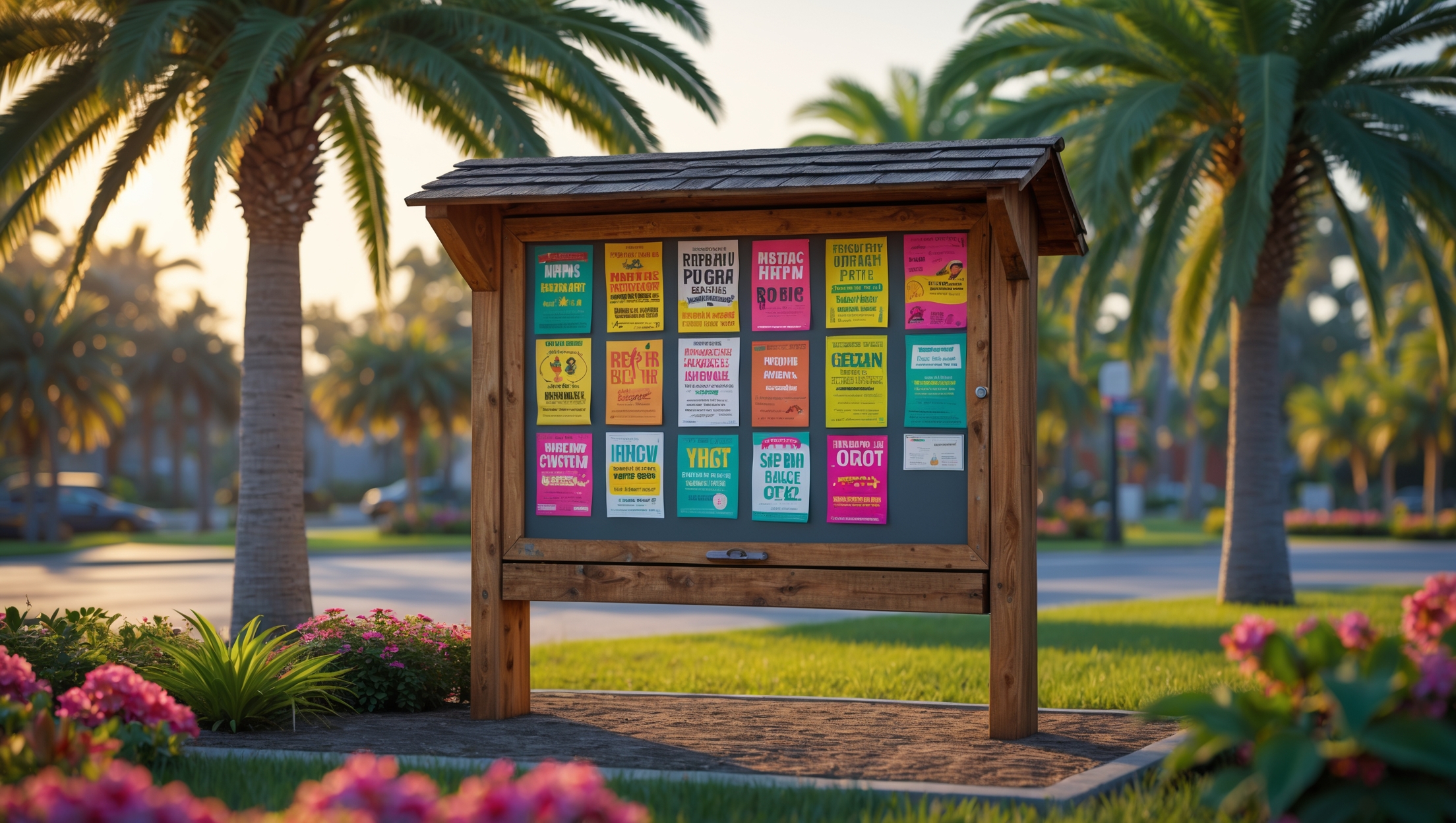
Weatherproofing Community Bulletin Boards in St. Petersburg, FL: Strategies, Materials, and Local Solutions

Introduction: The Community Bulletin Board’s Role in St. Petersburg
In St. Petersburg, Florida, community bulletin boards serve as vital connectors between neighborhoods, local organizations, and residents. Whether tucked under the eaves of an artsy coffee shop, standing proud in a city park, or nestled against a vibrant mural, these boards help share event announcements, resources, and opportunities. However, St. Pete’s subtropical climate—characterized by humid summers, sudden downpours, and salty breezes—poses unique challenges to the longevity and readability of these public message centers. Flyers curl, ink runs, and hardware rusts, quickly rendering even the most thoughtfully curated bulletin boards unusable.
This post explores the specific weatherproofing needs of St. Petersburg’s community bulletin boards, offering practical, actionable strategies for setup, material selection, and ongoing maintenance. Drawing on local case studies and expert advice, we’ll cover how to keep your bulletin board legible, inviting, and resilient—no matter what the forecast brings. Whether you’re a neighborhood association, a grassroots organizer, or a business looking to support local communication, these solutions are tailored for St. Pete’s unique environment.
Understanding St. Petersburg’s Weather Hazards
Humidity and Rain
St. Petersburg experiences high humidity year-round and frequent summer thunderstorms. Moisture seeps into unprotected materials, causing paper to wrinkle and mold, and warping wooden frames.
Salt Air and Coastal Winds
Proximity to the Gulf of Mexico means salt-laden air, which accelerates rust and corrosion on metal components. Strong gusts, especially during storm season, can rip unsecured postings and even topple poorly anchored boards.
Intense Sunlight
Florida’s abundant sunshine fades inks and brittle plastics, making UV protection just as important as waterproofing.
Selecting the Best Weatherproof Materials
Frames and Backings
- Pressure-Treated Lumber: Suitable for wood-framed boards, but must be sealed with exterior-grade varnish or paint for added protection.
- Recycled Plastic Lumber: Highly weather-resistant, never rots, and resists UV degradation—ideal for eco-conscious projects.
- Galvanized or Powder-Coated Steel: Stands up well to salt air, but must be properly coated to prevent rust.
- Aluminum: Lightweight, rustproof, and easy to work with, though more expensive than basic steel.
Display Surfaces
- Corkboard (Exterior-Grade): Must be sealed on all sides to prevent swelling and mold.
- HDPE Sheets: Weatherproof plastic boards that accept pushpins and self-heal after use.
- Magnetic Metal Panels: Combine rust-resistant metal with magnets for flyer display—no holes, less paper damage.
Protective Covers
- Polycarbonate Sheets: More impact-resistant than acrylic, resists yellowing, and provides strong UV protection.
- Acrylic (Plexiglass): Lighter and less expensive than glass, but more prone to scratching.
- Tempered Glass: Offers the best clarity and scratch-resistance, but is heavy and can be costly.
Hardware
- Stainless Steel Fasteners: Essential for all exposed screws, hinges, and locks.
- Weatherproof Gaskets: Use rubber or silicone seals around doors and covers to keep out moisture.
Design Strategies for Maximum Durability
Enclosed vs. Open Boards
While open boards allow for easy posting, they expose flyers to the elements. Enclosed boards with lockable doors protect postings from wind, rain, and vandalism. Opt for hinged covers that can be propped open for easy access, with clear signage for posting instructions and contact information.
Drainage and Ventilation
Include small drainage holes at the base of enclosed boards to prevent standing water. Discreet ventilation slots at the top promote airflow, reducing condensation and mildew inside the enclosure.
UV Protection
Use UV-blocking films or coatings on all clear covers. Position boards facing north or in shaded areas when possible to minimize direct sun exposure, which fades paper and stresses plastic components.
Anchoring and Wind Resistance
- Secure boards with concrete footings or heavy-duty ground anchors.
- Consider wind-rated designs or bracing for exposed locations, especially in hurricane season.
- Opt for rounded profiles and low-profile installations to minimize wind catchment.
Step-by-Step: Building a Weatherproof Bulletin Board in St. Pete
1. Site Selection
- Choose a visible, accessible location with some natural shade.
- Avoid low-lying areas prone to flooding or pooling water.
- Check with the city or property owner for permission and compliance guidelines.
2. Frame and Mount Construction
- Cut recycled plastic or pressure-treated lumber to size for the frame.
- Use stainless steel brackets and fasteners to assemble.
- Set posts at least 24″ into the ground with concrete for wind resistance.
3. Weatherproof Display Surface
- Install a sealed corkboard or HDPE panel inside the frame.
- Ensure all edges are caulked to prevent water ingress.
4. Protective Cover Installation
- Attach a polycarbonate hinged cover with weatherproof gaskets along all seams.
- Install lockable latches or padlocks to deter tampering.
5. Drainage and Ventilation
- Drill small (1/8″) holes at the bottom edge for drainage.
- Add screened ventilation slots at the top—fine mesh keeps out insects.
6. Signage and Posting Guidelines
- Post clear instructions for submitting flyers, including contact info for board maintenance volunteers or organizations.
- Consider digital QR codes that link to community calendars or event pages for added accessibility.
Cost Breakdown: Budgeting for a St. Pete-Ready Board
| Component | Estimated Cost (2024) |
|---|---|
| Recycled plastic frame (4×6 ft) | $175 – $250 |
| HDPE display panel | $60 – $100 |
| Polycarbonate cover (hinged, lockable) | $120 – $200 |
| Stainless steel hardware | $35 – $60 |
| Signage & posting instructions | $30 – $50 |
| Concrete footings & installation supplies | $80 – $120 |
| Total | $500 – $780 |
Tip: Sourcing recycled materials or working with local partners can help reduce costs.
Maintenance Best Practices for Longevity
Regular Inspections
- Check biweekly during rainy season and monthly the rest of the year.
- Look for water intrusion, mold, insect nests, and loose hardware.
Cleaning
- Wipe down covers with a soft cloth and mild soap to prevent salt buildup and clouding.
- Use a diluted vinegar solution for removing algae or mildew stains.
Flyer Management
- Remove outdated or weather-damaged postings promptly to maintain a tidy appearance.
- Encourage use of waterproof or laminated flyers, especially for long-term notices.
Hardware and Seal Checks
- Lubricate locks and hinges with silicone spray to prevent rust.
- Replace worn gaskets and tighten loose screws as needed.
Local Solutions: St. Pete Suppliers and Community Resources
Where to Source Materials
- Pinellas Lumber: Offers recycled and pressure-treated lumber, plus advice on local weatherproofing products.
- Tampa Bay Plastics: Carries HDPE panels and polycarbonate sheets cut to size.
- Habitat for Humanity ReStore: Great for discounted hardware and repurposed materials.
Community Partners
- Local neighborhood associations often coordinate maintenance volunteers and may have small grants for projects.
- St. Pete Tool Library offers tools for installation and repair.
- City of St. Petersburg’s Neighborhood Relations Department can advise on permitting and compliance for public spaces.
Case Study: Old Southeast Neighborhood Board Upgrade
In the Old Southeast neighborhood, residents noticed their long-standing bulletin board was falling into disrepair. Flyers were constantly soaked, and the wood frame was soft to the touch. The neighborhood association decided to invest in a weatherproof upgrade—choosing recycled plastic lumber for the frame, HDPE for the posting surface, and a lockable polycarbonate cover. Volunteers sourced materials from local suppliers, and the installation was a weekend project with help from the St. Pete Tool Library. Two years later, the board still looks new, and its protected flyers remain legible, even after summer storms. The project’s success inspired nearby neighborhoods to follow suit, creating a network of reliable, weatherproof message centers across the community.
Common Weatherproofing Mistakes to Avoid
- Skipping Protective Covers: Exposed boards rapidly deteriorate in St. Pete’s climate.
- Using Untreated Wood or Basic Cork: These materials rot quickly without sealing.
- Neglecting UV Protection: Sun-faded postings are hard to read and less engaging.
- Poor Drainage: Trapped water leads to mold, mildew, and structural damage.
- Underestimating Wind: Boards not anchored securely are vulnerable during storms.
Innovations: Toward Digital-Analog Hybrid Boards
Some St. Pete neighborhoods are experimenting with digital features, like QR codes linking to community calendars or augmented reality overlays that highlight upcoming events through a smartphone app. While these won’t replace the tactile, hyper-local charm of physical postings, integrating digital access points can broaden a board’s reach. For now, maintaining a robust, weatherproof physical presence remains essential—but don’t discount the power of hybrid solutions for the future.
Conclusion: Building Lasting Community Connections, One Board at a Time
Weatherproofing community bulletin boards is more than a maintenance task—it’s an investment in neighborhood resilience and communication. In St. Petersburg, these boards do more than post yard sales and yoga classes: they knit together diverse residents, foster civic engagement, and serve as lifelines during emergencies. When a board falls into disrepair, the loss is more than aesthetic; it’s a missed opportunity for connection.
By choosing the right materials, designing for Florida’s unique hazards, and committing to regular upkeep, you can ensure your bulletin board remains a vibrant hub for years to come. Remember to tap into St. Pete’s wealth of local suppliers and community organizations for support, and don’t hesitate to innovate—whether by adding digital elements or creative signage. With a little planning and the right resources, your weatherproof board can become an enduring symbol of neighborhood pride and possibility.
So, next time you walk by a community bulletin board, take a moment to appreciate the care and expertise behind its construction. And if you’re inspired to build or upgrade one in your own corner of St. Pete, know that you’re contributing to the heart of what makes this city such a special place to live, work, and connect.
We run a small neighborhood coffee shop in St. Pete and want to install an outdoor bulletin board. Which materials would you recommend that specifically stand up to both the salt air and the afternoon thunderstorms? Are there certain boards or coatings local businesses prefer here?
For St. Pete’s coastal climate, aluminum frames with a powder-coated finish are very popular because they resist rust from salt air and moisture. Polycarbonate or tempered glass covers protect notices from rain and sun. Many local businesses also use marine-grade plywood sealed with exterior varnish or epoxy, but metal or recycled plastic boards tend to last longer outdoors. Silicone or rubber gaskets help keep water out, a common feature in boards marketed as weatherproof for this area.
If a community board has already started showing signs of mold or warping, is it possible to salvage it with preventative treatments, or is replacement usually the only option with St. Pete’s climate challenges?
If mold or warping is minor, you might be able to clean the affected areas with a mold remover and let the board dry completely, then apply a weatherproof sealant. However, in St. Pete’s humid climate, boards with extensive mold or severe warping usually require replacement to prevent recurring issues and ensure durability. Ongoing maintenance and periodic inspections can help prolong the life of a new board.
Once I weatherproof my bulletin board following your suggestions, how often should I plan on doing maintenance or spot checks, especially during the intense Florida summer and hurricane season?
After weatherproofing your bulletin board, it’s a good idea to do a quick spot check every 2–4 weeks during the summer and hurricane season. Look for signs of water intrusion, damage to seals, and any rust or mold growth. After any major storm, inspect immediately for leaks or loose panels. Regular maintenance like tightening screws and resealing edges as needed will help keep it in good condition all year.
When considering ongoing maintenance for these weatherproofed bulletin boards in St. Petersburg, are there particular cleaning products or techniques recommended to prevent salt buildup and mold, especially in high-humidity areas near the coast?
For bulletin boards near the coast in St. Petersburg, use a mild soap solution or a specialized plastic or glass cleaner for regular cleaning. Non-abrasive cloths are best to avoid scratching surfaces. To prevent mold and salt buildup, rinse boards with fresh water weekly, especially after storms. For mold-prone areas, a diluted white vinegar solution can help deter growth, but always test on a small spot first to ensure compatibility with the materials used.
I’m a small business owner near the waterfront, so the salt air is always an issue. Are there any specific types of coatings or hardware finishes that hold up best against rust and corrosion in St. Pete’s coastal conditions?
For coastal areas like St. Pete, stainless steel hardware (grade 316 if possible) is excellent for resisting rust and corrosion from salt air. Powder-coated aluminum is also a strong, lightweight option for frames. For protective coatings, look for marine-grade polyurethane or epoxy coatings—these seal surfaces and help prevent moisture intrusion. Regularly rinsing your bulletin board hardware with fresh water can also help extend its life in salty environments.
For community groups working with limited budgets, are there any weatherproofing upgrades you’d recommend as the absolute minimum to handle both summer downpours and salty breezes, without breaking the bank?
For limited budgets, a clear acrylic or polycarbonate cover is a cost-effective essential—these materials shield your board from rain and salt without needing constant replacement. Use stainless steel or coated screws to prevent rust. Applying weather-resistant caulk around seams adds extra moisture protection. These simple upgrades can help your board last through wet summers and salty air without high expense.
If a bulletin board has already suffered some damage from mold or rust due to our climate, what early steps would you recommend for making repairs before investing in a full replacement?
If your bulletin board has mold or rust damage, start by cleaning the surface with a mild detergent and water to remove mold or mildew. For rust, gently sand the affected metal areas and apply a rust-inhibiting primer. Let everything dry thoroughly before considering repainting or resealing. If the board’s structure is still sound, these early repairs can extend its life before a full replacement is needed.
For board frames exposed to both humidity and the salty air in St. Pete, have you found any particular materials or coatings that strike the right balance between long-term durability and affordability? I’m also curious about how often they realistically need to be replaced or refinished here.
For board frames in humid, salty St. Petersburg conditions, powder-coated aluminum is a popular choice since it resists both corrosion and rust while staying affordable. Pressure-treated wood with marine-grade sealants is another option, though it needs more upkeep. Most frames with quality finishes hold up 5–7 years before needing refinishing; aluminum usually outlasts wood and may only need occasional cleaning or spot touch-ups.
Given the humidity and sudden rainstorms here, do you have advice for keeping flyers legible and mildew-free over several weeks? I’m especially interested in affordable solutions for a neighborhood association with a tight budget.
To keep flyers legible and mildew-free in St. Petersburg’s humid, rainy climate, try printing on water-resistant paper or using clear plastic sheet protectors. Laminate flyers if possible, or seal them with clear packing tape. Mount them inside a covered display case with good airflow, like a corkboard with a plexiglass door and vent holes. These options are affordable and help keep materials protected for several weeks.
For those working with a limited budget, which weatherproofing measures would you prioritize first: investing in UV-resistant plastics, pressure-treated boards, or rust-resistant hardware? I’m curious which upgrades make the biggest difference in extending the lifespan of bulletin boards in your climate.
In St. Petersburg’s hot and humid climate, I would prioritize rust-resistant hardware first. Moisture and salty air can quickly corrode standard fasteners, leading to structural issues. Next, UV-resistant plastics are a wise investment, as strong sunlight can cause fading and brittleness. Pressure-treated boards are helpful but can often be upgraded later, especially if your existing boards are still in good shape.
Have you found that certain types of pressure-treated wood or composite materials last longer than others when it comes to both humidity and salt exposure? I’d love to hear about specific brands or products that have worked for local bulletin boards.
Yes, we’ve seen that certain materials handle St. Petersburg’s humidity and salt air much better. For pressure-treated wood, products rated for ground contact, like those treated with MCA (Micronized Copper Azole), tend to be more durable. Among composites, brands like Trex and TimberTech have held up well on local boards, resisting warping and rot. Maintenance is still important, but these options have shown good long-term performance in our area.
The article mentions that salt air can really speed up rust on metal components. Are there specific rust-resistant coatings or materials that work best in St. Petersburg’s coastal climate, or is it better to avoid metal altogether when building a board?
In St. Petersburg’s coastal climate, using stainless steel or aluminum for metal parts is a good choice, as both are naturally more resistant to rust from salt air. If you do use standard steel, applying marine-grade epoxy or powder coatings can help protect against corrosion. Avoiding metal entirely is also an option; many people use treated wood or high-quality plastics for even less maintenance.
Do you have any recommendations for securing bulletin board postings against the strong coastal winds specific to St. Petersburg? I’m curious whether certain attachment methods, like covered clips or weather-resistant adhesives, hold up better with both humidity and gusty weather.
Securing postings in St. Petersburg’s coastal winds calls for a combination of covered, rustproof clips and weather-resistant adhesives. Stainless steel or heavy-duty plastic clips work well if you place them under a weatherproof cover. For adhesives, opt for outdoor-rated double-sided tapes or glue dots that specifically mention humidity resistance. Laminate your postings before displaying to prevent moisture damage, and check attachments periodically after storms to ensure everything is still secure.
If a community bulletin board already has water damage and some warping, is it worth trying to salvage it with new sealants and maintenance, or is replacement generally the only real solution in our climate?
If your bulletin board already has water damage and warping, repair might only be a short-term fix in St. Petersburg’s humid climate. Sealants can help prevent further deterioration, but warping often signals deeper structural issues. For long-lasting performance, especially outdoors, replacement with weather-resistant materials is usually the most effective solution. That way, you can ensure durability and less maintenance over time.
When considering mounting options for community boards in windy areas, do you suggest using concrete footings or are there alternative anchoring methods that balance stability with easier relocation if needed? I’d love some input for installations in shared public spaces.
For windy areas, concrete footings certainly offer the greatest stability, but they make relocation difficult. As an alternative, consider using heavy-duty ground anchors or helical anchors, which screw into the soil for solid support while still allowing future removal. For shared public spaces, this method provides a secure hold and flexibility if the board needs to be moved or adjusted later.
For community projects trying to retrofit older wooden bulletin boards already installed around St. Petersburg, what steps would you recommend to both weatherproof and add more anchoring against coastal winds, without having to completely replace the board?
To weatherproof and reinforce existing wooden bulletin boards, start by sealing any exposed wood with a high-quality exterior wood sealant or marine varnish to prevent moisture damage. For extra wind resistance, add galvanized brackets or metal straps to secure the board’s frame to its posts. Consider installing a clear acrylic or polycarbonate cover with weatherstripping to protect displayed materials. Finally, reinforce the base with concrete footings or additional anchor bolts if possible, all without having to replace the board entirely.
You mention the problem of salty air causing metal parts to rust. Are there specific hardware finishes or coatings that have worked well for others in St. Petersburg’s coastal neighborhoods for lasting more than a year?
In St. Petersburg’s coastal neighborhoods, stainless steel hardware—especially grades 316 or marine-grade—has performed very well against salty air, often lasting several years. Galvanized steel and hardware with powder-coated finishes are also commonly used. For extra protection, some residents apply a clear anti-corrosion spray or use nylon or plastic fasteners in non-structural areas to further reduce rust issues.
With the combination of humidity, salt air, and Florida sun, do you recommend any specific types of protective coatings or finishes for wooden frames that are affordable and actually last more than a season in St. Petersburg?
For wooden frames in St. Petersburg’s coastal climate, look for exterior-grade polyurethane or marine spar varnish, as both handle humidity, sun, and salt air well. Water-based polyurethanes are affordable and resist yellowing, while marine spar varnish offers extra UV protection and flexibility. Apply multiple thin coats and reapply annually for best durability. Seal all edges thoroughly to prevent moisture intrusion.
You mention that the intense Florida sun can fade inks and damage plastics. Are there specific types of coverings or treatments you recommend to protect flyers from UV damage without making the board too expensive for a small neighborhood group to maintain?
To protect flyers from UV damage while keeping costs reasonable, consider using clear acrylic sheets labeled as UV-resistant—these are more affordable than polycarbonate and provide good protection. You can also spray flyers with UV-protective clear coatings, which are available at most hardware stores. Regularly rotating or replacing flyers helps as well, so sun exposure is minimized. These options strike a balance between durability and budget for a small community board.
The article talks about ongoing maintenance for bulletin boards to keep them usable despite humidity and heavy rain. Could you give some specific tips on how often boards need to be checked or resurfaced, especially during the rainy season?
During St. Petersburg’s rainy season, it’s a good idea to check community bulletin boards every one to two weeks for signs of water damage, swelling, or mold. Resurfacing or resealing should be done at least once a year, but consider refreshing protective coatings before the wet season starts. Regularly replace damaged backing materials and clear any moisture buildup as soon as you spot it to extend the board’s life.
Do you have any specific recommendations for UV-resistant materials that can withstand both the intense sunlight and the salty air in St. Petersburg, without being too expensive? We want a durable setup for our community board, but our budget is limited.
For a budget-friendly yet durable option, consider using polycarbonate sheets for your bulletin board cover. Polycarbonate is highly UV-resistant, tough, and handles salty air well. For the backing, marine-grade plywood sealed with exterior polyurethane works nicely. Always use stainless steel hardware to prevent rust. These materials strike a good balance between cost and longevity in St. Petersburg’s climate.
I noticed you mentioned that salt air can quickly rust metal components. Are there any low-maintenance alternatives to metal for hardware and fasteners that local groups have found effective?
Yes, several local groups have switched to non-metal alternatives like heavy-duty plastic or nylon hardware for bulletin boards near the coast. These materials don’t rust and require less maintenance. For example, plastic zip ties, nylon screws, and weather-resistant composite brackets have proven durable in the salty St. Petersburg air, making them a practical choice for long-term outdoor use.
Our neighborhood board gets battered by the sea breeze and has rusted hardware within months. Do you have recommendations for affordable, rust-resistant fasteners or coatings that hold up well against St. Pete’s salty air?
Stainless steel or hot-dipped galvanized screws and bolts are good choices for resisting rust in salty St. Petersburg air, and they’re both affordable and widely available. You can also use plastic or nylon fasteners for non-structural parts. For extra protection, applying a marine-grade anti-corrosion spray or a clear polyurethane coating to exposed metal surfaces can help extend the life of your hardware.
I run a small bakery in St. Pete and want to keep my flyers readable despite the humidity and summer storms. Are there any budget-friendly weatherproofing materials you recommend that still look inviting for customers?
For your bakery flyers, consider laminating them with a matte finish to reduce glare and protect against humidity and rain. Clear plastic sleeves or acrylic display cases are also budget-friendly and allow you to post and swap out flyers easily while keeping them visible and inviting. Both options are inexpensive, offer good protection from the elements, and maintain a welcoming look for your customers.
If a neighborhood group is planning to weatherproof an existing wooden bulletin board, what are some effective maintenance steps they can take right now to protect against humidity and mold, especially as the rainy season approaches?
To protect your wooden bulletin board from humidity and mold, start by cleaning it thoroughly to remove dirt and mildew. Apply a high-quality exterior wood sealant or waterproofing stain, focusing on all exposed surfaces and edges. Check for any cracks or gaps and fill them with weatherproof wood filler. Trim vegetation nearby to promote airflow, and consider adding a sloped cover or awning to keep rain off. Regular inspections during the rainy season will help you catch any problems early.
For areas in St. Pete that have both strong coastal winds and a lot of foot traffic, have you found any particular anchoring methods or materials that actually hold up better over time? I’ve seen some boards topple after just a couple of storms.
In high-wind and high-traffic areas of St. Pete, boards anchored with stainless steel bolts set into concrete or deep-set ground sleeves have held up best long-term. For materials, marine-grade plywood or recycled plastic boards resist warping and water damage, while powder-coated metal frames prevent rust. Using vandal-resistant fasteners and installing wind bracing can also help boards stay put during storms.
I’m curious about ongoing maintenance—what schedule or checklist do you suggest for regularly checking community boards in St. Petersburg, especially after those frequent summer storms you mentioned?
After summer storms in St. Petersburg, it’s wise to inspect community bulletin boards at least once a week during the rainy season. Look for water damage, loose fasteners, and debris buildup. Wipe down surfaces, reseal any exposed edges, and replace damaged weatherproof covers as needed. Also, check that posted materials remain dry and legible. Regular monthly checks in drier months are usually sufficient.
You mention salt air speeding up rust on metal bulletin board parts in St. Petersburg. Are there specific brands or coatings for hardware that you’ve found resist corrosion better than others, or is it mainly about regular maintenance?
In salt-rich environments like St. Petersburg, stainless steel hardware—especially grades 316 or marine-grade—is much more resistant to corrosion than standard steel. Certain brands, like Fastenal and Simpson Strong-Tie, offer hardware specifically rated for coastal use. Using hardware with a powder-coated or galvanized finish also helps. Still, regular maintenance such as rinsing off salt and checking for early signs of rust is important for long-term durability.
The article mentioned how salt air can really speed up rust on metal parts. Are there particular coatings or metal types you’d recommend that actually hold up to the salty coastal air, or is it better to use all plastic or wood components in St. Petersburg?
In St. Petersburg’s salty air, stainless steel (especially grades 316 or marine-grade) and aluminum are great choices for metal parts, as they resist rust much better than standard steel. Applying powder coatings or specialized marine paints can further boost their durability. If you prefer avoiding metal, high-quality UV-resistant plastics are a solid option, since wood—even when treated—may still degrade over time in humid, salty conditions.
I’d love some advice on balancing cost and durability for community groups with a limited budget. Are there affordable materials or DIY tips that still work well against the humidity and sun, or is it better to invest upfront in more expensive weatherproofing?
For community groups on a budget, consider using UV-resistant acrylic sheets and treated plywood as cost-effective materials. Applying marine-grade varnish can boost durability against humidity. DIY weatherproofing with silicone sealant around edges helps prevent moisture. While premium materials last longer, starting with these affordable options lets you protect your board well without a big upfront investment. Regular maintenance, like resealing annually, also extends lifespan affordably.
Could you provide more information on affordable options for weatherproofing community bulletin boards, especially for smaller organizations with limited budgets? Are there any DIY solutions that have worked well considering St. Pete’s humidity and storms?
For smaller budgets, clear acrylic sheets or plexiglass can be used as protective covers for bulletin boards, secured with inexpensive weatherproof hinges and latches. Applying silicone caulk around the frame helps seal out moisture. Many local groups have also used weather-resistant paint and basic exterior plywood with good results. For added humidity protection, including a few silica gel packets inside the enclosure can help reduce moisture buildup during St. Pete’s humid months.
You mentioned salt air causing corrosion on metal parts—do you recommend stainless steel hardware, or are there other materials that resist rust better for bulletin boards near the coast in St. Petersburg?
Stainless steel hardware is a great choice for resisting rust in coastal areas like St. Petersburg. Another excellent option is marine-grade aluminum, which won’t rust and handles salt air well. You can also consider using coated or galvanized steel for extra protection. For fasteners, plastic or nylon options work if strength requirements aren’t too high. Stainless steel and marine-grade aluminum are typically the most durable for outdoor bulletin boards near the coast.
For a small business on a tight budget, are there any cost-effective maintenance tips or DIY weatherproofing hacks that work well for St. Pete’s climate? I’d love some advice on keeping up with repairs without needing to replace materials every year.
For St. Pete’s humid and rainy climate, using clear acrylic sheets as covers is a budget-friendly way to protect your bulletin board. Seal the edges with weather-resistant tape or silicone caulk to keep moisture out. Regularly check for signs of mold or warping and wipe surfaces with a mild bleach solution when needed. If you use cork, consider applying a waterproof sealant to extend its lifespan. These quick DIY steps can help your board last longer without frequent replacements.
I’m curious how often the weatherproofing measures you mentioned need to be maintained, especially given the combination of humidity, salt air, and strong sun. Is there a recommended maintenance schedule or certain times of year when attention is especially important?
In St. Petersburg’s climate, it’s smart to check weatherproofing at least twice a year, ideally before summer and winter when weather is most extreme. The sun, salt air, and humidity can break down seals and materials quickly, so look for signs of wear like cracking, fading, or rust. After heavy storms or hurricane threats, a quick inspection is also a good idea to ensure everything stays protected.
We noticed mold forming pretty quickly on our community board last summer. Besides improving the materials, are there regular maintenance steps or treatments that work well in humid, rainy conditions like ours?
In humid and rainy climates like St. Petersburg, regular maintenance is essential alongside using better materials. Wipe down boards frequently to remove moisture and debris, and inspect for any signs of mold or mildew. Applying a mildew-resistant sealant or protective spray can help prevent growth. Also, make sure the board is well-ventilated and clear any leaves or debris from around it to reduce trapped moisture.
I’m curious about how you balance the need for weatherproof materials with keeping costs reasonable, especially for smaller organizations or neighborhood boards. Are there any budget-friendly material options that still hold up well against humidity and salt air in St. Pete?
Balancing durability with cost is important, especially in St. Pete’s humid, salty environment. For budget-friendly options, many small organizations use marine plywood sealed with outdoor-grade varnish or polyurethane, which resists moisture well and is more affordable than full metal enclosures. Clear acrylic or polycarbonate sheets are reasonably priced alternatives to glass for covering bulletin boards, offering good protection without breaking the bank.
Could you share more about maintenance routines that actually work for these boards given how fast rust and fading happen here? We want to set up a board outside our shop, but not sure how much time we’d need to keep it in good shape year-round.
In St. Petersburg’s climate, regular maintenance is key. Wipe the board down every one to two weeks to remove salt and airborne debris, and check for early signs of rust or sun damage monthly. Refresh protective coatings—like UV sealants and rust-resistant sprays—at least twice a year. Also, replace any weather seals or hardware if you notice wear. With this routine, you’ll minimize fading and rust and only need brief check-ins each week to keep your board looking great.
Could you elaborate on what type of UV protection works best for flyers posted outdoors in St. Pete’s intense sunlight? I’m worried about ink fading fast, so I’m curious if laminating or any other method is most effective here.
For flyers exposed to St. Pete’s strong sunlight, laminating with UV-resistant pouches is one of the best ways to reduce fading. Opt for laminating film specifically labeled as UV-protective, which helps block harmful rays. Alternatively, printing flyers on UV-resistant paper with pigment-based inks can also help preserve color longer. Combining both methods—using UV-resistant inks and lamination—offers the best protection for outdoor postings.
Could you clarify how often we need to maintain or check on the materials you recommend here? I’m wondering what a realistic maintenance schedule would look like for keeping a board readable and sturdy during those super humid summer months.
For St. Petersburg’s humid summers, it’s best to check your bulletin board at least once a month. Inspect for any water damage, warping, or mildew, and replace or reseal weatherproof materials as needed. Cleaning the surface regularly and making sure seals are intact helps keep everything readable and sturdy throughout the season.
You mention that salt air and coastal winds near the Gulf can cause hardware to rust and even knock over bulletin boards. Are there particular types of fasteners or anchoring methods you’d recommend that stand up best to those conditions in St. Pete?
For St. Pete’s coastal climate, stainless steel or hot-dipped galvanized fasteners are excellent choices since they resist rust from salt air. When it comes to anchoring, using concrete footings or ground anchors for freestanding boards helps prevent them from being toppled by strong winds. Additionally, choosing corrosion-resistant brackets and lag bolts will further extend the board’s lifespan in harsh Gulf conditions.
You mentioned UV protection for plastics—would you recommend acrylic or polycarbonate covers for bulletin boards in St. Petersburg? I’ve heard polycarbonate is tougher against impacts, but does it hold up better against the intense sun and salt air over time?
Polycarbonate is indeed more impact-resistant than acrylic, making it a good choice for areas prone to vandalism or heavy use. However, in St. Petersburg’s intense sun and salty air, acrylic actually holds up better over time. Polycarbonate can yellow and degrade faster without high-quality UV coatings, while acrylic is naturally more UV-resistant and less likely to discolor. If you opt for polycarbonate, ensure it has a strong UV-protective layer, but for most outdoor bulletin boards, acrylic is the more durable choice for sun and salt exposure.
You mention salt air and high humidity in St. Pete causing rust and mold on bulletin boards. Are there specific brands or types of sealants and hardware that have held up best in actual community use here, especially along the coast?
For coastal St. Pete, stainless steel (grade 316) hardware and marine-grade aluminum components tend to resist rust the longest in community settings. For sealants, products like Rust-Oleum Universal Clear Topcoat and GE Silicone II work well for moisture protection, according to feedback from local HOAs. Boards using Spar Urethane have also shown better mold resistance. Choosing materials labeled as ‘marine’ or ‘outdoor coastal’ usually ensures better longevity here.
If you’re setting up a new bulletin board in St. Pete but don’t have a huge budget, which weatherproofing step would you say is absolutely essential to prevent water damage in the first few months? Is it more about the frame or the way flyers are covered?
If your budget is tight, the most crucial weatherproofing step is making sure the bulletin board has a well-sealed, water-resistant cover—this keeps rain and humidity off your flyers directly. While a sturdy frame helps, prioritizing a clear acrylic or polycarbonate front panel that seals tightly around the edges will give you the best immediate protection from water damage in St. Pete’s climate.
I run a small neighborhood board at a local park, and the ink on flyers always fades really quickly from the Florida sun. Are there specific brands or types of UV-resistant covers you recommend that are easy for volunteers to install?
For a neighborhood board in sunny Florida, look for clear polycarbonate or acrylic covers labeled as UV-resistant. Brands like Lexan or Plexiglas offer sheets with built-in UV protection and are available at most hardware stores. These are lightweight and can be cut to size, making installation straightforward for volunteers using basic tools like screws or simple frames. Be sure to check for covers with at least 10-year UV warranties for long-lasting results.
What’s a realistic budget for upgrading an existing community board to handle the city’s humidity and UV exposure? Are there cost-effective steps that neighborhood groups can take without a major overhaul?
For St. Petersburg’s climate, upgrading an existing bulletin board for humidity and UV resistance can cost anywhere from $100 to $400, depending on size and materials. You can keep costs down by sealing wood surfaces with marine-grade varnish, adding UV-resistant acrylic or polycarbonate covers, and using stainless steel hardware. These targeted improvements help prolong the board’s life and require less investment than a full replacement.
You mentioned that salt air can really speed up rust and corrosion on metal parts. Do you know if any local groups have found success using recycled plastics or alternative materials instead of metal for frames and fasteners?
Yes, some local St. Petersburg community groups have started using recycled plastics and composite materials for bulletin board frames and fasteners. These materials hold up much better against the salt air and humidity compared to traditional metals. A few neighborhood associations have also tried UV-stabilized plastics, which resist both corrosion and sun damage. Using these alternatives has noticeably reduced maintenance and replacement needs.
How much should a small neighborhood association expect to spend if we want to upgrade our bulletin board with weatherproof materials that can handle humidity, storms, and sun here in St. Pete? Are there any affordable solutions you’d suggest for a limited budget?
For a small neighborhood association in St. Pete, upgrading to a weatherproof bulletin board usually costs between $200 and $600, depending on size and materials. Polycarbonate enclosures with lockable doors are a good balance of durability and cost. If your budget is tight, consider using marine-grade plywood sealed with waterproof paint and a plexiglass cover, which can bring costs down to around $100–$200. Always ensure hardware is rust-resistant for Florida’s climate.
We want to upgrade our community board in a busy city park, but our budget is limited. What weatherproof materials offer the best durability without breaking the bank, especially considering the humidity and storm threats you mentioned?
For a limited budget in St. Petersburg’s humid and stormy climate, consider using marine-grade plywood coated with exterior paint or sealant for the board surface. Pair this with a clear polycarbonate cover instead of glass, as it’s shatter-resistant and affordable. Aluminum frames resist rust better than steel and need less upkeep. These materials balance cost, durability, and weather protection for a busy city park.
You mention that salt air really speeds up rust on metal parts. Are there any locally available coatings or finishes that actually work to prevent this, or is it better to stick with plastic or treated wood for board frames?
In St. Petersburg, you can find marine-grade coatings at local hardware stores that are specifically designed to protect metal from salt air corrosion. Look for epoxy paints or polyurethane sealants labeled for coastal or marine use. These can be quite effective if applied regularly. However, for the lowest maintenance, plastic or pressure-treated wood frames are often a safer bet, as they naturally resist salt damage without needing as much upkeep.
Could you give more detail on UV-protective coatings or coverings that really stand up to Florida sunlight? We had a problem with fading and brittle plastic last summer and want to avoid the same issue when we upgrade our neighborhood board.
Florida’s intense sun can quickly damage unprotected plastics. For lasting protection, look for polycarbonate or acrylic sheets specifically labeled UV-resistant, as these hold up much better than regular plexiglass. Applying a clear UV-blocking sealant or laminate film can further extend their lifespan. Marine-grade UV-protective sprays are also an option for touch-ups. Regularly cleaning off salt and grime will help too, since buildup can accelerate damage. These steps should help prevent fading and brittleness on your upgraded board.
Has anyone tried using enclosed bulletin boards with locking covers to combat moisture and wind issues, or do you find that these reduce community engagement compared to open boards? I’m weighing whether visibility or durability is a bigger concern here.
Enclosed bulletin boards with locking covers are used in some St. Petersburg neighborhoods, mainly to protect notices from rain, wind, and humidity. While they do a great job keeping materials intact, some residents have noted that locked enclosures can discourage spontaneous postings and reduce interaction. If visibility and easy access are important for your community, consider boards with clear covers that are easy to open or notice slots that allow people to submit items without unlocking the whole case.
For boards already showing damage from humidity and UV exposure, what are the most effective maintenance steps to prolong their usability before a full replacement becomes necessary?
To prolong the life of damaged boards, start by gently cleaning off any dirt or mold with mild soap and water. Sand down rough or warped areas, then apply a UV-resistant exterior sealant or paint to protect against further sun and moisture damage. If parts are soft or rotten, replace only those sections if possible. Regularly reapply sealant and check for new signs of wear to extend usability.
How often would you suggest checking or maintaining a bulletin board to keep it weatherproofed here in St. Pete? I’m looking for a realistic schedule that balances durability and the time commitment.
In St. Pete’s humid and rainy climate, inspecting your bulletin board every 2 to 3 months is a practical schedule. Look for signs of water damage, fading, or loose seals. After any major storm, a quick check is wise. Regular light maintenance like cleaning and resealing as needed can keep your board weatherproof without taking up too much of your time.
I noticed you mentioned pressure-treated frames as an option. How do those compare to aluminum or other metal materials in terms of longevity and resilience given the area’s coastal winds and salt exposure?
Pressure-treated wood frames offer good resistance to rot and insects, but in coastal areas like St. Petersburg, they can degrade over time due to salt exposure and humidity. Aluminum or other metals generally last longer because they don’t rot, and they’re more resilient against warping and high winds. Just make sure any metal you use is powder-coated or otherwise treated to prevent corrosion from salt air.
You mention that coastal winds can actually topple poorly anchored boards. What kind of anchoring systems or installation tips work best for preventing that in public parks around St. Petersburg?
For St. Petersburg’s coastal parks, it’s best to use galvanized steel posts set in concrete footings at least two feet deep to anchor bulletin boards. Stainless steel hardware resists corrosion, and adding cross-bracing can help with wind resistance. Installing boards away from direct wind corridors and checking fasteners regularly also prevents loosening over time.
How often would you say maintenance is needed for bulletin boards in St. Petersburg’s climate, especially after major summer storms? Is there a checklist or routine you suggest for keeping them in good shape year-round?
In St. Petersburg’s humid, storm-prone climate, it’s best to inspect community bulletin boards every one to two months, and always after major summer storms. For year-round upkeep, regularly check for water damage, ensure seals and locks are intact, clear debris, replace faded notices, and clean surfaces. Tighten hardware and look for signs of mold or rust, especially after heavy rain.
You mentioned sudden downpours and UV exposure as big issues. Do you have any advice for protecting posted flyers themselves, beyond laminating? Are there preferred posting techniques or covers local groups have found effective?
To protect flyers from rain and sun, some local groups use clear acrylic pockets or polycarbonate sleeves, which let people read flyers while keeping them dry and shielded from UV rays. Another method is to use weatherproof paper, designed to resist water and fading. For posting, attaching flyers with push pins inside covered sections or behind transparent hinged covers keeps them secure and more visible.
What kind of ongoing maintenance schedule would you suggest for neighborhood bulletin boards given the combination of salt air, rain, and humidity? Is monthly inspection usually enough, or do things tend to degrade more quickly than that in St. Petersburg?
In St. Petersburg’s climate, salt air and humidity can cause faster wear on bulletin boards. Monthly inspections are a reasonable starting point, but during rainy or stormy seasons, you might want to check them every two weeks. Look for signs of rust, mold, water damage, and fading materials. Regularly clean surfaces and replace weatherproof materials as needed to keep the boards in good shape year-round.
How often do you usually need to perform maintenance on weatherproofed bulletin boards in St. Pete’s climate to keep them in good condition? I’m curious if certain materials require less frequent upkeep than others.
In St. Petersburg’s humid and rainy climate, weatherproofed bulletin boards generally need maintenance about twice a year to stay in top condition. Boards made from stainless steel or treated aluminum tend to require less upkeep than wood or cheaper plastics, which may need more frequent checks for warping or mildew. Regular cleaning and resealing, especially after heavy storms, will help extend their lifespan.
You mentioned salt air can cause metal parts to rust and corrode. For someone on a tight budget, are there affordable alternatives to stainless steel hardware that still hold up well along the coast, or is that really the only reliable option for our area?
Galvanized steel is an affordable alternative to stainless steel and offers decent resistance to rust in coastal areas, especially if you reapply protective coatings periodically. You might also consider using plastic or coated hardware, which won’t rust at all, though it may not be as strong as metal. While stainless steel is the most reliable, these options can work well if you’re mindful of maintenance.
When it comes to keeping flyers legible during sudden downpours, have you found that enclosed boards work significantly better than open ones, or are there waterproof paper options that actually last in the Florida humidity?
Enclosed bulletin boards definitely provide better protection for flyers during St. Petersburg’s sudden downpours and help keep them legible much longer than open boards. While there are waterproof and synthetic papers available, they often still suffer from warping or ink running due to high Florida humidity over time. For the best results, combining enclosed boards with weather-resistant paper will keep your notices looking fresh and readable.
In considering UV protection for bulletin boards exposed to intense sunlight, do you have any recommendations for affordable treatments or materials that won’t significantly increase the budget for a small community group?
For community groups on a budget, using clear acrylic sheets with built-in UV resistance is a cost-effective way to shield bulletin boards from sunlight. You can also apply UV-protective spray coatings to existing surfaces, which are inexpensive and widely available at hardware stores. Both options help prevent fading and damage without a significant increase in cost.
When it comes to anchoring bulletin boards to withstand the strong coastal winds in St. Petersburg, what installation techniques have you found most reliable? Have you seen any materials or designs that actually failed in real-life situations?
For St. Petersburg’s coastal winds, securing bulletin boards with deep-set concrete footings or anchor bolts into masonry walls has worked consistently well. Stainless steel hardware resists corrosion from salty air. Boards mounted only on wood posts without deep anchoring tend to loosen or topple in storms, and lightweight plastic frames often warp or crack. Heavy-duty aluminum or pressure-treated wood with reinforced corners and weather-sealed seams typically hold up best long-term.
When it comes to preventing rust from the salty air, are there specific brands or types of anti-corrosion hardware that have worked best in St. Petersburg’s conditions? I’m especially concerned about stuff like screws and hinges lasting through the storm season.
In St. Petersburg’s salty and humid climate, stainless steel hardware—especially grades 304 or 316—tends to hold up best against corrosion. Many locals have found that products from brands like Simpson Strong-Tie and Hillman perform well for screws and hinges. For maximum durability, always opt for marine-grade hardware or items specifically labeled as suitable for coastal environments.
For someone planning to refresh a neighborhood bulletin board this spring, how often would you suggest doing maintenance checks or reapplying protective coatings, given the humidity and storms here in St. Petersburg?
Given St. Petersburg’s high humidity and frequent storms, it’s wise to check your bulletin board at least once a month, especially during the rainy season. For protective coatings, reapply them every 6 to 12 months, depending on the product used and visible wear. Quick monthly inspections can help you spot early signs of moisture damage or fading so you can address issues before they become bigger problems.
I’m curious about your recommendations for fastener materials that can withstand both the salt air and humidity in St. Pete. Are there any locally available products you’ve found that consistently resist corrosion, or should we only be looking at marine-grade stainless steel for longevity?
For St. Petersburg’s salty, humid climate, marine-grade stainless steel (like 316) is the gold standard for fasteners, as it reliably resists both rust and corrosion. Some builders also use hot-dipped galvanized fasteners, but they don’t last as long near the coast. Local hardware stores typically carry 316 stainless steel screws and bolts, especially those catering to boating and coastal construction.
Do you have suggestions for where to find UV-protected materials or coatings locally in St. Petersburg? I want to set up a new bulletin board for our neighborhood, but I’m not sure which shops carry weatherproof supplies that actually hold up in the coastal climate.
For UV-protected materials in St. Petersburg, try checking out local hardware stores like Home Depot or Lowe’s, as they usually carry outdoor-rated acrylic sheets and weatherproof sealants. Specialty stores like Florida Plastics or local sign supply shops often offer UV-resistant coatings and panels designed for coastal environments. It’s worth asking staff about products specifically rated for sun and salt exposure to ensure long-lasting durability.
Once a board is weatherproofed as you suggest, how often should maintenance or inspections be done to keep it in top shape, especially during the rainy summer months in St. Petersburg?
After weatherproofing your bulletin board, it’s a good idea to inspect it at least once a month, especially during the rainy summer season in St. Petersburg. Check for signs of moisture intrusion, warping, or damage to seals and coverings. Cleaning off debris and ensuring all fastenings remain tight will also help your board stay in great condition year-round.
You mentioned UV protection as being just as important as waterproofing for bulletin boards in St. Pete. What products or coatings actually work best against Florida sunlight, and are they easy to apply for someone who’s never done this before?
For protecting bulletin boards against Florida’s strong sunlight, clear acrylic sprays labeled as UV-resistant or marine-grade varnishes work well. Brands like Rust-Oleum and Krylon offer options that are easy to find at hardware stores. These sprays are straightforward to apply—just clean the surface, spray on thin, even coats, and let it dry thoroughly between layers. Even if you’re new to this, following the instructions on the can makes the process manageable.
I’m curious whether you found any cost-effective alternatives to pressure-treated materials that still hold up to both St. Petersburg’s humidity and salty air. Are there any local suppliers or products you’d recommend for those on a tight budget?
You might consider using exterior-grade plywood sealed with a high-quality marine varnish as a more budget-friendly option compared to pressure-treated lumber. Composite materials, while sometimes pricier upfront, can also withstand humidity and salt air over time. For local suppliers in St. Petersburg, checking with reuse stores or salvage yards can help find affordable materials, and some hardware stores carry less expensive exterior-rated woods suitable for these conditions.
I’m interested in the maintenance aspect you mentioned. What are some local examples of ongoing upkeep routines for these boards during the rainy season, and how often do community groups in St. Petersburg typically need to repair or refresh materials?
During the rainy season in St. Petersburg, community groups often schedule monthly checks to clean and inspect bulletin boards for water damage or mold. Many replace or reapply weatherproof coatings twice a year. Groups like neighborhood associations commonly swap out soggy flyers and tighten fixtures after heavy storms. Repairs to seals or plexiglass panels usually happen as needed, especially after periods of frequent rain.
When you talk about maintenance, how often should community groups expect to inspect or replace their bulletin board materials in St. Petersburg’s climate? Is this something that needs attention monthly, or can it be handled less frequently if you use weatherproof supplies?
In St. Petersburg’s humid and storm-prone climate, even weatherproof materials should be checked regularly. Monthly inspections are ideal, as this helps spot issues like leaks or sun damage before they worsen. Depending on the materials’ quality, full replacement might only be needed every 1–2 years, but keeping an eye on wear and tear each month will extend your bulletin board’s life.
With the combination of salt air and UV issues, do you recommend investing in higher-end hardware and UV-resistant materials from the start, or can more affordable solutions last a couple of years if maintained? Trying to balance budget with durability for our neighborhood project.
Given St. Petersburg’s salt air and strong sun, starting with higher-end, UV-resistant materials and rust-resistant hardware is usually more cost-effective in the long run. While affordable options might last a year or two with careful upkeep, they often require frequent repairs or replacement. Investing a bit more upfront often saves time and reduces maintenance hassles, especially for community projects meant to last.
You mention that strong winds can actually topple poorly anchored boards. For a business planning to install a new outdoor bulletin board, what kind of anchoring system would you recommend to keep it secure during summer storms here in St. Petersburg?
For St. Petersburg’s summer storms, a concrete footing is the most secure option. Set sturdy galvanized steel posts at least 2 feet deep in concrete to anchor your bulletin board. Make sure the board frame is attached with heavy-duty brackets and consider using tamper-resistant hardware. This setup helps your board withstand high winds and reduces the risk of toppling.
For ongoing maintenance, how often should I plan to check and update the weatherproofing of our bulletin board, given the frequency of summer storms and changing conditions in St. Petersburg?
Given St. Petersburg’s frequent summer storms and humidity, it’s wise to inspect your bulletin board at least once a month during the rainy season. Look for wear, water leaks, or damage to seals and covers. After any major storm, do a quick check. Regularly replacing worn materials and resealing edges will help ensure your board stays weatherproof all year.
Do you have any suggestions for how to weatherproof flyers themselves before posting them, especially in terms of ink and paper that can handle both the humidity and the UV exposure in St. Pete?
For flyers in St. Pete’s climate, choose synthetic or waterproof paper, which resists moisture and won’t tear easily. Use UV-resistant inks to prevent fading from sun exposure. Alternatively, you can laminate the flyers for extra protection against humidity and rain. Make sure to avoid regular paper and standard inks, as they’ll quickly deteriorate outdoors.
I’m curious how local groups keep their flyers readable during the peak summer thunderstorms. Besides using waterproof paper, have any neighborhoods tried creative solutions like laminating posts or adding extra coverings, and how much extra maintenance is involved?
Some neighborhoods in St. Petersburg use clear acrylic or Plexiglas covers over bulletin boards to shield flyers from heavy rain. Others have installed lockable outdoor display cases with rubber gaskets for added protection. Laminating flyers is common, though it means a bit more work for each posting. Extra maintenance usually involves cleaning covers regularly and checking that seals or hinges remain watertight, especially after storms, but most groups find the upkeep manageable.
The article talks about challenges like fading inks and warping wood from sun and humidity. What would be the estimated cost difference between basic DIY weatherproofing versus investing in professionally installed boards with all these protections in place?
Basic DIY weatherproofing, such as using treated plywood, exterior-grade paints, and clear plastic covers, can cost between $50 and $150 depending on board size and materials. In contrast, professionally installed boards with UV-resistant enclosures, sealed frames, and durable hardware typically range from $500 to over $1,000. The higher cost reflects enhanced longevity, less maintenance, and better protection against fading and warping.
Are there specific local case studies or examples where a certain weatherproofing solution worked particularly well or failed unexpectedly in St. Petersburg’s climate? I’m curious about what actually holds up versus what doesn’t in real neighborhoods.
Yes, the article highlights a few local cases. For example, bulletin boards in Crescent Lake Park used marine-grade plywood and clear acrylic covers, which held up well through several summers of heavy rain and humidity. On the other hand, boards in the Historic Kenwood neighborhood that relied on untreated wood and basic plastic sheeting required frequent repairs due to warping and mold. Overall, materials designed for marine or coastal use tend to last much longer in St. Petersburg’s climate.
If a community board’s metal frame has already started to rust because of the salty air, is it possible to restore and weatherproof it, or is it better to replace the whole thing? Any tips for ongoing maintenance after restoration would be appreciated.
If the rust is only surface-level and the metal frame is still structurally sound, you can restore it by sanding away the rust, applying a rust converter or primer, and repainting it with a marine-grade or outdoor metal paint. After restoration, check for rust regularly, touch up any chips in the paint, and consider applying a clear protective sealant once a year. If the rust has compromised the frame’s strength, replacement would be safer.
I’ve had a lot of trouble with my neighborhood’s bulletin board getting soaked during storms, especially when the wind blows rain sideways. Are there certain enclosure designs or materials that work best in St. Pete’s stormy conditions and still let people easily pin up flyers?
For St. Pete’s windy and wet storms, look for bulletin board enclosures with deep-sealed, gasketed frames and shatter-resistant polycarbonate doors. Top- or side-hinged doors with tight weatherstripping help block sideways rain. Aluminum frames resist corrosion, and cork or rubber pinning surfaces hold up well in humidity. Ensure the enclosure is vented to prevent moisture buildup but still keeps rain out. These options let people pin flyers easily while protecting them from the elements.
For neighborhoods with a tight budget, what are the most cost-effective weatherproofing strategies you recommend for bulletin boards, especially when dealing with Florida’s intense sun and sudden rainstorms?
For budget-conscious neighborhoods, using clear acrylic sheets as covers is an affordable way to protect postings from rain and sun. Mount bulletin boards under eaves or in shaded spots to reduce sun damage. Simple rubber weatherstripping along the edges can help keep moisture out. Regularly applying UV-resistant spray to both the board and covers is a low-cost way to prolong their lifespan in Florida’s intense weather.
For boards installed in parks near the water, what anchoring methods have proven to withstand the storm season winds you described? I’m curious if there are local case studies of boards surviving hurricanes or if extra maintenance is just a given.
For parks near the water, deep-set concrete footings with galvanized steel posts are most effective for anchoring boards against strong winds. Some installations in St. Petersburg have included hurricane-rated fasteners and additional lateral bracing. While a few local boards have survived recent hurricanes using these methods, extra inspections and occasional hardware replacements after major storms are generally expected for long-term durability.
When it comes to preventing metal hardware from rusting on these boards, do you recommend stainless steel, powder-coated metals, or is regular maintenance more important than the material itself for St. Pete’s conditions?
For St. Petersburg’s humid, coastal environment, choosing the right hardware is crucial. Stainless steel is highly recommended because it resists corrosion very well. Powder-coated metals also add protection, but over time, coatings can chip. Regular maintenance helps, but the material choice is more important here—starting with stainless steel will save you trouble in the long run.
For areas that get direct sunlight most of the day, what’s the best way to protect posted flyers from fading or curling? Are there any UV-resistant materials or coatings you’ve found work well in St. Petersburg’s climate?
To protect flyers in areas with intense sunlight, using UV-resistant acrylic sheets as a cover is very effective—these block harmful rays and reduce fading. Laminating your flyers with UV-inhibiting film also helps prevent curling and discoloration. In St. Petersburg’s climate, these solutions hold up well against both sun and humidity, keeping your notices readable and intact for longer.
I live in St. Pete and want to set up a new community board outside my business. Can you recommend a material or finish for the backing that holds up best against both the salty air and the intense sunlight here? I’m hoping not to have to replace it every year.
For St. Pete’s salty air and strong sun, marine-grade plywood with a UV-resistant, waterproof sealant works well for bulletin board backing. High-density polyethylene (HDPE) panels are another excellent choice since they resist moisture, warping, and fading. Whichever you choose, make sure to reapply protective finishes annually to maximize durability.
For groups working with a limited budget, what would you say are the most cost-effective materials or DIY weatherproofing steps that still hold up well against St. Petersburg’s coastal winds and storms?
For a tight budget, using clear acrylic sheets as covers is both affordable and effective for shielding against rain and wind. Pair these with weather-resistant plywood for the board itself. To seal edges, silicone caulk works well to keep moisture out. Mounting the board with galvanized screws will help prevent rust from the salty air. These materials are easy to find locally and can be installed with basic tools.
The article mentions that salt air can cause hardware to rust faster. For someone on a tight budget, are there affordable options for rust-resistant hardware, or should I just plan to replace the metal parts every year or so?
You don’t necessarily have to replace metal parts every year, even on a budget. Look for galvanized or zinc-coated screws and hinges—these are usually affordable and hold up much better against salt air than plain steel. Stainless steel hardware is great, but it’s often pricier. Also, applying a clear protective spray or sealant to regular metal parts can help extend their life.
If we want to update an existing community board that’s already suffering from rust and faded ink, do you recommend starting from scratch with new weather-resistant materials, or are there effective retrofit options for the climate challenges unique to St. Petersburg?
If the current board is significantly rusted and the display areas are badly faded, starting fresh with weather-resistant materials like stainless steel, UV-protected acrylic, or marine-grade aluminum will offer the longest-lasting results for St. Petersburg’s humid, salty air. However, if the board’s structure is still sound, you could retrofit by sanding off rust, treating with rust inhibitors, repainting with outdoor-grade paint, and adding UV-protective covers. Choose the approach based on your board’s condition and budget.
When it comes to UV protection for bulletin boards in areas with lots of direct sunlight, like city parks, are there specific coatings or products that perform noticeably better over time in St. Pete’s climate?
For St. Pete’s sunny climate, look for UV-resistant clear coatings specifically designed for outdoor use, such as marine-grade varnishes or polyurethane finishes. Polycarbonate or acrylic covers with built-in UV inhibitors also hold up well over time. These options help prevent yellowing, fading, and brittleness, offering reliable protection in high-sun areas like city parks.
If flyers are always curling or getting ruined after rainstorms, is it better to switch to laminated flyers or invest in a board with a locking waterproof cover? I’m wondering which solution works best for a volunteer-run board with a tight budget.
For a volunteer-run board on a tight budget, laminating flyers is usually the most cost-effective solution to prevent curling and water damage. However, if you frequently deal with severe weather or want longer-term protection, investing in a locking waterproof cover will better safeguard all materials and reduce ongoing maintenance. If possible, start with laminating and consider upgrading the board cover in the future as funds allow.
For neighborhood groups working with limited budgets, what are some cost-effective ways to add UV protection or waterproofing to existing boards without doing a full replacement? Any practical tips for retrofitting older installations?
For budget-friendly UV protection, consider applying a clear UV-resistant spray or varnish, which is available at most hardware stores and easy to use on wood or metal surfaces. For waterproofing, use clear silicone caulk around edges and seams to seal out moisture, and attach inexpensive clear acrylic sheets or plastic covers over the board face for extra weather resistance. Regularly check and touch up these coatings as needed to extend the life of your existing boards.
We’re interested in setting up a board outside our shop, but are concerned about strong winds during hurricane season. Is there a particular anchoring method or base design that has worked well for St. Petersburg’s typical weather challenges?
For St. Petersburg’s hurricane season, using steel posts set in concrete footings at least 2 feet deep works well to anchor bulletin boards securely. Some local businesses also use ground anchors or auger-style bases for added stability. Choosing a low-profile board with a vented, sloped roof can help reduce wind resistance. Regularly checking fasteners and using stainless steel hardware will make your setup more resilient during storms.
You mentioned that both humidity and salty breezes can quickly deteriorate flyers and board hardware. Are there any budget-friendly solutions for neighborhood groups that might not have access to specialized weatherproof materials or professional installation?
Neighborhood groups can try several low-cost approaches to protect their bulletin boards. Clear plastic sheet protectors or zip-top plastic bags can shield flyers from moisture. For the board itself, a simple acrylic sheet or even a shower curtain can serve as a protective cover. Using stainless steel or coated pushpins helps prevent rust. Regularly checking and replacing damaged parts also extends the board’s lifespan without major expense.
You mention UV protection being as important as waterproofing because of Florida’s intense sunlight. Are there affordable materials or finishes you suggest that are effective against fading but still fit a tight community project budget?
Acrylic sheets with built-in UV protection are a cost-effective choice for covering bulletin boards and help prevent fading from sunlight. You can also use exterior-grade clear polyurethane or spray-on UV-resistant sealants over wood or printed materials. These finishes are budget-friendly and available at most hardware stores, making them a good fit for community projects.
Could you give some examples of rust-resistant hardware that hold up well against the salty Gulf air? I’ve noticed regular staples and nails corrode fast, so I wonder what’s commonly used for long-term durability in coastal spots.
For coastal environments like St. Petersburg, stainless steel hardware—specifically grades 304 or 316—is a top choice for rust resistance. Galvanized screws and nails also perform well, as their zinc coating helps prevent corrosion. Many community boards use stainless steel staples, tacks, and bolts for extra durability. Avoid plain steel fasteners, since the salty air speeds up rusting tremendously.
With the salt air causing rust on outdoor bulletin boards, have you found any particular types of hardware or fasteners that hold up better over time without corroding? I’d love to avoid the boards looking shabby after just a few storms.
In coastal areas like St. Petersburg, stainless steel or marine-grade hardware works best for resisting corrosion from salt air. Aluminum fasteners are also a good choice, as they’re lightweight and rust-resistant. Avoid standard steel, as it rusts quickly. Coated or galvanized screws and bolts provide extra protection, but marine-grade stainless steel is usually the longest-lasting option for outdoor bulletin boards.
You mentioned salt air causing a lot of rust and corrosion on metal parts. Are there budget-friendly alternatives to metal hardware that hold up well in coastal climates, or should we plan on just replacing metal frequently as part of upkeep?
In coastal areas like St. Petersburg, plastic or nylon hardware is a good budget-friendly alternative to metal. These materials resist rust and corrosion from salt air much better than most metals. Stainless steel is another option, though it can be pricier. Using plastic or nylon fasteners can help minimize maintenance without sacrificing durability.
Can you recommend specific types of UV-protective coatings or films that work best in the intense sunlight of St. Petersburg? I’m wondering if there are products that hold up better than others, since fading seems like a big problem here.
In St. Petersburg’s strong sun, polycarbonate sheets with UV-resistant coatings perform very well for bulletin boards. Look for coatings labeled as ‘UV stabilized’ or ‘anti-UV,’ such as those made by Lexan or Makrolon. For films, opt for outdoor-rated UV-blocking laminates designed for signage—these typically last longer than basic clear acrylic. Regularly check and reapply as needed, since even the best products need maintenance over time.
The article mentions the impact of Florida’s intense sunlight and salt air on ink and plastics. Are there particular brands or locally available protective coatings that have proven effective for community boards in St. Petersburg?
For St. Petersburg’s harsh sun and salty air, many local community boards have had success using marine-grade varnishes like Epifanes or Spar Urethane for wood surfaces. For plastics and posted materials, UV-resistant spray coatings such as Krylon UV-Resistant Clear or Rust-Oleum Painter’s Touch Ultra Cover have held up well. These products are typically available at local hardware stores and marine supply shops in the area.
If I want to keep posted flyers from curling or getting ruined during sudden storms, are there specific types of covers or protective enclosures that work best in our climate? Or is it better to focus on using weather-resistant paper and inks?
For St. Petersburg’s humid and storm-prone climate, a combination approach works best. Use clear, locking polycarbonate enclosures or weather-sealed bulletin board covers to shield flyers from wind and rain. At the same time, choosing weather-resistant paper and waterproof inks adds extra protection. This way, even if a bit of moisture sneaks in, your flyers stay readable and intact.
The article mentions that Florida’s sun can make plastics brittle and fade ink. Are there any local stores or suppliers in St. Pete that carry UV-rated materials specifically suited for bulletin boards?
Yes, in St. Petersburg you can find UV-rated materials for bulletin boards at local hardware stores such as Home Depot or Lowe’s, which often carry UV-resistant acrylic sheets and weatherproof sealants. Specialty suppliers like Pinellas Rubber Supply or local sign shops may also stock UV-protected plastics and fade-resistant inks designed for outdoor use. It’s a good idea to ask for products specifically rated for Florida’s high UV exposure.
We maintain a community board at our business and I’m curious about how often you suggest reapplying UV or waterproof protection, considering Florida’s intense sun and rain. Is there a maintenance schedule local organizations find effective to keep things in good shape year-round?
In Florida’s climate, many local organizations find it effective to reapply UV and waterproof protection to community bulletin boards every 6 to 12 months. The intense sun and frequent rain can wear down coatings quickly, so inspecting the board each season and touching up any worn areas is also a good idea. Regular cleaning and prompt repairs help maintain durability throughout the year.
In the article, you mention salt air speeding up rust and corrosion on metal parts of the bulletin boards. Are there any local examples where using alternative materials like PVC or composites worked better than metals for long-term durability in St. Pete?
Yes, several community centers and condo complexes in St. Pete have switched to using PVC or composite frames for their outdoor bulletin boards. For example, the North Shore Aquatic Complex replaced metal boards with PVC models a few years ago, and they’ve reported far less maintenance and no significant rust or corrosion issues since. These materials hold up well against the salty air and frequent rain.
You mentioned that St. Petersburg’s salt air can quickly corrode metal hardware on bulletin boards. Are there specific locally available coatings or treatments you would recommend to extend the lifespan of metal components in this environment?
For St. Petersburg’s coastal environment, consider using marine-grade stainless steel hardware, which resists corrosion from salt air. If you need to treat existing metal parts, look for locally available rust-inhibiting sprays like Rust-Oleum or Permatex, which can be found at most hardware stores. Applying a clear polyurethane or epoxy coating can also help seal metal surfaces and provide extra protection against moisture and salt.
I noticed you talk about issues with ink running and paper wrinkling from humidity and rain. Are there any affordable ways for individuals to weatherproof flyers themselves before posting, or is it mostly about improving the board’s enclosure?
Individuals can definitely take some steps to weatherproof flyers before posting. Using clear packing tape to laminate both sides or slipping flyers into plastic sheet protectors are affordable ways to shield them from rain and humidity. These methods help prevent ink from running and paper from wrinkling, making your flyers last longer even if the bulletin board’s enclosure isn’t perfect.
You mentioned salt air can really speed up rust on metal parts. Have any local organizations in St. Pete found durable hardware that actually holds up long term, or is it better to avoid metal completely when choosing a frame for outdoor boards?
Some local groups in St. Pete have had good results with stainless steel or galvanized hardware, as these resist rust much better than regular steel. However, even these metals can eventually show wear in salty conditions. That’s why several organizations are switching to high-quality plastic or composite frames, which fully avoid the rust issue and hold up well outdoors. If aesthetics and budget allow, non-metal frames tend to last longer by the coast.
You mentioned salt air and rust being big issues for bulletin boards near the Gulf. Are there any locally available metal treatments or types of stainless hardware you’d recommend that really stand up over time in St. Petersburg’s climate?
For St. Petersburg’s salty, humid air, I recommend using 316-grade stainless steel hardware, which is highly resistant to corrosion and often available at local marine supply stores. For extra protection, consider zinc or epoxy coatings for metal parts. Products like marine-grade anti-corrosion sprays are also widely used by locals to extend the life of outdoor fixtures in coastal environments.
I’m curious about balancing UV protection and waterproofing for bulletin boards exposed to full sun in city parks. Are there material choices or treatments that handle both issues well, or is it generally better to use separate products for each problem?
For bulletin boards in full sun, some materials and treatments can address both UV protection and waterproofing together. Polycarbonate and acrylic panels, for example, resist UV damage and repel water. Marine-grade varnishes and UV-resistant sealants can also be applied to wood surfaces to handle both concerns. Using materials specifically rated for outdoor use often simplifies maintenance by combining these protections, so you usually don’t need separate products unless you have special requirements.
I’m interested in what approaches work best for keeping flyers from curling or falling off during St. Petersburg’s sudden downpours and windy conditions. Are there particular fasteners or posting methods that hold up better in our climate?
In St. Petersburg’s unpredictable weather, using weather-resistant push pins or stainless steel tacks helps flyers stay secure. Laminating flyers adds protection against moisture, while using clear plastic sleeves can further prevent curling. Some boards also use locking acrylic covers to shield postings. Avoid standard staples, which rust and lose grip, and opt for heavy-duty options designed for outdoor use.
We have a community board in our park that keeps getting ruined by the summer rain and salty air. What type of enclosure or cover would you recommend that can withstand both the humidity and coastal conditions without breaking the budget?
For St. Petersburg’s rainy, coastal climate, consider using a lockable aluminum or powder-coated steel enclosure with a polycarbonate window. These materials resist rust and UV damage, and the polycarbonate won’t yellow like acrylic. Look for a gasketed, weather-sealed frame to keep out moisture and salt air. These options are durable, relatively affordable, and available at many hardware stores or online.
Have you found any specific types of clear covers or laminate sheets that actually hold up well against both UV rays and the humidity in St. Pete? I’ve had issues with cheaper plastic warping or yellowing really fast in the sun here.
Polycarbonate sheets are a solid choice for St. Pete’s climate—they’re much more UV-resistant than standard acrylic or PVC and resist yellowing and warping. For laminated covers, look for those labeled UV-stabilized or marine-grade; they’re designed for high sun and moisture. Some local sign supply stores carry these higher-grade materials, and it’s worth investing a bit more to avoid the early breakdown you’ve experienced.
You mention UV protection is just as important as waterproofing because of intense sunlight. Are there specific finishes or coatings you’ve found effective at preventing fading and brittleness on posted materials in outdoor boards?
For outdoor bulletin boards, clear UV-resistant acrylic coatings work very well to shield posted materials from sun damage. Laminating materials with UV-protective film is another reliable method to prevent fading and brittleness. Polycarbonate panels with built-in UV inhibitors also help protect both the board and the notices inside in our strong Florida sun.
What maintenance schedule would you recommend for a bulletin board in a city park here? Like, how often should I check for water damage, rust, or fading to keep everything looking good and readable?
For a city park bulletin board in St. Petersburg, I recommend inspecting it every month for water damage, rust, and fading, since the climate can be harsh. After heavy rain or storms, do an extra check. Clean surfaces and replace any damaged materials as needed, and apply protective coatings once or twice a year to help prevent issues.
For neighborhood groups with limited budgets, are there cost-effective ways to weatherproof existing bulletin boards against the sun and rain you mentioned, or is a total material overhaul usually necessary in St. Pete’s climate?
Neighborhood groups on tight budgets can absolutely weatherproof existing bulletin boards without a full overhaul. Applying a clear exterior sealant to wood surfaces, adding inexpensive acrylic or plexiglass covers, and installing simple overhangs or awnings can all protect against rain and sun. Regular maintenance, like reapplying sealant and inspecting for damage, will help boards last longer in St. Pete’s climate.
If we operate on a limited neighborhood association budget, which weatherproofing upgrades would you consider most essential for keeping our board readable and intact through St. Pete’s rainy season?
For a tight budget, start with a clear polycarbonate cover to shield your board from rain while staying visible. Add weatherstripping around the edges to block out water and humidity. Try to raise the board a bit off the ground to avoid splash damage. These simple upgrades can make a big difference during St. Pete’s wet months without costing much.
I’m new to outdoor projects and I’m curious about how to deal with the salty air here in St. Pete. Are there specific types of screws or fasteners that hold up better than others against corrosion from the Gulf breeze?
In St. Petersburg’s salty coastal air, stainless steel fasteners are your best bet; they resist rust and corrosion much better than regular steel. Marine-grade stainless steel (such as 316) is even more durable. Galvanized screws are another option, though they may not last as long as stainless steel in salty environments. Be sure to avoid plain steel, as it will corrode quickly.
If we want our community board to stay legible and inviting year-round without spending a fortune on maintenance, what are some realistic ongoing upkeep tasks or products you suggest, especially during peak storm season?
To keep your board legible and welcoming all year, especially during storms, focus on tasks like regularly checking for moisture buildup, cleaning the surface with a mild cleaner, and promptly removing damaged notices. Use UV-resistant, waterproof display covers and opt for rustproof hardware. Laminating posted materials or using weather-resistant sleeves helps too. These steps keep maintenance affordable and protect your board during harsh weather.
When it comes to UV protection for both the frames and the flyers themselves, have you found that clear acrylic covers last significantly longer than glass or polycarbonate under St. Pete’s intense sun? Any trade-offs in terms of clarity or cost?
Clear acrylic covers generally hold up well under St. Petersburg’s strong sunlight, often outlasting polycarbonate when it comes to resisting yellowing and cloudiness. However, glass is still superior for long-term clarity and UV resistance, though it’s heavier and may break more easily. Acrylic is usually less expensive than glass, but can scratch more easily. Polycarbonate is durable and impact-resistant, but tends to discolor and lose clarity faster in intense sunlight. So overall, acrylic offers a good balance for most boards, but expect to replace it eventually if absolute clarity is crucial.
I’m trying to set up a community bulletin board for our neighborhood, and I’m worried about the salty sea air you mentioned. Are there any specific coatings or treatments you recommend for metal parts to prevent rust, or would plastic hardware be more reliable in St. Pete?
For St. Pete’s salty air, stainless steel with a marine-grade powder coating is a strong choice for metal parts, as it offers excellent corrosion resistance. Galvanized steel is another option, but it’s best to use coatings specifically rated for coastal environments. High-quality plastic hardware is also very reliable and won’t rust, making it a great alternative for non-structural elements of your bulletin board.
I noticed the article mentions UV protection is just as important as waterproofing. Are there affordable coatings or coverings that effectively block sunlight without making it hard to read the flyers?
Absolutely, there are several affordable options that block harmful UV rays while keeping flyers easy to read. Clear acrylic sheets with UV inhibitors are commonly used and maintain good visibility. You can also find UV-resistant laminating films designed for outdoor signage; these are easy to apply and don’t distort text or images. Both options help prevent fading and material breakdown without reducing readability.
For boards located outdoors in city parks near the water, what’s the best way to prevent flyers from blowing away in those coastal winds you mentioned? Are weatherproof enclosures necessary, or are there simpler solutions that still work well?
For outdoor boards near the water, coastal winds can definitely be a challenge. Weatherproof enclosures are the most reliable option to keep flyers secure and protected from both wind and moisture. However, if an enclosure isn’t possible, you can use covered cork boards with strong pushpins or clips, and consider using flyer sleeves or laminating the paper. Just make sure that whatever method you choose, it securely fastens the flyers at multiple points.
For someone trying to weatherproof a bulletin board on a tight budget, which materials would you recommend that offer good protection against both the salty air and intense sun in St. Pete without being too expensive?
For a budget-friendly option in St. Pete, try using pressure-treated plywood as the board base, then cover it with a clear polycarbonate sheet or acrylic panel to shield from rain and UV. Use exterior-grade paint or marine varnish to seal exposed wood edges. Galvanized or stainless steel hardware helps prevent rust from salty air without costing too much.
Could you provide more information on how local groups are maintaining the appearance of bulletin boards through both the rainy season and prolonged sun exposure? I’m particularly interested in whether there are any tried-and-true cleaning or touch-up routines specific to St. Pete’s climate.
Local groups in St. Petersburg often schedule regular cleanings, especially after heavy rain or storms. They use mild soap, soft brushes, and non-abrasive cloths to remove mildew and pollen. For sun exposure, most boards are touched up with UV-resistant paints or sealants once or twice a year. Volunteers also replace sun-faded flyers promptly and check for mold growth during the rainy months, ensuring the boards look neat year-round.
You mentioned UV protection being as important as waterproofing. Are there specific products or coatings you’ve found work best for keeping flyers readable in the sun, without making it too expensive or complicated for non-experts to apply?
For UV protection that’s affordable and easy to use, clear acrylic sprays like Krylon UV-Resistant Clear or Rust-Oleum’s equivalent work well and are simple to apply—just spray evenly over the flyers before posting. For the board itself, outdoor-rated clear polycarbonate sheets or UV-resistant laminating pouches help shield flyers from both sun and rain, and they don’t require any professional installation skills.
For organizations with limited budgets, are there more affordable weatherproofing solutions that still provide reasonable protection against the humidity and storms in St. Pete, or is it generally a must to invest in higher-end materials to get lasting results?
Affordable weatherproofing options do exist for organizations on a budget in St. Pete. Using clear plastic sheeting, sealable plastic covers, or inexpensive outdoor varnishes can offer decent protection against humidity and rain. While higher-end materials do last longer, careful sealing, regular maintenance, and strategic placement under overhangs or shaded areas can help budget solutions perform reasonably well for several years.
If we’re working with a tight budget, which material upgrades or weatherproofing steps would you say make the biggest difference for a community board exposed to both Florida’s rain and sun?
If you’re on a tight budget, focus first on using a UV-resistant, clear acrylic or polycarbonate cover to shield the board’s surface from sun and rain. Pair this with weather-resistant sealant around edges and mounting points to prevent water seepage. These two upgrades offer significant protection without a big investment, helping your board last longer in Florida’s challenging climate.
I’m on a tight budget for our neighborhood’s first community board. Are there any cost-effective weatherproofing solutions you’ve come across that still handle the Florida humidity and sudden downpours pretty well, or is it better to invest more upfront?
You can keep costs down by using polycarbonate sheets, which are durable and resistant to Florida’s humidity and rain. Mounting a corkboard inside a simple, DIY wooden frame with weatherstripping and a sloped overhang helps, too. As long as you regularly check for leaks and keep the board off the ground, these measures offer decent protection without a big upfront investment.
You mention that salt air causes metal hardware to rust quickly in St. Petersburg. Are there affordable alternatives to stainless steel or aluminum for things like hinges and screws, or is it worth spending extra on those materials for long-term durability?
Galvanized steel is a more affordable alternative to stainless steel or aluminum, as it has a protective zinc coating that helps resist rust in salty environments. However, it might not last as long as stainless steel or aluminum, especially near the coast. If your budget allows, investing in stainless or aluminum hardware is usually worthwhile for long-term durability and fewer replacements in St. Petersburg’s salty air.
With all the issues from salt air and UV exposure here, what ongoing maintenance tasks should I plan for after installing a weatherproofed bulletin board? Are there recommended products or a cleaning schedule that helps prevent rust and fading over time?
After installing your weatherproofed bulletin board, plan to rinse surfaces with fresh water every few weeks to clear off salt buildup. Use a mild soap solution and a soft brush for deeper cleaning every couple of months. Apply a UV-protectant spray or wax on plastic or metal parts twice yearly to minimize fading. For metal boards, check hardware for rust regularly and touch up any paint chips with rust-resistant paint. Stainless steel cleaner and a soft cloth work well for hinges and locks, helping to prevent corrosion.
I notice you mention that the salty air near the Gulf can corrode metal parts pretty quickly. Are there certain fasteners or hardware finishes that hold up best in St. Pete’s environment, especially for someone on a DIY budget?
In St. Pete’s salty, humid climate, stainless steel fasteners (look for 304 or 316 grades) are a smart choice—they’re much more resistant to rust than regular steel. Galvanized hardware is also a budget-friendly option if stainless is too pricey. Avoid plain steel, as it corrodes quickly. Nylon or plastic fasteners work for lighter jobs and won’t rust at all, making them another wallet-friendly pick for DIY projects.
If a community group doesn’t have a big budget, what are the minimum weatherproofing steps you’d advise to keep a bulletin board functional during the rainy season here in St. Petersburg?
For a limited budget, start by using a clear plastic sheet or plexiglass front to shield the board from rain. Make sure the enclosure has a top overhang to direct water away. Seal any gaps with weather-resistant caulk to prevent leaks. If possible, use stainless steel or galvanized hardware to resist rust. These basics can help keep your bulletin board readable and dry during the rainy season.
The article mentions that salt air can speed up rust and corrosion on metal parts. Are there any affordable, locally available materials or coatings you recommend that specifically resist salt-related wear, especially for groups with a limited budget?
For groups watching their budget, galvanized steel or aluminum hardware is a solid choice since both resist rust in salty air and are commonly stocked at local hardware stores. For extra protection, applying a clear marine-grade spray or Rust-Oleum Universal spray paint can further shield metal parts. These coatings are easy to find in St. Petersburg and don’t require special tools to apply.
I see you mention salt air and humidity being major issues for bulletin boards in St. Pete. As someone trying to set up a new board, how often do you recommend checking or maintaining the board to prevent mold or rust, especially during the rainy season?
For St. Petersburg’s humid and salty climate, especially during the rainy season, it’s best to inspect your bulletin board at least once a month. Look for early signs of mold, rust, or moisture damage. Wipe away condensation, check seals and fasteners, and clean surfaces as needed. After heavy storms, a quick extra check can help catch issues before they escalate.
For ongoing maintenance, how often do you recommend checking or updating a weatherproof community bulletin board in St. Pete? Given all the rain and sun, are there signs we should look for to know when repairs or replacements are needed?
In St. Petersburg’s climate, it’s best to check your community bulletin board at least once a month. Look for signs like faded notices, water spots inside the case, swelling or warping wood, rusted hardware, and cracked or yellowing covers. If you spot any leaks, loose seals, or difficulty opening the board, those are signals it’s time for maintenance or possible replacement.
You mentioned salt-laden air accelerating rust on metal parts. For boards already installed with standard metal hardware, are there any retrofit solutions or protective coatings you suggest to extend their lifespan without completely replacing components?
For existing boards with standard metal hardware, you can apply a rust-inhibiting primer or a marine-grade protective coating to slow corrosion, even if some rust is already present. Clean and dry the metal thoroughly before application. For screws or bolts, consider swapping for stainless steel or applying anti-corrosion sprays. Regular reapplication of protective coatings can greatly extend the hardware’s lifespan in St. Petersburg’s salty air.
Can you share more about how to keep metal parts from rusting in coastal neighborhoods? I’m interested in specific hardware or coatings that can withstand both the salt air and heavy summer rains.
For coastal areas like St. Petersburg, it’s best to use stainless steel or galvanized hardware, as both are highly resistant to salt air and moisture. For extra protection, you can apply marine-grade epoxy or rust-inhibiting spray coatings to metal parts. Regular maintenance, such as rinsing metal hardware to remove salt buildup, also helps prolong their lifespan in harsh weather conditions.
When choosing hardware for outdoor bulletin boards near the coast, is stainless steel really the best choice for resisting salt air, or are there more affordable alternatives that hold up just as well in St. Petersburg’s climate?
Stainless steel is widely recommended for coastal installations because it resists rust and corrosion from salt air better than most metals. However, hot-dipped galvanized steel and certain coated aluminum fasteners can also perform well and are often more budget-friendly. Just make sure any alternative hardware is specifically rated for marine or coastal environments to prevent premature rusting in St. Petersburg’s humid, salty conditions.
Could you elaborate on any specific UV-protective coatings or films that work best for keeping bulletin board content legible in St. Petersburg’s intense sunlight? I’m curious if there are locally available products or finishes that have really stood out in community use.
For St. Petersburg’s intense sunlight, polycarbonate sheets with built-in UV inhibitors have worked well for many community boards, as they prevent yellowing and protect paper from fading. Posters often stay legible much longer when paired with UV-resistant acrylic spray coatings, such as Krylon UV-Resistant Clear. Local hardware stores frequently carry these options, and several community groups have found them durable over multiple seasons.
Do you have any suggestions for keeping posted flyers readable and intact during the heaviest summer storms here in St. Pete? I worry that even laminated paper might get damaged with all the humidity and rain.
You’re right that humidity and heavy rain in St. Pete can challenge even laminated flyers. For extra protection, consider using waterproof sleeves or clear acrylic flyer holders with sealed edges to keep water out. These can be mounted directly to the board, protecting your flyers from moisture, wind, and UV rays. Using synthetic waterproof paper is another option—it won’t tear or deteriorate in wet conditions.
Have you found a particular type of clear cover or enclosure that holds up best to both the salty air and UV exposure in St. Pete? I’ve noticed some plastic options turning cloudy or brittle over time and wondered if certain materials last longer in this climate.
Polycarbonate covers tend to hold up better than standard acrylic or lower-cost plastics in St. Pete’s salty, sunny climate. Polycarbonate is more resistant to UV yellowing and doesn’t turn brittle as quickly. Make sure to choose UV-stabilized versions and look for hardware with rust-resistant coatings. Aluminum-framed enclosures with weather seals also perform well by keeping out moisture and resisting corrosion.
For coastal winds and storms, have you seen any specific anchoring methods or board designs that actually hold up long-term in city parks near the water? I’m curious if there are common mistakes people make with installation.
For city parks near the water, bulletin boards anchored with stainless steel bolts set into concrete footings tend to last much longer. Designs with sloped, overhanging roofs and marine-grade composite backings also help withstand storms. A common mistake is using shallow posts or untreated wood, which can rot or loosen quickly in coastal conditions. Ensuring deep-set posts and regularly checking fasteners are key for long-term durability.
We recently had issues with our neighborhood board’s metal frame rusting really quickly. You mentioned the salt air near the Gulf speeds up corrosion—are there affordable alternatives to stainless steel that still hold up well without breaking the bank?
Aluminum is a solid alternative to stainless steel for coastal areas like St. Petersburg. It doesn’t rust and is generally more affordable, though it can oxidize, forming a protective layer. Galvanized steel is another budget-friendly option, as the zinc coating resists corrosion; just be sure to touch up any scratches to maintain protection. Both choices hold up well in salty air if maintained properly.
For community groups on a tight budget, what are some cost-effective but durable options for weatherproofing bulletin boards against both humidity and salt air? Do any local suppliers offer discounts or bulk rates for these kinds of projects?
For groups on a budget, consider using treated plywood sealed with marine-grade varnish and clear acrylic sheets as a protective cover. Galvanized hardware resists rust from salt air. Some local lumber yards and hardware stores in St. Petersburg, like Pinellas Lumber or Home Depot, may offer discounts or bulk rates for nonprofits or community projects—just ask at the contractor desk and mention your group’s purpose.
You mentioned that intense sunlight can fade inks and plastics. Are there any UV-resistant materials or treatments that work well for flyers and board surfaces in this climate?
Yes, there are some effective options to protect against UV damage. For flyers, you can use UV-resistant laminating films or print with UV-stable inks to keep colors vibrant longer. For board surfaces, polycarbonate or acrylic panels with built-in UV protection work well. You can also apply a UV-blocking clear coat to existing surfaces. These materials and treatments help both flyers and boards last much longer under Florida’s strong sunlight.
For groups on a tight budget, are there locally available materials that balance durability against salt air and rain without costing a fortune? I’m especially interested in ideas that have worked for smaller neighborhood associations around St. Pete.
Neighborhood groups in St. Pete often use marine plywood for backings, as it’s durable against moisture and readily available at local lumber stores. For coverings, clear acrylic sheets or recycled plexiglass panels are a popular, affordable choice to shield announcements from rain without breaking the bank. Stainless steel or galvanized hardware is worth the small extra investment to prevent rust in salty air. Many associations also recommend sealing wood with exterior polyurethane for longer life.
For bulletin boards exposed to both direct sun and salty coastal winds in St. Pete, have you found any affordable hardware or frame options that balance corrosion resistance and UV protection? Most coated metals I’ve tried either rust over time or get very hot and brittle in our climate.
In St. Pete’s harsh coastal climate, fiberglass-reinforced plastic and high-density polyethylene (HDPE) are popular for bulletin board frames—they resist both rust and sun damage better than most metals. For hardware, stainless steel grades 316 or 304 hold up better to salt air than coated metals, though it’s wise to check for any exposed fastener areas. HDPE frames tend to stay cooler to the touch and won’t become brittle in the sun.
I’m curious about UV protection for bulletin boards here in Florida. The article mentions inks fading and plastics getting brittle, but does anyone have experience with specific brands or coatings that really last through our intense sunlight? Is there a difference between what’s available at big box stores and local suppliers?
UV protection is definitely important in Florida’s climate. Many people find that marine-grade UV-resistant acrylics or polycarbonates hold up better than standard plastics. For coatings, products like Spar urethane and 3M’s UV-resistant films are popular for outdoor boards. Local suppliers sometimes offer specialty coatings designed for Florida’s intense sun, which can last longer than general brands from big box stores. It’s worth asking local sign shops for recommendations specific to your area.
Have you found any affordable solutions for keeping flyers from curling or falling off in the high humidity and sudden downpours here in St. Pete? I’m curious if any particular fasteners or posting methods hold up better on outdoor boards given the local weather.
In St. Pete’s humid and rainy climate, clear plastic sleeves or sheet protectors are both affordable and effective for keeping flyers flat and dry. For fasteners, stainless steel push pins or weather-resistant staples tend to hold up better than regular tacks. Using double-sided outdoor tape along the top edge of flyers can also help prevent curling and keep them secure during sudden downpours.
For a small nonprofit with a limited budget, what would you say are the most cost-effective weatherproofing upgrades to prioritize for an existing outdoor bulletin board in St. Petersburg? Is there a quick fix for existing boards that already show some water damage or rust?
For a limited budget, focus on sealing gaps with weatherproof caulk, applying a clear acrylic spray to exposed surfaces, and adding a simple overhang or awning for extra rain protection. For boards with existing water damage, let them dry thoroughly, sand away any rough spots, and use rust-inhibiting primer on metal parts. Covering the display with a sheet of clear acrylic or plexiglass can also help prevent future water issues affordably.
Does the article have any recommendations for affordable ways to replace or retrofit existing community boards that are already showing signs of moisture damage or rust, especially for neighborhood groups with tight budgets?
Yes, the article suggests some budget-friendly options for neighborhood groups. It mentions using weather-resistant sealants and rust-inhibiting paint to extend the life of existing boards. For more damaged boards, replacing only affected parts, like backing panels or frames, with treated plywood or recycled plastic can save money. The article also notes that sourcing materials from local hardware stores or community salvage programs can help keep costs down.
For those of us on a limited budget, are there any lower-cost DIY options for protecting flyers from humidity and sudden downpours, beyond the pricier enclosed cases or custom builds mentioned for St. Petersburg’s weather?
Absolutely, there are some inexpensive DIY solutions to help protect flyers. You can use clear plastic sheet protectors or zip-top bags to cover individual flyers—just tape or staple them at the top so water runs off. Laminating paper with clear packing tape is another budget-friendly option. Also, consider placing bulletins under simple overhead cover like a small awning or even a repurposed clear plastic container to help shield from rain.
What kind of maintenance schedule would you recommend for keeping a community bulletin board in good shape, given all the rain and strong winds we get? I’m wondering what ongoing upkeep looks like throughout the year in St. Petersburg.
For St. Petersburg’s wet and windy climate, inspect your bulletin board at least once a month. Check for water leaks, loose or rusting hardware, and signs of mold or warping. Refresh weatherproof sealants every 6–12 months and replace any damaged postings or covers as needed. After major storms, do a quick inspection to catch any new issues early. This schedule should help your board stay in top shape year-round.
Can you recommend any low-cost but effective weatherproofing solutions for bulletin boards in city parks? We want to protect postings from fading and moisture without spending too much, especially since our association has a limited budget.
For a budget-friendly approach, consider using clear acrylic or polycarbonate sheets as protective covers over your bulletin boards. These materials are durable, provide UV protection to reduce fading, and shield postings from rain. You can attach them with hinges for easy access. Also, sealing the board edges with weather-resistant tape or caulk will help keep moisture out. Regularly rotating postings can further minimize sun exposure and keep information fresh.
With the salt air being so tough on metal parts, do you know if stainless steel hardware is really worth the extra cost over galvanized for bulletin boards near the beach, or do both end up corroding pretty quickly?
Stainless steel hardware is generally much more resistant to corrosion from salt air compared to galvanized steel, especially near the beach. While galvanized hardware does offer some protection, it can still rust and degrade faster in coastal environments. Stainless steel tends to last longer and requires less maintenance, making the higher upfront cost worthwhile for bulletin boards exposed to salty conditions.
Have you found any local suppliers in St. Pete that stock UV-resistant and salt-air-friendly materials, or do most people end up ordering online for weatherproof bulletin boards?
Several local suppliers in St. Petersburg, such as hardware stores and specialty building material shops, do carry UV-resistant and salt-air-friendly materials like marine-grade plastics and treated aluminum. However, for complete weatherproof bulletin boards, some people still choose to order online, especially if they’re seeking specific features or custom sizes. It’s worth checking with local vendors first, as they often have suitable materials in stock or can quickly order them for you.
For boards already showing signs of rust or water damage, what are the best steps to repair and weatherproof them moving forward? Should we replace parts entirely, or are there effective restoration methods that work in the local weather conditions?
For boards with rust or water damage, start by removing and sanding down any rusted metal parts, then treat them with a rust-inhibiting primer and repaint. For wood, dry out the board, sand away damage, and reseal with a high-quality exterior sealant. Severely damaged parts may need replacement. After repairs, installing weatherproof covers and using stainless steel fasteners will help protect against St. Petersburg’s humid, rainy climate.
You mentioned salt air causing rust, especially near the coast. For a business close to the water, would you suggest powder-coated metal or another material for the frame? I’m trying to balance durability with keeping costs reasonable.
For businesses near the water in St. Petersburg, powder-coated metal is a strong choice because the coating provides a protective barrier against salt air and rust. However, if you’re looking to keep costs down, high-quality plastic or fiberglass frames are also good options—they won’t rust and typically require less maintenance than metal. Both materials balance durability and affordability for coastal environments.
I noticed you mentioned both pressure-treated frames and waterproof covers for weatherproofing. Is it better to invest more in the frame materials or in the type of protective cover to get the most durability for our community board on a tight budget?
If you need to prioritize on a tight budget, it’s usually best to invest a bit more in a good waterproof cover. The cover directly shields your board and postings from rain and sun, which can cause the most damage in St. Petersburg’s climate. Pressure-treated frames are also helpful for long-term durability, but a solid cover often gives you the most immediate protection for your money.
If the summer storms come through suddenly, how often should I be checking and maintaining a community bulletin board to make sure postings and the board itself aren’t getting damaged? Is there a maintenance schedule that works well for St. Pete’s climate?
In St. Petersburg’s stormy summer months, it’s wise to check your community bulletin board at least once a week. After any severe weather—especially heavy rain or wind—do a quick inspection for water or wind damage. Monthly deeper cleanings and checks for mold or rust also help keep the board in good shape throughout the season.
Our bulletin board is right by the beach in St. Pete and we’ve had a lot of trouble with salt air rusting the hinges and locks. Are there any specific local suppliers or products you’d recommend for hardware that can really hold up to the salty air?
For the salty beach air in St. Pete, look for hinges and locks made from marine-grade stainless steel (316) or brass, as both resist corrosion very well. Locally, hardware stores like Pinellas Fasteners and Economy Hardware often carry these items and can provide advice on the most durable options for coastal environments. It’s also helpful to regularly rinse hardware with fresh water to remove salt buildup and extend its lifespan.