
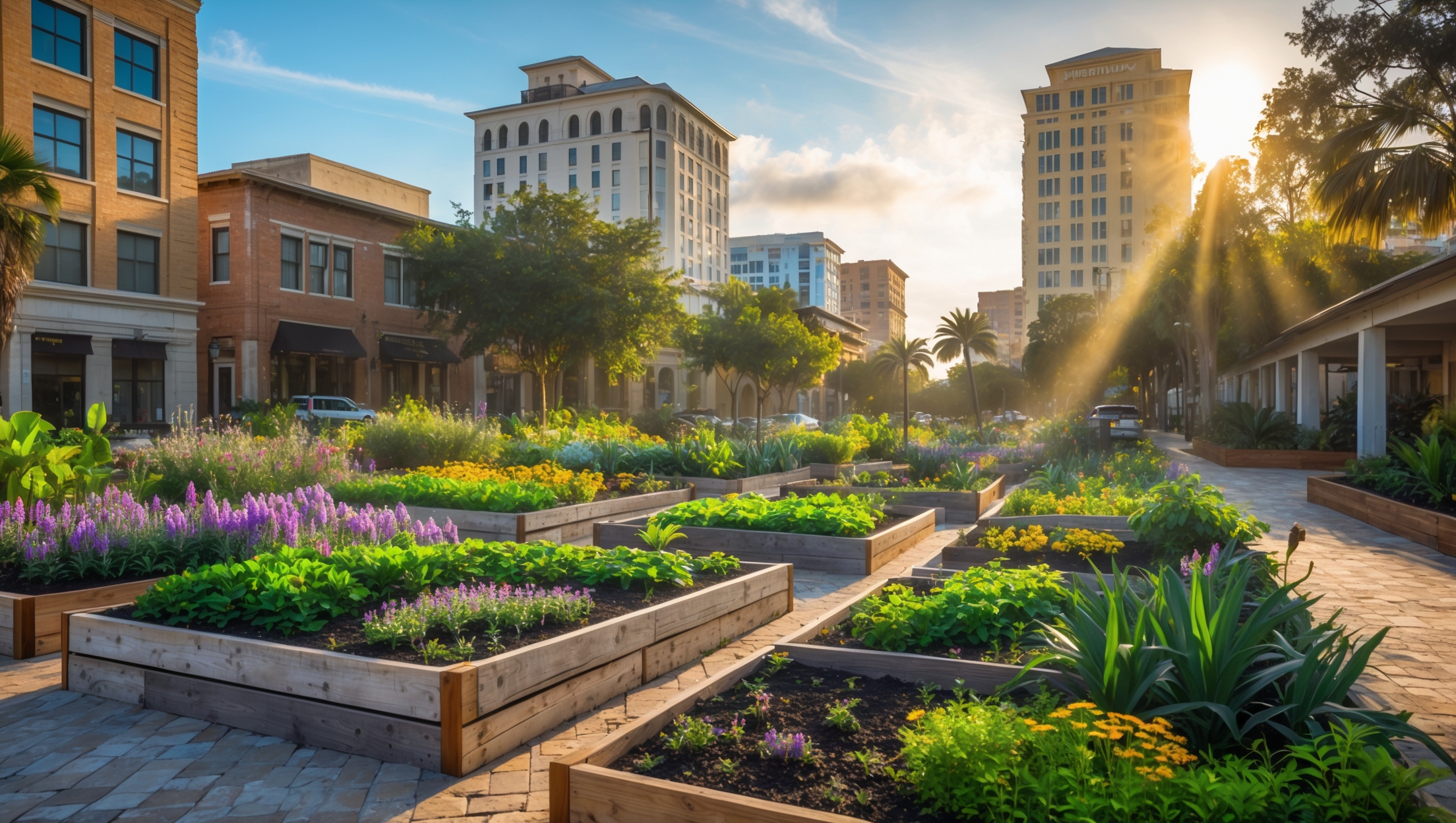
How St. Pete’s Community Gardens Thrive: Maintenance Best Practices, Local Resources & Success Stories

Introduction: The Roots of St. Petersburg’s Vibrant Community Gardens
St. Petersburg, FL, is a city renowned for its sunshine, creativity, and strong sense of community. Over the last decade, community gardens have blossomed in neighborhoods across the city, transforming underutilized lots and public spaces into green oases where residents grow fresh produce, learn from each other, and foster connections. But the visible beauty of these gardens is only the tip of the iceberg. Behind every thriving community garden in St. Pete lies a network of dedicated volunteers, careful planning, and ongoing maintenance guided by local expertise. Whether you’re a new organizer, a seasoned gardener, or a curious neighbor, understanding what it takes to keep a community garden flourishing is key to long-term success. This comprehensive post explores best practices for maintaining St. Pete’s community gardens, highlights local resources every group should know, and shares inspiring local stories that prove—when it comes to gardening, St. Petersburg is in full bloom.
Essential Maintenance Best Practices for St. Pete’s Community Gardens
Soil Health: The Foundation of Every Garden
Healthy soil is the backbone of every productive garden. In St. Petersburg, sandy soils dominate, which means extra care is needed to retain nutrients and moisture. Here’s how top local gardens maintain soil health:
- Regular Composting: Many gardens collaborate with local composting programs or set up on-site bins using food scraps and yard waste. This enriches the sandy soil and cuts down on landfill waste.
- Mulching: Applying pine straw, wood chips, or shredded leaves helps retain moisture and suppress weeds—crucial during the city’s hot, dry spells.
- Soil Testing: At least once a year, successful gardens test their soil with the Pinellas County Extension Office to monitor pH and nutrient levels, then amend as needed with locally sourced compost or organic fertilizers.
Watering Wisely: Strategies for Florida’s Climate
St. Petersburg’s weather swings from torrential summer rains to dry winter spells. Smart watering practices are vital:
- Drip Irrigation: Installing drip systems reduces evaporation, delivers water directly to roots, and saves time for volunteers.
- Rain Barrels: Collecting rainwater from nearby roofs helps supplement irrigation and cuts city water costs. The City of St. Petersburg’s Rainwater Rebate Program is a great resource.
- Watering Schedules: Early morning or late evening watering prevents rapid evaporation and heat stress on plants.
Managing Pests and Plant Diseases Organically
Pest pressure is a constant challenge in Florida’s warm, humid climate. St. Pete’s community gardens have developed several effective organic strategies:
- Companion Planting: Marigolds, basil, and nasturtiums are commonly planted to deter pests naturally.
- Physical Barriers: Row covers and netting protect tender crops from insects and birds without chemicals.
- Regular Inspections: Weekly walk-throughs to spot disease or pest outbreaks early mean faster, targeted responses.
- Encouraging Beneficial Insects: Many gardens plant pollinator strips to attract ladybugs, lacewings, and bees.
Weed Management: Staying Ahead Without Chemicals
Weeds thrive in Florida’s climate, but chemical herbicides are discouraged in shared spaces. Here’s what works:
- Mulching: As mentioned above, thick mulch layers are the first line of defense.
- Regular Hand Weeding: Weekly maintenance by volunteers keeps weeds from establishing deep roots.
- Sheet Mulching: Laying cardboard or newspaper beneath mulch suppresses persistent weeds and improves soil over time.
Tool Care and Shared Equipment
Shared tools require special attention to ensure longevity and safe use:
- Tool Cleaning Station: Setting up a simple station with brushes and water encourages everyone to clean tools after use, preventing rust and disease spread.
- Monthly Maintenance Check: Designate a volunteer to inspect, oil, and repair tools each month.
- Shared Equipment Log: Many gardens keep a sign-out sheet or digital log to track who uses what and note needed repairs.
Pathways, Beds, and Fencing: Keeping Spaces Safe and Accessible
Well-maintained walkways and beds make gardens welcoming to all:
- Pathway Mulching: Wood chips or gravel on paths reduce mud and trip hazards, especially during rainy months.
- Bed Edging: Raised beds with defined edges prevent soil erosion and keep pathways clear.
- Fence Repairs: Monthly checks for loose boards, rusty wire, or gaps deter critters and keep the garden secure.
Local Resources Every St. Pete Community Garden Should Know
Pinellas County Extension Office
This local hub offers free or low-cost workshops, soil testing, plant clinics, and Master Gardener volunteer programs. Their expertise is tailored to St. Pete’s unique climate and soil conditions. Visit their website for a calendar of events and resources.
St. Petersburg Sustainability & Resiliency Division
The city’s Sustainability office provides guidance on water conservation (including rain barrel rebates), composting initiatives, and native landscaping—often critical for community gardens seeking grants or partnerships. Check out the official portal.
Local Nonprofits and Garden Networks
- Edible Peace Patch Project: Supports school and community gardens with volunteers, supplies, and education.
- Keep St. Pete Local: Connects gardens with neighborhood businesses for sponsorships or material donations.
- Florida Native Plant Society (Pinellas Chapter): Offers advice and plant sales focused on sustaining local biodiversity.
City and County Grants
St. Petersburg’s Neighborhood Partnership Grants and Pinellas Community Foundation mini-grants can help with everything from tool purchases to irrigation upgrades. Application cycles typically open each spring or fall—be sure to review eligibility criteria and deadlines carefully.
Garden Supply Stores and Local Nurseries
- Wilcox Nursery & Landscape: Known for native and edible plants ideal for Florida gardens.
- Twigs & Leaves: A friendly spot for organic seeds, soil amendments, and gardening advice.
- Homegrown Hydroponics: A resource for raised bed kits, drip systems, and urban gardening supplies.
Seasonal Maintenance Checklist for St. Pete’s Community Gardens
Spring (March–May)
- Test soil and amend with compost if needed
- Plant tomatoes, peppers, beans, squash, herbs
- Check irrigation lines for leaks and clean rain barrels
- Host a spring kickoff event to recruit new volunteers
Summer (June–August)
- Harvest regularly to prevent spoilage and pest attraction
- Mulch heavily to retain soil moisture
- Monitor for fungal diseases after rainstorms
- Plant heat-tolerant crops (okra, sweet potatoes, southern peas)
Fall (September–November)
- Remove spent summer plants and compost them
- Plant cool-season crops (lettuce, kale, carrots, radishes)
- Repair raised beds and refresh path mulch
- Check fencing and gates for storm damage
Winter (December–February)
- Prune fruit trees and perennial herbs
- Clean and sharpen tools
- Plan crop rotations and order seeds for spring
- Host a winter garden workday and potluck
Success Stories: How Three St. Pete Gardens Flourished
1. Bartlett Park Community Garden: Turning Volunteers into Leaders
Started in 2016, this garden transformed a weedy lot into a productive urban farm. Their secret? A rotating volunteer leadership team, with clear roles for maintenance, events, and outreach. Regular skill-sharing sessions keep everyone engaged and reduce burnout. Today, Bartlett Park’s garden is a model for how empowering members builds sustainability.
2. Childs Park Urban Oasis: Rainwater Harvesting in Action
In 2020, the Childs Park garden installed a rainwater catchment system with city support. By supplementing irrigation with barrels and drip lines, they cut water bills by 40% and taught dozens of neighbors how to set up similar systems at home. Their success inspired a workshop series now hosted at gardens citywide.
3. Historic Kenwood Garden: Embracing Native Plants
Faced with constant pest problems, the Kenwood garden partnered with the Florida Native Plant Society to redesign half their beds with pollinator-friendly natives. The result? Fewer pests, more pollinators, and a healthier ecosystem that draws both gardeners and nature-lovers from across St. Pete.
Tips for Building Community Engagement and Volunteer Retention
- Host Monthly Workdays: Pair garden chores with social events—like potlucks or gardening classes—to build camaraderie.
- Share the Harvest: Donate extra produce to local food banks or set up a neighborhood produce swap.
- Offer Learning Opportunities: Invite Master Gardeners, chefs, or artists to lead workshops in the garden.
- Communicate Regularly: Use group texts, social media, or a bulletin board to keep everyone informed of tasks and events.
- Recognize Contributions: Celebrate volunteer milestones with certificates, small gifts, or a shout-out at community gatherings.
Conclusion: Cultivating a Flourishing Future for St. Petersburg’s Community Gardens
Community gardens are more than plots of soil—they’re living classrooms, sources of healthy food, and powerful connectors of people and ideas. In St. Petersburg, the success of these green spaces is no accident. It stems from a blend of practical maintenance strategies, creative problem solving, and the generous spirit of local volunteers and partners. By prioritizing soil health, water conservation, tool care, and community engagement, organizers can ensure their gardens remain vibrant for years to come.
Tapping into local resources—from the Pinellas County Extension Office to dedicated nonprofits—multiplies each garden’s impact, while seasonal checklists keep teams organized and ready for whatever Florida’s climate brings. And as the stories of Bartlett Park, Childs Park, and Historic Kenwood show, a willingness to innovate and learn from others is at the heart of every thriving garden.
For anyone considering starting or joining a community garden in St. Pete, remember: your efforts will yield more than just vegetables. You’ll be cultivating friendships, skills, and a shared sense of pride in your neighborhood. With the right maintenance practices and a strong local network, St. Petersburg’s gardens will continue to grow—feeding hearts, minds, and tables throughout the city.
The excerpt says many gardens use mulch like pine straw or wood chips to help retain moisture. Are there any cost-effective sources for these materials locally, especially for gardens on a tight budget?
Local tree service companies often have wood chips available for free or at a low cost, since they need to dispose of them anyway. The City of St. Pete’s mulch and compost sites can also be a good source of affordable mulch for community gardens. Additionally, some landscaping supply stores offer discounts to community projects, so it’s worth asking around or coordinating a group purchase.
The article mentions collaborating with local composting programs. For someone totally new, is it better to join an existing composting program or try setting up a small compost bin at first? What have other first-timers found easier in St. Pete?
In St. Pete, many first-timers have found it easier to join an existing composting program before starting their own bin. Local programs often provide guidance, resources, and help you learn the basics without the initial setup hassle. Once you’re comfortable, you can decide if you want to set up your own small bin at home or continue with the community option.
As a busy parent with limited spare time, I’m wondering how often soil testing should realistically be done for a small community garden. Is once a year really enough in St. Pete’s sandy conditions, or do any gardens test more frequently?
For most small community gardens in St. Pete’s sandy soil, soil testing once a year is usually sufficient, especially if you’re following recommended practices for amending and mulching. Some gardens do opt to test twice a year, particularly if they’re troubleshooting persistent plant health issues or experimenting with new crops, but annually is the norm for routine care.
Could you share more about how local gardens in St. Petersburg coordinate compost collection, especially when it comes to food scraps? Are there particular city-run programs or neighborhood partnerships that work best for beginner groups wanting to start their own composting?
Local gardens in St. Petersburg often partner with neighborhood associations or local nonprofits to coordinate compost collection, especially for food scraps. Some gardens use city-run programs like the St. Pete Compost Collective, which offers pickup services and drop-off spots for residents. For beginners, teaming up with established gardens or joining neighborhood composting initiatives can be a practical way to get started and share resources.
For those of us on a tight budget, how affordable is setting up composting on-site versus teaming up with local composting programs? Are there any grants or city support available to help with initial costs?
Setting up on-site composting can be quite affordable, especially if you use simple methods like a basic compost bin or pile. Partnering with local composting programs might save you time and effort, and sometimes they provide free or discounted bins. In St. Pete, there are occasional small grants and city support for community gardens, including composting initiatives. It’s a good idea to check with the city’s sustainability office or local gardening organizations for current funding opportunities and guidance.
I’m new to gardening in St. Pete, and I noticed you mentioned working with local composting programs. Could you recommend any specific organizations that help with compost pickup or education for beginner community gardens?
Absolutely! In St. Pete, organizations like Pinellas Community Compost and Keep Pinellas Beautiful offer compost pickup, workshops, and educational resources tailored for beginners. These groups work closely with community gardens, making it easy to learn composting basics and set up waste collection. If you’re just starting out, reaching out to them is a great way to get support and practical tips for your garden.
With the emphasis on soil testing through the Pinellas County Extension Office, could you elaborate on what the process usually costs for a community garden and how often most gardens find it necessary to retest or amend their soil?
Soil testing through the Pinellas County Extension Office is generally very affordable, often costing around $7 to $10 per sample for a basic test. Many community gardens choose to test their soil once a year—usually before planting season—to monitor nutrient levels and check for contaminants. Depending on the results, amending the soil and retesting every 1 to 2 years is common to ensure optimal growing conditions.
For someone interested in joining a community garden, how much time do volunteers typically need to commit each week to help with ongoing maintenance like mulching and composting? Is there a certain season when help is needed most?
Volunteers usually spend about 2 to 4 hours per week on regular maintenance tasks such as mulching, composting, and watering. The busiest times are spring and early summer, when planting and preparing beds require extra hands. However, all seasons need some help—especially with weeding and compost turning. You can often coordinate your schedule with other members to share the workload if you have limited time.
Can you elaborate on how St. Pete’s community gardens coordinate soil testing with the Pinellas County Extension Office? Is there a recommended schedule or protocol that new organizers should follow to get the most accurate results?
St. Pete’s community gardens typically work directly with the Pinellas County Extension Office by collecting soil samples as a group or individually, then submitting them for analysis. The recommended protocol is to test soil before planting each new season—usually twice a year, in early spring and fall. New organizers should contact the Extension Office for sample kits and follow their guidelines on depth, area, and labeling to ensure accurate, useful results.
You mention testing the soil with the Pinellas County Extension Office once a year. Could you explain how much that typically costs and how long it takes to get results? I’m trying to figure out if it’s doable with our family’s budget and schedule.
The Pinellas County Extension Office generally charges around $7 to $10 per soil sample for basic testing. After you submit your sample, it usually takes about 1 to 2 weeks to receive results. It’s a budget-friendly option, and the turnaround time is manageable for most families.
For families with younger children who want to get involved in maintaining the community garden, are there specific local resources or workshops you recommend for learning about mulching and watering techniques suited for Florida’s hot, dry periods?
Families with young children can look into programs at the St. Pete Library’s seed exchange and workshops, which sometimes focus on kid-friendly gardening activities, including mulching and watering. Local organizations like the St. Petersburg Sustainability Council and Pinellas County Extension also offer seasonal classes and demonstrations tailored to Florida’s climate, where families can learn practical techniques together. Checking with your nearest community garden can connect you to upcoming family-friendly workshops as well.
I noticed you mentioned that local community gardens often work with the Pinellas County Extension Office for soil testing. How expensive is it to get your soil tested there, and do they provide detailed recommendations for what amendments to add afterward?
Soil testing through the Pinellas County Extension Office is quite affordable, usually costing around $10 to $15 per sample. After you submit your sample, they provide a detailed analysis report that includes specific recommendations on which nutrients or amendments to add to your soil for optimal plant growth. This service is very helpful for both new and experienced gardeners.
Our family would love to volunteer, but we’re not sure how much time is actually needed for things like mulching, composting, or soil testing each month. Can you share what a typical maintenance schedule looks like for a St. Pete community garden?
Most St. Pete community gardens ask volunteers to commit 2-4 hours per month, though you’re always welcome to do more if you’d like. Tasks like mulching and composting are usually done once or twice a month, while soil testing happens every few months or seasonally. Many gardens set up monthly workdays where families can join in together, making it easy to fit volunteering into your schedule.
I noticed you mention that local gardens often collaborate with composting programs or set up their own bins. For someone just getting started, would it be better to partner with a local program or try building a composting setup on-site? Are there cost or maintenance differences?
Both partnering with a local composting program and setting up your own compost bin have their pros and cons. Partnering with a local program is usually less work—someone else manages the compost, and you may receive finished compost in return. Setting up your own bin on-site gives you immediate access to compost and more control, but it does require more time and ongoing maintenance. Costs for on-site bins can be low if you build them yourself, but pre-made bins or tumblers can get pricey. If you’re just starting out, connecting with a local program can be an easier, low-risk way to learn.
I noticed you mentioned using pine straw, wood chips, or shredded leaves for mulching in St. Pete’s community gardens. Do you find one of these options works better than the others for retaining moisture in sandy soil, or does it depend on the types of plants being grown?
In sandy soils like those in St. Pete, all three mulch options—pine straw, wood chips, and shredded leaves—help retain moisture, but wood chips generally provide the best long-term moisture retention because they break down more slowly and offer a thicker barrier. Pine straw is lighter and good for acid-loving plants, while shredded leaves work well but decompose faster. Ultimately, your choice can depend on the plants you’re growing and how often you want to replenish the mulch.
For gardens dealing with the sandy soil in St. Petersburg, is there a particular type of mulch that works best throughout the hot, dry spells, or do most gardens just use whatever organic material they can find locally?
In St. Petersburg’s sandy soil and hot, dry spells, most community gardens prefer using organic mulches like straw, shredded leaves, or wood chips, since these materials retain moisture well and eventually enrich the soil as they break down. While some gardens use whatever organic material is locally available, straw is especially popular for its effectiveness in reducing evaporation and keeping roots cool.
I’m curious about the annual soil testing mentioned with the Pinellas County Extension Office. How do organizers typically handle the logistics and costs for this in a community garden setting, especially for smaller groups with limited budgets?
Community garden organizers often coordinate soil testing as a group to share costs, which helps make it more affordable for everyone involved. Smaller groups sometimes seek assistance from the Pinellas County Extension Office, which may offer reduced rates or occasional free soil testing days. Some gardens budget a small amount each year for testing or apply for local grants to cover the cost. It’s also common for volunteers to help collect and deliver soil samples, keeping logistics simple.
The article talked about mulching with pine straw or wood chips to help with moisture and weeds. For a budget-conscious group, are there local sources or city programs that provide these materials at low or no cost for community gardens?
Yes, St. Pete’s city Sanitation Department often has free mulch available for residents and community groups; you can contact them to check current availability and pickup details. Additionally, local tree trimming companies sometimes offer free wood chips to community gardens as a way to dispose of their excess. It’s a good idea to call around or post in local gardening forums to connect with these resources.
You mention that successful community gardens in St. Pete do annual soil testing through the Pinellas County Extension Office. How quickly can beginner groups typically get results and recommendations, and is there usually a fee for this service?
Beginner groups can usually expect to receive soil test results and recommendations from the Pinellas County Extension Office within two to three weeks after submitting their samples. There is typically a small fee, often around $10 to $15 per sample, to cover testing costs. The extension staff will provide detailed advice based on your results to help guide your garden’s soil health.
I noticed the article mentions testing soil with the Pinellas County Extension Office each year. Can you share how much this process typically costs and whether there are any free or discounted resources available for community gardens in St. Pete?
Annual soil testing through the Pinellas County Extension Office generally costs around $7 to $10 per sample, depending on the specifics of the test. Some community gardens in St. Pete may qualify for free or discounted testing, especially if they’re part of local nonprofit initiatives or educational programs. It’s a good idea to reach out directly to the Extension Office and mention your community garden status to explore current offers or partnerships.
With St. Pete’s sandy soil and hot, dry spells, what mulching material have you found works best for both water retention and weed control? I’m debating between pine straw and wood chips and would love some feedback from people who’ve tried both.
In St. Pete’s climate, both pine straw and wood chips are popular choices, but wood chips generally offer better long-term water retention and weed suppression. They break down slowly and form a thicker barrier. Pine straw is lighter, lets the soil breathe, and is easy to spread, but may not suppress weeds as effectively. Many gardeners use wood chips around perennial beds and pine straw for annuals or paths. It can help to try both in small areas to see which suits your garden’s needs best.
I noticed the article mentions that many St. Pete community gardens use locally sourced compost and organic fertilizers. Can you recommend affordable places in the area where new organizers can purchase or get access to these materials, especially for gardens just starting out on a limited budget?
Absolutely! For affordable compost and organic fertilizers in St. Pete, many community gardens partner with Pinellas Community Compost, which sometimes offers free or discounted compost for local projects. Local farmers markets, such as the Saturday Morning Market, often have vendors selling organic amendments in smaller, budget-friendly quantities. Some city programs and neighborhood associations also provide compost giveaways or bulk discounts for new community initiatives, so it’s worth reaching out to those groups as well.
With sandy soil being such a challenge in St. Pete, have any gardens experimented with adding different types of mulch or soil amendments beyond pine straw or wood chips? I’d love to hear if anyone’s tried something unusual that worked well for retaining moisture.
Yes, some community gardens in St. Pete have tried unique approaches to improve sandy soil. A few have used coconut coir and shredded leaves as mulch, both of which helped with moisture retention. Others experimented with incorporating composted mushroom soil and biochar to boost water-holding capacity. These materials aren’t as common as pine straw or wood chips but have shown positive results in holding moisture and improving soil texture.
I noticed you talked about mulching with materials like pine straw and wood chips to help in the dry season. Are there preferred sources for getting these materials locally, or any community partnerships that supply them at a discount for gardeners on a tight budget?
Local garden centers and landscaping supply stores in St. Pete often carry pine straw and wood chips, but community gardens sometimes have partnerships that can help. Some city programs and local tree services offer free or discounted mulch, especially after tree pruning or storm cleanups. It’s also worth asking within your community garden group or neighborhood—sometimes members coordinate bulk purchases to lower costs.
I noticed you mention collaborating with local composting programs for soil health. Can you share which programs or organizations in St. Pete have been the most helpful, and how a small business might get involved or start a partnership with them?
In St. Pete, Pinellas Community Compost and Suncoast Compost have been especially supportive for community gardens and small businesses. Many groups start by reaching out directly to discuss pickup schedules, drop-off points, or educational workshops. As a small business, you could offer your food scraps or host a compost collection site. Both organizations are open to partnerships, so contacting them with your business needs and sustainability goals is a great first step.
I’m curious about the soil testing process with the Pinellas County Extension Office. How long does it usually take to get results back, and do they offer recommendations based on the test results for specific crops grown in St. Pete?
The Pinellas County Extension Office typically returns soil test results within 2 to 3 weeks after they receive your sample. Along with the results, they do provide detailed recommendations tailored to local soil conditions and can advise you on adjustments for specific crops commonly grown in St. Pete. This guidance helps gardeners optimize soil health for better yields.
If our neighborhood wants to start a garden but our soil is really sandy, do you recommend focusing on mulching or composting first to see results faster, or should both be done from the start?
Both mulching and composting are important for improving sandy soil, but if you want to see results quickly, starting with composting will directly boost soil fertility and help retain moisture. Mulching is also valuable, as it prevents water loss and further enriches the soil over time. Ideally, do both together if possible, but if you need to prioritize, add compost first and then mulch on top.
I’m curious how community gardens in St. Pete handle moisture retention during the longest dry spells, especially given the sandy soil. Have some mulch options like pine straw or wood chips proven significantly more effective or affordable than others over time?
In St. Pete’s community gardens, mulch is key for moisture retention, especially during dry stretches with sandy soil. Many gardeners have found that wood chips outperform pine straw in holding moisture longer, though both are used. Wood chips break down more slowly and often come free from local tree services, making them both effective and affordable in the long run. Pine straw is also popular but may need more frequent replenishing.
Could you share more about how new organizers can connect with experienced volunteers or local experts in the area? Are there any workshops or programs you’d recommend for someone just starting a community garden in St. Pete?
New garden organizers in St. Pete can reach out to local groups like the St. Pete Community Gardens Coalition or connect with Pinellas County Extension for expert advice. They often host workshops and volunteer-led events where you can meet experienced gardeners. The article also highlights success stories that mention regular meetups and community workdays—attending those is a great way to build connections and learn hands-on skills.
For someone just getting started, is it better to set up an on-site compost bin or join an existing local composting program in St. Pete? I’m trying to figure out what would be easier and more cost-effective for a small community group.
For a small community group just starting out, joining an existing local composting program is usually easier and more cost-effective. These programs handle collection and processing, saving you the effort of managing a bin, balancing materials, and troubleshooting issues. Once your group grows and becomes more confident, you could consider setting up an on-site compost bin for greater control and benefits.
I noticed mulching is recommended to retain moisture and suppress weeds, especially during hot, dry spells. In your experience, which mulch type—pine straw, wood chips, or shredded leaves—works best in St. Pete’s climate, and are there any local sources you’d recommend?
In St. Pete’s warm, humid climate, wood chips and shredded leaves are both excellent choices for mulch, as they break down slowly and provide good moisture retention. Shredded leaves are especially beneficial if you have access to them, since they enrich the soil as they decompose. For local sources, consider checking with the city’s yard waste recycling centers or connecting with tree trimming services, as they often have wood chips available for the community.
Our community group is just starting a new garden project in St. Pete and we’re concerned about the sandy soil. Could you share more details about what types of local compost programs have worked best for beginner gardens, and how to get involved with them?
Many beginner gardens in St. Pete have successfully improved sandy soil by partnering with local compost programs. The article highlights the St. Pete Eco-Village and Pinellas Community Compost as great options—they both offer affordable, nutrient-rich compost and workshops for newcomers. You can get involved by attending their community events or signing up for compost pickup or drop-off services. These groups are welcoming to beginners and often provide guidance on how to mix compost into Florida’s sandy soil for better plant growth.
I noticed you mentioned soil testing with the Pinellas County Extension Office. How much does it typically cost to get your soil tested there, and is it something individuals or only groups can access? Would love to know before getting started.
The Pinellas County Extension Office offers soil testing services to both individuals and groups, so anyone interested in gardening can take advantage of it. Typically, the basic soil test costs around $3 to $7 per sample. You just need to collect your soil sample following their guidelines and bring it to the office. It’s an easy and affordable way to get started on the right foot.
Do you know if there’s a recommended schedule for soil testing in St. Petersburg’s gardens, or is once a year really enough given the sandy soil? Also, what’s the usual cost for working with the Pinellas County Extension Office on this?
For St. Petersburg’s sandy soils, soil testing once a year is generally sufficient for most community gardens, unless you’re noticing specific problems or making major changes. The Pinellas County Extension Office typically charges around $7–10 per basic soil test. They also provide specific instructions for sampling and can help interpret the results, which is very helpful for local gardeners.
I noticed you mention that St. Pete’s community gardens often collaborate with local composting programs. Could you share some tips on finding these programs or setting up a partnership if my neighborhood wants to start composting together?
To find local composting programs in St. Pete, start by contacting the city’s sustainability office or local environmental organizations, as they often have a list of community initiatives. If you want to set up a partnership, reach out to established gardens or composting groups and propose a meeting to discuss mutual goals and logistics. Hosting a neighborhood meeting can help gauge interest and organize volunteers to get your composting project started.
Can you share more about the soil testing process with the Pinellas County Extension Office? How expensive or time-consuming is it for someone new, and do you need any special tools?
The Pinellas County Extension Office makes soil testing quite accessible for beginners. You simply collect a small soil sample from your garden, place it in a clean container or bag, and take or mail it to the Extension Office following their instructions. No special tools are needed—just a trowel or spoon. The cost is modest, usually under $10 per sample. Results typically come back within one to two weeks, and staff can help you interpret them.
For gardens just getting started, are there any city-supported composting programs or resources available specifically in St. Petersburg, or do new organizers mostly rely on independent efforts to build up soil quality?
In St. Petersburg, new community gardens can benefit from both city-supported and independent resources for composting. The city offers composting workshops and discounted compost bins to residents, and there are partnerships with local organizations that provide composting education. Many gardens supplement these resources with their own composting efforts, but organizers are encouraged to connect with the city’s Sustainability and Resilience Division for current programs and support.
I’m curious about the soil testing process with the Pinellas County Extension Office. How much does it cost, and do they offer guidance on interpreting the results and choosing the right amendments for sandy soils?
The Pinellas County Extension Office usually charges a small fee—around $7 to $10 per soil sample—for testing. They do provide assistance with interpreting your results, helping you understand pH, nutrient levels, and recommendations. If your soil is sandy, their staff can guide you on the best amendments to improve fertility and structure. You can drop off samples and discuss results directly with their horticulture agents.
I noticed you mentioned that many gardens in St. Pete collaborate with local composting programs or set up their own bins. Are there any city guidelines or restrictions new gardens should know about before starting on-site composting?
Yes, St. Pete has a few guidelines for on-site composting in community gardens. Compost bins should be enclosed to prevent pests, and only approved organic materials like fruit and vegetable scraps, leaves, and coffee grounds are allowed—meats and dairy should be avoided. Gardens are encouraged to maintain bins regularly to minimize odors. It’s also wise to contact the city’s Department of Sanitation for the latest rules or assistance before setting up your composting system.
I’m curious about the soil testing process you described with the Pinellas County Extension Office. How much does it usually cost for a community garden to get their soil tested, and how long does it take to get results back?
The Pinellas County Extension Office typically charges around $10 to $15 per soil sample for basic testing, though fees can vary depending on the type of analysis you need. After submitting your sample, you can usually expect results within 1 to 2 weeks. It’s a straightforward process and helps ensure your community garden’s soil is healthy and productive.
You mentioned testing soil yearly with the Pinellas County Extension Office. What’s the average cost and turnaround time for those soil tests, and are there any grants or resources that can help offset those expenses for smaller gardens?
The Pinellas County Extension Office typically charges $10–$15 per basic soil test, with results usually ready in about 1–2 weeks. For smaller gardens, some local organizations, like Keep Pinellas Beautiful or neighborhood associations, occasionally offer grants or vouchers to help cover soil testing costs. It’s a good idea to check with the Extension Office directly about current community programs or possible group discounts.
How do St. Pete community gardens handle the initial costs of setting up composting systems or on-site bins? Are there any local grants or city programs that help groups get started with these resources?
St. Pete community gardens often manage initial composting setup costs with the help of local partnerships, fundraising efforts, and support from the city. The article mentions that the city of St. Petersburg offers small grants and sometimes provides materials or technical guidance for starting composting systems. Additionally, local organizations and neighborhood associations may offer mini-grants or sponsor equipment to help new gardens get established with compost bins.
Can you share more about the soil testing process with the Pinellas County Extension Office? I’d like to know roughly what it costs and how long it takes to get results back, since keeping up with soil health seems to be key for garden success here.
The Pinellas County Extension Office offers soil testing services to help gardeners monitor soil health. You can collect a soil sample from your garden and bring it to their office. The basic test typically costs around $7 to $10 per sample. Once submitted, results are usually available within 2 to 3 weeks. The report will include pH levels and nutrient recommendations, which are really helpful for maintaining a healthy community garden.
For gardens dealing with especially sandy soil, have you found mulching with pine straw to be more effective than using wood chips or shredded leaves? I’d love to hear what local gardeners have learned about the pros and cons of each option in St. Pete’s climate.
Local gardeners in St. Pete often share that pine straw works well for sandy soils because it helps retain moisture without compacting the ground, and it’s readily available. Wood chips are good for long-term mulching but may take longer to break down and can sometimes tie up nitrogen as they decompose. Shredded leaves add nutrients but might blow away in windy conditions. Many community gardens use a mix, depending on plant needs and what’s accessible.
As someone considering starting a new community garden in St. Petersburg, I’m curious about soil testing. How much does it typically cost to have soil tested with the Pinellas County Extension, and how long do the results take to come back?
With the Pinellas County Extension, basic soil testing usually costs around $7 to $10 per sample. Once you submit your soil sample, results typically come back within one to two weeks. The Extension office staff can also help interpret results and recommend soil amendments tailored to your garden’s needs.
Given St. Pete’s sandy soil and the challenge of moisture retention, have any local gardens found a specific type of mulch that works best for both weed suppression and holding water through those really hot periods?
Yes, several community gardens in St. Pete have found that applying a thick layer of pine bark mulch or shredded wood mulch is especially effective. These types help retain moisture well in sandy soil and are readily available from local suppliers. Gardeners report they also do a good job at suppressing weeds during the hottest months while breaking down slowly, which benefits soil health over time.
The article mentions testing soil at least once a year through the Pinellas County Extension Office. How expensive is this testing process, and do they offer any guidance on understanding the results for people who are new to gardening?
Soil testing through the Pinellas County Extension Office is quite affordable—basic tests generally cost around $10 to $15 per sample. The office is also very supportive when it comes to interpreting results. Staff members often provide explanations, recommendations, and even workshops to help beginners understand what the results mean and how to improve their garden soil.
You reference annual soil testing through the Pinellas County Extension Office. Are there any recommendations on how to budget for this, or do any local grants or programs help cover testing and soil amendment costs for new community gardens?
Annual soil testing costs can add up, but many community gardens in St. Pete budget for them as a recurring yearly expense, often estimating $20–$30 per test. Some local grants, such as those from the City of St. Petersburg’s Neighborhood Partnership Program or Tampa Bay Estuary grants, may help cover testing and soil amendment costs. The Pinellas County Extension Office can also occasionally direct new gardens to available funding or discounted services, so it’s worth reaching out to them directly when planning your budget.
For someone new to organizing a community garden in St. Pete, how difficult is it to establish partnerships with local composting programs? Are there any tips for getting started or things to watch out for based on local experience?
Establishing partnerships with local composting programs in St. Pete is quite doable, especially since many organizations are passionate about sustainability. Start by reaching out to local nonprofits, farmers markets, or the city’s environmental department. Be clear about your garden’s goals and how a partnership could benefit both sides. From local experience, make sure to discuss logistics like pickup schedules and compost quality. Also, check if any permits or guidelines apply to compost use in your area.
Our neighborhood is thinking of starting a garden, but we’re worried about the sandy soil drying out fast. Between mulching and composting, which one would you say has made the biggest difference in keeping plants healthy during St. Pete’s dry spells?
In St. Pete’s community gardens, mulching has been the most effective for keeping soil moist during dry spells. A thick layer of organic mulch, like wood chips or straw, helps slow evaporation and keeps roots cool. Compost is also important for building soil health, but for immediate water retention, mulching makes the biggest difference. Many gardens use both together for best results.
You mentioned that most gardens test their soil with the Pinellas County Extension Office. Is this something individual gardeners can do as well, or is it only available to larger groups? Also, how much does soil testing typically cost in St. Pete?
Individual gardeners are absolutely welcome to use the soil testing services offered by the Pinellas County Extension Office. You don’t have to be part of a larger group or community garden to participate. The cost is quite reasonable—basic soil tests typically range from $7 to $10 per sample, depending on the specifics. Just contact the Extension Office for instructions on how to collect and submit your soil sample.
We have really sandy soil at our location, so I’m curious how long it typically takes, using regular composting and mulching, to see noticeable improvements in soil quality for vegetable crops in St. Pete’s conditions?
In St. Pete’s sandy soils, you can expect to see noticeable improvements in soil quality within one to two growing seasons if you consistently add compost and use mulch. Regular amendments help boost organic matter, moisture retention, and nutrient content fairly quickly, especially with seasonal crops. Keep up the routine and you’ll likely notice better vegetable growth and healthier soil within a year.
You mention testing soil at least once a year through the Pinellas County Extension Office. Is there a recommended time of year to do this, or could certain weather patterns in St. Pete affect the best timing for soil improvement projects?
In St. Pete, it’s generally best to test your soil in late winter or early spring, before major planting begins. This timing gives you a clear picture of your soil’s condition after winter and allows time for any needed amendments. Heavy rains or hurricane season can leach nutrients, so avoid soil testing right after major storms for the most accurate results.
After getting soil tested by the Pinellas County Extension Office, what are the next immediate steps if the results show low nutrients or pH issues? Is there a quick way to address these problems, or does it take a whole season to see improvements?
If your soil test from the Pinellas County Extension Office shows low nutrients or pH issues, you can take immediate steps to improve it. For low nutrients, add organic compost or a balanced fertilizer as recommended in your test results. If pH is off, use lime to raise pH or sulfur to lower it. While some improvement can be seen within weeks, especially with nutrients, full soil health may take a season or more. Regularly recheck your soil to monitor progress.
You mentioned that most community gardens test their soil at least once a year through the Pinellas County Extension Office. If we’re just starting out and on a tight budget, are there any affordable soil testing options or basic at-home kits you’d recommend to get us going?
Starting with a basic at-home soil test kit is a practical and affordable option. Many garden centers and hardware stores sell simple kits for about $10–$20 that check pH and key nutrients. While these aren’t as comprehensive as lab tests, they can help you identify major issues early on. Once your garden is established, you can consider the more detailed analysis from the Extension Office if needed.
Could you share more on how often community gardens in St. Petersburg need to mulch their beds, and if certain types of mulch perform better during the hot, dry spells mentioned?
In St. Petersburg, community gardens typically refresh their mulch every 2 to 3 months, especially before and during hot, dry spells. Organic mulches like pine straw, wood chips, or shredded leaves are preferred because they help retain moisture and keep roots cool. Pine straw, in particular, is popular here as it doesn’t mat down as much and allows water through more easily during summer heat.
I’m curious about the soil tests you mentioned with the Pinellas County Extension Office. How much do those typically cost, and is there any support or discounts for community gardens in St. Pete?
Soil tests through the Pinellas County Extension Office usually cost around $10 to $15 per sample, depending on the type of analysis you need. Community gardens in St. Pete can sometimes qualify for reduced rates or support, especially if they’re part of a nonprofit or city initiative. It’s best to contact the Extension Office directly and let them know you’re representing a community garden, as they may have additional resources or discounts available.
I see that a lot of gardens use composting to improve the sandy soil in St. Pete. For someone just starting out, is it better to set up my own compost bin at the garden or work with one of the local composting programs you mention? What are the pros and cons?
Setting up your own compost bin in the garden gives you control over what goes in and provides compost right where you need it, but it does require regular maintenance and space. Working with a local composting program can save time and effort, especially if you’re just starting out, and these programs often process larger amounts more efficiently. However, you may need to transport the compost to your garden. Many gardeners start with a program and gradually shift to their own bin as they gain experience.
You mention annual soil testing with the Pinellas County Extension Office. After receiving test results, what are some common amendments or next steps that St. Pete garden coordinators typically take to address issues like low nutrients or pH imbalances?
After getting soil test results, St. Pete garden coordinators often add compost or well-rotted manure to boost nutrients. For low pH (acidic soils), they might mix in garden lime, while high pH soils can be improved with elemental sulfur. If specific nutrients like nitrogen, phosphorus, or potassium are lacking, targeted organic fertilizers are usually applied. Coordinators also re-test the soil after making amendments to monitor improvements.
For someone looking to start a small community garden in one of St. Pete’s underutilized lots, what local resources or grants are realistically available to help cover initial costs like soil amendments and irrigation setup?
If you’re starting a community garden in St. Pete, local resources include the St. Petersburg Parks and Recreation Department, which sometimes offers support or guidance for new gardens. You can also look at the Pinellas Community Gardens Coalition, which connects gardeners to local expertise and may know of microgrant opportunities. For funding, consider applying for neighborhood mini-grants from the City of St. Petersburg, which can help with costs for soil, compost, and irrigation. Reaching out to local garden clubs and non-profits can also lead to possible supply donations or small grants.
You mentioned many gardens collaborate with the Pinellas County Extension Office for soil testing. Do they provide any free resources or workshops for beginners, or is there usually a fee involved for these services?
The Pinellas County Extension Office often offers free or low-cost workshops and classes on gardening, soil testing, and related topics, especially for beginners. Some resources like informational pamphlets and online guides are usually free. There may be a small fee for certain services, like comprehensive soil tests, but basic educational events are commonly accessible at little to no cost.
Can anyone share more about setting up on-site composting bins? I’d love to start one with my kids but worry about pests or odors in our neighborhood. Are there particular bin styles or practices that have worked well in St. Pete’s climate?
On-site composting works really well in St. Pete’s climate, but it’s important to use enclosed bins to help control pests and odors. Many local gardeners prefer sturdy plastic tumblers or lidded bins with air vents. Turn the compost regularly, keep food scraps buried under browns like leaves, and avoid adding meat or dairy. These steps help minimize smells and keep critters away, making composting family-friendly and neighborhood-appropriate.
The article talks about testing soil through the Pinellas County Extension Office. How much does soil testing usually cost for a community garden, and do they offer discounts or resources specifically for volunteer-run projects?
Soil testing through the Pinellas County Extension Office typically costs about $10 to $15 per sample, but prices can vary depending on the type of analysis needed. For community gardens, especially those run by volunteers, the Extension Office sometimes provides educational resources, guidance, or even reduced rates. It’s a good idea to contact them directly to ask about current discounts or any special programs for volunteer-led projects.
The mulch suggestions seem really helpful for moisture retention in sandy soil. Has there been any noticeable difference in plant health or yield between gardens using pine straw versus those using wood chips or leaves? I’d love some tips on choosing the best mulch locally.
Gardeners in St. Pete have seen that pine straw and wood chips both improve moisture retention, but wood chips tend to last longer and provide a bit more weed suppression. Leaves break down quickest and enrich the soil, which helps plant health but may require more frequent replenishing. For sandy soil, all three work well, so consider what’s easily available to you—many local tree services provide free wood chips, while pine straw and leaves can often be gathered from your neighborhood.
I’m interested in starting a small community garden in my neighborhood. For groups with limited space or resources, do you recommend collaborating with existing local composting programs, or is it more practical to set up an on-site compost bin from the start?
For groups with limited space or resources, collaborating with existing local composting programs can be a great way to get started quickly and reduce setup challenges. However, if your group wants to manage compost on-site and has a suitable spot, a small compost bin can work well too. Many St. Pete gardens use both methods, starting with local programs and adding an on-site bin as the garden grows.
You mentioned many community gardens set up their own compost bins using local food scraps and yard waste. Are there any regulations or guidelines in St. Petersburg that organizers should be aware of before starting onsite composting?
Yes, in St. Petersburg, community gardens need to follow certain city ordinances when setting up compost bins. Bins should be rodent-proof, well-ventilated, and maintained to prevent odors or attracting pests. Composting meat, dairy, or pet waste is not allowed—use only plant-based materials. It’s also recommended to check with the city’s sanitation department or the Pinellas County Extension Office for any updated guidelines.
You mentioned using pine straw, wood chips, or shredded leaves for mulching to retain moisture in the hot, dry spells. Is there a recommended local source for these materials, or are some options more sustainable or cost-effective than others for community gardens in St. Pete?
For St. Pete community gardens, tree trimming companies often have free or low-cost wood chips; local yard waste facilities sometimes offer pine straw or shredded leaves. Shredded leaves are especially sustainable if collected from neighborhoods after raking season. Wood chips typically last longer, while pine straw breaks down faster and enriches the soil. Choosing what’s most cost-effective depends on your group’s access—often, wood chips from local arborists are both affordable and sustainable.
You mention using pine straw, wood chips, or shredded leaves for mulching to help with moisture retention in the sandy St. Pete soil. Is there a benefit to choosing one type of mulch over another, or can they be mixed together without issues?
Each type of mulch—pine straw, wood chips, and shredded leaves—offers slightly different benefits. Pine straw is lightweight and good for acid-loving plants, wood chips break down slowly and help improve soil structure, while shredded leaves decompose quickly and add nutrients. You can mix them together without any issues, which can actually provide a broader range of benefits for your garden beds.
When you say that successful gardens mulch with pine straw or wood chips to retain moisture, is one option better than the other for St. Pete’s climate? I’m not sure which to choose for my first garden plot.
Both pine straw and wood chips work well for moisture retention in St. Pete’s climate, but they have slight differences. Pine straw breaks down faster and adds acidity, which some plants like. Wood chips last longer and do a great job of suppressing weeds. If you’re growing acid-loving plants, pine straw is a good choice. Otherwise, wood chips are a reliable, low-maintenance option for most garden beds.
You mention that regular soil testing is important and that the Pinellas County Extension Office helps with this. Could you clarify if there are any costs involved or if there’s a waitlist to use their testing services?
The Pinellas County Extension Office does provide soil testing services, but there is usually a small fee, depending on the type of test you request. For basic soil analysis, the cost is typically minimal. There isn’t generally a waitlist; you can pick up a sample kit, submit your sample, and get results in a few weeks. It’s best to call ahead to confirm current pricing and procedures.
I’m curious how often the gardens find they need to amend their soil after annual testing, and what kinds of adjustments are most common for the sandy soil in this area. Is compost usually enough, or do other amendments end up being necessary?
After annual soil testing, many St. Pete community gardens find that their sandy soil often needs more than just compost. While adding compost does improve structure and fertility, the most common additional amendments are organic fertilizers for nitrogen, as well as gypsum or lime to adjust pH and boost calcium. Sometimes trace minerals like magnesium or iron are also needed, depending on specific test results.
I noticed you recommend mulching with pine straw, wood chips, or shredded leaves. Is one type of mulch better than the others for holding moisture during the really hot months here in St. Pete?
In St. Pete’s hot summer months, wood chips generally do the best job at retaining soil moisture because they break down more slowly and form a thicker barrier against evaporation. Pine straw and shredded leaves are still good options and add organic matter, but they may dry out or decompose faster. If moisture retention is your top priority, wood chips are your best bet.
I’m interested in starting a community garden in my neighborhood and noticed you mentioned collaborating with local composting programs. Are there any specific organizations in St. Pete that will help new gardens get started with compost bins or pickup services?
In St. Pete, Pinellas Community Compost and the St. Petersburg Sustainability Office are great starting points for new gardens. Pinellas Community Compost often offers workshops, compost bin discounts, and pickup services for gardens. The St. Pete Sustainability Office can also connect you with local programs or grants to help set up composting. Reaching out to these organizations should get you the support and resources you need to start composting in your garden.
Our team struggles to keep plants alive during St. Pete’s dry spells. Are there local resources or specific mulching techniques that the community gardens find especially effective for moisture retention in such sandy soil?
Many St. Pete community gardens use organic mulch like pine straw, shredded leaves, or wood chips to help retain moisture in sandy soil. Applying a 2–3 inch layer around your plants can significantly reduce evaporation. For local resources, you can connect with the Pinellas Community Gardens group, which regularly shares mulch supplies and tips tailored for our area’s unique conditions.
You mentioned most St. Pete gardens use local composting programs or set up on-site bins. For someone starting out, is it better to join an existing city program or create our own system from scratch? What are the pros and cons based on your experience?
Joining an existing city composting program is often easier for beginners since you benefit from established processes, regular pickups, and sometimes educational support. It saves time and requires less ongoing effort. Setting up your own system gives you more control and immediate access to compost, but it takes more work to maintain and manage. Many community gardens in St. Pete start with city programs and later add their own bins once they’re more comfortable. Consider your group’s time, space, and experience before deciding.
I noticed the article mentions annual soil testing with the Pinellas County Extension Office. For someone new to organizing a garden, how much does this typically cost and is there financial assistance available for community gardens starting out?
The cost for soil testing through the Pinellas County Extension Office is typically around $7 to $10 per sample, but prices can vary depending on the type of test you need. For new community gardens, some local grants or city programs may help cover these costs. It’s a good idea to contact the Extension Office directly, as they sometimes offer free or discounted testing for community projects.
The suggestion to mulch with pine straw or wood chips sounds helpful for hot, dry spells. Are there local resources or programs that provide mulch at a reduced cost for community gardens or families on a tight budget?
Yes, in St. Pete there are a few options for affordable mulch. The city’s sanitation department sometimes offers free or low-cost mulch from recycled yard waste—check with your local waste facility. Some tree trimming companies also give away wood chips at no charge if you’re able to pick them up. It’s worth contacting neighborhood associations or local garden clubs, as they occasionally organize bulk mulch deliveries or share resources among members.
You mentioned local composting programs and on-site bins as ways to enrich the soil. For someone starting a garden with limited space and a small group of volunteers, which composting method have you found works best in St. Pete’s climate?
For smaller gardens and limited volunteer teams in St. Pete’s climate, we’ve found that simple, covered bin composting works really well. It keeps pests out and retains moisture during hot spells. Tumbling composters are also popular because they’re compact and easy to turn, speeding up decomposition. Both methods make it easy to manage food scraps and garden waste without taking up too much space.
You mention collaborating with local composting programs to enrich the soil. Are there any specific organizations or city resources you recommend for beginners who want to get started with composting in St. Pete?
For beginners in St. Pete, the city’s Department of Sanitation runs a Backyard Composting Program that provides free workshops and discounted compost bins. Another great resource is the Pinellas Community Compost, which offers educational events and connects residents with compost drop-off sites. Both options are beginner-friendly and can help you start composting effectively in your garden.
Can you explain a bit more about how to set up on-site compost bins for a small group? Are there local groups or organizations in St. Pete that help beginners with supplies or getting started?
To set up an on-site compost bin for a small group, start by choosing a shady spot and using a basic bin or tumbler. Layer food scraps, yard waste, and dry materials like leaves, turning the pile regularly for aeration. In St. Pete, organizations like Keep Pinellas Beautiful and St. Pete Eco Village often provide resources, workshops, and sometimes even starter bins to help beginners get started with composting.
I noticed mulching is recommended to help with moisture and weed control, especially during hot, dry spells. Are there certain types of mulch that work best in St. Pete’s climate, or is anything like pine straw and wood chips fine for beginners?
In St. Pete’s warm, humid climate, organic mulches like pine straw, wood chips, and shredded bark all work well for gardens. Pine straw is especially popular because it’s easy to spread and helps maintain soil moisture, but wood chips are also a solid choice for beginners. Just make sure to apply a 2–3 inch layer and keep it a few inches away from plant stems to prevent rot.
I’m curious about soil testing—does the Pinellas County Extension Office provide recommendations for specific organic amendments that work best in St. Pete’s sandy soils? Also, how affordable and accessible is soil testing for smaller community plots?
The Pinellas County Extension Office does offer soil testing and can provide tailored recommendations for organic amendments that suit St. Pete’s sandy soils, such as compost, worm castings, or well-rotted manure. They often suggest amendments that help improve water retention and nutrient content. Soil testing is quite accessible for smaller community plots, with affordable fees per sample and clear instructions provided. You can drop off samples at their office or follow mail-in procedures for convenience.
For someone just starting out with composting in St. Pete’s sandy soil, is it better to partner with existing local compost programs or to set up an on-site bin right away? What are the pros and cons you’ve seen from local groups?
Partnering with local compost programs can be easier for beginners—they often provide guidance, reduce your workload, and help you avoid common pitfalls, especially with sandy soil. However, setting up your own on-site bin allows you to manage your compost to suit your garden’s needs and use all your food scraps. Local groups have found success with both, but note that on-site bins may require more effort to maintain moisture and balance in sandy soil, while community programs streamline the process for newcomers.
You mention testing soil with the Pinellas County Extension Office. How long does it usually take to get results back from them, and are there any specific recommendations they tend to give for gardens in St. Pete’s sandy soil?
Typically, soil test results from the Pinellas County Extension Office take about two to three weeks to come back. For St. Pete’s sandy soil, they often recommend adding plenty of organic matter, like compost, to boost nutrients and water retention. Adjusting pH with lime or sulfur may also be suggested, depending on your test results. The Extension Office will include tailored advice with your report.
I noticed the article mentions that local gardens collaborate with composting programs or set up their own bins. For someone just starting out, is it better to join an existing composting program in St. Pete or to build a composting system from scratch in a new community garden?
If you’re just starting out, joining an existing composting program in St. Pete can be a great way to learn the basics, access resources, and connect with others. Once your garden is established and you feel more confident, you might consider setting up your own composting system tailored to your garden’s needs. Many community gardens choose to start with partnerships and transition to independent composting as they grow.
I noticed the article mentions testing soil through the Pinellas County Extension Office once a year. As a parent with a packed schedule, is this process complicated or time-consuming, and do they offer days or times that work for families with young kids?
Soil testing through the Pinellas County Extension Office is actually quite simple and not very time-consuming. You just need to collect a small soil sample from your garden and drop it off at their office. The process itself only takes a few minutes, and the staff can guide you if it’s your first time. The Extension Office often offers flexible drop-off times, including some late afternoons, so it should be manageable even with a busy family schedule.
When it comes to composting in a community garden, is there a recommended way to set up on-site bins that keeps critters and smells under control? I’m not sure what works best in a hot, humid city like St. Pete.
In St. Pete’s hot, humid climate, enclosed compost bins with tight-fitting lids are your best bet for minimizing critters and odors. Use rodent-proof materials and raise bins off the ground if possible. Regularly turn the compost to keep it aerated, and balance green and brown materials to avoid strong smells. Avoid meat, dairy, and oily foods in your community compost to help keep pests away.
Can you share more about how community gardens typically organize or fund on-site composting systems in St. Pete? I’m interested in the logistical or cost considerations for setting one up from scratch, especially for a small group just getting started.
In St. Pete, community gardens often organize composting by designating a small area with basic bins or enclosures, usually built from pallets or wire fencing. Funding often comes from member contributions, small grants, or local partnerships. Initial costs are modest—materials can be under $200 if sourced creatively. Ongoing needs include monitoring, turning the compost, and educating members about what can be composted. Many gardens also reach out to local businesses or the city for material donations or guidance.
You mention that successful gardens test their soil annually with the Pinellas County Extension Office. Is there a recommended time of year for soil testing in St. Petersburg, and does the process require a fee or appointment?
In St. Petersburg, it’s best to test your garden’s soil in late winter or early spring, before planting season begins. The Pinellas County Extension Office typically requires a small fee for soil testing. While appointments aren’t always necessary, it’s a good idea to call ahead to confirm current procedures and any changes in service.
We live in a neighborhood with really sandy soil, and I’m wondering how much of a difference regular mulching actually makes during the dry season. Has anyone tried different types of mulch and noticed one working better for moisture retention?
Regular mulching can make a big difference in sandy soils, especially during dry spells. Many gardeners in St. Pete have found that organic mulches like pine bark or shredded leaves help retain moisture much better than inorganic options. Wood chips also perform well, but they may take longer to break down. You might want to experiment with a few types to see which holds moisture best in your particular garden beds.
I noticed you mention using locally sourced compost and partnering with composting programs in St. Pete. Are there any recommended organizations or businesses in the area that offer affordable compost delivery or pick-up for small community gardens?
Several options in St. Pete can help with affordable compost for community gardens. Pinellas Community Compost offers delivery and pick-up services tailored to small gardens. St. Pete Eco Village also provides compost and often supports local garden initiatives. Additionally, check with the city’s sanitation department for community composting programs or seasonal giveaways. Reaching out to these organizations directly can help you find the best fit for your garden’s needs.
Can you elaborate on how local community gardens manage to set up composting systems on-site, especially in neighborhoods with limited space or concerns about pests? Are there any specific local programs that help start these efforts?
Many St. Pete community gardens use compact compost bins or tumblers to fit smaller spaces and keep things tidy. To prevent pests, gardens often cover food scraps, avoid meat and dairy, and use tightly sealed bins. Some neighborhoods use shared composting stations managed by volunteers. Local groups like the St. Pete EcoVillage and the city’s Urban Agriculture Program provide composting workshops, starter kits, and troubleshooting advice to help new gardens get set up successfully.
I’m new to community gardening and noticed you mentioned both regular composting and soil testing through the Pinellas County Extension Office. For someone just starting, should I prioritize building a compost pile first or do a soil test to know exactly what amendments I’ll need?
Since you’re just starting out, it’s usually helpful to do a soil test first. This will tell you what your soil actually needs, so you can make smarter decisions about any amendments or compost. Once you know the condition of your soil, you can start building a compost pile to provide ongoing organic matter and nutrients as your garden grows.
For gardens just starting out in St. Pete’s sandy soil, is it better to begin with raised beds or can in-ground beds work just as well if you focus on regular composting and mulching like you described?
In St. Pete’s sandy soil, raised beds are often the easier way to start because they give you more control over soil quality and drainage. However, in-ground beds can also succeed if you consistently add compost and mulch to build up organic matter. Both methods work—just be prepared for in-ground beds to need more time and effort to achieve rich, healthy soil.
You mention soil testing through the Pinellas County Extension Office as a best practice. Could you elaborate on the process and cost for local garden groups to have their soil tested, and how often would you recommend repeating these tests throughout the year?
The Pinellas County Extension Office offers soil testing services for a small fee—typically around $3 to $7 per sample, depending on the test. To get started, collect soil from several spots in your garden, mix it for a representative sample, and bring about a cup to the office in a clean bag. Results usually take a week or two. For community gardens, testing once a year is generally sufficient, but twice yearly (spring and fall) is ideal if you’re rotating crops or experiencing issues.
For someone just starting out with a plot in a community garden, what’s the best first step to improve sandy soil quickly—would you suggest focusing on mulching, composting, or using store-bought amendments?
For quick improvement of sandy soil, start by adding compost. Compost boosts both nutrients and water retention, which sandy soils often lack. You can combine this with an organic mulch layer to help keep moisture in. Store-bought amendments are helpful, but compost and mulch together give the most immediate and lasting benefits for beginner gardeners.
You mentioned some gardens partner with local composting programs. Could you share how these partnerships work in practice for a small business owner interested in supporting or participating? Are there specific groups you recommend reaching out to in St. Pete?
Partnerships usually involve local businesses donating food scraps or organic waste to composting programs that supply community gardens with nutrient-rich compost. As a small business owner in St. Pete, you can contact groups like Keep Pinellas Beautiful or the St. Pete Eco Village. They help coordinate pickups or drop-off points and often provide guidelines on what materials are accepted, making participation simple and impactful for both your business and local gardens.
When it comes to soil testing, does the Pinellas County Extension Office provide guidance on interpreting the results or recommend specific amendments for St. Pete’s sandy soils? I’d like to understand what level of support is available for newer garden organizers.
The Pinellas County Extension Office does help with soil testing and interpretation. They can explain your soil test results, recommend specific amendments for St. Pete’s sandy soils, and advise on best practices for improving soil health. Newer garden organizers are encouraged to reach out for personalized guidance, and workshops or one-on-one consultations are sometimes available to help you get started.
For the annual soil testing you described, how much does it typically cost through the Pinellas County Extension Office? Also, do they help explain the results if you’re not familiar with soil science?
Soil testing through the Pinellas County Extension Office usually costs around $7 to $10 per sample, depending on the specific analysis you request. Yes, they do help interpret the results—staff can walk you through what your report means and advise on any soil amendments needed, even if you don’t have a background in soil science.
You mentioned that soil testing with the Pinellas County Extension Office is a common practice. Could you share more details on how often testing is recommended and roughly what the cost is for a typical garden plot?
For most community garden plots, soil testing is recommended once a year—usually before the main planting season starts. The Pinellas County Extension Office offers basic soil testing, and the cost is typically around $5 to $10 per sample. This helps ensure your soil has the right nutrients and pH levels for healthy plant growth.
With St. Petersburg’s sandy soil and high temperatures, how do gardens balance water conservation with keeping plants healthy, especially during dry spells? Are there local resources to help with the cost or installation of irrigation systems?
Balancing water conservation with plant health is crucial in St. Petersburg’s climate. Community gardens often use mulch to retain moisture and install drip irrigation systems, which deliver water directly to roots and reduce waste. Rain barrels are also popular for collecting and reusing rainwater. For assistance with costs or installation, check with St. Pete’s Sustainability Department, Pinellas County Extension Office, and local nonprofits, as they sometimes offer grants, workshops, or discounted materials for water-saving garden solutions.
For someone new to community gardening in St. Pete, how much time should we expect each week for general maintenance like mulching and soil testing? I have a busy schedule and am trying to figure out if we can realistically participate.
For newcomers in St. Pete, general maintenance like mulching, watering, and spot-checking for weeds usually takes about 1–2 hours per week. Tasks like soil testing are less frequent, maybe once or twice a season, and take roughly 30 minutes each time. Many gardens also offer shared workdays, so you can often coordinate your efforts and split tasks with others to fit your schedule.
I’m interested in starting a community garden in St. Pete, but I’m unsure about the costs and logistics involved in setting up composting bins and sourcing mulch. Could you share more specifics on affordable options or local programs that help new gardens get started with these essentials?
Setting up composting bins can be cost-effective by using repurposed pallets or bins, which many local residents and businesses are willing to donate. For mulch, check with St. Pete’s city mulch programs, which often provide free or discounted mulch to community projects. Local gardening groups and neighborhood associations may also offer grants or material donations to help new gardens with start-up supplies like bins and mulch.
I noticed you mentioned that many St. Pete gardens collaborate with local composting programs. Are there specific organizations or city-run programs you recommend for sourcing compost, especially for new garden organizers just starting out?
Yes, several reliable options are available in St. Pete for sourcing compost. The city’s Sanitation Department runs a composting program where residents and organizations can obtain compost. Additionally, organizations like Pinellas Community Compost and Suncoast Compost offer services and resources for community gardens. For new garden organizers, reaching out to these groups can provide both compost and practical advice on sustainable gardening.
With the sandy soil in St. Petersburg, how do gardeners usually decide between amending with compost versus using store-bought organic fertilizers? Is one approach more cost-effective or better for long-term soil health?
In St. Pete’s sandy soil, many gardeners prefer starting with compost because it improves soil structure, water retention, and long-term fertility. Compost is often more cost-effective if you can make or source it locally. Store-bought organic fertilizers can help with quick nutrient boosts, but they don’t improve soil texture as compost does. For lasting soil health, compost is usually the better investment, and you can supplement with fertilizers if needed.
I noticed you mentioned collaborating with local composting programs. Are there any specific resources or organizations in St. Pete that help new gardens get started with composting, or is it mostly up to each group to set up their own bins?
In St. Pete, there are actually several resources to help new gardens with composting. The St. Petersburg Sustainability and Resilience team offers guidance and sometimes workshops for community groups. Additionally, organizations like Keep Pinellas Beautiful and Pinellas Community Compost provide education, starter kits, and sometimes even help set up compost bins. So, you don’t have to do it all on your own—there are local groups ready to assist!
I’m curious about the annual soil testing you mentioned with the Pinellas County Extension Office. How much does that usually cost, and does it cover recommendations on which compost or organic fertilizers to use for our specific garden needs?
The Pinellas County Extension Office typically charges around $7 to $10 per soil sample for basic testing. This price includes an analysis of your soil’s pH, nutrient levels, and recommendations tailored to your results. They also provide guidance on the best types of compost or organic fertilizers suitable for your garden’s specific needs, so you’ll get practical advice along with your results.
I noticed the article mentions partnering with local composting programs for soil health. Are there specific organizations in St. Pete that community gardens typically work with, and how do new gardens go about establishing these partnerships?
Yes, in St. Pete, community gardens often collaborate with organizations like St. Pete Eco Village and Pinellas Community Compost for composting needs. To establish a partnership, new gardens usually reach out directly to these groups, express their interest, and discuss pickup or drop-off options. Attending local gardening events or workshops can also help connect with composting program coordinators and learn about available resources.
If I’m new to community gardening, how do I find out if our local garden already partners with composting programs or if I should help start one? Is there a resource list or someone specific to contact in St. Pete?
To find out if your local community garden partners with composting programs, it’s best to reach out directly to the garden coordinator or leadership team. Many St. Pete gardens also share updates on neighborhood boards or social media. The article mentions the St. Pete Green Thumb Festival and the city’s Office of Sustainability—both are great resources for guidance and contacts. They can connect you with current composting initiatives or help you get one started if needed.
How do community gardens in St. Petersburg handle the costs of regular soil testing and amendments, especially for smaller groups just getting started? Are there any affordable or free resources through the Pinellas County Extension Office?
Community gardens in St. Petersburg often manage soil testing and amendment costs by pooling resources among members or applying for small local grants. The Pinellas County Extension Office is a great resource—they occasionally offer free or low-cost soil testing clinics and can provide guidance about composting and sourcing amendments affordably. It’s a good idea for new groups to contact the Extension Office directly to ask about current programs or available financial assistance.
You mention annual soil testing through the Pinellas County Extension Office. About how much does this testing cost, and do they provide advice on what amendments to use afterward or just the test results?
The Pinellas County Extension Office typically charges around $7 to $10 per basic soil test, though prices can vary depending on the depth of analysis you want. Along with the test results, the Extension Office does provide guidance on recommended soil amendments and practices based on your results, so you’ll know exactly how to improve your garden’s soil health.
The article talks about using composting programs or onsite bins for soil health. For groups just starting out, are there recommended local organizations that help with setting up a composting system, or any city resources available for new gardens?
For groups just starting out in St. Pete, the city offers support through its Community Composting Program, which provides workshops and free compost bins to qualifying gardens. Additionally, local organizations like the Pinellas Community Composting Alliance and Keep Pinellas Beautiful often assist with training and resources for new compost systems. Reaching out to these groups can help you set up an effective system tailored to your garden’s needs.
With St. Pete’s sandy soils, I’m curious how community gardens decide between using pine straw, wood chips, or shredded leaves for mulching. Are there specific advantages to each material in this climate, or does availability usually dictate the choice?
In St. Pete’s sandy soils, mulching decisions often balance both material benefits and local availability. Pine straw is popular for its acidity and ability to stay in place, which helps with weed suppression. Wood chips retain moisture well but break down slower, enriching the soil over time. Shredded leaves decompose quickly and boost soil organic matter. Community gardens typically consider what’s easily sourced locally, but they may mix materials to maximize both soil health and practicality.
I noticed you mentioned using local composting programs or on-site bins for maintaining soil health. Do you have recommendations for the most cost-effective way to start composting if our group is just getting off the ground with limited funds?
Starting a composting system on a budget is definitely possible. You can begin by designating a simple compost pile in a corner of your garden, or use inexpensive containers like repurposed pallets or large plastic bins with holes for aeration. Ask local residents or businesses for compostable scraps, and check if the city offers free compost workshops or starter kits. Involving your group in building and maintaining the pile will keep costs low and encourage everyone to participate.
I’d love to know more about how St. Pete’s community gardens handle composting. Are there any local organizations you recommend partnering with for food scrap collection, or do most gardens manage composting completely in-house?
Most of St. Pete’s community gardens manage composting on-site using their own bins and systems, which helps keep the process local and educational. However, some gardens do partner with groups like Pinellas Community Compost to collect extra food scraps or to get advice and support. If you’re starting out, connecting with local organizations can provide helpful resources, training, and sometimes even materials to get your composting system up and running smoothly.
I noticed you mention that many gardens in St. Pete regularly use composting programs or set up their own bins. Do most community gardens rely on volunteers to manage and turn the compost, or are there partnerships with city services that help with this process?
Most community gardens in St. Pete rely on dedicated volunteers to manage and turn the compost, as it’s a hands-on process that fits well with community involvement. However, some gardens also benefit from partnerships with local organizations or occasional support from city-run composting initiatives, especially for additional training or equipment. The main day-to-day responsibility generally stays with garden members and volunteers.
We have really sandy soil in our backyard, too. Have you found any specific local compost or mulch options that work best in St. Pete’s climate and are budget-friendly for families trying to DIY at home?
Sandy soil is common in St. Pete, so you’re not alone! Many local gardeners recommend using Leafy Luv compost, which is locally produced and affordable. For mulch, city yard waste sites often offer free or low-cost mulch to residents. Mixing in composted manure from local farms is another budget-friendly way to boost nutrients. These options help retain moisture and improve soil structure for home gardeners.
For a new community garden just getting started, what kind of upfront costs are involved in setting up effective mulching and composting systems? Are there any local grants or resources specific to St. Pete that could help offset these initial expenses?
Upfront costs for mulching and composting systems usually include bins or tumblers for compost, basic tools like pitchforks and shovels, mulch materials, and signage—often totaling a few hundred dollars, depending on scale. In St. Pete, check with the St. Petersburg Sustainability & Resilience Department and local organizations like Keep Pinellas Beautiful, which sometimes offer starter kits, grants, or in-kind donations to help new gardens get established.
I noticed the article mentions using local composting programs and on-site bins for enriching the soil. Could you share more details on which local programs are most cost-effective for new community gardens just getting started?
For new community gardens in St. Pete, Pinellas Community Compost and the city’s Sanitation Department offer some of the most affordable composting programs. Pinellas Community Compost provides workshops and sometimes free or discounted bins for groups, making it budget-friendly for beginners. The city also sells compost at reduced rates to local organizations. Many gardens combine these services with their own on-site compost bins to keep costs low and ensure a steady supply.
I saw you mentioned collaborating with local composting programs or setting up on-site bins to improve soil health. Could you recommend any specific composting resources or partners in St. Pete that are beginner-friendly for a small neighborhood garden?
For beginner-friendly composting in St. Pete, consider reaching out to Pinellas Community Compost or the St. Petersburg Sustainability & Resilience office, which both offer resources and support for new composters. The Eco Village in St. Pete also runs community workshops and may let you tour their composting setup. These organizations can guide you on getting started and provide advice tailored to small neighborhood gardens.
You talked about soil testing through the Pinellas County Extension Office. How expensive and accessible is soil testing for smaller gardens, and what should gardeners expect from the testing process in terms of timeline and support?
Soil testing through the Pinellas County Extension Office is quite affordable, usually under $10 per sample, making it accessible even for small community or backyard gardens. The process is straightforward: you collect a soil sample, submit it to the office, and receive results within 1-2 weeks. The Extension Office often provides clear instructions, interpretation of results, and recommendations, so gardeners get useful support throughout the process.
You mention annual soil testing with the Pinellas County Extension Office. Could you share more about how that process works, and what kind of turnaround or costs people should expect when they get their garden’s soil tested?
The Pinellas County Extension Office offers soil testing services where you collect a soil sample from your garden and bring or mail it to their office. The process is straightforward—they usually provide instructions and sample bags. Results typically take one to two weeks. As for costs, basic tests are usually quite affordable, often under $10 per sample. These tests help identify nutrient levels and any necessary amendments for your garden.
When applying mulch to maintain soil moisture in the hot months, is there a particular type that has worked best in St. Pete’s climate? Also, do you have recommendations for sourcing mulch cost-effectively for a larger volunteer-run garden?
In St. Pete’s hot and humid climate, organic mulches like pine bark, shredded leaves, or wood chips have proven especially effective for retaining soil moisture and keeping roots cool. Many local gardens source mulch in bulk from city yard waste facilities or tree trimming companies, which often offer it at a low cost or even free for community projects. You might also check with the city’s Parks and Recreation Department for programs supporting volunteer gardens.
I saw that mulching is really important for dealing with St. Pete’s sandy soil and dry spells. Are there specific types of mulch that work best here, or does it depend on what you plan to grow in the garden?
In St. Pete’s sandy soil, organic mulches like pine bark, pine straw, shredded leaves, and compost work especially well. These help retain moisture, add nutrients, and improve soil structure. While most vegetables and flowers benefit from these types, you can tailor mulch to your crops—pine straw is great for acid-loving plants like blueberries, for example. Generally, avoid using dyed or treated mulches in edible gardens.
You mention that many St. Pete community gardens partner with local composting programs or set up their own bins. In your experience, which method is more effective for smaller gardens with limited space, and are there any local programs that specifically help new gardens get started with composting equipment?
For smaller gardens with limited space, partnering with local composting programs tends to be more effective because it saves space and reduces the need to manage bins on-site. In St. Pete, the city’s Community Composting Alliance offers starter kits and guidance for new gardens, making it easier for beginners to get set up without much initial investment or hassle.
As a parent who’s interested in starting a small garden with my kids, I’m wondering if the St. Pete community gardens welcome families to volunteer or if you need to be a member? Also, are there programs specifically for children to learn about soil health and composting?
St. Pete’s community gardens are very family-friendly and welcome volunteers of all ages, including parents and kids. You don’t need to be a member to participate—many gardens host open volunteer days. Some gardens also offer children’s programs focused on soil health, composting, and basic gardening skills, either as workshops or seasonal events. It’s a good idea to reach out to specific gardens for their current schedules and opportunities.
I noticed you mentioned that many St. Pete community gardens collaborate with local composting programs or manage on-site bins. Could you share more about the process of setting up these partnerships locally, and whether there are any city guidelines or programs that support composting efforts in public spaces?
Many St. Pete community gardens start by reaching out to local composting organizations or the city’s sustainability office to discuss potential partnerships. The city does encourage composting and sometimes provides resources or workshops. To set up a composting program in a public space, you may need to follow guidelines regarding bin placement, maintenance, and pest management. It’s helpful to connect with existing gardens or the St. Pete Greenhouse for advice and to ensure compliance with any city requirements.
I noticed you mention collaborating with local composting programs or setting up on-site compost bins to improve soil health. How do you decide which option is better for a specific garden, especially if there are limited volunteers or space?
Choosing between local composting programs and on-site bins depends on your garden’s capacity and needs. If your group has limited volunteers or space, partnering with a local composting program is often easier, as they handle collection and processing. However, if you have enough space for a small, well-managed bin and volunteers willing to monitor it, on-site composting gives you direct control over soil inputs. Assess volunteer availability, space constraints, and how much compost you need before deciding.
Since St. Petersburg has such sandy soil, do community gardens there ever run into issues with nutrient runoff or plants not thriving? What kinds of organic fertilizers have proven most effective over time in keeping the gardens productive?
St. Petersburg’s sandy soil does pose challenges with nutrient runoff and water retention, which can affect plant growth. Community gardens here often use compost, worm castings, and well-rotted manure to enrich the soil and minimize runoff. Mulching with organic materials helps retain moisture and nutrients as well. Over time, gardeners have found that regular applications of homemade compost and fish emulsion provide steady nutrients and support healthy, productive plants.
I’m curious about the composting options—do most local gardens prefer collaborating with city-run composting programs or find it more effective to set up their own on-site bins? Are there any specific challenges with either approach in St. Pete?
In St. Pete, some community gardens take advantage of city-run composting programs for convenience and access to established infrastructure, especially for larger or shared spaces. However, many gardens prefer setting up their own on-site bins to have greater control and flexibility. On-site composting can present challenges like managing odors, pests, and ensuring proper balance of materials, while relying on city programs may involve transportation or scheduling hurdles. Both approaches have pros and cons, so gardens often choose based on their size, capacity, and volunteer involvement.
I noticed the article mentions collaborating with local composting programs or setting up on-site bins for composting. Are there any particular local composting services in St. Petersburg that community gardens have found especially reliable or cost-effective?
Several community gardens in St. Petersburg have worked well with services like Pinellas Community Compost and Suncoast Compost, both known for their reliability and reasonable pricing. Some gardens also choose to partner with local organizations or city initiatives that occasionally offer free or discounted composting support. It’s a good idea to reach out to these providers directly to discuss your garden’s specific needs and see what options are currently available.
You mentioned collaborating with local composting programs and using mulch like pine straw or wood chips to help sandy soil. For someone new to this, how do I decide which mulch or amendment is safest for kids who help out in the garden?
When gardening with kids, choose mulch and amendments that are natural and untreated. Pine straw, shredded leaves, and undyed wood chips are generally safe options. Avoid cocoa mulch, as it’s toxic to pets and can attract kids with its smell, and steer clear of mulches that are chemically treated or dyed. For soil amendments, well-aged compost from a trusted local source is safe. Always check labels or ask suppliers about any additives.
The article mentions testing soil with the Pinellas County Extension Office at least once a year. Do they offer any workshops or guidance for people who are new to soil testing and amending sandy soils for vegetable gardening?
The Pinellas County Extension Office does offer workshops and guidance for beginners interested in soil testing and improving sandy soils for vegetable gardening. They host classes on soil health, testing procedures, and amendment techniques, as well as provide one-on-one advice. You can contact them directly or check their events calendar to find upcoming workshops tailored to new gardeners.
I’m curious about the composting setups you described. For someone just starting out, is it better to join an existing local composting program or try building a small composting bin on site? What are the pros and cons of each approach in St. Pete’s climate?
In St. Pete’s climate, both options work well, but each has its perks. Joining a local composting program is easier for beginners, as you’ll benefit from shared knowledge and fewer setup hassles. Building your own bin gives you more control and can be tailored to your space, but requires more effort and regular upkeep, especially in warm, humid weather. Many beginners here start with community programs, then move to their own setup as they gain confidence.
For someone new to gardening in St. Pete, how do you find out exactly what type of mulch or compost is best for your plot? Are there specific local resources or places that offer free or discounted materials for community gardens?
To choose the right mulch or compost for your garden plot in St. Pete, start by asking fellow gardeners or coordinators at your community garden—they often know what works best locally. The article mentions local resources like the Pinellas Community Composting Alliance and city-run facilities that sometimes offer free or discounted mulch and compost. Visiting these centers or checking their websites can provide details about available materials and pick-up times.
I noticed the article mentioned working with the Pinellas County Extension Office for soil testing. Can you share some specifics about what that process looks like and how often St. Pete gardens actually need to test their soil to keep crops healthy?
When working with the Pinellas County Extension Office for soil testing, gardeners typically collect soil samples from their plots and drop them off at the Extension Office. The staff then analyzes the samples for nutrients and pH levels, providing recommendations for amendments. It’s generally advised to test your soil once a year, ideally before planting each new season, to ensure optimal conditions for healthy crops.
I live in St. Pete and am thinking about getting involved with a local community garden, but our family is super busy. How much time do volunteers usually spend each week on things like composting or mulching to keep the gardens healthy?
Most community garden volunteers in St. Pete typically spend about 2 to 4 hours a week on tasks like composting, mulching, watering, and general upkeep. Some gardens offer flexible schedules or assign specific tasks, so you can often choose activities and times that fit your family’s availability. Even helping out once or twice a month makes a valuable difference.
Our garden group is just getting started, and we’re wondering about the logistics of setting up an on-site compost bin. Are there any local ordinances or best practices we should be aware of before we start collecting food scraps and yard waste?
Setting up a compost bin is a great step for your garden. In St. Pete, composting is allowed, but you need to keep bins covered, rodent-proof, and odor-free to comply with city guidelines. Avoid adding meat, dairy, or oils, and stick to fruit, vegetable scraps, and yard waste. It’s also a good idea to check with your neighborhood association for any specific rules. Good luck with your new garden project!
How often do the community gardens in St. Pete need to reapply mulch to keep the weeds down, especially during those hot, dry months? I’d love to know what works for your climate compared to somewhere less sandy.
In St. Pete’s sandy and often hot climate, community gardens usually reapply mulch about two to three times a year. During especially dry months, it helps to add a fresh layer every 3-4 months to retain moisture and suppress weeds. Because the soil here drains quickly, a thicker mulch layer—about 3 inches—works better than what’s needed in less sandy areas. Mulching after heavy rain or before a dry spell boosts effectiveness.
You mentioned setting up on-site compost bins using food scraps and yard waste. For someone just starting out, do you have tips on keeping the compost process simple and odor-free in Florida’s heat? I’m nervous about it attracting pests in my neighborhood.
To keep composting simple and odor-free in Florida’s heat, use a closed bin with a secure lid, and turn the pile weekly to aerate it. Layer food scraps with yard waste to balance moisture and prevent smells. Avoid adding meat or dairy, which attract pests. If you notice odor, add more dry material like leaves or shredded paper and mix well. This keeps pests away and helps your compost break down efficiently.
You mentioned using pine straw, wood chips, or shredded leaves as mulch in St. Pete’s sandy soil. Is one type generally more effective than the others for moisture retention, or does it depend on the specific plants you’re growing?
All three mulch types—pine straw, wood chips, and shredded leaves—help retain moisture in sandy soil, but wood chips tend to be the most effective for long-term moisture retention due to their density and slower decomposition. Pine straw is also good, especially for acid-loving plants, while shredded leaves decompose faster and enrich the soil. Your choice can depend on the plants’ needs: use wood chips for shrubs and perennials, pine straw for acid-loving plants, and leaves for annual beds.
With soil testing being such a key part of garden maintenance, about how much does it typically cost to use the Pinellas County Extension Office’s testing services, and are there any grants or local resources to help cover these expenses for volunteer-run gardens?
Soil testing through the Pinellas County Extension Office usually costs between $7 and $15 per sample, depending on the type of analysis needed. For volunteer-run gardens, you might be able to offset these costs with small grants from local organizations, neighborhood associations, or gardening clubs. Sometimes the Extension Office itself or local nonprofits have special programs or seasonal campaigns that offer free or discounted testing, especially for community projects.
How do community gardens in St. Pete decide whether to use pine straw, wood chips, or shredded leaves for mulching? Is one option more effective in the city’s climate, or does it just depend on what’s available locally?
Community gardens in St. Pete usually choose mulch based on what’s easily available and affordable, but climate and garden goals also matter. Wood chips are popular because they break down slowly and retain moisture well in the city’s warm weather. Pine straw is lightweight and good for acid-loving plants, while shredded leaves add valuable nutrients as they decompose. Most gardens use what’s accessible from local sources, so availability does play a big role in the final decision.
You mention that soil testing is done at least once a year with the Pinellas County Extension Office. How expensive is this process, and is it accessible for smaller community gardens with tight budgets?
Soil testing through the Pinellas County Extension Office is quite affordable, typically costing around $10 to $15 per sample. This makes it accessible even for smaller community gardens on limited budgets. Some local organizations or grants may also help cover these costs, so it’s worth asking the Extension Office about available resources or support for community gardens.
You mentioned that mulching is crucial during St. Petersburg’s hot, dry spells. Have you found that one type of mulch, like pine straw versus wood chips, works better for moisture retention in your local gardens?
Both pine straw and wood chips are popular choices in St. Pete’s community gardens, but wood chips generally excel at retaining soil moisture during hot, dry spells. They form a denser layer, slowing evaporation and helping the soil stay cool. Pine straw is also effective, especially for acid-loving plants, but it may break down a bit faster in our climate. Many gardeners use a mix, depending on the plants’ needs and what’s available locally.
If my neighborhood group wants to turn an empty lot into a garden, how long does it usually take to improve the sandy soil enough to support veggies using these composting and mulching best practices?
Using composting and mulching as described in the article, you can start to see noticeable improvements in sandy soil within one growing season, typically 3 to 6 months. However, for best results and richer, more productive soil, plan for a year of consistent amendment. Regularly adding organic matter and keeping the soil covered will steadily build the nutrients needed for healthy veggies.
Could you explain a bit more about how local gardens in St. Pete set up their on-site composting bins? Are there any city guidelines or programs that help with this process, especially for those of us who are just getting started?
In St. Pete, many community gardens use simple composting bins made from wood pallets or plastic bins, often placed in shaded, accessible spots. The city does offer guidance on composting, including workshops and printed materials, through the St. Petersburg Sustainability Office. While there isn’t a specific citywide program for installing bins, local garden groups and the Pinellas Community Composting Alliance can help new gardeners set up and manage composting systems effectively.
With St. Pete’s sandy soil being a challenge, do you have any advice on how much mulching is usually needed to maintain moisture during the peak summer heat? Is one type of mulch generally more effective in this climate than another?
For St. Pete’s sandy soil, applying a 2-3 inch layer of mulch is usually sufficient to help retain moisture during the hottest summer months. Organic mulches like pine bark, shredded leaves, or wood chips tend to work best in this climate, as they break down over time and improve soil structure. Just keep the mulch a little away from plant stems to prevent rot.
For someone new to gardening, how expensive is it to get soil tested and amended through the Pinellas County Extension Office? Are there budget-friendly options you’d recommend for first-timers trying to improve sandy soil?
Soil testing through the Pinellas County Extension Office is very affordable, usually costing around $3 to $7 per sample. For amending sandy soil on a budget, consider adding compost, which you can often get free or inexpensively from local yard waste sites or community compost programs. Mulching with leaves or grass clippings also helps retain moisture and improve soil quality without much cost.
I’m curious how community gardens coordinate soil testing with the Pinellas County Extension Office. Is it something volunteers can do themselves, or do you need a professional? Also, how much does it typically cost to get your soil tested in St. Pete?
Community gardens in St. Pete often work directly with the Pinellas County Extension Office for soil testing. Volunteers can collect soil samples themselves using guidelines from the Extension Office, so you don’t need to hire a professional. After collecting your sample, you submit it to the Extension Office for analysis. The cost is usually between $7 and $15 per sample, depending on the type of test requested.
Could you share more about the process of working with the Pinellas County Extension Office for soil testing? For someone new, what should we expect in terms of cost, turnaround time, and interpreting the test results to choose the right amendments?
When working with the Pinellas County Extension Office for soil testing, you’ll usually pick up a soil sample kit or get instructions on collecting a sample from your garden. The cost is typically under $10 per sample. After submitting your sample, expect results in about two to three weeks. The report will include nutrient levels and pH, and staff can help you interpret the results so you know which amendments, like compost or specific fertilizers, are best for your soil’s needs.
I noticed you mentioned collaborating with local composting programs or setting up on-site bins for composting. For a small business wanting to support a community garden, is it more effective to donate compost materials or to help set up an actual composting system on site?
Both donating compost materials and helping set up an on-site composting system can be valuable, but setting up a composting system on site often has a longer-lasting impact. It empowers the community garden to process its own waste and create fresh compost regularly. If your business can assist with materials, training, or ongoing support, the garden gains sustainable benefits. However, if space or expertise is limited, regularly donating quality compost materials is still a helpful contribution.
Our community garden group is just getting started in St. Pete, and I noticed you mentioned using local composting programs or setting up on-site bins. Could you share which local programs have been most helpful, and any tips for getting residents involved in compost collection?
In St. Pete, the city’s residential composting program has been very helpful for many gardens, providing free compost bins and regular workshops. Groups have also had success partnering with Pinellas Community Compost for support and resources. To get residents involved, try hosting composting demos at garden meetings, providing easy-to-use bins in visible spots, and sharing updates about how much food waste is being diverted. Making it social and educational encourages ongoing participation.
I’m new to gardening in Florida and was wondering, how do you know when your soil needs more compost or specific amendments after getting it tested by the Pinellas County Extension Office? Is there someone who helps interpret the results for beginners?
When you get your soil tested by the Pinellas County Extension Office, you’ll receive a report listing nutrient levels and recommendations. The staff there are happy to help interpret your results—just ask for guidance. They can walk you through what amendments or compost your soil may need and offer beginner-friendly advice so you know exactly how to proceed.
Could you share more details about how St. Pete’s community gardens typically collaborate with local composting programs? For example, are there recommended organizations or guidelines for setting up those partnerships, especially for new organizers?
St. Pete’s community gardens often work with local composting groups like Pinellas Community Compost and city-run programs. These organizations provide compost bins, training, and collection services. New organizers are encouraged to contact these groups directly to discuss pickup schedules, contamination prevention, and educational workshops. Following city composting guidelines and clearly labeling bins in the garden also helps ensure smooth collaboration and effective organic waste recycling.
The article mentions soil testing with the Pinellas County Extension Office. For someone new, what does that process look like in terms of cost and time commitment? Is it something a volunteer can handle easily, or do you need a more experienced gardener for that?
Soil testing through the Pinellas County Extension Office is quite beginner-friendly. Typically, you collect a soil sample from your garden and drop it off at the office. The cost is usually modest, often under $10 per sample. Volunteers can easily handle the process—no advanced gardening experience is needed. Results are usually available within a week or two, along with recommendations for improving your soil.
The article says soil testing with the Pinellas County Extension Office is recommended at least once a year. Is that frequency usually enough, or do some gardens test more often to catch nutrient issues sooner? How expensive is testing, and are there any free testing events locally?
Annual soil testing is generally sufficient for most community gardens, especially if your garden’s soil health remains consistent. Some gardens do test more often—such as seasonally or after major amendments—if they’re troubleshooting specific nutrient problems. Standard soil testing through the Pinellas County Extension Office usually costs around $10–$15 per sample. Occasionally, the Extension Office or local gardening groups host free or discounted soil testing events; it’s a good idea to check with them or follow their announcements for upcoming opportunities.
I noticed that soil testing is recommended at least once a year using the Pinellas County Extension Office. Are there any specific issues or deficiencies that St. Pete community gardens commonly find with their soil tests, and how do most groups address those without using synthetic fertilizers?
St. Pete community gardens often find low organic matter, slightly acidic pH, and nutrient deficiencies like nitrogen or phosphorus in their annual soil tests. Most groups address these issues by adding compost, mulching, and planting cover crops to naturally boost soil health. They may also use natural amendments like bone meal or rock phosphate instead of synthetic fertilizers to correct imbalances.
For someone just getting involved, how difficult is it to arrange annual soil testing through the Pinellas County Extension Office? Is this something individual gardeners can do themselves, or does it usually need to be organized by the whole community garden group?
Arranging annual soil testing through the Pinellas County Extension Office is quite straightforward and open to both individuals and groups. Individual gardeners can submit their own soil samples if they wish, but sometimes community gardens coordinate group testing for convenience and consistency. If you’re just starting out, you can contact the Extension Office for instructions on how to collect and submit a sample; they provide clear guidance and forms.
If our community garden is just getting started and the soil is mostly sand, what would be the best first step: adding compost, mulching, or testing the soil? Is there a recommended order or timeline to follow for new sites in St. Petersburg?
For a new garden in St. Petersburg with sandy soil, start by testing the soil first. This helps identify any nutrient deficiencies or pH issues. Next, add compost to improve soil structure and fertility. Mulching should follow to help retain moisture and suppress weeds. Begin with a soil test, then amend with compost, and finish by mulching your beds.
You mentioned sandy soil and the need for mulch to retain moisture. Are there specific types of mulch that work best in our climate and are affordable or easy to get locally for families who are just getting involved in community gardening?
For St. Pete’s sandy soil, pine straw, shredded leaves, and wood chips are especially effective mulches. These options help retain moisture and are usually affordable or even free—many tree companies and city yard waste facilities offer wood chips at low or no cost. Pine straw and leaves can often be gathered from your own yard or neighbors. All three break down gradually to improve soil quality over time.
The article says successful gardens test their soil annually with the Pinellas County Extension Office. How long does it typically take to get results back, and is it something volunteers can do themselves, or does it require professional assistance?
Soil test results from the Pinellas County Extension Office usually come back within two to three weeks after you submit a sample. Volunteers can absolutely collect and submit soil samples themselves by following the Extension Office’s guidelines—no professional assistance is required for the collection process. The Extension Office staff will handle the actual testing and provide you with an easy-to-understand report.
How do the local gardens in St. Pete usually handle irrigation during the particularly hot, dry spells? I’m curious if most groups rely on city water, or if there are cost-effective alternatives given the area’s climate.
During hot, dry spells, most community gardens in St. Pete do use city water for irrigation, often with scheduled hand watering or hose systems. However, many are moving toward sustainable options like collecting rainwater in barrels and using mulching techniques to retain soil moisture. Some groups also experiment with drip irrigation setups to minimize water waste and costs, adapting to the area’s climate challenges.
I noticed you mentioned getting soil tested through the Pinellas County Extension Office. How expensive and accessible is that for a new garden group, and are there any grants or local assistance programs that help cover those costs?
Soil testing through the Pinellas County Extension Office is quite accessible. The basic soil test usually costs about $7–$10 per sample, making it affordable for most garden groups. For new or community gardens, there are sometimes grants or local initiatives that can help offset these expenses. I recommend reaching out to the Extension Office directly, as they may know of current programs or partnerships that support community gardening efforts with funding or free testing options.
Can you share more about the composting collaborations mentioned? I’m curious how local gardens in St. Pete set up partnerships with composting programs and whether there are specific organizations that make this process easier for new gardens.
Many St. Pete community gardens partner with local composting groups like Pinellas Community Compost and St. Pete Eco Village. These organizations often provide start-up guidance, bins, and regular pickups or drop-off points for organic waste. New gardens usually reach out through these groups’ websites or attend local meetings to establish a partnership. They also benefit from workshops on compost management, which helps streamline the process and build a network for sharing resources.
For groups just starting out with a community garden, what are some low-budget tips to set up effective composting and mulching systems using local resources? Any unexpected challenges newcomers in St. Pete should be prepared for?
For a low-budget composting setup in St. Pete, you can use simple bins made from repurposed pallets or wire fencing, and gather food scraps from members or local coffee shops. For mulching, local tree services often offer free wood chips. Watch out for pests like raccoons and fast weed growth due to our climate, and remember to keep compost moist but not soaked, especially during rainy months.
Our neighborhood is thinking about starting a community garden, but we have a mix of shady and sunny spaces. Do the maintenance practices in the article, especially around soil health and mulching, apply differently depending on how much sun the garden gets?
Yes, the maintenance practices like soil health improvement and mulching are important in both shady and sunny spots, but there are some differences to consider. In sunnier areas, mulching helps retain moisture and regulate temperature, while in shady spots, it can prevent soil from staying too damp. For soil health, all areas benefit from added compost and regular testing, but you may need to adjust your plant choices and watering practices depending on how much sunlight each section receives.
You wrote that successful gardens partner with the Pinellas County Extension Office for soil testing and amendments. How expensive and time-consuming is it to get soil tested, and are there any local grants or resources to help cover those costs?
Soil testing through the Pinellas County Extension Office is quite affordable, usually around $7–$10 per sample, and the process is straightforward—you collect a soil sample and mail or drop it off, with results coming back in a couple of weeks. Some local grants, such as those from neighborhood associations or environmental groups, occasionally cover soil testing and amendments, so it’s worth checking with local nonprofits or the Extension Office itself for current opportunities.
You mention using pine straw, wood chips, or shredded leaves as mulch for moisture retention. Are any of these better than the others for St. Pete’s sandy soil, or is it fine to use whatever you have available?
In St. Pete’s sandy soil, all three mulch options—pine straw, wood chips, and shredded leaves—will help retain moisture and improve soil health. Wood chips tend to last longer and provide better weed suppression, while pine straw and shredded leaves break down faster and enrich the soil more quickly. It’s perfectly fine to use whatever you have available, or even mix them, based on what’s most accessible to you.
How do most of the successful St. Pete gardens handle watering schedules during the hottest and driest months? Are there affordable irrigation setups that you recommend for groups working with limited budgets?
Most successful community gardens in St. Pete manage watering during hot, dry months by using consistent schedules, often watering early in the morning or late afternoon to reduce evaporation. Many groups use affordable drip irrigation systems or soaker hoses, which can be set up with basic timers. These methods save water and time and are generally inexpensive, especially if materials are bought in bulk or sourced from local garden centers that offer group discounts.
For gardens dealing with especially sandy soil, do most groups find that mulching with pine straw is more effective than wood chips, or does it depend on the types of plants being grown? I’d love to hear what works best for local conditions.
In St. Pete’s sandy soils, both pine straw and wood chips are popular mulch choices. Many local gardeners prefer pine straw for its light weight and ability to hold moisture without compacting the soil, especially around vegetable beds. However, wood chips are often used around fruit trees and perennial beds where slower breakdown is a plus. Ultimately, the best option can depend on your specific plants and maintenance goals.
With St. Pete’s sandy soil, have any local gardens tried integrating biochar or other soil amendments alongside compost and mulch to improve nutrient retention? I’m weighing different options for our plot and would love to hear about real experiences in the area.
Yes, several community gardens in St. Pete have experimented with biochar along with compost and mulch to boost sandy soil’s nutrient-holding capacity. Gardeners at Bartlett Park and Childs Park have reported that mixing biochar into beds improved water retention and root health. Some also use worm castings or aged manure as amendments. Each garden tweaks the mix based on their plants’ needs, but combining these materials seems to give the best results for our local soil.
If a community garden is just starting out and doesn’t have access to the Pinellas County Extension Office for soil testing right away, what are some immediate steps we can take to improve soil health or prevent common problems?
If you can’t access soil testing right away, you can still boost soil health by adding compost, mixing in organic matter like leaf mulch, and avoiding the use of chemical fertilizers or pesticides. Planting cover crops, rotating crops, and watering consistently also help. Keep an eye on plant health to catch any issues early, and consider asking local gardeners for advice based on their experience.
If I want to set up soil testing through the Pinellas County Extension Office, what does that process actually look like for a small garden group? Is it expensive or time-consuming to get the results and recommendations?
Setting up soil testing through the Pinellas County Extension Office is straightforward for small garden groups. You’ll collect soil samples from your garden, fill out their submission form, and drop samples off or mail them in. Costs are typically low, and results with recommendations are usually provided within a couple of weeks. The process is not time-consuming, and the Extension staff can help interpret the results if needed.
I noticed you mentioned collaborating with local composting programs and also creating on-site compost bins. For a small garden just starting out, which approach tends to be more manageable in terms of costs and volunteer effort?
For a small garden that’s just starting out, collaborating with local composting programs is usually more manageable. These programs often supply finished compost or accept your green waste, saving you the expense and effort of building and maintaining your own bins. As your garden grows and gains more volunteers, you could consider setting up on-site composting in the future.
You mention that mulching with pine straw or wood chips is important for keeping moisture in Florida’s dry spells. Are certain types of mulch better than others for vegetable gardens, and how often should I reapply mulch to keep it effective in St. Pete’s climate?
For vegetable gardens in St. Pete, organic mulches like pine straw, wood chips, shredded leaves, or compost are all good choices. Pine straw allows good airflow, while wood chips last longer and help with weed control. Reapply mulch every 2-3 months, or whenever you notice it thinning out, to ensure consistent moisture retention throughout Florida’s dry and humid cycles.
You mentioned testing soil with the Pinellas County Extension Office. Could you explain how the testing process works for a small community garden, and once we get the results, how do we know which amendments or fertilizers to choose for our specific plot?
To test your soil, collect samples from several spots in your garden and mix them together, then bring the combined sample to the Pinellas County Extension Office. They’ll analyze it and provide a report showing nutrient levels and pH. When you get your results, look for recommendations included in the report or ask the Extension staff for guidance. They can suggest specific amendments or fertilizers based on your soil’s unique needs, ensuring your plants get the best start.
I noticed you mentioned that many gardens in St. Pete collaborate with local composting programs or have on-site compost bins. For someone just starting out, is it better to build your own compost bin, or are there specific local programs that are easier for beginners to join?
For beginners, joining a local composting program can be simpler and less time-consuming since many provide bins, guidance, and even collect your food scraps. However, if you enjoy hands-on projects and want full control over what goes into your compost, building your own bin can be rewarding. Many St. Pete gardens do both, so you might start with a program and try your own bin later as you gain confidence.
Our neighborhood is interested in starting a compost system like the ones described. Do most gardens in St. Pete manage their own bins, or are there city-supported composting programs that help new groups get started?
Most community gardens in St. Pete handle their own compost bins, often managed by garden volunteers. However, the city does offer some support, such as workshops, starter guides, and sometimes materials through local partnerships or grants. New groups can reach out to the city’s Sustainability Department or connect with local garden networks for guidance, resources, and sometimes assistance setting up composting systems.
For gardeners who want to use mulch, do you recommend pine straw over wood chips or leaves for moisture retention in St. Pete’s climate, or does it depend on the garden’s specific conditions? Would love to hear what tends to work best locally.
In St. Pete’s climate, many gardeners find that wood chips are especially effective for moisture retention and weed suppression, lasting longer than pine straw or leaves. However, pine straw can also work well, as it allows good airflow and breaks down more slowly than leaves. Ultimately, the best choice depends on your garden’s needs—wood chips for durability, pine straw for lighter coverage, or leaves if you want a faster breakdown to enrich the soil.
I saw that St. Pete’s gardens often collaborate with local composting programs or set up their own bins. For a beginner, is it easier to join a local composting effort or set up a small bin myself, and what supplies would I need to get started on a budget?
For beginners, joining a local composting program is usually the easiest and least expensive way to start. You can learn from others, share resources, and avoid common mistakes. If you prefer to set up your own small bin, you’ll need a sturdy container with a lid, some soil, food scraps, dry leaves or newspaper, and a spot with good drainage. You can often repurpose containers and use household scraps to keep costs low.
You mention annual soil testing with the Pinellas County Extension Office. How much does this service typically cost, and are there any local grants or resources that help cover the expense for community gardens on a tight budget?
The Pinellas County Extension Office typically charges around $7 to $10 per soil sample for basic testing. For community gardens with tight budgets, some local organizations and city programs occasionally offer mini-grants or sponsorships to cover these costs. It’s worth reaching out to the Extension Office directly, as they sometimes have funding partnerships or can point you to local garden support initiatives that help offset expenses.
I noticed the article mentions collaborating with local composting programs or setting up on-site compost bins. For a small garden just starting out in St. Pete, which option would you recommend to manage food scraps efficiently, and are there any city-run composting resources available to new groups?
For a small garden just starting out in St. Pete, beginning with a simple on-site compost bin can be very manageable and lets you control what goes in. St. Pete also offers composting resources—new groups can get information and support through the city’s Sustainability & Resiliency department. They sometimes run workshops or provide starter kits, so reaching out to them directly is a good next step.
Our garden struggles with keeping moisture in the soil, even with regular mulching. Are there specific types of mulch that work better for St. Petersburg’s sandy soil, or certain mistakes to avoid that you’ve learned from experience?
In St. Petersburg’s sandy soil, organic mulches like pine bark, shredded leaves, or composted wood chips tend to retain moisture better than lighter materials like straw. Make sure to apply mulch 2-3 inches deep, but avoid piling it against plant stems to prevent rot. Also, check that your mulch isn’t too fine, as this can compact and repel water. Replenish mulch regularly, since sandy soil drains quickly and breaks down mulch faster.
Our garden has struggled with sandy soil, and we’re considering yearly soil testing like you described. How do we coordinate testing with the Pinellas County Extension Office, and are there recommended resources to help interpret the results for our specific crops?
To coordinate soil testing with the Pinellas County Extension Office, you can contact their horticulture department to request soil test kits or instructions for submitting samples. Once you receive your results, the Extension Office staff can help interpret them, especially for specific crops. They often provide recommendations tailored to local conditions and can direct you to crop-specific fact sheets or workshops.
Do most gardens in St. Pete rely mostly on on-site composting, or do a lot of them use local composting programs instead? I’m trying to figure out which approach would be easier and less time-consuming for a small group of volunteers.
Most community gardens in St. Pete use a mix of on-site composting and local composting programs. Smaller gardens with limited volunteers often find local composting programs easier and less time-consuming since they require less daily maintenance and space. On-site composting is popular for those who want more control over the process but does take ongoing effort to manage. For a small volunteer group, starting with a local composting program might be simpler and more sustainable, at least until you see what your team can handle.
You mention that many gardens in St. Pete collaborate with local composting programs. Are there any specific organizations or city-run resources that can help a small neighborhood garden get started with regular compost pickup or education?
Yes, St. Pete offers several resources for community gardens interested in composting. The city’s Sanitation Department runs a composting education program with free workshops and occasional compost bin giveaways. Additionally, local organizations like Pinellas Community Composting Alliance and Keep Pinellas Beautiful offer support for compost education and may help coordinate compost pickup or drop-off options. Reaching out to these groups can help your neighborhood garden get set up with composting services or training.
You mentioned that many gardens here collaborate with local composting programs or set up their own on-site bins. For a small group just starting out, what’s the most affordable and manageable way to begin composting in St. Pete? Are there any local organizations that help with supplies or training?
For a small group in St. Pete, starting with a simple backyard-style compost bin made from repurposed materials like pallets or bins is both affordable and easy to manage. Groups like Pinellas Community Compost and Keep Pinellas Beautiful often offer free or low-cost workshops, supplies, and guidance to help you get started. These organizations can also connect you with local volunteers or resources tailored for beginners.
If a garden doesn’t have space for on-site compost bins, are there local programs in St. Pete that can help with compost collection, or any alternatives that work well for smaller spaces?
If your garden lacks space for compost bins, St. Pete offers some good alternatives. The city has community compost drop-off locations where you can bring food scraps. Additionally, there are local organizations and farmers’ markets that may accept compostable materials. For smaller spaces, consider using a bokashi bin or a worm composting (vermicomposting) system, both of which are compact and odor-controlled.
Our neighborhood wants to start a new garden but we’re not sure how to access soil testing through the Pinellas County Extension Office. Can anyone walk me through the process or share what resources are available for first-timers?
The Pinellas County Extension Office offers soil testing services that are perfect for new community gardens. You’ll need to collect a small soil sample from your proposed garden site, place it in a clean bag, and label it. Bring the sample to the Extension Office, where staff can guide you through submitting it for analysis. They also provide helpful advice on interpreting your results and improving your soil. First-timers can also attend their workshops or request a site visit for personalized guidance.
You mentioned that many gardens test their soil annually through the Pinellas County Extension Office. Is there a significant cost involved in these tests, and are there any grants or local programs that help cover these expenses for community gardens?
The Pinellas County Extension Office offers basic soil testing at a relatively low cost, usually under $10 per sample. For community gardens, there are sometimes local grants or support from organizations like Keep Pinellas Beautiful or the City of St. Petersburg that can help cover these expenses. It’s a good idea to check with the Extension Office and local nonprofits about current funding or reimbursement opportunities.
You mentioned that many local gardens work with the Pinellas County Extension Office for soil testing. Is this service free for community garden groups, or does it come with a fee? Also, how long does it usually take to get the test results back?
The Pinellas County Extension Office does offer soil testing services, but there is usually a small fee per sample for community garden groups. The cost helps cover the analysis and reporting. Turnaround time for receiving results is typically about 1 to 2 weeks after submitting the samples, depending on current demand and the type of test requested.
You mentioned yearly soil testing through the Pinellas County Extension Office. Is there any guidance on what time of year is best for testing in St. Pete to prepare for the main growing season?
In St. Pete, the ideal time for soil testing is late winter to early spring, typically between January and March. Testing during this window gives you enough time to get results and make any necessary soil amendments before the main growing season begins. The Pinellas County Extension Office can provide more details and help interpret your results, so you’ll be well-prepared for planting.
With St. Pete’s hot, dry spells, how much time does it usually take to keep up with mulching and watering? Is it realistic for parents with young kids and full-time jobs to stay involved in maintaining these gardens year-round?
During St. Pete’s hot, dry spells, mulching can be managed with a couple of hours every few weeks, while watering might take 15–30 minutes every few days, depending on the garden’s size. Many community gardens rotate tasks among members, which helps busy parents stay involved without being overwhelmed. Some gardens also set up drip irrigation or group workdays to share the load, making year-round participation much more manageable for families.
For gardens just starting out in St. Petersburg’s sandy soil, is it better to focus first on setting up a composting system or investing more upfront in organic fertilizers and soil amendments? Which approach seems to work best based on local experience?
In St. Petersburg, many new gardens succeed by starting with organic soil amendments like compost, manure, and mulch to quickly improve sandy soil. Setting up a composting system is valuable for long-term health, but using ready amendments initially gives you better results faster. As your compost matures, you can rely more on it and spend less on store-bought products. Local gardeners often recommend this combination approach for both immediate and lasting benefits.
Has anyone noticed big differences between using pine straw versus wood chips for mulching in these local gardens? We want to minimize weeds and retain moisture, but we’re on a tight budget and not sure which option gives the best results in St. Pete’s climate.
In St. Pete’s community gardens, both pine straw and wood chips are popular mulching options. Gardeners have found wood chips are slightly better at suppressing weeds and holding moisture, especially through our hot summers. However, pine straw is often more affordable and still effective, though it may need to be replenished more often. If budget is tight, pine straw can work well, but for longer-lasting results, wood chips might be worth the investment.
How do St. Pete’s gardeners handle soil testing logistics—do most groups use the Pinellas County Extension Office together, or do individual plots arrange this themselves? I’m wondering what the process usually looks like for new community gardens.
In St. Pete’s community gardens, soil testing is often coordinated as a group effort, especially when a garden is just getting started. Many new gardens work together to collect soil samples and submit them to the Pinellas County Extension Office, which helps streamline the process and reduce costs. However, ongoing or individual plot testing is sometimes handled by gardeners themselves if they have specific concerns. Generally, the group approach is most common when launching a new garden.
Could you give a bit more detail about the soil testing process with the Pinellas County Extension Office? I’m wondering how much it costs, how long it takes to get results, and what kind of amendments are usually recommended for beginner gardeners.
The Pinellas County Extension Office offers soil testing for a small fee, usually around $3 to $7 per sample. You collect a soil sample from your garden, drop it off, and results generally come back in 1–2 weeks. The report often suggests amendments like compost for organic matter, lime to raise pH, or balanced fertilizers for nutrients. Beginner gardeners typically benefit from adding compost and making minor pH adjustments based on test results.
I’m interested in trying out mulching to retain moisture in our garden’s sandy soil. Are there particular types of mulch that seem to work best in St. Pete’s climate, and are any materials especially budget-friendly for a community group just getting started?
In St. Pete’s climate, organic mulches like pine straw, shredded leaves, or wood chips work well to retain moisture in sandy soil. For a budget-friendly option, many community gardens collect grass clippings and leaves from local yards or ask tree services for free wood chips. Just make sure any mulch is free from pesticides or weeds before using. These materials break down over time, improving soil health and helping your garden thrive.
With St. Pete’s soil being so sandy, how often do experienced community gardeners find themselves having to amend the soil beyond annual testing? Is there a rule of thumb for how much compost or mulch to add each season?
Experienced community gardeners in St. Pete often amend the sandy soil more than once a year, depending on crop rotation and plant needs. Many add compost at the start of each new growing season, not just after annual testing. A common rule of thumb is to spread 1–2 inches of compost on beds and 2–3 inches of mulch to retain moisture and add nutrients. Regular observation helps fine-tune how much you need each season.
I noticed the article mentions working with the Pinellas County Extension Office for soil testing. For someone new to community gardening in St. Pete, how much does soil testing typically cost, and is there a way to access this resource at a reduced rate for non-profit or volunteer groups?
Soil testing through the Pinellas County Extension Office usually costs between $7 and $20 per sample, depending on the type of analysis. Many community gardens and non-profit groups in St. Pete have successfully accessed reduced or waived fees by contacting the Extension Office directly and explaining their volunteer or non-profit status. It’s a good idea to reach out to them and ask about current discounts or special programs for community projects.
I noticed you mention the importance of soil testing with the Pinellas County Extension Office. Could you share more details about the process and any costs involved for community garden groups that want to utilize this resource?
The Pinellas County Extension Office offers soil testing services to community gardens and individuals. To get started, you’ll typically collect a soil sample from your garden and deliver it to their office. They provide instructions and forms for proper sampling. There is usually a small fee per sample, often around $10–$15, but group rates or assistance may be available for community projects. Results include recommendations for improving soil health, which are very helpful for garden planning.
I saw you mentioned that many St. Pete gardens collaborate with local composting programs or set up their own bins. Could you share more details on how organizers typically get started with a local composting partnership and what challenges they might face in the beginning?
Organizers usually begin by reaching out to local composting organizations, city programs, or sustainability groups to discuss partnership opportunities. Early steps often include agreeing on drop-off schedules, acceptable materials, and shared responsibilities. Initial challenges can include educating garden members on proper composting, managing contamination or pests, and coordinating consistent pick-ups or maintenance. Starting small and involving the community helps smooth out these hurdles and builds long-term success.
For new volunteers joining an existing garden, what are some good ways to learn about the ongoing maintenance routines, like composting and watering, to make sure everyone is on the same page with best practices?
A great way for new volunteers to get up to speed is to attend any regular orientation sessions or scheduled workdays, where experienced members can demonstrate routines like composting and watering. Asking questions and observing others is always helpful. Many gardens also keep a maintenance guide or checklist posted in a common area, so reviewing that can provide clear expectations and best practices everyone follows.
I’m new to gardening in Florida and the article mentions St. Pete’s sandy soils needing extra care. Do you have any specific tips for first-timers on the easiest way to start composting at home, especially if I don’t have much yard space?
Starting composting in a small space is very doable. For beginners, try a simple kitchen compost bin or a compact tumbler, which fits well on patios or balconies. Focus on collecting fruit and vegetable scraps, coffee grounds, and eggshells. Avoid meat or dairy. If you’re tight on space, vermicomposting with worms in a bin indoors is also a great option and produces rich compost for sandy soils.