
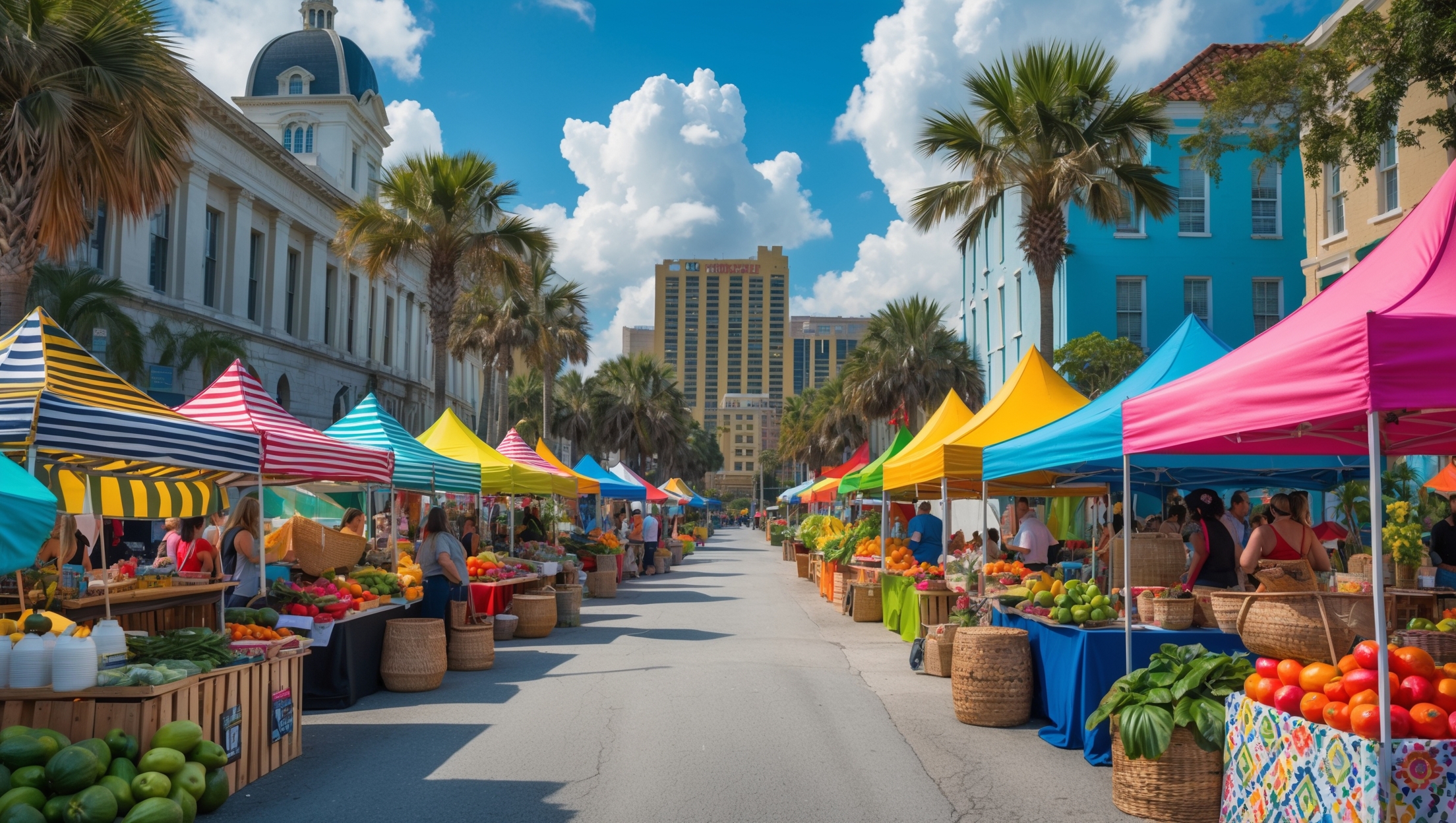
Permits & Partnerships: Navigating St. Petersburg’s Community Pop-Up Markets

Introduction: The Power of Pop-Up Markets in St. Petersburg
St. Petersburg, FL, isn’t just known for its beautiful Gulf Coast sunsets and rich arts scene—it’s a city where grassroots initiatives thrive. Community pop-up markets have become a powerful force for local connection, entrepreneurship, and resource sharing. Whether you’re a nonprofit aiming to fight food deserts, a neighborhood association boosting local artists, or a group of friends eager to create a sustainable swap meet, pop-up markets offer unmatched flexibility and community impact.
But while pop-up markets can look simple from the outside, behind every successful event lies careful planning, legal navigation, and creative partnership building. In St. Petersburg, compliance with city ordinances, securing the right permits, and forging relationships with local partners are crucial steps that can make or break your market. This guide will walk you through the unique landscape of organizing community-driven pop-up markets in St. Pete, from permit processes to partnership strategies—so you can focus on what matters: connecting people and ideas.
Understanding the Legal Landscape
Why Permits Matter
Operating a pop-up market without proper permits isn’t just risky—it can shut down your event and damage your reputation. St. Petersburg ordinances are designed to protect public safety, ensure accountability, and maintain order in shared spaces. Navigating these requirements is the first step in building a resilient community market.
Types of Permits You May Need
- Temporary Use Permit (TUP): For events held on public or private property not zoned for permanent commercial use. Required for most pop-up markets.
- Special Event Permit: Necessary if your market will use city parks, streets, or sidewalks, or if you expect significant crowds or amplified sound.
- Vendor Permits: Individual vendors may need separate permits, especially for food sales, crafts, or services.
- Food Handling Permits: If you or your vendors are selling prepared food, the Florida Department of Business and Professional Regulation (DBPR) and the Department of Agriculture may require additional licensing.
- Alcohol Permits: If any vendor plans to offer alcohol, you must obtain a temporary alcoholic beverage license and comply with state and local laws.
Where to Start: City Resources
Begin at the City of St. Petersburg Special Events Office. Their staff are familiar with grassroots projects and can help you determine which permits your pop-up market needs. Early contact reduces surprises and can unlock city support you didn’t know existed.
Step-by-Step: Securing Permits for Your Pop-Up Market
1. Define Your Market’s Scope
Outline key details:
- Location(s): Will you use public parks, private lots, or sidewalks?
- Frequency: One-time event or recurring series?
- Number of vendors and expected visitors
- Types of goods/services to be offered
- Will there be food, amplified music, or alcohol?
2. Contact the Appropriate City Departments
- For public spaces: Contact the Special Events Office and Parks and Recreation Department.
- For private property: Check zoning and discuss plans with the city’s Planning & Development Services.
- For food sales: Reach out to the Florida DBPR and Department of Agriculture for food vending requirements.
3. Prepare Required Documentation
- Site plan with vendor layouts, entry/exit points, and safety features
- Proof of property owner’s consent (if not public land)
- Event description, including hours, activities, and expected attendance
- Insurance documentation (see below for details)
4. Submit Applications and Pay Fees
Processing times vary, but you should start at least 60 days in advance. Some permits may require public notification or neighborhood input, so build in extra time for approvals.
5. Coordinate with Inspectors and First Responders
City inspectors may visit the site before or during your event. If your market involves cooking or large crowds, alert local fire and police departments for safety compliance.
Building Strategic Partnerships: The Secret Sauce
Identifying Potential Partners
Community pop-up markets thrive on collaboration. The right partners can unlock resources, expertise, and built-in audiences. Consider:
- Local nonprofits and neighborhood associations: Offer credibility and often have experience with city processes.
- Small businesses and artisans: Can supply goods, sponsorships, or operational support.
- Farmer cooperatives and urban gardens: Bring in fresh produce and sustainable practices aligned with St. Pete’s values.
- Libraries, museums, and cultural centers: Provide space, volunteers, or educational programming.
- Local schools and universities: Student groups can volunteer or showcase entrepreneurial projects.
Securing Formal Agreements
Partnerships work best with clear expectations. Draft memoranda of understanding (MOUs) or simple written agreements outlining:
- Roles and responsibilities
- Resource contributions (funds, volunteers, materials)
- Promotion and marketing commitments
- Liability and insurance obligations
Leveraging City Support
St. Petersburg’s city government is increasingly supportive of community-driven events. Ask about:
- Fee waivers or reductions for grassroots or nonprofit-led events
- Access to city-owned spaces or equipment
- Inclusion in official event calendars and citywide promotions
Compliance and Best Practices
Vendor Compliance Requirements
- All vendors should display city-issued permits or licenses as required.
- Food vendors must follow Florida food safety rules and display DBPR/Department of Agriculture certifications.
- Vendors selling taxable goods need a Florida Annual Resale Certificate.
- Nonprofit or charitable vendors should have proof of tax-exempt status handy.
Insurance and Risk Management
Many permitting processes require proof of insurance. At minimum, you’ll need:
- General liability insurance: Covers injury, property damage, and accidents at your event.
- Additional insured certificates: Add the City of St. Petersburg and property owners to your policy as required.
- Vendor insurance: Ask vendors to provide their own coverage, especially those handling food, machinery, or high-value items.
Accessibility and Inclusivity
ADA compliance isn’t just good practice—it’s the law. Ensure your market:
- Has accessible paths, restrooms, and vendor tables
- Provides accommodations for vendors and attendees with disabilities
- Posts clear, multilingual signage where possible
Pop-Up Market Setup: Practical Tips for St. Pete
Choosing the Right Location
St. Pete’s urban geography offers diverse opportunities:
- Parks & green spaces: Great for family-friendly, all-ages events. Check for restroom access and parking.
- Vacant lots or parking areas: Often underused and eager for activation, but may require more setup and cleanup.
- Community centers or schools: Offer built-in infrastructure and weather contingency options.
Essential Equipment Checklist
- Pop-up tents or canopies (with weights for wind)
- Tables, chairs, and display racks
- Power sources (generators or extension cords, if allowed)
- Sanitation stations (hand sanitizer, waste bins, recycling)
- First aid kits and emergency contacts posted on site
Weather and Seasonal Considerations
St. Petersburg’s subtropical climate is generally market-friendly but can shift rapidly. Prep for:
- Sudden rain showers: Pack waterproof tarps and tent sidewalls.
- High heat: Provide shade, water stations, and cooling towels for vendors.
- Hurricane season (June–November): Have a clear cancellation or rescheduling policy.
Marketing and Community Engagement
Grassroots Marketing Strategies
- Leverage local Facebook groups, Nextdoor, and Instagram for targeted outreach.
- Partner with neighborhood newsletters and local influencers for promotion.
- Collaborate with city-run event calendars and radio stations.
- Encourage vendors and partners to cross-promote to their own audiences.
Building a Loyal Community
- Host regular markets in the same location to build routine and recognition.
- Feature rotating themes or guest vendors to keep each event fresh.
- Gather attendee feedback via QR codes or on-site suggestion boxes.
- Highlight local stories and causes at each market to deepen community impact.
Case Study: The Green Bench Market
The Green Bench Market began as a pop-up in a vacant Central Avenue lot, quickly becoming a hub for local makers and urban farmers. By partnering with a nearby arts nonprofit and securing a city Temporary Use Permit, the organizers navigated city regulations and accessed free promotion through the city’s Arts Alliance. Their transparent vendor agreements and shared insurance coverage helped new sellers test their ideas risk-free. The result: a recurring, city-sanctioned market that inspired similar projects in other neighborhoods.
Conclusion: Building Lasting Impact Through Compliant, Connected Markets
Community pop-up markets in St. Petersburg are more than weekend gatherings—they’re catalysts for local entrepreneurship, shared resources, and neighborhood pride. But their success hinges on thoughtful compliance and the strength of local partnerships. Navigating the city’s permit landscape can seem daunting, but by starting early, seeking guidance, and building formal relationships with partners, your event can become a sustainable fixture in St. Pete’s community life.
Remember, each successful market builds trust with local officials, opens new doors for funding or sponsorship, and gives residents a sense of ownership over their public spaces. If you take the time to do things right—from securing the necessary permits to crafting clear agreements with partners—you’ll create a pop-up market that doesn’t just meet city regulations but also meets the needs and dreams of St. Pete’s diverse community. So gather your team, reach out to your neighbors, and start building the compliant, collaborative market you want to see. Your city—and your community—are waiting.
I’m curious if there are any common challenges people run into with the city’s permit process, especially for first-time organizers. Are there any specific requirements or paperwork that usually trip people up when planning a pop-up market here?
First-time organizers often find the permit process a bit overwhelming, mainly because of the specific paperwork required by St. Petersburg. Common challenges include missing deadlines for applications, not having detailed site plans, or overlooking insurance requirements. Health and fire safety permits can also be tricky if food vendors are involved. Double-checking the city’s checklist and reaching out to the permit office early can help smooth things out.
You mentioned vendor and food handling permits—do first-time vendors have to apply for those individually, or is there a way for the event organizer to cover everyone under one application to make things simpler for everyone involved?
First-time vendors usually need to apply for their own vendor and food handling permits, as these are typically tied to each business or individual’s information for health and safety reasons. However, some event organizers may obtain an umbrella permit for temporary vendor activities, but this depends on the event and local regulations. It’s a good idea to check directly with the event organizer and the city’s permitting office to see what’s possible for your specific situation.
Can you clarify if there are any special considerations or additional permits needed when organizing a pop-up market on school grounds or church property in St. Petersburg compared to typical public spaces?
Yes, organizing a pop-up market on school grounds or church property in St. Petersburg may require additional steps beyond standard public space permits. You’ll generally need written permission from the property owner or administration. Schools and churches may also have their own rules or insurance requirements. In addition, the city may still require event or vendor permits, so it’s important to check with both the property owners and the city’s permitting office before proceeding.
I’d love to support my kids’ school with a craft pop-up, but I’m worried about the time and cost involved in getting all these permits. Is there any way to streamline the application process or budget tips for first-timers?
Organizing a school craft pop-up can feel overwhelming, but a few strategies can help. To streamline permits, check if your school or PTA already has relationships with city officials or existing permits you can leverage. Sometimes schools qualify for nonprofit or educational exemptions, reducing fees. For budgeting, gather a group of parents to split costs and look for local sponsors who may cover permit or supply expenses in exchange for recognition at the event.
The article mentions partnerships are crucial for success. What are some examples of effective partnerships you’ve seen for markets focused on sustainable swap meets rather than food sales?
For sustainable swap meets, effective partnerships often involve local environmental nonprofits, repair cafes, or recycling centers. These groups can help with education, logistics, and credibility. Collaborating with makerspaces or upcycling artists can attract more visitors and provide workshops. Some markets also partner with thrift stores or municipal waste programs, which can supply items for swapping or offer disposal services for leftover goods.
Are there any estimated costs for the different permits described, like the Special Event Permit and Vendor Permits, and is there financial support available for smaller organizations starting out?
The article doesn’t list exact costs for permits such as the Special Event Permit or Vendor Permits, since these can vary based on event size, location, and duration. For smaller organizations, the city sometimes offers reduced fees or support programs, but these are handled case by case. It’s best to contact St. Petersburg’s event permitting office directly to get current pricing and ask about any financial assistance or waivers for new or small-scale vendors.
I noticed the article mentions partnerships as being crucial. Are there any recommended types of local partners or organizations that can help with both compliance and outreach for these markets?
Local business associations and neighborhood organizations are often strong partners for community pop-up markets. They can provide guidance on permit compliance and help with outreach to attract both vendors and customers. Additionally, collaborating with the city’s economic development office or local chambers of commerce can connect you with resources and networks to ensure your market meets legal requirements and gains community support.
When partnering with neighborhood associations or local businesses for a pop-up market, are there any specific agreements or documentation the city requires besides the standard permit applications?
Beyond the standard permit applications, the city may require proof of partnership or authorization if you’re working with a neighborhood association or local business. This usually means a signed agreement, letter of permission, or memorandum of understanding outlining the roles, responsibilities, and permissions for the event. It’s a good idea to have these documents ready to submit with your permit application, as city officials may request them to confirm all parties have agreed to the event details.
If a vendor forgets to get their required food handling permit and the market has already started, what usually happens? Is there an immediate penalty, or can they get it on-site somehow?
If a vendor is found without the required food handling permit after the market has begun, they are typically not allowed to sell food until the proper permit is obtained. Immediate penalties can include being asked to leave or a fine, depending on local enforcement. Permits are rarely issued on-site, so vendors should secure them in advance to avoid disruptions.
If I’m thinking about starting a pop-up market with some friends in St. Pete, how far in advance should we apply for a Temporary Use Permit or Special Event Permit, and is there much paperwork involved?
It’s a good idea to apply for a Temporary Use Permit or Special Event Permit at least 30 to 60 days before your planned event in St. Pete. The application process does involve some paperwork, including site plans, event details, and sometimes insurance documentation. Starting early will give you enough time to gather everything and address any questions from the city.
After getting all the necessary permits for a pop-up market, how do most organizers approach building partnerships with local businesses or nonprofits in St. Pete? Are there recommended first steps?
Once permits are secured, most organizers in St. Pete start by reaching out directly to local businesses and nonprofits, often introducing themselves and explaining the pop-up market’s goals. It’s helpful to highlight mutual benefits, such as increased foot traffic or community engagement. Setting up informal meetings or attending local networking events is a common first step. Many organizers also use social media and local business associations to connect and begin collaborations.
For someone new to organizing, how long does it typically take to get all the city permits approved in St. Petersburg? I’m trying to plan a timeline, but I’m not sure if there are seasonal backlogs or common holdups that could impact when we can actually host the pop-up.
The permitting process in St. Petersburg usually takes about 2 to 6 weeks, depending on the type and scale of your pop-up market. Timelines can stretch during busier seasons, like spring and early fall, when more events are scheduled. Common delays often involve incomplete paperwork or waiting for approvals from different city departments. It’s a good idea to submit your applications as early as possible and double-check all requirements to help avoid setbacks.
I noticed you mentioned the importance of partnership building for successful pop-up markets. Are there any city-supported programs or organizations in St. Pete that help connect new market organizers with potential local business or nonprofit partners?
Yes, in St. Pete, the Greenhouse is a well-known city-supported resource that helps connect entrepreneurs and market organizers with local businesses, nonprofits, and other partners. The St. Petersburg Area Chamber of Commerce also offers networking opportunities and business guidance. Both organizations regularly host events, workshops, and forums that are valuable for anyone looking to build partnerships for pop-up markets.
When working with local nonprofits to set up a neighborhood swap meet, what’s the best way to start building those creative partnerships mentioned in the article? Do you find most property owners willing to share space, or are there common hurdles?
To start building creative partnerships with local nonprofits, reach out directly with a clear idea of your swap meet’s goals and how collaboration could benefit both sides. From experience, some property owners are open to sharing space, especially if it aligns with community values or supports a good cause, but common hurdles include liability concerns and scheduling conflicts. Early, transparent communication and flexibility can go a long way in addressing these challenges.
What is the typical timeline for securing the necessary permits for a pop-up market in St. Pete, and are there any common delays organizers should watch out for?
The timeline for securing permits for a pop-up market in St. Pete usually ranges from two to six weeks, depending on the event size and location. Common delays organizers encounter include incomplete applications, missing insurance documents, or last-minute changes to site plans. It’s wise to start early and double-check all requirements with the city’s event permitting office to avoid setbacks.
Are there any common mistakes people make when applying for vendor or food handling permits in St. Petersburg, and what steps would you recommend to avoid delays or rejections for first-time organizers?
A common mistake is submitting incomplete applications or missing required documents, such as proof of insurance or health department certifications for food vendors. Double-check all submission requirements and keep copies of everything. For first-time organizers, reach out to the city’s permitting office early, ask for a checklist, and make sure you allow extra time for processing. Reviewing city guidelines in detail before applying can help prevent unnecessary delays or rejections.
The article mentions partnerships being crucial for a successful market. Do you have any tips on how busy parents can connect with local organizations or businesses to form these partnerships, since it seems like collaboration is just as important as the permits?
Busy parents can start by reaching out to their children’s schools, neighborhood associations, or local parent groups, which often have connections with community organizations. Attending local events, even briefly, helps build relationships. Social media groups focused on St. Petersburg businesses or parenting can be a good way to introduce yourself and propose simple collaborations, like promoting each other’s events. If time is tight, consider teaming up with another parent to share outreach tasks.
I’m planning a small pop-up market in my neighborhood in St. Pete, mostly featuring local artists and a couple food vendors. Do each of the individual vendors have to get their own separate permits, or can the event organizer cover everything with the main Temporary Use Permit?
For most pop-up markets in St. Petersburg, the event organizer needs to secure a Temporary Use Permit for the overall event. However, individual food vendors often have to obtain their own food service permits, especially if they’re preparing or serving food onsite. Non-food vendors, like artists selling crafts, typically don’t need separate city permits if they’re operating under the main event permit. It’s a good idea to check with the city’s permitting office to confirm the latest requirements for your specific market.
How long does it usually take to get a Temporary Use Permit approved for a pop-up market in St. Petersburg? I’m trying to figure out the timeline for planning an event on campus.
Approval for a Temporary Use Permit in St. Petersburg typically takes about two to four weeks, depending on the complexity of your event and how complete your application is. It’s a good idea to submit your application as early as possible and make sure all required documents are included to avoid delays. If your pop-up market is on a campus, you may also need additional permissions, so factor that into your timeline.
I’m a parent who might volunteer with our PTA to run a pop-up market fundraiser. How far in advance should we start the permit process in St. Pete, and what’s the most common reason applications get delayed or rejected?
For PTA-led pop-up markets in St. Petersburg, it’s best to start the permit process at least 6–8 weeks before your planned event. This allows time for gathering necessary documents and possible revisions. The most common reason for delays or rejections is incomplete or missing information on the application, such as unclear site layouts or lacking proof of insurance. Double-check everything before submitting to help things go smoothly.
If I’m planning a small community swap meet in my neighborhood—not a big event, just a few families trading items—do I still need to apply for a Temporary Use Permit or any other permits in St. Pete?
For a small swap meet with just a few families, you likely won’t need a Temporary Use Permit in St. Pete as long as it stays low-key, doesn’t involve commercial vendors, and doesn’t disrupt traffic or public spaces. If you’re hosting it on private property and keeping things simple, you should be fine. However, if you plan to advertise publicly or expect more people, it’s a good idea to call the city’s zoning office to confirm.
If we want to host a pop-up market on private property in St. Petersburg just once, do we still need both a Temporary Use Permit and a Vendor Permit for each seller, or does the TUP alone cover everyone involved?
For a one-time pop-up market on private property in St. Petersburg, you still need both permits. The Temporary Use Permit (TUP) is required for the event itself, but each individual vendor must also obtain their own Vendor Permit, even if it’s just for one day. The TUP does not cover all participating sellers automatically.
Can you clarify how partnerships with local organizations might make obtaining permits easier or more affordable for us? I’m thinking about teaming up with a nonprofit, but I don’t know if that will lighten the process or costs for a neighborhood market.
Teaming up with a local nonprofit can sometimes simplify the permit process and lower fees, especially if the organization already has established relationships with the city or qualifies for special rates as a charitable group. Some permits may be easier to get under a nonprofit’s sponsorship, and the nonprofit might even handle paperwork or insurance. It’s worth asking the specific nonprofit and city permitting office about possible benefits or streamlined options available through partnership.
Could you clarify how long the Temporary Use Permit process typically takes in St. Petersburg, and if there are any ways to expedite approval for organizers who are on a tight event timeline?
The Temporary Use Permit process in St. Petersburg usually takes about 2 to 4 weeks from application to approval, depending on the complexity of your event and the completeness of your submission. To help speed things up, make sure to submit all required documents and details up front, and communicate proactively with the permitting office—they may be able to offer guidance or flag any issues early on.
Can you clarify how long it typically takes to get approved for the necessary permits in St. Pete? I’m trying to plan a neighborhood swap meet and want to make sure I start the process early enough.
Approval times for permits in St. Petersburg can vary depending on the type of event and the specific permits required. In general, you should allow at least 4 to 6 weeks for processing, though some permits may take longer if additional reviews are needed. Starting early is smart—reach out to the city’s permitting office to confirm the exact timeframe for your neighborhood swap meet.
If my group wants to host a small pop-up market inside a privately owned parking lot for just one weekend, do we need both a Temporary Use Permit and a Special Event Permit, or would just the Temporary Use Permit be enough?
For hosting a small pop-up market on a privately owned parking lot for just one weekend, a Temporary Use Permit is typically sufficient. However, if your event includes amplified music, food vendors, or large crowds, the city may also require a Special Event Permit. It’s best to check with the city’s permitting office to confirm based on your event’s specific details.
I saw that individual vendors, especially those selling food, need separate permits. How complicated is that process for a parent who wants to sell home-baked goods at one of these pop-up markets, and are there insurance requirements too?
Selling home-baked goods at St. Petersburg pop-up markets does involve some extra steps. You’ll need a cottage food permit, which isn’t too complicated if your baked goods qualify under Florida’s cottage food laws. The process usually includes basic paperwork and following safety guidelines. Some markets may also require you to carry liability insurance, so it’s best to check with the event organizer in advance.
How far in advance should organizers start applying for these permits in St. Petersburg? Is there often a long wait, or are the approvals pretty quick for smaller pop-up markets?
For St. Petersburg pop-up markets, organizers should plan to apply for permits at least 30 days before their event. While smaller markets sometimes get quicker approvals, it depends on the number of vendors and the location. During busy seasons or for more complex setups, processing can take longer, so earlier applications are always safer. It’s best to check with the city’s permitting office for current timelines.
You mentioned that securing the right permits is crucial for pop-up markets in St. Pete. How far in advance should we start the application process for a Temporary Use Permit or Special Event Permit to avoid delays, especially if we’re hoping to coordinate with local artists and nonprofits?
It’s best to start the permit application process at least 60 to 90 days before your planned event. The city often requires this lead time, especially for Special Event Permits, to review your application and coordinate with any city departments. Starting early also gives you more flexibility to communicate with local artists and nonprofits, ensuring everyone’s schedules align and paperwork is in order.
What is the typical timeframe for securing all necessary permits in St. Petersburg, especially for markets that plan to include food vendors and amplified sound? I’m trying to gauge how far in advance planning needs to begin.
For pop-up markets in St. Petersburg that include food vendors and amplified sound, you should plan to start your permitting process at least 60 to 90 days in advance. This allows time for both the food service permits and the special event permits, which often require additional documentation and coordination. Starting early helps ensure you can address any unexpected requirements from the city.
Do you have any insight into how long it typically takes to secure the necessary vendor and food handling permits in St. Petersburg? I’m trying to plan ahead and want to avoid any last-minute delays.
In St. Petersburg, obtaining vendor and food handling permits usually takes anywhere from two to four weeks, depending on the type of permit and how quickly you submit all required paperwork. It’s a good idea to start the application process at least a month in advance to account for possible backlogs or follow-up questions from city offices. Double-check that your documents are complete to help speed things up.
If I’m planning a community swap meet with just friends on someone’s private property in St. Pete, do we still need to apply for a Temporary Use Permit, or is that only for larger events open to the public?
For a private swap meet with just friends on private property, you typically don’t need a Temporary Use Permit since these permits are generally required for larger events that are open to the public or held in commercial areas. However, make sure the gathering remains private, isn’t advertised publicly, and complies with any noise or parking regulations for the neighborhood.
Are there specific requirements in St. Pete for amplified sound or live music at pop-up markets, or does that fall under the Special Event Permit? Just want to make sure we don’t miss anything if we plan for entertainment.
In St. Petersburg, amplified sound or live music at pop-up markets typically requires additional permissions, which are often addressed within the Special Event Permit process. When you apply, be sure to specify your plans for entertainment, as the city may require details about sound levels, timing, and equipment. Sometimes, you might also need coordination with local noise ordinances. Double-check with the city’s event office for any extra steps once you’ve submitted your application.
I’m a bit concerned about the budget side of things—are there any reduced fees or waivers available for nonprofits or groups working to address food deserts when applying for these St. Pete permits?
Yes, St. Petersburg does offer some fee reductions and waivers for nonprofits, especially those focused on community needs like addressing food deserts. When you apply for a permit, be sure to indicate your nonprofit status and mission. It’s a good idea to contact the city’s event permitting office directly—they can walk you through any available discounts or special considerations for your group.
If a student group wanted to set up a small pop-up market on campus or at a local park, would we need both a Temporary Use Permit and a Special Event Permit, or does one cover both scenarios?
For a student group pop-up, the permit requirements depend on where you plan to host the market. On campus, you should check with your school’s administration first, as they might have their own rules and permits separate from city requirements. For a local public park, you’ll generally need a Special Event Permit from the city. A Temporary Use Permit is typically needed for private property or non-standard locations. If your market is in a park or other city property, focus on the Special Event Permit, but always confirm with the city’s permitting office.
For a pop-up market in St. Petersburg that mainly sells handmade crafts and art, do organizers still need both a Temporary Use Permit and individual vendor permits, or is it possible to cover everything under one event application?
For a pop-up market featuring handmade crafts and art in St. Petersburg, organizers generally need to apply for a Temporary Use Permit for the event itself. However, individual vendors may also need their own permits or business tax receipts, depending on what they are selling. The event application does not automatically cover all vendor requirements, so it’s important to check with the city’s zoning and permitting office to ensure full compliance for both the event and each participant.
When estimating the total budget for a small community pop-up market, do you have any ballpark figures or tips on how much to allocate for permits and potential city fees based on your experience in St. Petersburg?
Based on experiences in St. Petersburg, you can expect to budget around $50 to $150 for basic event permits, though this can vary depending on the size and location of your pop-up market. Additional city fees for things like temporary signage or health permits might add another $50 to $100. It’s smart to contact the city early for the most accurate fee schedule, as requirements sometimes change.
I saw you mentioned the Temporary Use Permit for events on properties not zoned for commercial use. How far in advance do I need to apply for this permit in St. Pete, and are there common reasons why applications get denied?
For a Temporary Use Permit in St. Petersburg, it’s best to apply at least 30 days before your planned event to allow time for processing and any needed revisions. Common reasons for denial include incomplete applications, non-compliance with zoning requirements, insufficient parking or access plans, and not meeting safety or health regulations. Double-check your application details and supporting documents to help avoid delays.
The article mentions both Temporary Use Permits and Special Event Permits. How do I know which one I actually need for a small, neighborhood swap meet on private property? Would I ever need both for the same event?
For a small neighborhood swap meet on private property, a Temporary Use Permit is often the right choice, as it’s designed for short-term activities on private land. Special Event Permits are generally used for larger gatherings, especially those affecting public spaces or streets. You typically wouldn’t need both permits for the same event, but if your swap meet expands to include public areas or impacts traffic, you might need a Special Event Permit as well.
The article talks about both Temporary Use Permits and Special Event Permits. How do I know which one is right for my event if I’m planning to use a city park but expect only a small crowd? Does choosing one over the other make a difference in processing time or costs?
If your pop-up event in a city park will have a small crowd and minimal impact, a Temporary Use Permit is likely the right fit, as it’s intended for smaller, low-impact events. Special Event Permits are usually needed for larger gatherings or those affecting public resources. Temporary Use Permits can be quicker to process and may also have lower fees, but it’s always best to check with the city’s permitting office for your specific details.
For someone organizing their very first pop-up market in St. Pete, how early should I start the permit application process, and is there a way to track the status once it’s submitted to avoid delays?
It’s best to start your permit application process at least 6 to 8 weeks before your planned event date. This gives you time to address any additional requirements the city might have. After you submit your application, you can typically check the status by contacting the relevant city department directly—most departments provide email or phone updates, and some offer online status tracking. Staying in touch with the permitting office helps prevent surprises or last-minute delays.
If I want to host a pop-up market on private property that’s not normally used for commercial activity, is the Temporary Use Permit enough or would I also need to look into a Special Event Permit if I’m expecting a larger crowd?
If you’re hosting a pop-up market on private property that’s not typically used for commercial purposes, a Temporary Use Permit is generally required. However, if you anticipate a larger crowd or expect impacts like increased traffic, noise, or parking concerns, the city may also require a Special Event Permit. It’s a good idea to discuss your specific plans with the city’s permitting office to ensure you have all the necessary approvals.
How far in advance do you recommend starting the permit application process for a community market in St. Pete? Do you know roughly how long approvals usually take, especially when food vendors are involved?
It’s wise to start the permit application process at least 2 to 3 months before your planned market date in St. Petersburg. Approval times can vary, but when food vendors are involved, expect the process to typically take 4 to 8 weeks due to extra health department reviews. Getting applications in early helps avoid delays and gives you time to address any additional requirements.
Does the city of St. Pete allow neighborhood associations to team up with local food trucks under the same market permit, or do each of the food vendors need to apply separately for their own permits and food handling approvals?
Neighborhood associations in St. Petersburg can organize pop-up markets and include local food trucks under a single market permit, but each food vendor or truck is still responsible for securing their own food handling approvals and health permits. The city’s market permit covers the event itself, while compliance with food safety regulations remains the responsibility of each vendor.
For someone completely new to organizing pop-up markets in St. Pete, is there a particular order in which to apply for the Temporary Use Permit versus individual Vendor Permits? I’m wondering if there’s a risk of losing money if one is denied after paying for the other.
It’s best to apply for the Temporary Use Permit first, since that’s required for the entire event to take place. Once that’s approved, you and your vendors can proceed with the individual Vendor Permits. This helps avoid the risk of paying for vendor permits only to find out the event itself can’t be held. Always check current city guidelines as well, since processes can occasionally change.
Can you give an idea of how far in advance organizers should start the permit application process in St. Pete? Are there common delays or issues people should plan for when scheduling their community pop-up market?
Organizers in St. Pete should ideally start the permit application process at least 8 to 12 weeks before their planned pop-up market. This timeframe allows for possible delays, such as incomplete paperwork, extra documentation requests, or high application volumes. It’s common for organizers to face issues with missing details or last-minute changes to event plans, so double-checking requirements and applying early helps avoid scheduling setbacks.
Could you elaborate on how long the permitting process typically takes from application to approval for a community pop-up market in St. Petersburg? Knowing average timelines would really help with event planning and securing vendors.
The permitting process for a community pop-up market in St. Petersburg usually takes about 2 to 4 weeks from application to approval, depending on the complexity of your event and how complete your application is. To avoid delays, make sure all required documents are submitted early. It’s a good idea to factor in a little extra time in case the city requests additional information.
If we’re planning a small neighborhood swap meet mostly run by parents and kids, do the same vendor and food handling permits apply, or are there exemptions for non-commercial or smaller events in St. Petersburg?
For small, non-commercial neighborhood swap meets—especially those organized by parents and kids—St. Petersburg often has different requirements compared to larger, commercial markets. Generally, if no one is selling prepared food and the event is not for profit, you might not need the full vendor or food handling permits. However, if any food is served or sold, basic food safety guidelines or a temporary food permit may still apply. It’s a good idea to contact the city’s permitting office for specifics based on your event details.
For a small nonprofit that wants to host a single-day pop-up on private property, would both a Temporary Use Permit and individual vendor permits be required, or does the TUP cover everyone involved? I’m trying to clarify the exact permit responsibilities for organizers versus individual vendors.
For a single-day pop-up on private property, the Temporary Use Permit (TUP) is typically required for the event organizer and covers the overall event. However, individual vendors may still need their own permits, especially if they are selling food or certain other regulated goods. It’s best to confirm with the city’s permitting office, but organizers are generally responsible for the TUP, while vendors may have separate requirements depending on what they offer.
I’m a little worried about how much time it might take to actually get all these permits approved for a pop-up market. On average, how far in advance should we start the application process in St. Pete?
In St. Petersburg, it’s a good idea to start your permit application process at least 4 to 6 weeks before your planned pop-up market date. This allows time for review, potential follow-up questions, and any necessary adjustments. Some permits may process faster, but giving yourself this buffer helps avoid last-minute stress.
The article mentions that individual vendors, especially those selling food, might need their own permits. Is there a centralized place where organizers can help their vendors apply for everything at once, or does each vendor have to handle permits separately?
In St. Petersburg, each vendor—particularly food vendors—typically needs to secure their own permits, as requirements often depend on the type of products and individual business details. Organizers sometimes provide guidance or a checklist, but there isn’t a centralized application process for all vendors together. It’s best for each vendor to check with the event organizer about support, but expect that most permitting is handled individually.
If I’m just organizing a small neighborhood swap meet in a friend’s backyard, do I still need to go through the whole Temporary Use Permit process, or are there any exceptions for smaller, private events?
For a small neighborhood swap meet held privately in a friend’s backyard and not advertised to the general public, you typically do not need to go through the full Temporary Use Permit process. These permits are usually required for public or commercial events. However, it’s always wise to double-check with the local zoning office to ensure compliance with any neighborhood or city rules, especially regarding noise, parking, and the number of attendees.
The article mentions that a Temporary Use Permit is usually required for most pop-up markets, but are there any circumstances where a small neighborhood gathering or swap meet might be exempt from this requirement in St. Petersburg?
Yes, there are some limited circumstances where very small, private neighborhood gatherings or informal swap meets could be exempt from needing a Temporary Use Permit in St. Petersburg. If your event is held on private property, is invite-only, and does not involve commercial sales to the general public or amplified sound, you may not need a permit. However, it’s a good idea to check directly with the city’s zoning or permitting office to confirm your specific situation.
For organizers partnering with local nonprofits to host pop-up markets, are there streamlined processes or fee reductions for permits, especially if the goal is to address food insecurity in underserved areas?
When partnering with local nonprofits to address issues like food insecurity, organizers may be eligible for streamlined permit processes or reduced fees in St. Petersburg. It’s recommended to clearly highlight your partnership and community focus in your application. You can also contact the city’s permit office directly to ask about available exemptions or special consideration for nonprofit or charitable events in underserved areas.
I’m curious about the typical timeline for getting a Temporary Use Permit approved in St. Pete. Is there a way to expedite the process if we’re working with a tight deadline, or should we expect some delays during busy seasons?
In St. Petersburg, the approval process for a Temporary Use Permit usually takes about two to three weeks, but this can vary depending on the time of year and how complete your application is. During busy market seasons, there may be delays, so it’s a good idea to apply as early as possible. If you’re on a tight deadline, contact the city’s permitting office directly—they sometimes offer options for expedited processing, though extra fees may apply.
What’s the typical timeframe for getting all the required permits approved in St. Petersburg if we’re planning a first-time pop-up market? I’m trying to figure out how early we need to start the process.
For a first-time pop-up market in St. Petersburg, it’s smart to allow at least 4 to 6 weeks to get all the necessary permits approved. This gives you enough time to gather documents, submit your application, and address any follow-up requests from the city. Starting early ensures you won’t run into any last-minute issues.
You mentioned building creative partnerships as being crucial for success. Are there particular local organizations or businesses in St. Pete that you’ve found especially open to collaborating with first-time pop-up market organizers?
Yes, in St. Petersburg, groups like Keep St. Pete Local and the St. Pete Greenhouse are known for supporting new market organizers and fostering partnerships. Many local coffee shops, breweries, and art galleries—such as Green Bench Brewing, The Studio@620, and Black Crow Coffee—are also open to collaborations with first-timers. These organizations often have experience hosting pop-ups and can provide both advice and space, making them great first contacts.
For a neighborhood association interested in hosting a recurring pop-up art market, is it necessary to apply for a new Temporary Use Permit for each event, or is there an option for a multi-date or annual permit in St. Petersburg?
In St. Petersburg, you generally need a Temporary Use Permit for each individual pop-up market event. However, if your neighborhood association is planning a series of recurring markets, you can discuss the possibility of a multi-date permit with the city’s zoning or permitting department. They sometimes offer permits that cover multiple dates or seasonal events, so it’s worth asking about options that might suit your schedule.
For smaller pop-up markets that don’t involve food vendors, would the permitting process be quicker or less expensive, or are all events subject to the same application fees and requirements in St. Pete?
For smaller pop-up markets without food vendors, the permitting process can sometimes be simpler and less expensive. St. Petersburg typically requires fewer health and safety checks when food isn’t involved. However, most events still need a basic event or vendor permit, and application fees may apply. The exact requirements depend on event size, location, and activities, so it’s best to check with the city’s Special Events Office for the specifics on your market.
I’m interested in partnering with local nonprofits for my market. Do you have any tips on approaching these groups or examples of creative partnership arrangements that have worked well in St. Petersburg?
When reaching out to local nonprofits, start by identifying groups whose missions align with your market’s values. Contact them directly, sharing how a partnership can benefit both parties, such as fundraising opportunities or awareness campaigns. In St. Petersburg, some markets have hosted nonprofit-led workshops, donation drives, or co-branded events. Offering booth space or collaborating on themed market days are also popular creative arrangements that have brought success to both vendors and nonprofits.
If a pop-up market has a mix of food vendors and craft sellers in St. Petersburg, are both vendor permits and food handling permits needed for every participant, or are there cases where one permit could cover multiple vendors?
In St. Petersburg, each food vendor is typically required to have their own food handling permit to ensure health and safety compliance. Craft sellers usually need a separate vendor or business permit, but not a food handling permit. Permits are generally issued to individual vendors rather than covering multiple vendors under one permit, unless a special arrangement is made with the city or market organizer. It’s best to check with the local permitting office for any exceptions or group permit options.
For organizers with limited budgets, are there any city partnerships or programs in St. Petersburg that help offset permit fees or assist with costs related to compliance for pop-up markets, especially for groups focused on public benefit or community impact?
St. Petersburg does offer some support for community-focused groups through city partnerships and grant programs. Nonprofit organizations or groups that demonstrate significant public benefit may qualify for reduced permit fees or financial assistance for compliance costs. It’s a good idea to contact the Office of Cultural Affairs or the city’s Economic Development department directly to learn about current opportunities, as programs and available support can vary throughout the year.
The article mentions building partnerships as a key part of organizing community pop-up markets. Could you give examples of what kinds of local organizations or businesses are most helpful to connect with in St. Pete?
Connecting with local arts councils, neighborhood associations, and business improvement districts can be very beneficial in St. Pete. Small businesses like coffee shops, bakeries, and boutiques often make great partners for pop-up markets. Nonprofits focusing on community development or cultural events can also help with outreach and resources. These groups typically have local networks and experience that can support your event’s success.
I’m interested in starting a pop-up market focused on local artists, but my friends and I are on a tight student budget. Are there any tips for minimizing permit costs or resources available for small groups trying to navigate the required paperwork in St. Pete?
For students on a budget, consider teaming up with local art collectives or community organizations—they sometimes sponsor or co-host markets and may already have permits in place. You can also look for city-sponsored pop-up events that offer reduced fees for small groups or first-timers. The city’s Business Assistance Center is a great resource for guidance on paperwork and may point you to grants or workshops for new vendors.
You mentioned individual vendor permits, especially for food or crafts. How does the process differ for kids selling items or young entrepreneurs—are there any exemptions or simplified steps for minors?
For minors and young entrepreneurs, St. Petersburg often requires a parent or guardian to oversee the permitting process. While there typically aren’t full exemptions for kids, some events or organizations do offer simplified vendor registration and reduced fees for youth participants. It’s always best to check with the specific market organizer, as they may have special programs or guidelines designed to encourage young sellers.
I’m curious about the vendor permit process for food sellers at these pop-up markets. Does each food vendor have to apply individually, or can the market organizer cover vendors under a single permit to streamline things?
For food vendors at St. Petersburg’s pop-up markets, each vendor typically needs to obtain their own individual permits, especially for health and food safety compliance. Organizers may sometimes facilitate the process or provide guidance, but the city usually requires separate permits for each food seller to ensure proper oversight. It’s a good idea to check with both the market organizer and local permitting office for any exceptions or bundled options.
For a neighborhood association looking to support both food vendors and local artists at a single event, are there ways to streamline the process so each vendor isn’t overwhelmed by separate permit requirements?
Yes, you can help streamline the process by applying for a single event or umbrella permit that covers all participating vendors. The city often allows neighborhood associations or event organizers to secure permits on behalf of their vendors, simplifying paperwork and compliance. Make sure to coordinate with the permitting office to confirm which documents you need and whether food vendors require any additional health department approvals.
How far in advance do you recommend starting the permit application process for a community pop-up market in St. Petersburg? I’m worried about potential delays since we have parents and volunteers with limited availability.
It’s wise to begin the permit application process at least 6 to 8 weeks before your planned event date. This gives you extra time to handle any unexpected issues or requests from the city, especially since coordinating with busy parents and volunteers can add to the timeline. Early preparation helps ensure your event goes smoothly without last-minute stress.
When it comes to vendor permits, especially for food sales, do you know if the city provides any resources or guidance for first-timers navigating the application process? I’m concerned some of our vendors might find it confusing.
The city of St. Petersburg does offer resources to help first-time vendors, especially those selling food. You can find step-by-step guides and contact information for city staff who can answer questions about permits. Some local business associations also host workshops to walk vendors through the application process. Let your vendors know these resources exist—they can make things much smoother.
I see you mentioned both Temporary Use Permits and Special Event Permits. If our pop-up market is a small, recurring event on private property, do we need to apply for both types, or would just the TUP be enough in St. Pete?
For a small, recurring pop-up market on private property in St. Pete, a Temporary Use Permit (TUP) is typically sufficient. Special Event Permits are generally required for larger, one-time events or those held on public property. Always double-check with the city’s zoning or permitting office, as requirements can vary depending on event details and frequency.
For small neighborhood swap meets with fewer than 10 vendors, is a Temporary Use Permit still required, or are there exceptions for events at a certain scale in St. Pete?
For small neighborhood swap meets in St. Petersburg with fewer than 10 vendors, you still need to check with the city about permit requirements. The article notes that most public pop-up markets require a Temporary Use Permit, but there may be exceptions for very small or informal gatherings. It’s best to contact the city’s zoning or permitting office directly to confirm if your event qualifies for an exemption.
Do you have any advice on budgeting for permit costs when planning a community pop-up market? I’m worried about expenses adding up quickly, especially if each vendor also needs separate permits.
It’s smart to plan ahead for permit costs, as they can add up, especially if multiple permits are required. Start by contacting the city’s permitting office to get an itemized list of fees for both the event organizer and individual vendors. Consider pooling permit costs into vendor fees or seeing if a group permit is available for your market. Always budget a little extra for unexpected fees or last-minute changes.
I’m a bit confused about whether individual vendors at a community pop-up each need their own permit, especially if some are selling crafts and others are just swapping items. Can you clarify how that works in St. Pete?
In St. Petersburg, individual permits are usually required for vendors who are selling items, even at community pop-up markets. If you’re selling crafts, you’ll likely need your own permit. However, if you’re just swapping or trading items without any money changing hands, a permit might not be necessary. It’s always best to check with the event organizer or the city’s permitting office to make sure you’re following the right guidelines for your specific activity.
For a student group interested in hosting a one-time sustainable swap meet in a public park, would we need just a Temporary Use Permit or also a Special Event Permit? And are there any specific challenges students should anticipate when applying for these in St. Pete?
For a one-time sustainable swap meet in a public park, you’ll likely need a Special Event Permit, especially if your event is open to the public and involves multiple vendors or activities. The Temporary Use Permit is more for ongoing or recurring use. Challenges students often face include getting insurance, meeting safety requirements, and planning far enough in advance to allow for permit processing times. It helps to contact the city’s event office early to clarify requirements and get support.
I’m trying to help my teenager sell homemade crafts at one of these community pop-up markets. Based on the article, would she need her own vendor permit even if she shares a booth with another family, or is there a group permitting option?
According to the article, each vendor typically needs their own permit, even if they are sharing a booth with another family. There isn’t a group permitting option mentioned for these markets. It’s best to check with the specific market organizers, as some may have unique rules or family-oriented options that could make the process easier for young sellers.
If a group of friends wants to organize a sustainable swap meet on private property that isn’t zoned for commercial use, is only the Temporary Use Permit required, or are there other permits we should be aware of as well?
For a sustainable swap meet on private property not zoned for commercial use, a Temporary Use Permit is typically required. However, depending on the expected attendance, activities, and whether you have food vendors or amplified sound, you might need additional permits such as a noise permit or health permits for food. It’s a good idea to contact the city’s permitting office to discuss your specific plans and ensure you’re meeting all requirements.
If I’m organizing a small pop-up market for local artists in my neighborhood, is a Temporary Use Permit always required, or can some types of smaller gatherings qualify for an exemption in St. Petersburg?
A Temporary Use Permit is generally required for most pop-up markets in St. Petersburg, but there are exceptions for very small gatherings. If your event is limited in size, doesn’t involve amplified sound, road closures, or food sales, you might qualify for an exemption. It’s a good idea to contact the city’s zoning department with your event details to confirm whether you need a permit or if you qualify for a waiver.
You mentioned the importance of forging relationships with local partners. Do you have examples of which kind of local organizations or businesses are usually open to collaborating with new pop-up market organizers in St. Pete?
Local businesses such as coffee shops, boutiques, art galleries, and independent bookstores in St. Pete are often open to collaborating with pop-up market organizers. Non-profits, neighborhood associations, and arts organizations also welcome partnerships, especially if your market supports local causes or artists. Reaching out to co-working spaces and community centers can be helpful too, as they usually enjoy hosting community events and connecting with new entrepreneurs.
Do you have any tips for connecting with local partners or organizations in St. Petersburg who might be open to collaborating on a family-friendly pop-up event? I’m not sure where to start with partnership building.
To start building partnerships, try reaching out to community centers, local schools, and neighborhood associations in St. Petersburg, as they often support family-friendly events. Attend city council meetings or local business networking gatherings to meet potential collaborators. Social media groups focusing on St. Petersburg events are also helpful for connecting with like-minded organizations. Introduce your idea, highlight the benefits of collaboration, and be open to their suggestions.
You talked about individual vendors needing extra permits for things like food sales. If I’m inviting a mix of food and craft vendors, is it my responsibility as the organizer to make sure all their paperwork is in order, or does the city check that directly with each vendor?
As the organizer, it’s important to ensure your vendors have the appropriate permits, especially for food sales. While the city may check permits during inspections, you should verify your vendors’ paperwork beforehand to avoid any issues on market day. This helps prevent fines or disruptions and keeps your event running smoothly.
What is the typical timeline and cost for securing the necessary permits for a pop-up market in St. Petersburg? I’d like to budget and plan ahead to avoid any last minute surprises with the city.
Securing permits for a pop-up market in St. Petersburg usually takes about 2 to 4 weeks, depending on the type and size of the event. Costs can range from $50 to $300, covering application fees, temporary use permits, and sometimes fire or health inspections. It’s a good idea to start planning at least a month in advance and confirm with the city permitting office for your specific event details.
Are there any partnerships you recommend for smaller community groups that don’t have the budget to navigate all the permit fees on their own? I’d love tips on affordable ways to get started in St. Pete.
For smaller community groups in St. Pete, consider partnering with local nonprofits, neighborhood associations, or existing market organizers. These groups often have resources or experience that can help with permit costs, and sometimes they already hold umbrella permits. You might also explore applying for small business grants or sponsorships from local businesses interested in supporting community events. Starting by joining established pop-up markets can be a cost-effective way to gain exposure without bearing all the permit fees yourself.
I see the article mentions both Temporary Use Permits and Special Event Permits. If I’m planning a small outdoor market in my neighborhood that doesn’t expect big crowds or use amplified sound, do I still need both types or just the Temporary Use Permit?
For a small outdoor market in your neighborhood without large crowds or amplified sound, you typically only need a Temporary Use Permit. Special Event Permits are usually required for larger events with significant attendance, amplified music, or broader community impact. It’s always wise to double-check with the city’s permitting office to confirm your specific situation.
How far in advance should I start applying for these permits in St. Pete, especially if I want to do a pop-up on public property? Are there typical wait times or common holdups people should plan for?
It’s best to start your permit application process at least 4 to 6 weeks in advance for pop-ups on public property in St. Pete. This gives you time to handle reviews, any required revisions, and possible back-and-forth with city departments. Common holdups include incomplete applications, missing insurance documents, or conflicts with other scheduled events, so double-check requirements and submit everything early to avoid delays.
Is there an estimate on how long it typically takes to get permits like the Temporary Use Permit or Special Event Permit in St. Pete? I want to plan my timeline realistically and avoid last-minute trouble.
In St. Petersburg, processing times for permits like the Temporary Use Permit or Special Event Permit can vary, but you should generally allow at least 30 to 45 days before your planned event. Applying early is important, as the city might need additional documentation or adjustments. If your event is large or complex, it’s wise to start the process even sooner to avoid unexpected delays.
If our neighborhood association wants to partner with local artists for a park pop-up, what should we expect in terms of timeline for securing Temporary Use and Special Event Permits? Are there common delays we should plan for?
For a park pop-up, it’s best to start your permit process at least 60 days in advance. Temporary Use and Special Event Permits in St. Petersburg often require detailed plans and coordination with multiple departments. Common delays include incomplete applications, late insurance documents, or changes to the event layout. Build in extra time for approvals and be ready to respond quickly to any city requests for more information.
If several vendors at our market plan to sell both homemade crafts and prepared food, do they each need separate vendor and food handling permits from the city, or is there a way to streamline this for pop-up events?
Each vendor who plans to sell prepared food in St. Petersburg typically needs their own food handling permit, as well as a vendor permit. The city does not currently offer a group or blanket permit for multiple vendors at pop-up events. However, for certain community markets, organizers can sometimes coordinate with the city for event-specific guidance, which may streamline the process slightly. It’s best for each vendor to check directly with the city’s permitting office to confirm individual requirements.
Is there a specific timeframe for how early we need to secure a Temporary Use Permit or Special Event Permit before the date of our pop-up market in St. Petersburg? I’m wondering how far in advance to start the permit application process to avoid last-minute issues.
For pop-up markets in St. Petersburg, it’s best to start your Temporary Use Permit or Special Event Permit application at least 30 to 60 days before your event. The city often requires this lead time for processing, reviews, and addressing any issues. Starting early gives you enough time for any additional requirements or adjustments that may come up during the approval process.
How far in advance should I start the permit application process for a community pop-up market in St. Pete to avoid last-minute issues? Is there a typical approval timeframe to expect?
It’s best to start your permit application process at least 6 to 8 weeks before your planned pop-up market date in St. Petersburg. The typical approval timeframe is around 4 to 6 weeks, but starting earlier gives you room for any unexpected delays or additional requirements that may come up during review.
Can you clarify if there are any reduced permit fees or special processes for small neighborhood groups or nonprofits organizing their first community swap meet in St. Petersburg?
Yes, St. Petersburg does offer some flexibility for small neighborhood groups and nonprofits. First-time organizers or nonprofit groups may qualify for reduced permit fees or even waivers, depending on the nature and size of the event. The city encourages community-building activities, so they recommend reaching out to the Special Events Office early in your planning process. They can walk you through any available discounts and help with the application paperwork.
For college students or small groups trying to start a sustainable swap meet, what are the main costs and timeline we should expect when applying for the required Temporary Use Permit in St. Petersburg?
For a college group planning a sustainable swap meet, the main costs for a Temporary Use Permit in St. Petersburg typically include the permit application fee (often ranging from $50 to $150) and possible insurance coverage. If your event involves food vendors, extra permits may be needed. The application process usually takes 2 to 4 weeks, so plan to apply at least a month in advance. Factor in time for gathering documents and getting approvals from property owners or campus administration if needed.
If a group of students wanted to organize a pop-up art market on campus property that’s not usually used for commercial activity, would we need both a Temporary Use Permit and a Vendor Permit for every student artist, or just one for the overall event?
If you’re hosting a pop-up art market on campus property, you’ll likely need a Temporary Use Permit for the overall event, since the property isn’t normally used for commercial activities. Each student artist who is selling items may also need a Vendor Permit, depending on local regulations. It’s a good idea to confirm specific requirements with the city’s permitting department, as rules can vary based on location and event size.
Are there any common challenges or mistakes people make when applying for the different permits for pop-up markets in St. Petersburg, and are there resources or offices on campus that can help students navigate the process?
One common challenge is not allowing enough time for permit approval, as applications can take several weeks to process. People sometimes submit incomplete paperwork or overlook specific requirements like insurance or health department approvals. For support, students can reach out to the campus Office of Student Life or Student Entrepreneurship Center; they often provide guidance, resources, and sometimes even workshops to help navigate the permitting process.
The article mentions that vendor permits may be needed for crafts and services, not just food. Are there separate application processes or fees for these different types of vendors, and how does that typically affect the overall budgeting for a small community market?
Yes, there are often separate application processes and fees depending on what you plan to sell—food, crafts, or services. For example, food vendors may need health department permits, while craft and service vendors might only require a basic business license. This means your budgeting should account for multiple permit fees and possibly different timelines for approval, which can add both cost and complexity to organizing a small market.
If we’re just starting out and working with a limited budget, are there any city partnerships or programs that can help reduce permit costs or offer support to first-time pop-up organizers in St. Petersburg?
St. Petersburg does occasionally offer partnership programs and grant opportunities for small businesses and first-time event organizers, especially through the St. Pete Greenhouse and the Office of Economic & Workforce Development. It’s also worth reaching out to your neighborhood association or local business incubators—sometimes they collaborate with the city to help new vendors with permit fees or provide shared resources. Be sure to check the city’s event calendar, since pilot programs and fee waivers are sometimes announced there.
What is the average processing time for securing a Special Event Permit in St. Pete, especially if you want to use city parks or sidewalks? I’m trying to budget my timeline and want to avoid last-minute surprises with city approval.
For Special Event Permits involving city parks or sidewalks in St. Petersburg, you should allow at least 30 days for processing. Some events may require even more lead time depending on their size and complexity. It’s wise to submit your application as early as possible to account for any additional requirements or reviews that might come up.
If a pop-up market includes both food vendors and craft artists, do organizers need to handle permits for each vendor individually, or is there a way to streamline the process so everyone is covered under one main permit?
In St. Petersburg, pop-up market organizers can often streamline the process by applying for a single event permit that covers the market as a whole. However, food vendors may still need to obtain their own health or food service permits due to safety regulations. It’s best to confirm specific requirements with the city’s permitting office, but generally, most craft artists are covered under the main event permit, while food vendors might need separate approval.
Do you have any advice on budgeting for these various permits and partnership costs for a first-time pop-up organizer? I’d like to avoid surprises while planning our market.
It’s smart to plan ahead for permit and partnership costs. Start by listing all the permits you might need—vendor, food, signage, etc.—and contact the city for exact fees. Add a buffer of 10-20% to your budget in case of unexpected costs or changes. For partnerships, clarify if there are revenue sharing agreements or flat fees, and get all terms in writing. Reviewing previous pop-up events or speaking with experienced organizers in your area can also help you estimate realistic costs.
Once permits are secured, are there city guidelines or resources for forging partnerships with local businesses or nonprofits to co-host a market event? I’m interested in next steps after the legal requirements are met.
After securing your permits, the city itself doesn’t provide formal partnership programs for pop-up markets, but they do encourage collaboration. You can reach out to St. Petersburg’s Office of Economic and Workforce Development or local business associations for introductions and advice on co-hosting. Additionally, neighborhood associations and nonprofits are often open to partnerships, especially if your event aligns with their goals, so contacting them directly can be a productive next step.
You mentioned the importance of building partnerships for a successful pop-up. Do you have any tips on approaching local businesses or organizations in St. Petersburg that are most receptive to collaborating with new market organizers?
When reaching out to local businesses or organizations in St. Petersburg, start by targeting those that already support community events, such as coffee shops, art galleries, and co-working spaces. Prepare a clear proposal outlining mutual benefits, like increased foot traffic or publicity. Personalize your pitch—visit in person if possible and show genuine interest in their mission. Partnering with neighborhood associations or cultural groups can also help connect you with receptive collaborators.
Could you explain more about what kind of insurance or liability coverage is expected by the city when applying for temporary use or special event permits for a neighborhood pop-up market? I’m trying to figure out what extra steps I need beyond just the permits.
When applying for temporary use or special event permits in St. Petersburg, you’ll typically need to provide proof of general liability insurance. The city often requires coverage of at least $1 million per occurrence, with the City of St. Petersburg named as an additional insured. Make sure your policy covers both bodily injury and property damage. Double-check if your vendors or partners also need individual coverage. After securing the insurance, you’ll usually submit a certificate of insurance along with your permit application.
What kind of timeline should I anticipate for securing all required permits for a neighborhood pop-up market, especially if it’s my first time organizing one? I’m concerned about potential delays with city approvals.
For your first neighborhood pop-up market, it’s wise to allow at least 4 to 6 weeks for the full permitting process in St. Petersburg. This includes time for researching requirements, submitting applications, and waiting for city approvals. Some steps, like obtaining insurance or health permits, may take extra time if there are follow-up questions or documentation needed. Starting early and maintaining good communication with city offices can help minimize unexpected delays.
I noticed you mentioned the need for both Temporary Use Permits and Special Event Permits depending on location and activities. If my pop-up will be held in a private parking lot but expects a large crowd, would I need both types, or just the Temporary Use Permit?
If your pop-up market is on a private parking lot, you generally need a Temporary Use Permit. However, if you expect a large crowd or plan activities that could impact public safety or traffic, the city may also require a Special Event Permit. It’s best to contact the local permitting office with your event details to confirm exactly what’s needed for your situation.
If my pop-up market will only have a handful of vendors and is hosted on private property, do we still need both a Temporary Use Permit and individual vendor permits, or is there flexibility for very small, low-impact events?
Even small, low-impact pop-up markets on private property in St. Petersburg usually require a Temporary Use Permit, as the city regulates all public gatherings for safety and compliance. Each vendor may also need individual permits, depending on what they sell—food vendors, for example, have additional health requirements. It’s best to check directly with the city’s zoning or permitting office to discuss your event’s size and details, as they might offer some flexibility or guidance for smaller events.