
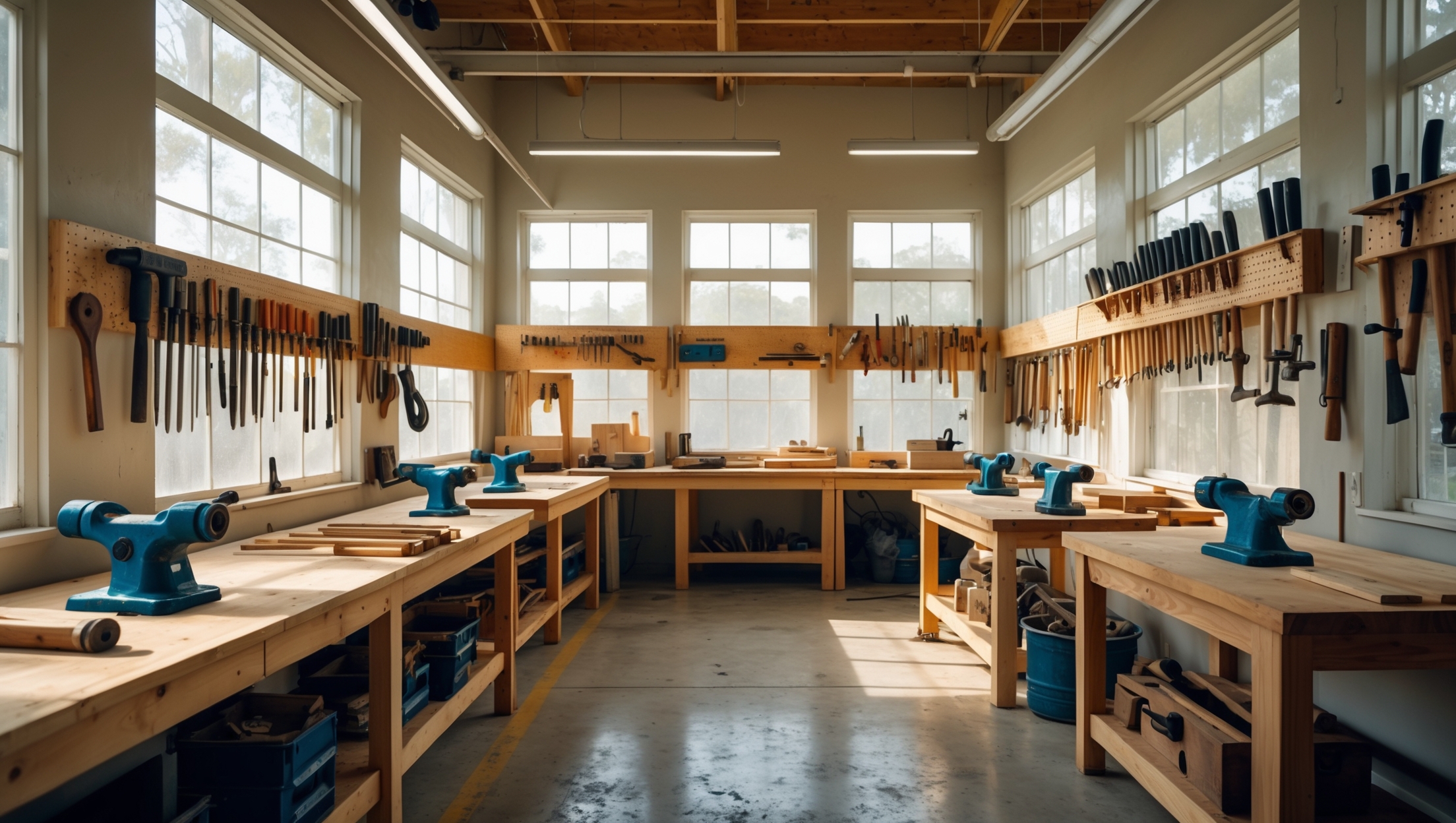
A Practical Tools & Equipment Guide for St. Petersburg Community Woodshops

Introduction: Empowering St. Pete’s Makers with the Right Tools
Community woodshops are thriving hubs of creativity and skill-building across St. Petersburg, FL. Whether your neighborhood association is setting up a collaborative workshop space or your nonprofit wants to upgrade its tool lending program, a well-equipped woodshop can unite people and spark countless projects. But with so many tool options, safety considerations, and budget constraints, where should your group begin? This guide offers a comprehensive, practical roadmap for selecting, sourcing, and maintaining the essential tools and equipment for a community woodshop in St. Pete. Tailored to local needs and resources, you’ll find expert tips on budgeting, must-have tools for all skill levels, smart sourcing strategies (including local grants and partnerships), and the best practices for ongoing maintenance. Whether you’re launching from scratch or expanding an existing space, this guide will help you avoid common pitfalls and ensure your woodshop serves the community for years to come.
Understanding Community Woodshop Needs in St. Petersburg
Assessing Your Community’s Goals
Before filling your shopping cart, it’s crucial to clarify the mission and primary users of your woodshop. Will it primarily serve beginner hobbyists, students, or skilled makers? Are you focused on furniture making, small crafts, repair projects, or all of the above? Collect feedback through surveys, open meetings, or conversations with likely users; this ensures your tool selection aligns with real demand and maximizes engagement.
Space Considerations: Layout and Safety
Measure your available space and map out zones for cutting, assembly, finishing, and storage. St. Petersburg’s humid climate means ventilation and dehumidification are priorities—especially during rainy season. Factor in safe walkways, emergency exits, and locations for dust collection equipment. Sketch your layout before buying large machinery to avoid overcrowding and compliance issues.
Essential Tools and Equipment for Every St. Pete Community Woodshop
Hand Tools: The Foundation
- Saws: Handsaws, coping saws, and backsaws for basic cuts.
- Chisels: A set of beveled-edge chisels in multiple sizes.
- Planes: Block plane and jack plane for smoothing and shaping.
- Clamps: Bar clamps, C-clamps, and spring clamps for assembly and gluing.
- Measuring & Layout Tools: Tape measures, combination squares, marking gauges, and levels.
- Hammers & Mallets: Carpenter’s hammer, rubber mallet, and dead blow mallet.
- Screwdrivers & Wrenches: Both flathead and Phillips; adjustable wrenches for tool setup.
Power Tools: Boosting Productivity and Precision
- Table Saw: The central workhorse for ripping and cross-cutting lumber. Prioritize safety features such as blade guards and emergency stops.
- Miter Saw: For precise crosscuts and mitered angles—vital for framing and trim work.
- Drill Press: Enables controlled, repeatable drilling; safer than handheld drills for many users.
- Band Saw: Ideal for curved cuts and resawing lumber.
- Jointer and Planer: Essential for flattening and squaring raw boards—critical if your shop uses reclaimed local lumber.
- Dust Collection System: Protects air quality and reduces cleanup, especially important in St. Pete’s humid climate where mold can be a concern.
- Random Orbital Sander: For smooth finishing on all projects.
- Router and Router Table: Versatile for edge profiling, joinery, and custom detailing.
Safety Equipment and First Aid
- Eye protection (goggles and face shields)
- Hearing protection (earmuffs or plugs)
- Respirators and dust masks
- Fire extinguisher (Class A/B/C rated)
- First aid kit (stocked and accessible)
- Emergency shutoff switches for major equipment
- Clearly posted safety guidelines and equipment instructions
Storage Solutions
- Wall-mounted tool racks and pegboards
- Lockable cabinets for hazardous items (finishes, solvents, sharp tools)
- Mobile tool carts for flexible workspaces
- Dedicated lumber storage racks with airflow space to prevent warping/mold
Budgeting for Your Community Woodshop: Local Insights
Typical Startup Costs in St. Petersburg
Budgets will vary based on space size, tool quality, and whether you’re starting from scratch or upgrading. Here’s a realistic breakdown for a modest but well-equipped woodshop in St. Pete (as of 2024):
- Hand Tools (basic set): $1,000–$1,500
- Power Tools (core selection): $4,000–$7,000
- Dust Collection & Ventilation: $1,000–$2,500
- Safety Equipment: $500–$1,000
- Storage & Workbenches: $1,000–$1,500
- Miscellaneous (consumables, signage, small tools): $500–$1,000
Total: $8,000–$14,500
Budget-Smart Strategies
- Phased Purchasing: Start with essentials, then add specialty tools as your membership grows and needs evolve.
- Buy Refurbished or Used: Local shops and online classifieds (like Craigslist Tampa Bay and Facebook Marketplace) often have quality tools at half retail price.
- Community Drives: Host tool donation drives; many retirees in the area are happy to donate gently used equipment.
- Bulk Purchasing: Partner with other community organizations or schools to negotiate discounts from local hardware stores.
- Local Grants and Sponsorships: The St. Petersburg Arts Alliance or Foundation for a Healthy St. Petersburg occasionally fund creative and skill-building projects.
Sourcing Tools and Equipment Locally
Local Retailers and Reuse Centers
- St. Pete Reuse Factory: Excellent for reclaimed lumber, hand tools, and hardware at a fraction of new cost.
- Habitat for Humanity Restore (St. Petersburg): Frequent source for affordable benches, cabinets, and sometimes larger machinery.
- Pinellas County Tool Library: Partner for tool loans, training, and occasional surplus sales.
- Independent Hardware Stores: Many offer nonprofit discounts—try Pinellas Hardware or Bill Jackson’s Shop for specialty tools.
Building Relationships with Local Makers
Engage with St. Petersburg’s vibrant maker scene—groups like the St. Pete Makers Guild and local high school woodshop teachers are often open to tool swaps, shared purchases, or even co-hosted workshops. Attend local meetups or city-sponsored maker fairs to network and spot deals.
Maintenance and Longevity: Keeping Your Woodshop in Top Shape
Routine Maintenance Schedules
- Daily: Clean work surfaces, sweep floors, empty dust collection bins, and return tools to their storage spots.
- Weekly: Inspect tool cords, blades, and moving parts for wear. Sharpen chisels and planes as needed.
- Monthly: Oil moving parts, calibrate measurement tools, and test safety equipment (fire extinguishers, first aid kits).
- Seasonally: Check for mold or rust, especially after summer storms; inspect roof and windows for leaks.
Tool Checkout and Accountability
Implement a simple sign-in/out system—digital (like Google Sheets) or analog—to track tool use, reduce loss, and schedule regular maintenance. Encourage users to report dull blades or broken parts immediately.
Sharpening and Calibration
- Invest in a basic sharpening station with whetstones and honing guides.
- Schedule quarterly calibration checks for saws, planers, and measuring tools.
- Offer training sessions for users to learn care basics—protecting both your tools and your members’ safety.
Safety Best Practices for St. Pete Woodshops
Climate-Specific Hazards
St. Petersburg’s humidity accelerates rust and can promote mold growth. Use dehumidifiers, especially in summer, and store metal tools in silica gel-lined containers when possible. Regularly inspect electrical cords and outlets for moisture damage. Post clear instructions for handling power outages or summer storm surges.
Emergency Preparedness
- Post evacuation routes and emergency contact numbers in English and Spanish.
- Train a few volunteers in basic first aid and CPR—local Red Cross chapters offer discounted classes for nonprofits.
- Maintain a “near-miss” log to review and learn from safety incidents.
Training, Community Building, and Sustaining Engagement
Ongoing Training Programs
- Offer regular tool safety orientations for all new members.
- Host monthly skill-building workshops (e.g., safe table saw use, joinery basics, finishing techniques).
- Invite local artisans or woodworkers as guest instructors—it builds community pride and brings fresh ideas.
Encouraging Inclusive Participation
Design your space and programming to welcome all skill levels, genders, and backgrounds. Provide adaptive tools or adjustable benches for users with mobility challenges. Consider offering project kits for beginners, making it easy for anyone to start and succeed.
Celebrating Success and Sharing Resources
Showcase members’ finished projects online and at local events. Share tool maintenance tips and project plans through a community newsletter or social media. Partner with local schools or youth programs to introduce new generations to woodworking.
Conclusion: Building Stronger Communities, One Tool at a Time
Launching or upgrading a community woodshop in St. Petersburg, FL is about more than just collecting a pile of tools—it’s about empowering neighbors, nurturing creativity, and fostering a culture of skill-sharing and mutual support. By thoughtfully selecting the right equipment, budgeting smartly, tapping into local resources, and maintaining a safe, welcoming space, your community woodshop can become a lasting resource for generations of makers. Remember to start with the essentials, prioritize safety, and build strong local partnerships to amplify your impact. With the right planning and ongoing stewardship, your woodshop will not only transform raw materials into beautiful projects—it will transform lives and neighborhoods across St. Pete. The tools you choose today are the foundation for tomorrow’s creativity, collaboration, and community pride. Start building wisely—and watch what your city can create together.
What’s the best way to approach local grants or partnerships when trying to source equipment for a nonprofit woodshop? Are there particular organizations or businesses in St. Petersburg that tend to be supportive of these kinds of community projects?
To source equipment for a nonprofit woodshop, start by reaching out to local foundations and the city’s arts or community development departments, as they often support hands-on learning initiatives. In St. Petersburg, organizations like the St. Petersburg Arts Alliance and Pinellas Community Foundation are known for supporting community projects. Local hardware stores and lumber yards may also be open to partnerships or donations, especially if you highlight the community impact of your work.
For organizations that want to expand an existing tool lending program, how would you recommend involving potential users in deciding which new tools to add without over-purchasing or missing key needs?
A good way to involve potential users is to run short surveys or host open forums where members can suggest and vote on new tools they’d find most useful. Prioritize based on the most requested items and cross-check with staff or experienced woodworkers to ensure practical choices. Consider starting small, then reviewing tool usage after a trial period before making further purchases.
When prioritizing must-have tools for all skill levels, do you have advice on balancing purchases between more expensive machines and hand tools—especially if the initial budget is tight? What do you recommend buying first to get a woodshop up and running?
For a tight budget, start by investing in quality hand tools like chisels, saws, and a good measuring tape, since these are versatile for most projects. Add a sturdy workbench early on. Save bigger purchases—like a table saw or planer—until you know what kinds of projects you’ll tackle most. Many St. Petersburg community woodshops offer shared access to expensive machines, so you can do a lot without owning them right away.
You mentioned that St. Petersburg’s humid climate requires special attention to ventilation and dehumidification in woodshops. Do you have any recommendations for specific equipment or simple solutions that work well in community spaces without a huge increase in operating costs?
For community woodshops in St. Petersburg, portable dehumidifiers with built-in humidistats can help control moisture without major installation costs. Oscillating fans and window-mounted exhaust fans improve air circulation and ventilation affordably. It’s also helpful to open doors or windows when weather allows. Regularly emptying dehumidifier reservoirs and checking for condensation will keep things running smoothly without adding much to operational expenses.
I noticed the guide mentions smart sourcing strategies like local grants and partnerships. Are there particular organizations or grant programs in the St. Pete area that you recommend reaching out to for funding or donations when equipping a community woodshop?
In St. Petersburg, several organizations could be valuable for funding or donations when equipping a community woodshop. Consider reaching out to the Pinellas Community Foundation, which often supports local initiatives. The St. Petersburg Arts Alliance may also have grant opportunities, especially for creative spaces. Additionally, local businesses, lumberyards, and hardware stores sometimes offer partnership programs, sponsorships, or in-kind donations. Connecting with the city’s Office of Cultural Affairs can also help identify current grant openings for community projects.
You mentioned the importance of ventilation and dehumidification in St. Pete’s climate. Are there particular brands or types of equipment you’d recommend for a larger shared workshop space, or tips for keeping costs down while maintaining good air quality?
For larger shared workshops in humid climates like St. Pete, look for commercial-grade dehumidifiers such as those from Frigidaire, Aprilaire, or Ebac. For ventilation, inline fans from brands like Vortex or AC Infinity are reliable. To keep costs down, consider using programmable timers to run equipment only during peak hours and ensure regular filter maintenance to maximize efficiency. Strategically placing exhaust fans near dust-producing workstations can also improve air quality without needing to ventilate the entire space constantly.
When it comes to budgeting, how do you prioritize which must-have tools to purchase first for an all-skill-level woodshop? Are there any local grants or partnership programs in St. Petersburg you’d recommend starting with?
When budgeting for a community woodshop, start with versatile, high-use tools like table saws, band saws, and sanders since they support a wide range of projects and skill levels. Next, add essentials like clamps, measuring tools, and safety gear. For funding in St. Petersburg, consider reaching out to the St. Petersburg Arts Alliance and the Foundation for a Healthy St. Petersburg, as both have histories of supporting local makerspaces and community initiatives.
If our group is just starting out and has a limited budget, which essential tools should we prioritize first for a mix of beginners and experienced makers? Are there any affordable brands you recommend that hold up well in a shared, high-use environment?
For a new group with various skill levels, focus first on versatile basics: a quality table saw, miter saw, cordless drills, clamps, and a reliable set of hand tools like chisels and measuring tapes. For shared, high-use environments, brands like DeWalt, Makita, and Ridgid offer durability and good value. Start with these essentials, then expand as your needs and budget grow. Look for bundle deals or gently used equipment to stretch your funds further.
You mentioned humidity in St. Pete as a factor—do you have recommendations for affordable dehumidifiers or ventilation solutions that work well in smaller, shared spaces? We’re trying to avoid expensive equipment if possible.
For smaller, shared woodshop spaces in St. Pete, portable dehumidifiers with a capacity of 30–50 pints often work well and are reasonably priced. Brands like Frigidaire and hOmeLabs are reliable. For ventilation, box fans combined with open windows or strategically placed exhaust fans can help move moist air out without a big investment. Just make sure any dehumidifier you choose is easy to empty and quiet enough for your shared environment.
As someone looking to start a small community woodshop here in St. Petersburg, do you have recommendations for specific local partners or grant programs that are especially supportive for nonprofits just getting started?
For starting a nonprofit woodshop in St. Petersburg, consider reaching out to the St. Petersburg Arts Alliance and the Foundation for a Healthy St. Petersburg, both of which support creative and community-focused initiatives. Local Rotary Clubs and the Suncoast Credit Union Foundation have also funded grassroots projects. Additionally, the Pinellas Community Foundation sometimes offers grants for community spaces. Connecting with these organizations could provide both funding and helpful local partnerships.
I’m curious how to balance buying must-have tools for all experience levels when our budget is pretty limited. Does the guide recommend starting with fewer high-quality tools, or going for more affordable basic versions even if they might need replacing sooner?
The guide suggests prioritizing quality over quantity when budgets are tight. It recommends purchasing fewer high-quality, versatile tools that can serve multiple purposes and last longer, rather than buying many cheaper tools that might need frequent replacement. This approach helps ensure safety, better results, and lower long-term costs, especially for community woodshops serving people with different experience levels.
For a St. Pete community woodshop that will have a mix of beginners and more experienced members, what are your top must-have power tools that balance versatility with safety, especially considering limited space and Florida’s humidity?
For a mixed-skill community woodshop in St. Pete, I suggest prioritizing a quality table saw with safety features, a compound miter saw, a drill press, and a band saw. These tools are versatile and can handle most projects. For Florida’s humidity, choose tools with rust-resistant finishes and keep a dehumidifier or silica gel packs in the shop. A good dust collection system also helps maintain equipment and air quality in limited spaces.
Our community group is just starting to organize and we’re not sure which local grants or partnerships are realistic to pursue for funding equipment. Could you recommend a few resources in the St. Petersburg area that have helped woodshops get tools on a budget?
In St. Petersburg, several resources can help new community woodshops with equipment funding. Check out the St. Petersburg Arts Alliance, which sometimes offers grants for creative spaces. The Foundation for a Healthy St. Petersburg and the Pinellas Community Foundation may have relevant small grants as well. Many groups also partner with local businesses, home improvement stores, or tool banks for donations or discounts. Reaching out to these organizations directly is a good way to start.
We’re working with a pretty tight budget for our neighborhood woodshop in St. Pete. What would you say are the absolute must-have tools for beginners, and are there specific local grants you recommend looking into first?
For beginners on a tight budget, focus on basics like a circular saw, jig saw, cordless drill, clamps, measuring tape, combination square, and safety gear. These will cover most entry-level projects. For local grants, check with the St. Petersburg Arts Alliance, Creative Pinellas, and the city’s Neighborhood Partnership Grants. Sometimes local hardware stores or lumberyards sponsor community initiatives as well.
I noticed the guide mentions budgeting and sourcing tools locally, especially with the possibility of grants and partnerships. Do you have suggestions for specific organizations or grant programs in St. Petersburg that support new community woodshops?
Absolutely, in St. Petersburg, you might consider reaching out to the Arts Alliance, the St. Petersburg Downtown Partnership, and the Foundation for a Healthy St. Petersburg, all of which have supported community-focused initiatives in the past. Local hardware stores and lumberyards sometimes have sponsorship or donation programs. For grants, the Pinellas Community Foundation and Creative Pinellas are worth exploring, as they periodically offer funding for arts and community projects.
The guide talks about collecting feedback from users before selecting tools. Do you have any sample survey questions or tips on effectively gathering input from people who might not have much woodworking experience yet?
You can keep surveys simple and approachable, especially for beginners. Ask questions like: What types of projects are you interested in trying? Are there any tools you wish to learn about? What experience do you have with woodworking tools, if any? Also, consider in-person discussions or hands-on demos to help newcomers express their preferences more confidently.
You talk about mapping out zones for assembly, finishing, and storage. Are there any local examples or templates of St. Pete woodshops that have an efficient layout, especially for smaller spaces?
A few local St. Petersburg woodshops, like the St. Pete Makers space and The Wood Shop at Morean Arts Center, have efficient layouts tailored to smaller spaces. They often use mobile workstations, wall-mounted storage, and clear zones for assembly and finishing. Visiting these shops or checking their open house events can give you firsthand ideas for optimizing your own layout.
I noticed the guide talks about sourcing tools and equipment through local grants and partnerships. Do you have any examples of St. Petersburg organizations or businesses that have supported new community woodshops recently, and how did those partnerships work?
Yes, several St. Petersburg organizations have played an active role. For example, the St. Pete Makerspace received funding from the St. Pete Innovation District through a local grant, which helped them purchase essential woodworking tools. Additionally, the Suncoast Credit Union has donated equipment directly to newly established community woodshops. Typically, these partnerships involve either providing funds for tool purchases or donating surplus equipment, with the community woodshops offering classes or hosting public events in return.
You highlight the importance of ventilation and dehumidification in St. Pete’s humid climate, especially during the rainy season. Do you recommend any particular systems or low-cost solutions for smaller community woodshops that might not have a large budget or space for industrial equipment?
For smaller community woodshops in St. Pete, portable dehumidifiers and window or wall-mounted exhaust fans work well and are budget-friendly. Simple solutions like opening doors and windows for cross-ventilation also help, especially after rainy days. If possible, use moisture-absorbing products like silica gel or desiccant packs in storage areas to further control humidity without heavy equipment.
When assessing what tools to buy first for a new space mostly serving beginners, what would you prioritize—versatile hand tools, basic power tools, or investing in bigger shared equipment like table saws?
For a beginner-focused woodshop, it’s usually best to start with versatile hand tools and a few essential power tools like a drill and a jigsaw. These allow for a wide range of projects and help beginners develop fundamental skills. Once those basics are covered, consider investing in larger shared equipment like a table saw, which can greatly expand what your group can build together.
When surveying the community to understand what tools are most needed, do you have any example questions or strategies that have worked well for gathering useful feedback? I want to be sure I’m actually getting input that will shape the tool list.
One effective strategy is to use a short survey with a mix of multiple-choice and open-ended questions. For example, ask members which types of projects they’re most interested in, what tools they currently use most, and if there are any tools they’ve wished were available. Ranking questions—like asking participants to prioritize a list of potential new tools—can also help clarify community needs.
We have a mixed group with a lot of beginners and some more experienced woodworkers. What are the must-have tools you suggest for balancing safety and utility for all skill levels, especially if we’re starting small and hope to expand later?
For a mixed group, start with quality basics that everyone can use safely: a sturdy workbench, tape measures, combination squares, hand saws, chisels, mallets, and clamps. Add a few power tools like a drill/driver and a jigsaw for versatility. Prioritize safety gear such as eye protection, dust masks, and push sticks. As the group grows, you can add table saws, planers, or routers, but these can wait until everyone is comfortable with the fundamentals.
How would you suggest balancing the needs of both beginner hobbyists and more experienced makers when choosing must-have tools, especially if there are budget constraints for a new woodshop?
To accommodate both beginners and experienced makers on a budget, focus first on versatile, essential tools like quality saws, drills, clamps, and measuring tools. Prioritize tools that are safe and easy to use, but robust enough for advanced projects. As resources allow, gradually add more specialized equipment. Don’t forget to consult the community on their top priorities to ensure the shop meets a range of needs.
You mentioned the importance of dehumidification and ventilation due to St. Pete’s humid climate. Can you recommend specific types of equipment or systems that work well for community woodshops in this area, especially if the budget is tight?
For a St. Petersburg community woodshop on a budget, consider portable dehumidifiers with auto-shutoff and adjustable humidity settings; models from Frigidaire or hOmeLabs are reliable. Box or inline fans, combined with window or wall vents, can greatly improve airflow. Installing a basic exhaust fan near woodworking areas will help remove moisture and fumes. Try to arrange tools and benches away from exterior walls to prevent condensation. These solutions balance effectiveness and cost.
How do you recommend prioritizing which tools to buy first when working with a limited nonprofit budget? Are there certain must-have tools for beginners in St. Pete’s community woodshops that deliver the most value upfront?
When working with a limited budget, focus on versatile hand tools like measuring tapes, saws, chisels, and hammers, which are essential for most woodworking projects. Next, prioritize a quality workbench and clamps for safety and accuracy. For St. Pete’s community woodshops, consider seeking donations or purchasing secondhand equipment to stretch your budget. Power tools like drills or sanders can come later as your shop grows. Start with the basics that cover the widest range of beginner projects.
I noticed the article mentions the importance of dehumidification in St. Petersburg’s humid climate. Are there particular brands or types of dehumidifiers and dust collectors you’d recommend for a mid-sized woodshop, considering energy efficiency and cost?
For a mid-sized woodshop in a humid area like St. Petersburg, look at dehumidifiers from Frigidaire or hOmeLabs, as both offer energy-efficient models with solid capacity and reliability. For dust collection, Jet and Oneida are good choices; they have units designed for small to medium shops that balance power use and performance well. Be sure to check for Energy Star ratings and compare maintenance needs when choosing your equipment.
The article mentions budgeting and local grants for sourcing equipment. Could you share any specific St. Petersburg organizations or grant programs that have been especially helpful or accessible for community woodshops just starting out?
Several St. Petersburg-based organizations have supported community woodshops in their early stages. The St. Petersburg Arts Alliance often offers grants that creative spaces can apply for. The City of St. Petersburg’s Office of Cultural Affairs also has small grant programs for community projects. Additionally, the Foundation for a Healthy St. Petersburg and local Rotary Clubs have provided funding or equipment donations to similar initiatives in the area.
I noticed the guide mentions considering humidity and ventilation because of St. Petersburg’s climate. Are there specific dehumidifiers or ventilation setups you recommend for community woodshops in this area, especially for spaces on a tight budget?
For community woodshops in St. Petersburg on a tight budget, look for portable dehumidifiers with a capacity of at least 50 pints per day, since they’re effective for moderate-sized spaces. Brands like Frigidaire and hOmeLabs offer reliable models. For ventilation, installing basic box fans or window exhaust fans can help improve airflow without major expenses. If possible, add an air filtration unit to reduce dust and moisture. Regularly monitor humidity to keep it around 40–50 percent.
You mentioned the importance of proper ventilation and dehumidification due to St. Petersburg’s humid climate. Are there any specific equipment recommendations or local best practices for managing moisture and air quality in a community woodshop setting?
In St. Petersburg’s humid climate, a combination of equipment and practices works best. Consider installing a commercial-grade dehumidifier rated for your shop’s size, such as models by Aprilaire or Frigidaire. Use exhaust fans and open windows or vents when weather allows to promote airflow. Many local woodshops also elevate lumber off the floor and use moisture meters to monitor wood before use. Regularly cleaning dust filters and maintaining HVAC systems also helps keep air quality safe.
Could you elaborate on how local grants and partnerships specifically work for tool sourcing in St. Petersburg? Are there any examples of organizations in the area that have successfully used these resources to set up their community woodshops?
Local grants in St. Petersburg often come from city arts programs or neighborhood revitalization funds, which community woodshops can apply for to purchase equipment. Partnerships typically involve teaming up with local businesses, tool suppliers, or nonprofits who may donate tools or offer discounts. For example, the St. Pete Makerspace collaborated with local lumberyards and received a small city grant to outfit their shared workshop. These combined efforts help reduce startup costs for new community woodshops.
I noticed the guide talks about budgeting and finding local grants or partnerships for sourcing tools. Are there any St. Pete-specific organizations or programs you’d recommend reaching out to for financial support or tool donations when starting a new community woodshop?
In St. Petersburg, you might consider contacting the St. Petersburg Arts Alliance, which sometimes supports creative community spaces. The Foundation for a Healthy St. Petersburg and local Rotary or Kiwanis clubs may also have grant opportunities or be open to supporting community projects. Additionally, try reaching out to local hardware stores and lumberyards, as they occasionally donate materials or tools to grassroots initiatives.
Our nonprofit wants to set up a tool lending program, and you mentioned aligning tool selection with real demand. Do you have tips on how to gather feedback effectively from our community, especially for folks who may not be familiar with woodworking yet?
To gather useful feedback, try hosting open houses or hands-on demo days where people can try basic tools and share their interests in a casual setting. Simple surveys—online or paper—can help too, especially if you use pictures of tools and ask what projects interest them. Partnering with local organizations to reach non-woodworkers can also help you hear from a broader group.
You mention seeking local grants and partnerships as smart sourcing strategies. For a group new to this in St. Petersburg, what are the first steps to identifying and approaching possible partners or grant opportunities specifically for community woodshops?
Start by researching local organizations that support community projects, such as city arts councils, neighborhood associations, and regional foundations. Check their websites for grant programs or partnership initiatives. Next, prepare a concise proposal explaining your woodshop’s goals and community benefits. Reach out with a friendly introduction and request a meeting to discuss collaboration. It’s helpful to attend local networking events to connect with potential partners in person.
For groups just starting out with very limited funding, which local grants or partnerships in St. Petersburg have proven most effective for building up the basics of a community woodshop? Are there particular organizations or programs you recommend approaching first?
For groups with limited funding in St. Petersburg, the St. Petersburg Arts Alliance and the Pinellas Community Foundation have been supportive of creative community spaces. Local neighborhood associations and the Suncoast Credit Union Foundation sometimes offer small grants for community projects. It’s worthwhile to approach the St. Pete Greenhouse for guidance, as they often connect new initiatives with funding or partnership opportunities. Starting with these organizations can help you secure initial resources and build local connections.
Our neighborhood is looking into setting up a woodshop, and budgeting is one of our biggest concerns. Do you have recommendations for which must-have tools to prioritize if funds are limited, especially for a group of mostly beginners?
For a beginner-friendly, budget-conscious woodshop, start with the basics: a sturdy workbench, a circular saw, a jigsaw, a cordless drill, a set of clamps, a tape measure, and a variety of hand tools like screwdrivers, chisels, and a hammer. These essentials cover most simple projects and keep startup costs manageable. As your group gains experience and funds allow, you can add more specialized equipment like a table saw or band saw.
When figuring out the best layout for a small woodshop in St. Pete, how do we balance space for machinery with the need for safe walkways and emergency exits, especially if our available space is very limited?
Balancing machinery placement with safe walkways in a small woodshop starts by mapping out your floor plan. Prioritize essential machines, grouping them by workflow to minimize movement. Ensure at least 3 feet of clear walkway space around each station and keep all emergency exits completely accessible. Use mobile bases for larger tools to allow flexibility, and store less-used items vertically or on rolling carts to free up valuable floor space.
Could you elaborate on smart sourcing strategies, especially for groups launching a woodshop from scratch? Are there specific local grants or partnerships in the St. Pete area you’d recommend looking into first before making big equipment purchases?
When starting a woodshop from scratch in St. Petersburg, consider connecting with local nonprofits, vocational schools, and makerspaces—they sometimes offer equipment sharing or partnership opportunities. For grants, look into the Pinellas Community Foundation and St. Petersburg Arts Alliance, as they occasionally support creative and educational initiatives. Also, reach out to local hardware stores or lumberyards, as they may have donation programs for community projects.
If a nonprofit is just starting out with a tight budget, are there particular tools or equipment you’d recommend purchasing first versus items that can be borrowed or sourced through partnerships later?
For a new nonprofit woodshop on a budget, it’s wise to start with essential hand tools like hammers, screwdrivers, measuring tapes, and saws. These are affordable and versatile. Larger or specialized equipment, such as table saws or planers, can often be borrowed from local partners or rented until funds allow for purchase. Building relationships with other organizations or tool libraries can also help stretch your resources.
We worry about humidity and tool maintenance in our current workshop here in St. Pete. Do you have suggestions for practical dehumidification solutions or regular routines that help protect both wood and equipment in a shared space?
Humidity control is definitely important in St. Pete’s climate. Using portable dehumidifiers is a simple and effective option, especially when set to maintain humidity below 55%. Regularly check and empty their reservoirs. For ongoing maintenance, wipe down metal tools with a light coat of oil after each use and store wood off the floor on racks. Silica gel packs in toolboxes can also help absorb extra moisture. Scheduling monthly deep cleans and inspections can catch any rust or mold early.
Could you expand more on the types of local grants or partnerships available in St. Petersburg for outfitting a community woodshop? I’m curious how easy it is to access funding for tools versus ongoing maintenance expenses.
In St. Petersburg, local grants for community woodshops are often available through city programs and arts organizations. Funding for initial tools and equipment is generally more accessible, especially via start-up or innovation grants. Ongoing maintenance expenses can be trickier to cover, but partnerships with local businesses or recurring community grants can help. Many woodshops collaborate with neighborhood associations or local colleges, which may share resources or offer sponsorships for ongoing needs.
Could you share more details about the recommended dehumidification systems for St. Pete’s humid climate? Are there specific brands or setups that work well in community woodshops, especially during the rainy season mentioned in the article?
For St. Pete’s humid climate, especially during the rainy season, a commercial-grade dehumidifier with a built-in humidistat is a good choice for community woodshops. Brands like Frigidaire and Aprilaire are reliable and commonly used. Look for units designed for large spaces and make sure they have continuous drain options. Positioning the dehumidifier near the center of the shop and keeping doors closed will help maintain consistent humidity levels, protecting both wood and tools.
The article mentions the importance of ventilation and dehumidification due to St. Petersburg’s climate. What are some affordable solutions for managing humidity in a shared woodshop space, especially for groups with a limited budget?
For a shared woodshop on a budget, consider using portable dehumidifiers designed for larger rooms, which are more affordable than commercial-grade units. Regularly empty their water tanks and clean the filters for best results. Box fans and open windows can also help with air circulation. Using moisture absorbers, like silica gel or calcium chloride buckets, in specific areas can further reduce humidity without a big investment.
You mentioned local grants and partnerships for smart sourcing. Do you have any advice on where to start looking for these in St. Petersburg, or examples of organizations that have successfully partnered with community woodshops in the area?
In St. Petersburg, a good starting point is the St. Petersburg Arts Alliance, which often lists grant opportunities for creative spaces. You might also look into collaborating with the Pinellas Community Foundation or local businesses like woodworking suppliers. Some community woodshops have built partnerships with local makerspaces, the city’s Parks and Recreation Department, and neighborhood associations to access funding or equipment donations.
Our group is mostly made up of beginners wanting to learn basic woodworking—should we focus more on hand tools or invest in a few entry-level power tools to start? The article talks about assessing community goals but I’m not sure how to decide where to draw the line.
For a group of beginners, starting with quality hand tools is often best—they teach fundamentals, are safer, and allow everyone to build skills at a comfortable pace. Once people gain confidence, you can add a few entry-level power tools for efficiency. Try polling your group to see what interests them most and consider the projects you want to tackle first. That way, your investments match your learning goals and keep everyone engaged.
Our neighborhood group is concerned about humidity ruining tools, especially during the rainy season in St. Pete. Do you have suggestions for cost-effective dehumidification or tool storage options that can help prolong equipment life?
Humidity is definitely an issue in St. Pete, especially for woodshop tools. To help, consider using portable dehumidifiers in your storage area—they’re fairly affordable and work well for small to medium spaces. Silica gel packs or moisture-absorbing tubs can be placed in toolboxes and cabinets for extra protection. Also, try storing tools in airtight plastic bins or cabinets, and apply a thin coat of oil to metal parts to prevent rust. Regularly checking for condensation and wiping tools dry is also a good habit.
When designing the layout and safety zones, how do you recommend balancing space for large cutting machinery with areas for beginners or kids, especially in smaller St. Petersburg spaces?
To balance space for large cutting machinery and beginner or kid-friendly areas in smaller shops, use clear physical barriers or floor markings to separate zones. Place larger machines along walls or in corners to maximize open space. Reserve central, highly visible areas for beginner or youth stations with smaller, safer tools. Keep supervised, dedicated spaces for kids, and always ensure good sight lines for monitoring activity throughout the shop.
Our group is thinking about starting a small woodshop but is worried about fitting all the essential equipment into a limited space. Do you have advice on which larger machines are truly must-haves versus which ones can be left out or sourced later?
For a small woodshop with limited space, prioritize a table saw, a good workbench, and a dust collection system—these are fundamental for most tasks. A bandsaw and planer are also valuable, but you can often delay adding a jointer or large stationary sanders. Many groups start with portable or benchtop versions of tools like drill presses or miter saws. Focus on versatility and multi-use machines at first, and expand as your needs become clearer.
If we’re working with a limited budget to set up a small community woodshop, are there any local St. Petersburg grant programs or partnerships you’d recommend looking into first before buying new equipment?
For a limited budget, it’s worth checking with local organizations like the St. Petersburg Arts Alliance, the City of St. Petersburg Office of Cultural Affairs, and the Foundation for a Healthy St. Pete, as they sometimes offer grants or partnerships for community initiatives. You might also reach out to local hardware stores or lumberyards, since they occasionally provide sponsorships or donated equipment for nonprofit projects.
I noticed advice on sketching layouts before purchasing large machinery. Are there any common layout mistakes St. Petersburg woodshops encounter due to space or climate that you suggest avoiding from the start?
One common mistake in St. Petersburg woodshops is underestimating the effects of humidity on both machinery placement and wood storage. Avoid putting machines too close together, as high moisture levels can cause rust and hinder airflow. Also, be mindful not to block windows or vents—proper ventilation is key to managing the humid climate and preventing warping. Always allow enough space for safe movement and future tool upgrades.
The article touches on engaging potential users to tailor the woodshop, but what are some effective strategies you’ve seen for maintaining user engagement and feedback over time to ensure the space keeps meeting community needs?
Ongoing user engagement can really make a difference for a community woodshop. Hosting regular feedback sessions, using suggestion boxes, and sending out periodic online surveys are proven ways to gather input. Creating a users’ committee and organizing open forums or quarterly town hall meetings also keeps communication active. Recognizing members’ input by implementing their suggestions, even small ones, helps build long-term commitment and ensures the space evolves with the community.
I noticed you mentioned smart sourcing strategies and local grants for getting equipment. Are there specific St. Pete organizations or programs you recommend reaching out to first when looking for funding or tool donations for a new community woodshop?
For St. Petersburg, the Community Foundation of Tampa Bay is a great starting point, as they often support local initiatives. Also, check with the St. Pete Greenhouse, which connects small businesses and nonprofits to local funding and resources. Local hardware stores and tool libraries sometimes offer donations or discounts, so reaching out to them directly can also be worthwhile.
If our nonprofit wants to apply for local grants to help fund woodshop equipment, do you have tips on which organizations in St. Petersburg are most supportive of these kinds of projects or where to look first?
You might want to start by checking with the Pinellas Community Foundation and the St. Petersburg Arts Alliance, as both often support local creative and educational initiatives. The Foundation for a Healthy St. Petersburg sometimes funds programs that benefit the community, and local businesses or hardware stores may have small grant programs or donations available. Reaching out to city offices that oversee community development can also help you find current grant opportunities.
Our group is just starting to map out a layout for our space, and you mentioned ventilation and dehumidification being important in St. Pete’s climate. Are there certain equipment types or setups you recommend for effectively handling humidity and dust in a Florida woodshop?
For Florida’s humid climate, portable or wall-mounted dehumidifiers can help maintain proper moisture levels in your woodshop. For dust control, consider using a central dust collection system paired with air filtration units to trap fine particles. Make sure to position dust collection ports near major machines and set up cross-ventilation with exhaust fans or window units to keep air circulating and humidity down. These steps will help protect both your tools and your health.
I noticed the article mentioned local grants and partnerships as a way to source tools for the woodshop. Could you give some examples of organizations or programs in St. Pete that have successfully secured these resources, and any advice on how to approach them?
Several St. Petersburg groups like the St. Pete Makers and the St. Petersburg College Community Programs have benefitted from grants through local arts councils and partnerships with businesses such as hardware stores. To approach them, start by preparing a clear proposal showing community impact, then reach out to organizations like the St. Petersburg Arts Alliance or local rotary clubs. Building relationships and demonstrating shared benefits can increase your chances of success.
I’m new to setting up a woodworking space and really appreciate the point about humidity in St. Petersburg. Do you have recommendations for affordable dehumidification solutions that work well in shared shop environments, especially during the rainy season?
For a shared woodworking shop in St. Petersburg, consider using a commercial-grade portable dehumidifier with a built-in pump and large water capacity, which can handle the high humidity during the rainy season. Brands like Frigidaire and hOmeLabs offer reliable models at different price points. Position the unit centrally and ensure good airflow. Regularly check and clean the filters, and if possible, set up a hose for continuous drainage to avoid constant emptying. This setup should keep your tools and materials in better condition.
If a group is just starting out with a limited budget and wants to prioritize safety, which large machinery should they invest in first, and which tools can be added later as the shop grows? Curious how you balance quality, safety, and cost in the beginning stages.
For a new group prioritizing safety and working with a tight budget, start with a quality table saw equipped with modern safety features like a riving knife and blade guard. Add dust collection if possible, as this boosts both safety and cleanliness. As your shop grows, consider adding a bandsaw, drill press, and jointer. Always invest in reliable personal protective equipment and maintain your tools well, as these steps help balance quality, safety, and cost early on.
When assessing tool needs based on user feedback, how do you recommend balancing the wishlist of advanced equipment from experienced makers versus the basic essentials required by beginners? Is there a suggested process for prioritizing purchases if the budget is tight?
A good approach is to gather detailed feedback from both beginners and experienced makers to identify which tools are most requested and essential for safety and learning. Start by ensuring all basic tools for common projects are available and in good condition, as these benefit everyone. Then, use member surveys or a voting system to prioritize advanced equipment purchases. If the budget is tight, consider adding one higher-end tool at a time, based on collective interest and potential impact, while maintaining a solid core of essentials.
If our neighborhood association wants to tap into local grants and partnerships for sourcing tools, do you have advice on where to start or examples of organizations in St. Pete that support community woodshops?
To get started, consider reaching out to the St. Petersburg Arts Alliance and Creative Pinellas, as both often support community arts and maker projects. The Foundation for a Healthy St. Petersburg and the Pinellas Community Foundation may also have relevant grant opportunities. Connecting with local businesses, hardware stores, and woodworking clubs can open doors for partnerships or in-kind donations. It’s helpful to clearly outline your project’s goals and community impact when applying.
If our nonprofit is starting a small woodshop from scratch, how long should we realistically expect it to take from assessing our needs through to opening day? What are the biggest time sinks we should plan for when setting everything up safely and effectively?
For a new nonprofit woodshop, the full process from initial assessment to opening day often takes 3 to 6 months. The biggest time sinks are usually securing appropriate space, setting up electrical and dust collection systems, and ensuring all safety measures meet legal requirements. Ordering and installing equipment can also cause delays, especially if specialty items are backordered. Careful planning and building in extra time for inspections and training will really help your timeline.
When collecting feedback from future users like you suggest, what are some effective ways to balance the different needs of beginners versus more experienced makers? Is it better to focus on one group at first or try to accommodate both from the start?
Balancing the needs of both beginners and experienced makers works best when you gather targeted feedback from each group and look for overlapping interests. If resources are limited, consider starting with flexible tools and equipment that serve both skill levels, like adjustable benches or multi-purpose machines. It’s helpful to pilot a few classes or workshops to see which features are most used, then gradually expand based on participation and specific requests.
When surveying potential users about their project interests, were there any tools or equipment categories that stood out as unexpectedly popular or essential for beginners? I’m curious if your research found trends specific to St. Pete’s community.
During our surveys, many beginners in St. Petersburg showed a strong interest in basic hand tools and portable power tools, especially cordless drills, orbital sanders, and clamps. We also noticed higher-than-expected demand for combination workbenches and safety equipment. The emphasis on small, versatile tools seemed tied to limited workspace at home and a desire for accessible, confidence-building projects. These trends stood out as particularly relevant to our local community.
You mention the importance of adjusting for St. Petersburg’s humid climate, especially regarding ventilation and dehumidification. Could you elaborate on which specific types of dehumidifiers or ventilation systems are most effective for woodshop environments in this region?
For St. Petersburg’s humid climate, look for commercial-grade dehumidifiers with a capacity of at least 50–70 pints per day, such as those designed for basements or industrial use. These handle larger spaces and high humidity well. For ventilation, exhaust fans with high CFM ratings, paired with intake vents, help maintain airflow. Adding an air filtration system can further keep dust and moisture in check, which is ideal for woodshop environments.
For a community woodshop in St. Petersburg dealing with the high humidity and frequent rain, what dehumidification or ventilation systems have you found most effective without breaking the budget? Are there brands or setups local shops tend to rely on?
Many community woodshops in St. Petersburg rely on a combination of portable dehumidifiers and box fans for budget-friendly humidity control. Brands like Frigidaire and Honeywell offer reliable dehumidifiers that are popular among local shops. For ventilation, installing basic exhaust fans near work areas and keeping windows open when possible helps a lot. Some shops also use simple humidity monitors to keep track of moisture levels. This setup balances effectiveness with affordability.
I noticed the guide mentions smart sourcing strategies like local grants and partnerships. Do you have any examples of specific grants or community organizations in St. Pete that have been supportive for woodshop startups, especially with initial equipment purchases?
In St. Petersburg, the St. Pete Greenhouse has supported local makers by connecting them with city grants and small business funding. The Pinellas Community Foundation sometimes offers grants that can apply to makerspaces and woodshops. Additionally, Keep St. Pete Local and the Arts Alliance are active in helping new creative spaces connect with equipment donations or sponsorships. Reaching out to these organizations is a great starting point for woodshop startups seeking support.
For groups just getting started with very limited funds, do you have recommendations on how to prioritize which essential tools to buy first for a community woodshop in St. Pete? It’s a challenge to balance budget and safety, so any practical tips would be helpful.
When starting out with a tight budget, focus on versatile and essential hand tools like tape measures, hammers, hand saws, screwdrivers, and chisels. Next, consider a quality power drill and a circular saw, as they cover many basic needs. Safety gear—like goggles, dust masks, and ear protection—should be a top priority. Start small, build up your toolkit as funds allow, and encourage donations or tool-sharing among members to stretch your resources further.
For a community group starting from scratch with a limited budget, which three tools would you prioritize as essential, and are there certain brands or models that tend to hold up better in shared-use environments?
For a new community woodshop on a tight budget, I’d prioritize a reliable table saw, a quality cordless drill/driver, and a robust miter saw. These cover a wide range of basic tasks. For shared-use, brands like DeWalt and Makita are known for their durability and easy-to-find parts. If funds allow, look for contractor-grade models, as they’re built to withstand more frequent use.
You mention St. Pete’s humid climate needing special attention in terms of ventilation and dehumidification. Are there specific types or brands of dehumidifiers and ventilation systems that work best for woodshops in this area, especially on a nonprofit’s budget?
For a woodshop in St. Pete’s humid climate, portable dehumidifiers from brands like Frigidaire and GE are reliable and budget-friendly. Look for models with at least a 50-pint capacity for larger spaces. For ventilation, inline duct fans from AC Infinity or VIVOSUN paired with HEPA filters work well and are cost-effective. Always check for Energy Star ratings to help minimize electricity costs over time.
When figuring out the best layout for a new woodshop, how do you suggest balancing space for larger stationary machines versus more flexible workstations, given the need to avoid overcrowding and maintain safe walkways?
To balance space for stationary machines and flexible workstations, start by placing your largest, least-moved machines (like table saws and jointers) first, ensuring clear, unobstructed paths around them. Then, fill in with mobile or modular workstations, which can be rearranged as needed. Always maintain at least 3 feet of walkway space for safety. This approach helps prevent overcrowding and keeps movement through the shop easy and safe.
I noticed you mentioned the impact of St. Pete’s humid climate on woodshop planning. Do you have any recommendations for affordable dehumidifiers or ventilation setups that work well in larger shared spaces, especially during the rainy season?
For larger shared woodshop spaces in St. Pete, it’s worth looking into commercial-grade dehumidifiers, such as models from Frigidaire or hOmeLabs—they offer good capacity and reliability at a reasonable price. For ventilation, consider installing high-capacity exhaust fans or setting up a cross-ventilation system with multiple box fans and open windows. Running these systems consistently during the rainy season will help keep moisture levels in check and protect your tools and wood.
Your section mentions leveraging local grants and partnerships for smart sourcing. Do you have examples of organizations in St. Pete that have successfully secured such support for their woodshops, and what was their process like?
Several St. Petersburg woodshops have benefited from local grants and partnerships. For example, the St. Pete Makerspace received funding from the Pinellas Community Foundation and collaborated with local businesses for equipment donations. Their process usually involves outlining specific community goals, submitting detailed grant applications, and building relationships with local civic groups and businesses. This approach helps them secure both funding and in-kind support for their woodshop initiatives.
If our nonprofit already has some basic tools but wants to upgrade equipment, what would you suggest as the next priority purchases to best serve a mix of beginners and experienced makers?
For a community woodshop serving both beginners and experienced makers, consider upgrading to a robust table saw, a quality bandsaw, and a dust collection system. These tools enhance safety and versatility for many projects. Adding a jointer and planer can also be valuable for more advanced woodworking. Ensure that all equipment includes clear safety features and is accessible for users of different skill levels.
When gathering feedback from potential users, what has worked best in your experience—surveys, open meetings, or one-on-one conversations—for really understanding the tools and equipment people want to see in a new community woodshop?
In our experience, one-on-one conversations tend to provide the most detailed and honest feedback about tool and equipment preferences. While surveys are useful for gathering broad trends and open meetings can spark creative ideas, personal conversations help uncover specific needs, concerns, and wish lists that people might not share in a group setting. Combining individual chats with a follow-up survey often gives the clearest picture.
I noticed you mentioned the importance of dehumidification and ventilation in St. Pete’s humid climate. Are there specific brands or types of dehumidifiers and dust collection systems that work best for community shops on a tight budget?
For community woodshops with budget constraints, many find that Frigidaire and hOmeLabs portable dehumidifiers are reliable and affordable options for managing humidity. For dust collection, consider the Wen 3401 or Harbor Freight’s Central Machinery dust collectors, which offer good performance at a lower price. Both types are widely used in schools and small shops due to their value and efficiency.
Can you provide more details on how to effectively assess the tool needs for a group with mixed skill levels? For example, how do you balance purchasing advanced equipment versus ensuring beginners are comfortable and safe using the tools?
To assess tool needs for mixed skill levels, start by surveying your group’s experience and project goals. Prioritize purchasing versatile, user-friendly tools that suit both beginners and advanced users. Focus on safety by offering hands-on orientations and clear instructions for all equipment. Consider advanced tools as add-ons, accessible to experienced members or during supervised sessions. This approach ensures everyone can participate safely and grow their skills.
If our community group is mainly made up of beginner hobbyists, would you recommend starting with a comprehensive tool set right away, or is it more practical to gradually expand equipment as our members’ skills grow?
For a group of beginners, it’s more practical to start with essential, easy-to-use tools and gradually expand your equipment as members gain confidence and skills. This approach helps manage costs, avoids overwhelming new woodworkers, and lets you invest in tools that best suit your group’s evolving interests and projects.
Our nonprofit is looking to start a tool lending program for local residents, as mentioned in the guide. Are there specific local St. Petersburg grants or partnerships you recommend reaching out to first, especially for groups with limited funds?
For a tool lending program in St. Petersburg, consider contacting the Foundation for a Healthy St. Petersburg and the Pinellas Community Foundation, as both support community-focused initiatives. It’s also a good idea to reach out to the City of St. Petersburg’s Neighborhood Programs and local hardware stores, which sometimes sponsor or donate to neighborhood projects. Partnering with established community woodshops can help with resources and grant advice as well.
The article mentions factoring in ventilation and dehumidification for St. Pete’s climate. Do you have any recommendations for affordable dehumidifiers or ventilation setups that work well in community spaces on a limited budget?
For community woodshops in humid climates like St. Pete, consider portable dehumidifiers such as models from Frigidaire or hOmeLabs—they offer good capacity and durability for shared spaces without a hefty price tag. For ventilation, simple box fans paired with window exhaust fans can help circulate air effectively. Installing vent hoods near dust-producing tools also makes a big difference, and DIY ducting with flexible tubing can keep costs low.
Our community group is mainly made up of beginner hobbyists and students. Based on the guide, which must-have tools should we prioritize first so we can get started quickly, without feeling overwhelmed by too many choices?
For beginner hobbyists and students, it’s best to start with versatile hand tools and a few basic power tools. Prioritize items like a tape measure, combination square, quality chisels, a mallet, and a set of screwdrivers. A cordless drill and a circular saw are helpful entry-level power tools. These essentials will let your group tackle most starter projects without overwhelming anyone with too much equipment.
For organizations just starting to collect feedback from potential users, what are some effective survey questions or strategies you’ve seen work well in identifying the types of projects and tools that will get the most engagement?
To get useful insights, you might ask open-ended questions like ‘What woodworking projects are you most interested in?’ and offer checklists for common projects and tools. Including questions about skill level helps match offerings to user needs. Another effective strategy is to ask which days and times people would use the shop, as this can shape both tool purchases and scheduling. Keep surveys short, and consider follow-up interviews for deeper understanding.
When gathering community input for our neighborhood woodshop, what’s the most effective way to balance the needs of both students and experienced makers? The article mentions surveys and meetings, but I’d love more specifics on managing conflicting priorities.
To balance the needs of students and experienced makers, consider forming a small advisory group with representatives from each group. After collecting survey and meeting feedback, use this group to review priorities and propose compromises—like scheduling beginner and advanced classes at different times, or allocating specific equipment hours. This structured approach helps ensure everyone’s voice is heard and difficult choices are made transparently.
You mention the importance of ventilation and dehumidification for woodshops in St. Petersburg’s climate. Are there affordable solutions or recommended equipment for small spaces that have worked well for other community groups in this area?
For small woodshops in St. Petersburg, many community groups have found that portable dehumidifiers and window-mounted exhaust fans are both effective and affordable. Brands like Frigidaire or hOmeLabs offer reliable, compact dehumidifiers. For ventilation, simple box fans or window fans can make a big difference, especially when placed opposite each other to create cross-ventilation. These solutions are easy to install and don’t require major renovations.
When it comes to budgeting for essential tools and equipment as you mention in the guide, are there any local grants or partnership resources in St. Petersburg that you’ve found especially helpful for small, community-led groups just getting started?
Local groups in St. Petersburg often look into grants from organizations like the St. Petersburg Arts Alliance and the Pinellas Community Foundation, which occasionally support creative and community-driven projects. Some woodshops have also formed partnerships with neighborhood associations or local businesses for sponsorships or donated materials. It’s worth reaching out to the city’s Office of Cultural Affairs, as they can point you toward current grant opportunities or resources tailored to new, community-focused initiatives.
We’re just starting to plan our workshop and I’m a bit overwhelmed by the layout and safety suggestions, especially with St. Pete’s humidity. Do you have tips for affordable dehumidification or ventilation solutions that work well for beginners on a tight budget?
Humidity is definitely a challenge in St. Pete. For affordable dehumidification, consider using basic desiccant packs or small portable dehumidifiers in key areas. For ventilation, box fans combined with open windows or doors can help air circulation, and installing a basic vent fan (like those used in bathrooms) is budget-friendly. Start small and expand as your workshop grows—you can always add more as needed.
Our nonprofit is looking to expand our current tool lending program, but we’re worried about maintaining equipment over time given the city’s humidity. What kind of maintenance routines or equipment do you suggest for preventing rust and keeping tools in good condition?
To combat rust in St. Petersburg’s humid climate, store tools in a dry, well-ventilated area and use silica gel packs or dehumidifiers. Wipe tools after each use, apply a light coat of oil or rust inhibitor, and regularly inspect for early signs of corrosion. Setting a routine weekly cleaning schedule and keeping inventory records also helps maintain your equipment’s condition.
When planning the layout to maximize safety, what are some common mistakes you see groups make when sketching zones for cutting and assembly? Any tips on how to avoid overcrowding with larger tools in a limited space?
One common mistake is placing cutting and assembly zones too close together, which can lead to crowded work areas and safety hazards, especially around large tools like table saws. To avoid this, ensure each zone has enough clearance for safe movement and material handling. Also, avoid placing tool outfeeds into walkways. Using mobile bases for larger equipment can help you reconfigure the space as needed, helping to prevent permanent overcrowding.
When budgeting for a community woodshop, what are some common expenses people forget to factor in besides just the cost of tools? I’m hoping to avoid surprises after we open our space to the public.
Besides the upfront cost of tools, it’s easy to overlook ongoing expenses like maintenance and replacement parts, utility bills (especially for dust collection and ventilation systems), insurance, permits, safety equipment, and consumables such as sandpaper, glue, and finishes. You should also budget for workshop cleaning supplies, marketing costs, and possible upgrades for security or accessibility. Factoring these in will help you avoid unexpected costs after opening.
When planning the tool selection, how should we prioritize must-have tools for all skill levels if our community woodshop will host both beginners and more experienced makers? Are there specific types of equipment that best meet a wide range of projects?
To serve both beginners and experienced makers, prioritize versatile, user-friendly tools like quality hand saws, cordless drills, clamps, and reliable sanders. Benchtop equipment such as a table saw, drill press, and band saw also suit a wide range of skill levels and project types. Focus on tools that offer safety features and are easy to adjust, ensuring everyone can use them confidently and efficiently.
Do you have specific recommendations for dealing with St. Pete’s humidity when it comes to storing power tools long-term? I’m worried about rust and equipment damage in our community space, especially during the summer months.
Humidity is definitely a challenge in St. Pete, especially for metal tools. For long-term storage, keep power tools in airtight containers or cabinets with silica gel packs or other desiccants to absorb moisture. Apply a light coat of machine oil or rust inhibitor to exposed metal parts. If possible, use a dehumidifier in the storage area during the summer months. Regularly check and wipe down tools to catch any early signs of rust.
Our nonprofit is considering starting a tool lending program, but we’re concerned about budgeting and prioritizing purchases. From your guide, which essential tools should we invest in first to maximize versatility for beginners and experienced makers alike?
To serve both beginners and experienced makers, consider starting with versatile and frequently used tools. Essentials include a quality set of hand tools (hammers, screwdrivers, chisels), cordless drills, circular saws, a jigsaw, orbital sander, and a miter saw. These cover most basic woodworking tasks and projects. As your program grows, you can expand to specialty tools or larger equipment based on demand and budget.
In the section about sourcing tools, you mention local grants and partnerships. How would a totally new community woodshop go about finding and applying for these opportunities in St. Pete? Are there any resources or organizations you suggest starting with?
To get started with local grants and partnerships in St. Pete, connect with the St. Petersburg Arts Alliance and the Community Foundation of Tampa Bay, as both support creative projects. The city’s Office of Cultural Affairs can also point you toward relevant opportunities. It helps to attend local networking events or workshops to meet potential partners. When applying, prepare a clear proposal about your woodshop’s mission, community impact, and funding needs.
We’re trying to set up a small woodshop at our local community center in St. Pete and I’m curious what you would recommend as a starting set of tools for mostly beginner and student users. Are there a few must-haves we should prioritize within a tight budget?
For a beginner-friendly and budget-minded woodshop, focus first on basics like a quality workbench, clamps, tape measures, squares, and safety gear (goggles, ear protection). For essential tools, start with hand saws, a cordless drill, chisels, a block plane, and a reliable jigsaw. These cover most simple projects and are safe for students. Add a shop vacuum for cleanup and consider expanding later as needs grow.
How do you recommend balancing the need for advanced tools with keeping things accessible and safe for beginners, especially if the woodshop will be used by both kids and adults in the community?
It’s important to create clear zones or schedules within the woodshop: set aside certain times or areas for advanced tools, making sure only trained adults have access. For beginners and kids, focus on basic hand tools and supervised use. Safety training sessions for all users, clear rules posted, and color-coded tool labels can also help keep everyone safe and comfortable, while still letting the shop cater to different skill levels.
When you’re figuring out which must-have tools to prioritize for a new woodshop that’s mostly serving beginner hobbyists, what are the first few investments you’d recommend? Is there a “starter kit” you suggest before expanding later?
For a beginner-friendly woodshop, start with essentials that cover most basic projects: a quality workbench, a set of hand tools (measuring tape, chisels, hammer, screwdrivers), and a few power tools like a circular saw, drill, and random orbit sander. Safety gear—such as goggles and ear protection—is also a must. This foundation lets beginners tackle a wide variety of projects before adding more specialized equipment as your community’s skills and needs grow.
When planning for all skill levels, how do you balance equipping the shop with advanced machinery versus keeping it accessible and safe for beginners? Any tips on prioritizing tools for a mixed user base?
Balancing equipment for all skill levels means starting with versatile, easy-to-use tools that build basic skills, like quality hand tools and simple power tools. Introduce advanced machinery gradually, ensuring clear instructions and safety signage. Consider organizing separate tool zones—one for beginners, another for experienced users. Prioritize tools that see the most use and support a wide variety of projects. Regular training sessions can help everyone use the equipment safely and confidently.
In the section about smart sourcing strategies, you mention local grants and partnerships. Do you have any specific recommendations for organizations or programs in St. Petersburg that have been supportive of community woodshops in the past?
St. Petersburg has a few supportive organizations for community woodshops. The St. Petersburg Arts Alliance often has grant opportunities, and Creative Pinellas sometimes supports makerspaces. The Foundation for a Healthy St. Petersburg has also funded community-focused projects in the past. Additionally, collaborating with local businesses like lumberyards or hardware stores can lead to helpful partnerships and sponsorships.
When it comes to budgeting for startup tools in a community woodshop, do you have suggested priorities for must-have items versus things that can wait until later? I’d love more details, especially for a group with a limited initial grant.
For a community woodshop with a limited budget, prioritize core tools that serve many users and projects. Start with a quality table saw, miter saw, drill press, and workbenches. Add basic handheld tools like drills, clamps, chisels, and safety gear. Items like specialty routers, sanders, and advanced joinery equipment can wait until you gauge member needs. Focusing on versatile, shared-use tools ensures you cover most woodworking basics right from the start.
With the humidity in St. Petersburg, what ongoing maintenance steps are essential to keep woodworking tools from rusting or malfunctioning? Are there particular brands or storage solutions you’ve found work best in this climate?
Humidity in St. Petersburg can definitely be tough on woodworking tools. Regularly wiping down metal surfaces with a light oil or rust inhibitor is essential. Using silica gel packs or dehumidifiers in your storage area helps a lot. For tool brands, many locals trust Festool and DeWalt for their durability in humid conditions. Storing tools in airtight cabinets or tool chests also prevents moisture buildup and keeps rust at bay.
Could you give a few examples of how local grants or partnerships in St. Petersburg have helped community woodshops get essential equipment? I’m part of a small nonprofit and we’re not sure where to start looking for funding.
In St. Petersburg, community woodshops have often benefited from grants provided by local arts organizations, city economic development funds, and partnerships with hardware stores. For example, some have received equipment through collaborations with local colleges or tool banks. You might start by contacting the city’s Office of Cultural Affairs, local community foundations, or approaching businesses willing to sponsor tools or donate gently-used equipment.
I’m interested in how local grants and partnerships typically work when sourcing tools for a new workshop in the area. Are there particular organizations in St. Petersburg known to support these kinds of community initiatives?
Local grants and partnerships are a big help for new community workshops in St. Petersburg. Organizations like the St. Petersburg Arts Alliance and the Foundation for a Healthy St. Petersburg frequently support creative community spaces, sometimes providing funding or tools. You might also reach out to local businesses, hardware stores, and even neighborhood associations, as they sometimes sponsor workshops or donate equipment. Building relationships with these groups increases your chances of securing support.
You mentioned local grants and partnerships for sourcing tools. Do you know of any specific programs in St. Pete that are beginner-friendly, or advice for approaching potential sponsors as a small nonprofit?
In St. Petersburg, beginner-friendly options include the Pinellas Community Foundation and the St. Petersburg Arts Alliance, both of which support creative community projects. For sponsorships, start by preparing a clear proposal outlining your mission, community impact, and specific needs. Reach out to local hardware stores, lumber yards, and even neighborhood associations—they often welcome partnerships with nonprofits, especially those benefiting residents.
When surveying potential users to assess our community woodshop’s needs, what are the most important questions to ask to make sure our tool selection matches real demand, especially if we want to serve both beginners and experienced makers?
To match your tool selection to real demand, ask users about their skill levels, preferred woodworking projects, and specific tools they wish to use or learn. Find out which power tools and hand tools they consider essential, what classes or workshops interest them, and whether they need space for large or small projects. It’s also useful to ask about accessibility needs and desired shop hours.
You mentioned that St. Petersburg’s humid climate makes ventilation and dehumidification very important for community woodshops. Are there specific tools or equipment you would recommend for keeping humidity under control, especially during the rainy season?
Controlling humidity in a St. Petersburg woodshop is crucial. For community spaces, a high-capacity dehumidifier designed for large areas is a solid investment—look for models with continuous drain options for convenience. Exhaust fans help with air movement, while a hygrometer will let you monitor moisture levels. During the rainy season, consider using moisture absorbers in storage areas and make sure windows and doors seal tightly to keep humid air out.
Our group mainly includes beginner hobbyists and students. Would you recommend focusing our initial budget on versatile power tools or is it better to invest more in basic hand tools and safety equipment first?
For beginner hobbyists and students, it’s usually wise to prioritize essential hand tools and quality safety equipment before moving on to power tools. Hand tools help build foundational skills and are often less intimidating for new users. Once everyone is comfortable and safety habits are established, you can gradually add versatile power tools to your shop as your budget allows.
I’m curious about the section on space planning. If our available space is on the smaller side, what are your top priorities for essential zones or equipment to include, and what can be safely omitted or shared?
For a smaller woodshop, prioritize zones for safety, cutting, and assembly. Ensure there’s a clear walkway and proper ventilation. Multi-use benches and mobile tools (like a jobsite table saw or portable workbench) help save space. Shared items could include clamps, hand tools, and finishing supplies. Large stationary equipment like jointers or dedicated sanding stations may be omitted or replaced with hand tools, depending on your projects.
When surveying community members about what tools to prioritize, what are some effective methods or questions to make sure you’re truly capturing everyone’s needs and not just the most vocal participants?
To capture a wide range of needs, try offering anonymous surveys both online and in person, so quieter voices can share input comfortably. Ask questions like, ‘Which tools do you use most often?’ and ‘What projects would you like to try if the right equipment were available?’ Also, consider focus groups or suggestion boxes to gather diverse feedback beyond the most outspoken members.
Our nonprofit is looking to upgrade our tool lending program in St. Pete, but we have limited indoor space and are worried about the humidity affecting our tools. Do you have any specific recommendations for dehumidifiers or tool storage solutions that work well in this climate?
Humidity can definitely be a challenge in St. Pete. For your situation, look for dehumidifiers rated for Florida’s high humidity, such as models from Frigidaire or hOmeLabs, and consider one with a built-in pump for easy drainage. For tool storage, sealed plastic bins with silica gel packs help, or invest in metal cabinets with tight seals. Wall-mounted racks also save precious floor space and improve air circulation around your tools.
Could you elaborate on how to balance budgeting for must-have power tools versus safety gear when starting a small community woodshop from scratch? The article mentions prioritizing both, but where should we make tradeoffs if our funds are limited?
When funds are limited, always prioritize essential safety gear first—like goggles, ear protection, and dust masks—since these protect your members’ health. For power tools, start with versatile basics such as a quality circular saw and drill, adding specialized equipment as your budget allows. Consider seeking donations or buying used tools to stretch your funds, but never compromise on protective equipment for the sake of new tools.
Our nonprofit is thinking about upgrading our tool lending program, but we have a pretty limited budget. Are there specific local grants or partnerships in St. Pete you recommend starting with to help fund must-have tools?
For St. Pete nonprofits, the Pinellas Community Foundation and the Suncoast Credit Union Foundation often support community improvement efforts like tool lending programs. You might also reach out to the Foundation for a Healthy St. Petersburg and the City of St. Pete’s own Neighborhood Partnership Grants. Partnering with local hardware stores, lumberyards, or even trade schools can also sometimes yield in-kind donations or sponsorships.
When planning the shop’s layout, is there a rule of thumb for how much space should be allocated to assembly versus cutting and storage? Our room isn’t huge, so I want to make sure we don’t end up crowded or unsafe.
For smaller woodshops, a good rule is to allocate about 40% of your space to assembly, 30% to cutting and machining, and 30% to storage. Prioritize spacious walkways and clear zones around machines for safety. If possible, use mobile workbenches or storage to adjust your layout as needed. Always keep emergency exits and tool access unobstructed.
We’re trying to revamp our nonprofit’s tool lending program and wondered if you have recommendations for sourcing durable tools on a tight budget. Are there specific grants or local partnerships in St. Pete you’ve seen work well for community woodshops?
For durable tools on a tight budget, consider reaching out to St. Pete-area businesses for donations or discounts, such as local hardware stores or tool suppliers. Many community woodshops have had success partnering with organizations like the St. Petersburg Foundation and applying for local arts or neighborhood improvement grants. Hosting tool drives and collaborating with nearby makerspaces can also expand your inventory cost-effectively.
When you mention sourcing strategies like local grants and partnerships, could you provide examples of organizations in St. Pete that have successfully secured these resources for their woodshops?
Certainly! The St. Pete Makerspace has secured local grants for expanding their woodworking area, often partnering with the St. Petersburg Arts Alliance. Another example is the Boyd Hill Nature Preserve, which worked with Friends of Boyd Hill and received city funding for their woodshop programs. These organizations demonstrate how leveraging community connections and grant opportunities can support woodshop resources.
You mentioned that ventilation and dehumidification are important due to St. Pete’s humid climate. What kind of affordable ventilation systems would work best for a smaller community woodshop, especially if we’re just getting started on a tight budget?
For a small community woodshop on a budget, consider starting with box fans placed in windows to create cross-ventilation and help move air out. A window exhaust fan is another affordable option that can pull dust and humid air outside. For dehumidification, a portable dehumidifier will help control moisture levels. Always ensure air is filtered to minimize dust, even with basic setups.
When it comes to applying for local grants or partnering with organizations to source equipment, do you have any tips or examples of successful collaborations from other St. Petersburg woodshops?
Several St. Petersburg woodshops have found success by partnering with local nonprofits, neighborhood associations, and even art councils. Often, they join forces for grant applications or host community events that attract sponsorships or donations. One tip is to reach out to local businesses for in-kind donations of tools, or to co-host workshops with organizations that share similar goals. Building relationships and clearly outlining mutual benefits have helped many shops secure resources and funding.
You mention local grants and partnerships for sourcing equipment. Could you share any tips or examples of organizations in St. Petersburg that have successfully secured these kinds of resources for their community woodshops?
Certainly! In St. Petersburg, organizations like the St. Pete Makers and the Greenhouse have leveraged local business partnerships and city-sponsored grants to expand their equipment inventory. Applying for the Pinellas Community Foundation’s small grants or partnering with local hardware stores for donations are both practical approaches. Engaging with local government initiatives focused on arts and workforce development can also open up new funding and equipment opportunities for community woodshops.
When assessing community needs, how do you handle situations where your users’ interests are really diverse, like some people wanting to focus on furniture and others on small crafts or repairs? Do you prioritize certain tools first, or is it better to start basic and expand over time?
When user interests vary widely, it’s usually best to begin with versatile, essential tools that support a range of projects—from furniture to small crafts. This way, everyone can get started. As the community grows, gathering feedback helps decide which specialized tools or equipment to add next, ensuring the shop evolves based on members’ active interests and needs.
If a group is starting from scratch, what would be the top three must-have tools you’d prioritize for serving both beginners and more experienced makers, and how would you suggest balancing their cost versus overall usefulness?
For a new community woodshop, I’d suggest starting with a table saw, a quality drill/driver set, and a bandsaw. These tools handle a wide range of basic and advanced projects, making them versatile for all skill levels. When budgeting, invest in durability for core tools like the table saw, but consider reputable mid-range brands for accessories and less-used tools. This way, you maximize both utility and value.
If our group is just starting out and working with a limited budget, which must-have tools would you prioritize first to cover as many common woodworking projects as possible for all skill levels?
For a group just starting with a limited budget, I recommend prioritizing a sturdy workbench, a set of hand saws, a cordless drill with bits, basic measuring and marking tools (like a tape measure, square, and pencil), clamps, a hammer, chisels, and safety gear. These essentials will let you tackle most beginner and intermediate projects and are useful for all skill levels.
I noticed you mentioned humidity and ventilation being important in St. Petersburg woodshops. Are there specific dehumidifiers or ventilation systems you recommend for a community space on a limited budget?
For community woodshops on a budget, portable dehumidifiers like the Frigidaire 22-pint or hOmeLabs 22-pint are reliable and affordable options for controlling humidity. For basic ventilation, installing box fans in windows or using an exhaust fan like the Lasko High Velocity model can help circulate air. If your space is larger, consider a simple ducted exhaust system with a budget inline fan. Always prioritize units with easy maintenance and sufficient coverage for your shop’s square footage.
As someone running a small nonprofit in St. Pete, I’m wondering what kind of local grants or partnership opportunities you’ve seen work well for securing larger equipment like table saws or planers. Are there specific organizations in the area that are supportive of community woodshop setups?
In St. Pete, several organizations have been supportive of community woodshop initiatives. The St. Petersburg Arts Alliance occasionally offers grants for creative spaces, and the Foundation for a Healthy St. Petersburg has funded community development projects in the past. Local businesses, such as hardware stores or lumber suppliers, sometimes partner with nonprofits to donate or sponsor equipment. You might also look into the Pinellas Community Foundation, which sometimes backs hands-on learning programs.
Could you expand on how to assess which specific tools are most essential for a group that includes both beginner hobbyists and more skilled makers? I’m curious how to balance versatility and safety without overspending.
To balance versatility, safety, and budget, start by listing common projects group members want to tackle. Focus on multi-purpose tools like a quality table saw, cordless drills, and sanders, as these suit both beginners and advanced users. Choose models with clear safety features, such as blade guards and emergency stops. Prioritize hand tools for beginners and add specialty items only as your group’s needs grow, so you avoid overspending while still supporting a range of skill levels.
You mentioned that St. Pete’s humidity is a big factor when planning workshop layouts. From your experience, are there certain types of dust collection or dehumidification equipment that handle the local climate better or require less maintenance? Any specific brands or systems you’d recommend for a nonprofit on a tight budget?
In St. Petersburg’s humid conditions, portable dehumidifiers with built-in pumps (like some Frigidaire or hOmeLabs models) do well and need minimal upkeep. For dust collection, shop vacs with HEPA filters or simple cyclone separators (such as Dust Deputy) are affordable and effective for smaller spaces. Both are good choices for nonprofits since parts and filters are easy to replace, and they don’t require much maintenance.
You mentioned that humid climate in St. Pete means ventilation and dehumidification are priorities for woodshops. Are there certain affordable dehumidifier models or ventilation setups you recommend for small community spaces, especially ones on a limited budget?
For small community woodshops on a budget, portable dehumidifiers like the hOmeLabs 1,500 Sq. Ft. model or the Frigidaire 22-pint are reliable and affordable choices. For ventilation, a combination of box fans and a window exhaust fan can work well, especially if installed opposite each other to improve airflow. If your space allows, adding a low-cost air purifier with a HEPA filter can further help maintain air quality.
Our neighborhood association wants to set up a collaborative workshop, but we’re worried about St. Petersburg’s humidity and ventilation needs. Do you have suggestions for affordable dehumidification or ventilation solutions that work well for community spaces in our climate?
For St. Petersburg’s humid climate, portable dehumidifiers rated for your workshop’s square footage are a cost-effective choice, and they’re easy to move if you relocate. For ventilation, consider box fans or window exhaust fans to circulate air. If you have the budget, installing a wall-mounted exhaust fan helps remove dust and humidity more efficiently. Try to keep tools and materials off the floor and use moisture absorbers in storage areas to protect them further.
Could you give some examples of local grants or partnership opportunities in St. Petersburg that specifically support expanding or starting a community woodshop? I’m interested in learning what resources are actually available to neighborhood groups trying to get funding for tools.
In St. Petersburg, neighborhood groups can explore grants from the City of St. Petersburg’s Neighborhood Partnership program, which often funds community projects like woodshops. The Pinellas Community Foundation and the Foundation for a Healthy St. Petersburg also sometimes support community education spaces. You might also reach out to local businesses or hardware stores for partnership or sponsorship opportunities. Consider connecting with local arts councils, as they occasionally offer small project grants for creative spaces.
I noticed the article talks about collecting feedback from potential users before picking tools. Do you have suggestions on what kinds of survey questions are most helpful for figuring out which equipment will actually get used in a community setting?
To get useful feedback, ask potential users about their woodworking interests and experience levels. For example, questions like ‘What types of projects do you plan to work on?’, ‘Which tools have you used before?’, and ‘Are there any specific pieces of equipment you wish you had access to?’ can help. You could also include multiple-choice options for common tools and invite open responses for special requests.
Could you provide more details on best practices for maintaining equipment in a community woodshop, particularly in terms of organizing regular upkeep and encouraging users to participate in maintenance?
A solid maintenance plan includes a clear schedule for regular cleaning, lubrication, and safety checks of all equipment. Post checklists near machines and assign specific tasks to users at the end of their sessions. Monthly group clean-up days can foster a sense of shared responsibility. Providing short training sessions on proper care and explaining how maintenance extends tool life will also encourage participation.
When mapping out zones for different shop activities, how do you recommend prioritizing limited space if our group wants to support both beginners and more advanced woodworkers? Would certain tools or zones take precedence in a smaller workshop?
In a smaller workshop, start by giving priority to multipurpose tools and flexible work areas—benches and essential hand tools should be central so both beginners and advanced users can access them. Keep stationary tools like table saws in a dedicated area, but focus on mobile or stowable equipment where possible. Designate a safe, open zone for instruction or setup, as this helps beginners without limiting space for experienced woodworkers. Adapt zones as your group’s needs evolve.
If our nonprofit is starting almost from scratch, what would you prioritize first for a safe and functional woodshop space: investing in high-quality ventilation and dehumidification, or stretching the budget to buy a wider range of entry-level tools?
For a new nonprofit woodshop, safety and comfort should come first, so high-quality ventilation and dehumidification are the best initial investments. Good air quality protects everyone’s health and prevents wood damage. You can start with a smaller, essential set of tools and expand gradually, but inadequate ventilation or moisture control can create bigger problems right away.
When it comes to sourcing tools through local grants and partnerships, do you have tips on where to begin in the St. Petersburg area or examples of organizations that have successfully secured funding for their woodshop equipment?
To get started with sourcing tools via local grants and partnerships in St. Petersburg, consider reaching out to the St. Petersburg Arts Alliance and the Foundation for a Healthy St. Petersburg, as both have histories of supporting community projects. The Morean Arts Center is an example of an organization that has successfully obtained funding for creative spaces, including woodshops. It’s helpful to connect with local makerspaces and nonprofits—they often collaborate on grant applications and can share valuable insights.
When gathering feedback from potential users to assess the woodshop’s goals, what are some effective survey questions or discussion topics to ensure you capture a wide range of skill levels and interests?
To get feedback from a variety of skill levels and interests, ask users about their woodworking experience (beginner, hobbyist, professional), types of projects they want to work on, specific tools or equipment they’d like access to, preferred class topics, and ideal workshop hours. You could also ask what barriers they face in joining a woodshop and what community events or support services would be most valuable to them.
When assessing users’ needs, what’s the best way you’ve found to reach a mix of hobbyists and more experienced woodworkers? Are there tools or approaches that help keep both groups engaged and safe in a shared workshop?
To connect with both hobbyists and experienced woodworkers, we usually use surveys and informal interviews during open house events. This lets us gather feedback on tool preferences, project interests, and safety concerns. For engagement and safety, having clear signage, regular safety briefings, and a mix of beginner-friendly and advanced tools helps everyone feel welcome and secure in the workshop.
With the emphasis on safe layout and dust collection, do you suggest any particular brands or local vendors for dust collection systems that fit smaller workshop spaces in this region? I’m hoping to avoid overcrowding but still keep things clean and safe.
For smaller workshop spaces in St. Petersburg, many local woodworkers prefer compact dust collection systems from brands like Oneida and Jet, as they offer reliable performance without taking up much space. You might want to visit Woodcraft of St. Petersburg or Rockler in Tampa, both of which stock a range of space-saving units and can offer tailored advice for your specific needs.
For groups just starting out in St. Petersburg, do you have any advice on balancing the need for essential power tools with safety and ventilation requirements, especially considering the humidity and limited space mentioned in the article?
When starting out in St. Petersburg, focus on a few versatile, high-quality power tools like a table saw and miter saw, but prioritize tools with built-in dust collection. Since humidity can affect both tools and safety, choose equipment with rust-resistant coatings and store them off the floor. For ventilation, use portable air filtration units or window fans to keep air moving, especially in tight spaces, and always ensure clear walkways for safe movement.
I’m interested in your budgeting tips. Could you elaborate on how to prioritize must-have tools for an organization just starting out versus one that is expanding? Are there tools you suggest holding off on until community interest grows?
For a new woodshop, prioritize versatile essentials like table saws, quality drills, clamps, and safety equipment—these support most basic projects. As your organization grows, assess member interests before investing in specialized tools like CNC machines or advanced lathes. Hold off on expensive or niche equipment (such as router tables or laser cutters) until you see clear demand from your community, ensuring your funds go where they’re most needed.
Our neighborhood group is considering setting up a woodshop, but we’re concerned about the impact of St. Petersburg’s humidity on our tools over time. Do you have specific recommendations for dehumidification methods or protective storage solutions that work well in this climate?
St. Petersburg’s humidity can definitely affect tool longevity. For dehumidification, a dedicated dehumidifier sized for your space is very effective—consider models with automatic humidity controls. For storage, sealable plastic bins or cabinets with silica gel packs help reduce moisture around hand tools. Additionally, applying a light coat of oil to metal surfaces and using vapor corrosion inhibitor (VCI) products can provide extra protection against rust.
What are some mistakes you’ve seen new St. Pete community woodshops make with layout planning, especially when it comes to safety or adapting to rainy season conditions? I’d love any real-world examples or lessons learned.
One common mistake is placing power tools too close to entrances or exits, which can create safety hazards, especially during sudden Florida downpours when people rush inside. Some new shops also forget to elevate lumber storage or work areas off the floor, leading to water damage during rainy season flooding. It’s important to plan for good drainage and clear walkways to avoid slips and electrical risks.
Our nonprofit is interested in launching a small woodshop, but the budget is pretty limited. Based on your guide, what are the absolute must-have tools we should prioritize first to meet a range of skill levels and project types?
To get started on a tight budget, focus on versatile hand tools and a few essential power tools. Must-haves include a good quality circular saw, a cordless drill, clamps, measuring tools, a combination square, a workbench, and basic safety gear. Hand saws, chisels, and sanders are also useful. These basics allow for a variety of projects and skill levels, and you can gradually expand as resources grow.
When you’re just starting out and working with a limited budget, which core tools do you recommend prioritizing for a community woodshop that aims to serve both beginners and more experienced makers in St. Petersburg?
For a community woodshop on a budget, start with versatile, high-use tools. Prioritize a quality table saw, a miter saw, a drill/driver set, and a selection of hand tools like chisels, clamps, and measuring tapes. Add a couple of workbenches and a dust collection system for safety. These basics will accommodate both beginners and experienced makers and can be expanded as your budget allows.
You mention the importance of dehumidification in St. Petersburg’s humid climate for community woodshops. Can you recommend specific dehumidifiers or ventilation setups that work well for shared spaces, especially on a limited budget?
For community woodshops on a budget, portable commercial-grade dehumidifiers like the Frigidaire FFAD5033W1 or hOmeLabs 4,500 Sq. Ft. models work well and are easy to move between rooms. For ventilation, consider installing window exhaust fans or using box fans in opposite windows to create cross-ventilation. Regularly emptying dehumidifier tanks or getting models with continuous drain options is helpful in shared spaces.
When starting a woodshop from scratch on a limited nonprofit budget, which essential power tools do you advise prioritizing first to cover the widest range of projects? Is it smarter to start with a few high-quality basics or try to equip for multiple skills right away?
For a nonprofit woodshop on a tight budget, it’s usually best to invest in a few high-quality basic power tools first. Prioritize a table saw, a drill/driver, and a miter saw, as these cover most fundamental cuts and joinery. Starting with robust versions of these essentials allows you to handle a range of projects safely and accurately. As your budget grows, you can add more specialized tools to expand your capabilities.
When assessing the community’s goals and collecting feedback, what methods have worked best for getting input from people who might not already be involved in making or woodworking? I want to make sure we include as many perspectives as possible.
Involving people beyond the usual woodworking community often works best through a mix of outreach methods. Setting up casual open houses, attending local events, and using surveys shared through neighborhood groups or libraries help reach new audiences. Partnering with schools or community organizations can also bring in voices that might not naturally gravitate toward a woodshop, ensuring a broader range of perspectives in your feedback.
I noticed the guide mentions local grants and partnerships for smart sourcing. Do you have recommendations on where to start looking for these kinds of funding or equipment donations specifically in the St. Pete area?
For St. Petersburg, a good starting point is to check with the St. Pete Greenhouse, local arts and maker organizations, and your city’s economic development office. You can also reach out to area hardware stores, lumberyards, and major tool retailers for possible donation programs. Don’t overlook local community foundations or neighborhood associations, as they sometimes offer small grants or know of available resources.
If our community space is starting out with mostly hand tools and we want to gradually add larger equipment, what kind of partnerships or local grant programs have you found most successful in St. Pete for helping with those bigger purchases?
In St. Petersburg, several community woodshops have successfully partnered with local businesses, hardware stores, and woodworking supply shops to receive donations or discounts on larger equipment. Additionally, many groups have had luck applying for grants through the St. Petersburg Arts Alliance and the Pinellas Community Foundation. Hosting public workshops or collaborating with city recreation programs can also open doors to municipal grants or sponsorships.
You mentioned the importance of ventilation and dehumidification because of St. Petersburg’s climate. Do you have suggestions for affordable ways to tackle humidity in a woodshop, especially for smaller spaces?
For smaller woodshops in St. Petersburg, a portable dehumidifier is a budget-friendly solution. Make sure it’s sized appropriately for your space and empty the reservoir regularly. Also, use a box fan or window fan to improve airflow, which helps reduce moisture. If possible, seal up any gaps or leaks in doors and windows to prevent humid air from getting in.
You mentioned St. Petersburg’s humid climate as a factor in planning the woodshop layout. Do you have suggestions for affordable dehumidification solutions or tips to prevent rust on tools, especially for groups on a tight budget?
For affordable dehumidification, consider using box fans for air circulation and silica gel packs or moisture-absorbing products like DampRid in storage areas. Keep tools in a closed cabinet with some desiccant. Applying a thin coat of paste wax or light machine oil to metal surfaces helps prevent rust. Regularly wiping down tools and keeping the woodshop well-ventilated can also make a big difference for groups watching their budget.
If a group is trying to set up partnerships with local businesses or apply for grants to upgrade their tool lending program, what are some successful approaches or resources you’ve seen work well in the St. Petersburg area?
In St. Petersburg, groups have had good results by reaching out directly to local hardware stores, lumber yards, and tool retailers for partnerships, often offering co-branding or workshops in exchange for equipment support. For grants, researching local foundations, the city’s arts or community development departments, and even neighborhood associations can be effective. Collaborating with established nonprofits as fiscal sponsors or partners can also improve your chances of grant approval.
When it comes to mapping out zones for cutting, assembly, and storage, do you have any sample floor plans or recommended square footage per function for groups working with tight space in St. Pete?
For tight spaces, it’s helpful to allocate at least 40-60 sq ft for cutting, 60-80 sq ft for assembly, and around 30-50 sq ft for storage. While the article doesn’t include actual floor plans, a common approach is to use movable tables and modular shelving so zones can flex as needed. Sketching your layout on graph paper to scale can also help visualize the best flow and use of your available space.
After collecting feedback from our group, it seems like we have a mix of students and hobbyists, with some interest in furniture making. Is it better to focus on versatile, multi-purpose tools in the beginning, or should we invest in more specialized equipment right away?
Since your group includes both students and hobbyists with diverse interests, starting with versatile, multi-purpose tools is usually the best approach. These tools can cover a wide range of projects and skill levels, including furniture making. As you learn more about members’ preferences and needs, you can gradually add specialized equipment for specific techniques or advanced projects.
If our neighborhood group mostly has beginner hobbyists but wants to eventually accommodate more skilled makers, should we start with basic tools first or invest in a few advanced machines early on to future-proof the space?
Starting with basic tools is usually the best approach, especially for beginner hobbyists. This allows everyone to build core skills safely and keeps costs manageable. As your group’s abilities grow, you can gradually add more advanced machines based on members’ interests and needs. That way, you avoid overspending early while ensuring your workspace evolves alongside your group.
Our neighborhood group is planning to apply for local grants to fund our community woodshop. Do you have any tips on which types of partnerships or St. Pete organizations are most receptive to supporting tool lending programs or collaborative workshop spaces?
For community woodshops in St. Petersburg, reaching out to local neighborhood associations, the St. Pete Makerspace, and the St. Petersburg Arts Alliance could be a good start. Libraries and local hardware stores sometimes support tool lending initiatives. Consider partnering with vocational schools or city recreation centers, as they often have experience with grants and collaborative projects. Building relationships with these groups can boost your chances of securing support.
Our nonprofit is looking to upgrade our tool lending program, as suggested in your guide. Could you share more about what kinds of ongoing maintenance routines are most important for keeping shared tools in good shape given St. Pete’s humidity?
For St. Pete’s humid climate, regular cleaning and drying of tools after use is crucial to prevent rust. Apply a light coat of machine oil to metal surfaces and sharpen cutting edges frequently. Store tools in a dry, ventilated area, and consider using silica gel packs or dehumidifiers in storage spaces. Inspect electrical tools for moisture and check cords regularly. A monthly maintenance log helps ensure nothing gets overlooked.
Our parent-teacher group is thinking about starting a small woodshop for students and adults. Do you have any tips for getting feedback from potential users, or examples of the kinds of survey questions that help figure out what tools people actually want to use?
To gather useful feedback, try creating a short survey with questions such as: What experience do you have with woodworking? Which tools are you most interested in using or learning about? Are there specific projects or skills you’d like to develop? How often would you use the woodshop? Including both multiple-choice and open-ended questions helps you understand preferences and get new ideas. You might also invite people to a meeting or open house to discuss their interests in person.
Our neighborhood association would like to apply for local grants or develop partnerships, as referenced in the guide. Do you have any recommendations on where to start that process or examples of successful collaborations in St. Pete woodshops?
To get started with grants or partnerships, consider reaching out to local organizations like the St. Petersburg Arts Alliance or the Community Foundation of Tampa Bay, as they’ve supported creative and community projects in the past. Neighborhood partnerships with established woodshops, such as the St. Pete Makers or local schools, have led to shared tool libraries and educational workshops. Begin by identifying your association’s goals, then connect with these groups to explore collaboration opportunities and potential funding sources.
I’m curious about the process of assessing user needs for the community woodshop. Besides surveys and meetings, are there other methods you’ve found effective in making sure the tool selection truly matches what local makers and hobbyists want?
Absolutely, there are several other helpful methods beyond surveys and meetings. Observing which tools get used most often or requesting feedback via a suggestion box in the shop can reveal real needs. Hosting trial sessions where users test new tools and share their impressions is also effective. Informal conversations during open shop hours often surface valuable ideas, too.
I see you recommend sketching the layout before buying large machinery to avoid overcrowding. Do you have tips or templates for mapping out zones, especially to handle both ventilation needs and workflow efficiency in a humid place like St. Petersburg?
Mapping out zones starts with drawing your shop to scale on grid paper or using free online layout tools. Group machines by workflow stages, like breaking down stock, shaping, and finishing. Keep dust-producing tools near ventilation sources or windows, and position air filtration units centrally. In humid St. Petersburg, avoid placing sensitive materials or machines against exterior walls. Mark clear paths for moving materials between zones, and consider flexible layouts so you can adjust as your needs change.
The guide talks about smart sourcing strategies, including local grants and partnerships. Could you suggest specific organizations or resources in the St. Pete area that groups have successfully worked with to secure equipment or funding for woodshops?
In the St. Petersburg area, several woodshops have found support through organizations like the Pinellas Community Foundation, the City of St. Petersburg’s Office of Arts, Culture and Tourism, and the St. Pete Innovation District. Local businesses and hardware stores sometimes partner on equipment donations. Additionally, groups like Creative Pinellas and the Community Foundation of Tampa Bay frequently offer grants or funding opportunities that can be used for tools and expansion.
Once a community woodshop has been set up and equipped, what kind of ongoing maintenance schedule or checklist would you suggest to keep the tools in good condition without overburdening volunteers?
A simple monthly checklist works well for ongoing maintenance. Divide tasks among volunteers, like cleaning sawdust, checking blades and bits for sharpness, oiling moving parts, and testing safety features. Assign one person to inventory supplies or spot damaged tools each month. Encourage users to wipe down equipment after use and immediately report issues, so maintenance stays manageable and shared.
When starting a woodshop primarily for beginner hobbyists, what are the first must-have tools you suggest investing in to maximize safety and versatility without overspending? A rough startup budget estimate for these essentials would be really helpful.
For a beginner-focused woodshop, prioritize safety and versatility with essentials like a good-quality workbench, clamps, a cordless drill, a circular saw, a jigsaw, a random orbital sander, and plenty of safety gear (goggles, ear protection, dust masks). These tools allow for most basic projects without big investment. Expect to budget around $500–$800 for these basics, with the bulk going to reliable power tools and safety equipment.
After gathering feedback from community members, how do you actually decide which tools to prioritize buying first if your funding is limited? Is there a typical sequence you suggest for expanding a starter tool collection?
When funding is limited, it helps to rank tools based on both community demand and the versatility of each tool. Usually, it’s best to start with essential hand tools and a few core power tools like a table saw, drill, and sander. After that, expand to more specialized tools as funds allow. Prioritizing multipurpose tools ensures more members can complete a variety of projects right away.
The article talks about clarifying the woodshop’s mission and gathering feedback from potential users. Do you have any sample survey questions or proven methods to accurately assess whether people are more interested in furniture making, crafts, or repairs in a new community space?
To gauge user interest, try including survey questions like: ‘Which activities would you use the woodshop for? (Furniture making, crafts, repairs, other – please specify)’, ‘What skill level are you? (Beginner, intermediate, advanced)’, and ‘What days/times would you most likely attend?’ You can also use ranking questions, asking people to order their interest in each activity. Hosting a focus group or open house with informal interviews can also provide valuable insights.
You mentioned budgeting and sourcing strategies like local grants and partnerships for acquiring equipment. Can you share any examples of St. Petersburg organizations or programs that have successfully tapped into these resources for their community woodshops?
Certainly! One example is the St. Pete Makers, a local makerspace that has secured community development grants and partnered with area businesses to expand their woodworking resources. Another is the Morean Arts Center, which has received city funding and collaborated with local woodworking suppliers to build out their facilities. These organizations demonstrate how combining grants and partnerships can effectively support equipment needs in St. Petersburg community woodshops.
I’m just starting to help set up a neighborhood woodshop here in St. Pete, and I saw you mentioned the importance of ventilation and dehumidification because of the local climate. Do you have any recommendations for affordable equipment or setups that smaller spaces can use to tackle the humidity issue?
For smaller woodshops in St. Pete, a portable dehumidifier rated for your room size is a cost-effective solution. Look for models with automatic humidity controls and easy-to-drain reservoirs. Good ventilation can be achieved with window exhaust fans or inline duct fans, which help keep air moving and reduce moisture buildup. Also, keeping wood stored off the floor and spaced out aids air circulation. Regularly monitor humidity with a digital hygrometer to adjust settings as needed.
With the humidity here in St. Pete, what are some affordable ways to manage ventilation and dehumidification for small workshops, especially if we don’t have access to a dedicated HVAC system?
Managing humidity and ventilation without a full HVAC system is definitely possible on a budget. Consider using a portable dehumidifier sized for your shop to reduce moisture. For ventilation, window fans or box fans can help circulate air and remove fumes. Make sure to open doors or windows when weather permits. Also, use moisture absorbers like silica gel or desiccant packs in tool cabinets to protect your equipment.
If our group is planning to focus mainly on furniture making, which must-have tools should we prioritize first for both beginners and more advanced makers? The list can be overwhelming and we don’t want to overspend or miss something important.
For furniture making, start with essentials like a quality table saw, miter saw, jointer, planer, and a drill/driver set. Chisels, clamps, and a random-orbit sander are also key. For beginners, focus on these basics and add tools like a router or band saw as your group’s skills grow. Investing in good measuring and marking tools, like squares and tape measures, will help everyone work accurately. This foundation covers most furniture projects without overwhelming your budget or members.
I noticed you mentioned humidity and ventilation as important factors for St. Pete woodshops. Do you have any specific recommendations for affordable dehumidifiers or ventilation setups that have worked well in local community spaces?
For community woodshops in St. Pete, many groups have had success with mid-sized dehumidifiers like the Frigidaire 50-pint or hOmeLabs 35-pint models, which are affordable and reliable for high humidity. For ventilation, simple setups using box fans with HEPA filters or installing window exhaust fans can help circulate air and control dust. Combining these two solutions is both budget-friendly and effective for keeping your woodshop safe and comfortable.
The article mentions budgeting for both must-have tools and ongoing maintenance. Could you suggest some realistic average costs that a nonprofit or neighborhood group in St. Pete should expect to allocate for start-up tools and yearly upkeep?
For setting up a community woodshop in St. Pete, nonprofits typically spend $5,000–$10,000 to equip a solid set of essential tools, including saws, sanders, drills, and safety gear. For ongoing yearly maintenance and consumables like blades, sandpaper, and tool servicing, budgeting $1,000–$2,000 is realistic. Actual costs can vary with tool quality and shop size, but these figures should help you plan effectively.
I’m curious about the local grants and partnerships you referenced for sourcing woodshop equipment. How can a new community woodshop in St. Pete find these opportunities, and what requirements or application processes should we expect?
Local grants and partnerships in St. Petersburg often come from city programs, arts organizations, or local businesses interested in supporting creative spaces. Start by reaching out to the St. Petersburg Arts Alliance and the city’s Office of Cultural Affairs. Most grants require a clear mission statement, budget plan, and details on how your woodshop will benefit the community. Partnerships may involve sponsorship proposals and meetings to align on goals. Be prepared to submit an application, attend interviews, and provide progress reports once funded.
You mention local grants and partnerships for sourcing tools. Can you share more about where to look for these opportunities in St. Pete or any organizations that have been especially supportive of community woodshops?
In St. Petersburg, groups like the St. Petersburg Arts Alliance and Creative Pinellas have provided support to community woodshops in the past, either through grants or collaborations. The city’s Office of Cultural Affairs also lists funding opportunities. Local businesses and hardware stores sometimes offer sponsorships or in-kind donations, so reaching out to them can be fruitful. Networking at city events or joining local maker groups can help uncover new partnership possibilities as well.
You suggest using surveys and meetings to assess what tools the community will need most. Do you have any sample questions or tips on getting actionable feedback from potential users, especially if many are total beginners?
To get actionable feedback, keep questions simple and focused on experience and needs. For example: What woodworking projects are you interested in trying? Are there any tools you feel intimidated by or would like to learn about? Which days and times are you most likely to use the shop? For beginners, consider asking what skills or workshops they’d like offered. Also, offering checklists of common tools or project types can help people respond even if they’re new to woodshops.
When setting up zones for cutting, assembly, and finishing, are there any common layout mistakes you’ve seen that make maintenance or safety harder in community woodshops around St. Pete?
One common mistake is placing the cutting and finishing zones too close together, which can lead to dust contaminating finishing projects. Another issue is not allowing enough space around power tools for safe movement. Also, improper storage of tools or materials in walkways can create tripping hazards and make cleanup harder. Keeping each zone clearly separated and ensuring clear paths will improve both safety and maintenance.
When you mention sourcing strategies like local grants and partnerships, do you have recommendations for St. Pete-specific organizations or programs that support community woodshops financially or with equipment donations?
Absolutely—St. Petersburg has several local resources worth exploring. Consider reaching out to the Foundation for a Healthy St. Petersburg, which supports community initiatives, or the St. Petersburg Arts Alliance, known for funding creative spaces. The Community Foundation of Tampa Bay and the city’s own Neighborhood Grants Program are also helpful for securing grants or donations. Local hardware stores and lumberyards sometimes sponsor community projects or offer discounts to nonprofit woodshops, so it’s worth connecting with them as well.
I see you suggest considering both ventilation and dehumidification due to the humid climate in St. Pete. Does that mean a basic fan and open windows aren’t enough, or should we be budgeting for more advanced equipment from the start?
In St. Pete’s humid climate, a basic fan and open windows might help a bit, but they usually aren’t enough to control humidity or prevent rust and warping in a woodshop. For the best results, plan to budget for a dehumidifier and possibly a more robust ventilation system. This will keep your workspace comfortable and protect your tools and projects.
You mention getting feedback from potential users before buying tools. Have you seen any specific survey questions or methods work best for figuring out whether people want to focus on things like crafting, repairs, or furniture building in a new community woodshop?
A mix of multiple-choice and open-ended survey questions tends to work well. For example, you can ask, ‘Which activities are you most interested in? (Crafting, repairs, furniture building, other—please specify)’ and ‘What specific projects would you like to work on?’ Also, offering a short ranking list where people prioritize interests helps clarify demand. In-person feedback sessions or informal focus groups can also reveal deeper preferences.
When surveying community members about what tools to prioritize, how detailed should the feedback process be? Do you recommend focusing on a core set of universal tools first, or is it better to tailor the initial purchases directly to the specific interests people share in the surveys?
When surveying members, it’s helpful to strike a balance. Start with a short list of essential, universal tools that every woodshop needs, but use survey feedback to fine-tune priorities and identify specialty items based on popular interests. Keep the survey concise but allow space for members to suggest additional tools so you capture both core needs and community passions.
Once a group has gathered user feedback and mapped out their layout, what are the immediate next steps you suggest before sourcing tools and equipment to avoid expensive mistakes?
After gathering feedback and finalizing your layout, it’s wise to review safety requirements and local code regulations for your space. Develop a prioritized list of essential tools based on your group’s needs, and estimate your budget. Consider consulting with experienced woodworkers or an advisor to validate your plan. Testing your layout with cardboard mockups or taped floor outlines can help spot potential workflow issues before committing to any purchases.
If our group wants to serve both beginners and more experienced makers, how do you recommend balancing tool purchases between simple hand tools and larger machinery, especially when space and funds are limited? Are there a few versatile pieces you suggest prioritizing?
Balancing for both beginners and experienced makers, it’s wise to prioritize versatile equipment. Start with high-quality hand tools—like chisels, hand saws, and mallets—which everyone can use safely. For larger machinery, consider a combination jointer-planer and a quality table saw, as these handle many tasks and save space. Add tools as your community grows, focusing first on those that support a wide range of projects.
In the guide you mention smart sourcing strategies like local grants and partnerships for equipping a community woodshop in St. Petersburg. Can you recommend any specific grant programs or local organizations in the area that have been helpful for funding or donating equipment?
Yes, several local organizations in St. Petersburg have supported community woodshops. The St. Petersburg Arts Alliance offers grants geared toward creative spaces, and the Pinellas Community Foundation sometimes funds community projects. Recycle Bin and Habitat for Humanity ReStore are good sources for donated tools or materials. It’s also worth reaching out to local Rotary or Lions clubs, as they occasionally sponsor community initiatives. Contacting these groups directly increases your chances of finding the right support for your woodshop.
If our group wants to focus on serving both beginners and more experienced makers, how would you suggest balancing the must-have tools list for different skill levels without overcrowding the space or going over budget?
To serve both beginners and experienced makers, prioritize versatile, multi-use tools like quality drills, saws, and sanders that suit most projects. Start with essential hand tools and a few core machines, then add specialty items as your group’s needs become clear. Consider organizing tools by use or skill level and using storage solutions like wall racks or mobile carts to avoid clutter while staying within budget.
When assessing the community’s goals and gathering feedback for tool selection, are there particular survey questions or methods you’ve found work best for involving both beginners and experienced makers in the decision process?
Involving both beginners and experienced makers works best when you use a mix of open-ended and multiple-choice questions. Ask what types of projects people want to pursue, which tools they wish were available, and what skill-building opportunities interest them. Consider hosting group discussions or feedback sessions in addition to surveys, so everyone can share their perspectives and priorities directly.
You talk about humidity and the need for ventilation and dehumidification in St. Petersburg woodshops. What are some affordable ways for a small group with a tight budget to handle these climate challenges without spending a ton?
For a small group on a budget, try using portable box fans for basic ventilation and place them near open windows or doors to improve airflow. For humidity, consider using silica gel packs or moisture absorbers in storage areas and invest in one or two small-capacity dehumidifiers, which are often available secondhand. Regularly monitor humidity with inexpensive hygrometers to stay ahead of problems.
Can you elaborate on how to balance the needs of both beginner hobbyists and more skilled makers when it comes to selecting must-have tools? Are there certain tools that are universally useful, or should we consider running separate workshops for different skill levels?
Balancing tool selection is all about versatility. Tools like clamps, measuring tapes, basic saws, and cordless drills are universally helpful and suit any skill level. For specialized equipment, you might consider rotating advanced tools through scheduled workshops for experienced makers, while keeping a core set accessible for beginners. This way, everyone can develop skills at their own pace without overwhelming newcomers.
I noticed you mentioned the importance of ventilation and dehumidification in St. Pete’s humid climate, especially during rainy season. Do you have recommendations for specific brands or types of dehumidifiers and ventilation systems that have worked well in local community woodshops?
In St. Pete’s humid environment, community woodshops have had good experiences with Santa Fe and Frigidaire dehumidifiers due to their reliability and large capacity. For ventilation, many shops use Jet or Powermatic air filtration systems, paired with basic inline exhaust fans. It’s important to match dehumidifier size to your space and maintain filters on both systems regularly for best results.
If our community woodshop is just starting out with a tight budget, which three types of tools would you prioritize as must-haves for serving both beginner hobbyists and experienced makers? I’d love some guidance before we start purchasing equipment.
For a new community woodshop on a budget, I recommend prioritizing a quality table saw for versatile cutting, a drill press for precise holes, and a selection of hand tools like chisels, hand saws, and measuring tools. These essentials cover a wide range of woodworking tasks and will be valuable to both beginners and experienced makers as your shop grows.
I’m curious how you suggest balancing tool selection for beginners versus more advanced makers. Have you seen certain core tools work well for a diverse community, or is it better to start basic and gradually add more specialized equipment?
Balancing tool selection usually works best by focusing on a set of core, versatile tools that both beginners and advanced makers can use—things like table saws, drills, and sanders. These tools handle most projects and allow new woodworkers to learn safely. As your community’s skills grow, introducing more specialized equipment makes sense and helps everyone expand their techniques at a comfortable pace.
The article brings up the importance of dehumidification and ventilation due to St. Pete’s climate. Are there specific brands or types of equipment you would suggest to handle humidity without breaking a limited community space budget?
For community woodshops on a budget, consider portable dehumidifiers like those from Frigidaire or hOmeLabs, which work well for mid-sized spaces. For ventilation, simple exhaust fans such as models by Vornado or Lasko can improve air flow without a major investment. Both types of equipment can be found at home improvement stores and are relatively energy efficient, keeping costs down while addressing St. Pete’s humidity.
I’m curious about the best options for ventilation and dehumidification in St. Petersburg’s humid climate. Do you recommend any specific equipment or layout strategies to help keep woodworking spaces safe and comfortable year-round?
In St. Petersburg’s humid climate, using a combination of exhaust fans and air filtration systems is key for good ventilation. For dehumidification, portable or wall-mounted dehumidifiers work well—look for models with continuous drain options for convenience. Arrange workstations so air flows freely, and keep vents unobstructed. Installing ceiling or wall fans can also help circulate air, reducing moisture buildup and keeping the space comfortable and safe.
If our nonprofit already has some hand tools and a small space, what would be the top three must-have power tools to prioritize first, especially for a group with mostly beginners?
For a beginner-friendly nonprofit woodshop, I’d suggest prioritizing a cordless drill/driver for general assembly, a random orbital sander for finishing, and a jigsaw for versatile cutting. These three are user-friendly, handle a variety of projects, and help keep costs down while giving your group plenty of creative options.
When surveying potential users for tool selection, what are some practical methods or questions you’ve found effective in identifying whether the community is more interested in furniture making versus small crafts? Are there tools you see as universally necessary regardless of the focus?
Asking about past woodworking experience, desired projects, and preferred materials helps reveal whether people lean toward furniture or small crafts. For example, questions like ‘What types of projects are you most interested in?’ or ‘Which tools have you used before?’ are insightful. No matter the focus, essentials like workbenches, clamps, saws, sanders, and safety gear are universally needed in any woodshop.
I like the idea of collecting feedback from potential users before setting up a woodshop. Can you share any survey templates or example questions that have worked well for St. Pete organizations to figure out the right mix of equipment?
To collect useful feedback, St. Pete organizations often use simple surveys asking questions like: Which types of woodworking do you plan to do? What tools or machines are most important to you? Do you have experience using professional-level equipment? How often would you use the woodshop? Which classes or training would interest you? Short-answer and multiple-choice formats both work well to gauge interest and needs.
Our nonprofit is hoping to set up a tool lending program for local residents, as mentioned in your guide. Do you have suggestions for affordable but durable brands of woodworking tools that hold up well in St. Pete’s humid climate?
For a tool lending program in St. Pete’s humid climate, look for brands like DeWalt, Makita, and Milwaukee, which offer affordable, durable power tools with good corrosion resistance. For hand tools, Stanley and Irwin are dependable choices. To help tools last, choose models with rust-resistant coatings and remind users to clean and dry tools before returning. Regular oiling and proper storage will also help combat humidity damage.
When surveying our community’s interests as you suggested, what’s the best way to balance requests from both beginners and experienced makers when it comes to selecting the first round of essential tools? Is there a recommended ratio of advanced to basic equipment?
When balancing beginner and experienced makers’ needs, it’s smart to prioritize versatile, foundational tools that everyone can use, like saws, drills, and sanders. A common approach is a 70/30 split: allocate about 70% of your budget to basic, essential equipment and 30% to more advanced tools. As your community grows, you can adjust this ratio based on ongoing feedback and usage patterns.
If our nonprofit is just starting out and funds are tight, which must-have tools would you prioritize for a basic setup, and are there particular local grants or partnerships in St. Petersburg you’ve found especially helpful for sourcing equipment?
For a basic setup, I’d focus on essentials like a table saw, miter saw, drill/driver set, workbenches, clamps, and safety gear—these will cover most beginner projects. Many St. Petersburg nonprofits have found support through local organizations like the Foundation for a Healthy St. Petersburg, the Pinellas Community Foundation, and partnerships with area hardware stores. Reaching out to local businesses or joining forces with maker spaces can also lead to donated or discounted equipment.
If our nonprofit wants to expand from a small tool lending program to a full community woodshop, what are some common pitfalls to watch out for during the transition, particularly regarding space layout and user safety?
Transitioning to a full community woodshop brings some key challenges. For space layout, make sure walkways are clear and machines are spaced to prevent crowding and accidents. Plan for dust collection and proper ventilation from the start. For safety, establish clear tool check-in/check-out processes, ongoing safety training, and visible signage for emergency shut-offs. Don’t overlook regular maintenance schedules and a clear incident reporting protocol.
For a community woodshop just getting started with limited space, what are the absolute must-have tools for beginners versus items we can add later as the workshop grows?
For a small, beginner-focused community woodshop, start with essentials: a sturdy workbench, clamps, measuring tools (tape measure, square), a power drill, a circular saw, a jigsaw, basic hand saws, hammers, screwdrivers, and chisels. These cover most basic projects. As your space and budget allow, you can later add larger equipment such as a table saw, planer, jointer, band saw, and dust collection system.
I’m part of a new neighborhood group in St. Pete looking to start a community woodshop, but we’re not sure how to prioritize tool purchases on a limited budget. Does your guide recommend a starter list of absolute essentials versus nice-to-have upgrades, especially for beginners?
The guide suggests starting with essential tools that cover most basic woodworking needs, such as a table saw, miter saw, cordless drill, and a set of hand tools (hammers, screwdrivers, measuring tape, squares). It also highlights clamps and safety gear as must-haves. Upgrades like a planer, jointer, or specialty tools are listed as useful additions once your group gains experience and extra funds. This approach helps beginners get started without overspending.
When figuring out which must-have tools to buy first, do you suggest focusing on power tools or hand tools if our group has a lot of beginners? I’m trying to prioritize what will get used the most while staying inside a limited budget.
Since your group has many beginners and a limited budget, starting with a solid set of essential hand tools is a smart choice. Hand tools are generally more affordable, safer for new users, and help build foundational skills. Once members are comfortable, you can gradually add a few versatile power tools, like a drill or jigsaw, that will get the most use in group projects.
For a nonprofit with a tight budget looking to upgrade its tool lending program, which essential tools should be prioritized for purchase versus those that could be borrowed or sourced through partnerships?
Focus your budget on versatile, high-demand tools like cordless drills, circular saws, hand planes, and measuring tools, as these are used most often and benefit from being readily available and well-maintained. Larger, specialized equipment—like table saws, jointers, and lathes—can often be borrowed or accessed through partnerships with local businesses, schools, or other community organizations. This approach helps you maximize both access and cost efficiency.
Our community wants to balance a welcoming space for beginners with providing some more advanced equipment for experienced members. What’s the best way to prioritize our tool purchases so both groups feel accommodated while staying within budget?
Start by listing essential tools that beginners need for foundational woodworking, such as basic hand tools and a few versatile power tools. Once those are covered, survey your members to identify the most requested advanced equipment and prioritize purchases that serve multiple uses, like a router table or a bandsaw. Consider gradually adding advanced tools as your budget allows, and communicate openly with members about your purchase plan.
I’m curious about the best way to handle humidity in a shared woodshop here in St. Petersburg. What kind of dehumidification or ventilation systems would you recommend that are affordable and effective for our climate, especially during the rainy season?
In St. Petersburg’s humid climate, a combination of portable dehumidifiers and good ventilation is key. Look for energy-efficient dehumidifiers sized for your shop’s square footage. For ventilation, consider exhaust fans or a cross-ventilation setup with openable windows and fans, if possible. During the rainy season, running dehumidifiers continuously and checking humidity levels with a digital hygrometer will help prevent wood warping and mold.
Our group is just starting to plan a shared woodshop and we’re worried about maximizing our limited space. When you talk about mapping zones and sketching the layout, are there specific tools or layouts you’d recommend for spaces under 500 square feet?
For under 500 square feet, compact and multi-use tools are your best friends—think benchtop jointers, combination planer/thicknessers, and foldable workbenches. Prioritize mobile bases for heavy equipment so you can reconfigure the space as needed. When sketching your layout, try a central open workspace with tools and storage around the perimeter, and designate clear zones for cutting, assembly, and finishing to keep things efficient and safe.
Could you share any examples of local grants or partnerships in St. Pete that have successfully helped community woodshops get started or expand? I’m curious which organizations are most open to supporting tool and equipment needs.
Several St. Petersburg community woodshops have benefited from local support. The Pinellas Community Foundation and the St. Petersburg Arts Alliance have both provided grants for equipment and programming in the past. Additionally, partnerships with local businesses like hardware stores or lumber yards often result in donated materials or discounts. Neighborhood associations and the city’s Office of Cultural Affairs are also known to be receptive to supporting tool and equipment needs for community-focused woodshop projects.
Our group is just starting to assess what tools we’ll need for a mix of beginners and experienced makers. Do you have a suggested process or checklist for balancing essential purchases versus nice-to-have items for a new community woodshop?
To balance essential and nice-to-have tools, start by listing core woodworking activities your group wants to support. For beginners, prioritize safety gear, workbenches, clamps, saws, drills, and sanders. Gather input from experienced members on specialty tools for advanced projects. Create a checklist splitting items into ‘must-have’, ‘useful’, and ‘future wish list’ categories. This way, you can cover basics first and add more as your community grows.
When trying to balance the needs of both beginners and more experienced makers, what are some must-have versatile tools that work well for all skill levels without stretching a limited budget too thin?
Some versatile tools that suit both beginners and experienced makers include adjustable power drills, quality hand saws, combination squares, and reliable clamps. A good set of chisels and a sturdy workbench also benefit everyone. Focusing on multi-purpose tools, rather than highly specialized equipment, helps your budget go further while still covering a wide range of woodworking needs.
Our nonprofit is looking to start a tool lending program for beginners and hobbyists, but we have limited space and budget. Could you share any tips on prioritizing which must-have tools to start with in a small community woodshop like the ones in St. Pete?
For a small tool lending program, focus on versatile, commonly used hand tools first—like tape measures, hammers, screwdrivers, and hand saws. Add power drills, a circular saw, and a jigsaw if budget allows, as they cover many beginner projects. Prioritize safety gear such as goggles and ear protection. Start with durable, easy-to-maintain brands, and gradually expand your collection based on user feedback and demand.
Our nonprofit is interested in expanding our tool lending program. Could you give more details or examples on how to tap into local grants or partnerships specific to the St. Pete area for sourcing equipment?
To expand your tool lending program in St. Pete, consider reaching out to local organizations like the Pinellas Community Foundation and the St. Petersburg Arts Alliance, both of which sometimes offer small grants for community projects. Partnering with local hardware stores or lumber yards is also effective—many have community support programs or may donate surplus tools. Additionally, connecting with the city’s Office of Sustainability or local Rotary Clubs can open up partnership and funding opportunities for nonprofits focused on hands-on community work.
Our nonprofit is trying to upgrade the tool selection for our woodshop, but we’re worried about the humidity in St. Pete. Do you have any specific recommendations for maintaining tools and machinery in our climate to prevent rust and other damage?
Humidity is definitely a major concern in St. Pete. To protect your woodshop tools, keep them in a climate-controlled environment if possible, or use dehumidifiers to lower moisture levels. Apply a thin coat of paste wax or a rust inhibitor on metal surfaces regularly. Store hand tools in closed cabinets with silica gel packets. Also, make sure to wipe down equipment after each use and avoid leaving sawdust on surfaces, as it can trap moisture. Regular maintenance will go a long way in preventing rust and corrosion.
The budgeting section sounds really helpful, but I’m wondering how groups typically prioritize between investing in bigger machines versus making sure there are plenty of hand tools for everyone. Are there strategies for balancing quality and quantity when funds are limited?
Balancing big machines and enough hand tools can be tricky for community woodshops on a budget. Many groups start by listing the most-used projects and tools, then prioritize must-have hand tools to ensure everyone can participate. For larger machines, some opt for secondhand or refurbished models to save money. Pooling funds through grants or member fees helps upgrade quality over time, while keeping basic hand tools well-stocked for accessibility.
For groups just starting out, how do you suggest prioritizing the initial tool purchase list—should safety equipment come before basic power tools, or is there a minimum set that covers both? Some clarity on what to buy first would be super helpful.
Safety equipment should always come first when setting up a new community woodshop. Start by purchasing essentials like eye protection, ear protection, dust masks, fire extinguishers, and first aid kits. Once safety is covered, focus on acquiring a few basic hand tools and versatile power tools, such as a drill, circular saw, and sander. This approach ensures everyone can work safely while still getting projects underway.
If we want to apply for local grants or try to build partnerships as suggested, do you have any advice on which organizations in St. Pete are most likely to support new community woodshops or what they typically look for in proposals?
In St. Pete, organizations like the St. Petersburg Arts Alliance, Foundation for a Healthy St. Petersburg, and local Rotary clubs often support community-focused projects. They typically look for proposals that highlight clear community benefits, partnerships, sustainability plans, and inclusivity. Be sure to show how your woodshop will serve a diverse group, encourage skill-building, and fill a community need.
When mapping out the layout, you mention zones for cutting, assembly, and finishing. How much space should we ideally leave between these areas for safety, especially if our workshop is on the smaller side?
For a small workshop, it’s important to ensure at least 3 to 4 feet of clear space between each zone—cutting, assembly, and finishing. This width allows for safe movement, handling of materials, and reduces risk of accidents. If possible, keep large equipment near walls and use rolling worktables to maximize flexibility and maintain those clear pathways.
In your guide, you mention the importance of budgeting for must-have woodshop tools. Do you have any practical tips or ballpark figures for what a starting budget might look like for a small nonprofit setting up a basic but safe woodshop in St. Pete?
For a small nonprofit in St. Pete, a reasonable starting budget for basic, safe woodshop equipment is typically between $3,000 and $7,000. This should cover essentials like a quality table saw, miter saw, workbenches, clamps, hand tools, safety gear, and dust collection. To save money, consider sourcing lightly used equipment or asking local hardware stores for nonprofit discounts. Prioritize safety equipment first, then gradually expand as funds allow.
You mentioned that St. Petersburg’s humid climate makes ventilation and dehumidification extra important for woodshops. Are there any specific brands or models of dehumidifiers or ventilation systems that work best in community spaces with a lot of foot traffic and tools running?
For community woodshops in humid areas like St. Petersburg, look for commercial-grade dehumidifiers such as those from Frigidaire or Aprilaire, as they handle larger spaces and continuous use well. For ventilation, systems by JET or Powermatic are reliable and designed for shops with heavy tool usage. Make sure to choose models rated for your square footage, and consider units with automatic sensors for both humidity and air quality.